

E6950HB wheel excavator for Heavy Construction and Excavation Work
When I work with customers looking for a heavy Excavator, I do not start with the machine name alone. I first look at the actual job, the ground condition, the required digging depth, the type of attachment, the transport plan, and the daily working hours. This is especially important for a machine such as the E6950HB, because a Large Excavator is normally selected for work where digging force, machine stability, attachment capability, and long working cycles all matter.
The E6950HB is a Hydraulic Excavator model associated with heavy-duty earthmoving applications. The HB configuration is also associated with Hydraulic Breaker applications, making the machine relevant to projects where excavation and breaking work may be carried out with different working tools. For buyers searching for an E6950HB Wheel Excavator, I recommend confirming the exact machine configuration before placing an order, because the same model name can be described differently in different markets.
From my experience in international construction machinery supply, this kind of machine is not something I would recommend based on one specification or one attractive number. A heavy excavator needs to match the complete working system. The hydraulic system, boom and arm, attachment, undercarriage, operator environment, transportation method, spare parts, and after-sales support all affect the real value of the machine.
At Ganglong Heavy Industry Technology (Hefei) Co., Ltd., together with our international trade team, I help customers source construction machinery according to their actual project requirements. We work with construction machinery, mining machinery, agricultural machinery, and related attachments. For third-party brands, our role is supply, sales, sourcing, inspection, logistics coordination, and customer service rather than claiming to be the original manufacturer.
When I talk to a customer about a heavy excavator, the first question is usually not “How much does it cost?” My first question is simpler: “What are you going to do with it?”
A machine used for ordinary earth excavation has different needs from one used for rock breaking. A quarry has different requirements from a road construction project. A large infrastructure site may need long working hours and strong attachment support, while a demolition project may place more attention on hydraulic breaker compatibility and structural protection.
This is why I look at the E6950HB as part of a working system rather than just a single machine.
For heavy excavation, the basic working process is easy to understand. The engine supplies power. The hydraulic system converts that power into movement. Hydraulic cylinders move the boom, arm, and bucket or attachment. The upper structure can swing to position the working equipment, while the undercarriage keeps the machine stable and allows it to move around the jobsite.
When a hydraulic breaker is installed, the basic digging tool is replaced by a breaking attachment. Instead of using the bucket to scoop soil, the attachment delivers repeated impact to concrete, rock, pavement, or other hard materials suitable for the selected breaker.
That flexibility is one reason heavy hydraulic Excavators are widely used in infrastructure and mining-related work. The machine does not have to perform only one task throughout its service life. With the correct working equipment and hydraulic configuration, one base machine can support different operations.
| Factor I Check | Why It Matters | What I Confirm With the Buyer |
|---|---|---|
| Machine configuration | Different configurations can change working capability | Exact model, year, market and configuration |
| Attachment | Digging and breaking require different working tools | Bucket, hydraulic breaker or other attachment |
| Hydraulic system | Attachment performance depends on hydraulic compatibility | Flow, pressure and auxiliary hydraulic requirements |
| Working environment | Ground conditions affect machine selection | Soil, rock, quarry, road or construction site |
| Transportation | Heavy machines need proper shipping planning | Destination, port, dimensions and shipping method |
The table above is my practical purchasing checklist rather than a factory specification sheet. Before an order is confirmed, I always recommend matching these points with the exact machine available for the customer.
A hydraulic excavator may look complicated from the outside, but its basic working idea is quite straightforward.
Power starts with the engine. The engine drives the hydraulic pumps. The pumps move hydraulic oil through the system under controlled pressure. Valves direct the oil to different actuators depending on what the operator wants to do.
If the operator moves the control for the boom, hydraulic oil moves to the boom cylinders. If the operator controls the arm, another hydraulic circuit controls the arm movement. The bucket cylinder opens or closes the bucket. The swing system rotates the upper structure, while the travel system controls machine movement.
This coordinated hydraulic movement is what allows an excavator to perform several actions at the same time. For example, an operator may raise the boom while pulling the arm and rotating the upper structure. A skilled operator can combine these movements smoothly and reduce unnecessary pauses between digging cycles.
For a heavy excavator, smooth hydraulic response is particularly important. A machine may have plenty of engine power, but if hydraulic control is not well matched, the operator may still feel that the machine is slow or difficult to control.
That is why I pay attention to the relationship between engine power, hydraulic capacity, attachment requirements, machine weight, and operating conditions rather than looking at one number alone.
The HB configuration also makes attachment selection especially important. When a hydraulic breaker is used, the hydraulic circuit must match the breaker. An unsuitable breaker can create poor performance or unnecessary stress on the hydraulic system.
For international buyers, I therefore ask for the intended breaker model, working pressure, hydraulic flow requirement, and project conditions before confirming an attachment package.
If I were preparing an E6950HB for a demanding project, I would divide the inspection into several simple areas: power, hydraulic system, working equipment, undercarriage, cab, attachment system, and service condition.
The boom and arm are under repeated load every working day. When the bucket enters hard ground or a breaker works against rock, the working equipment experiences considerable force and vibration.
For that reason, I look closely at the condition of the boom, arm, pins, bushings, cylinders, welding areas, and connection points. On a used machine, these details can tell me much more than a clean paint finish.
The hydraulic system is the heart of an excavator. I check for abnormal oil leakage, hose condition, cylinder condition, control response, and attachment compatibility.
For a breaker-equipped configuration, I pay additional attention to the auxiliary hydraulic circuit. The breaker should receive the correct oil flow and pressure. If the hydraulic requirements do not match, the attachment may not work properly and could increase maintenance requirements.
A large excavator needs a stable base. When the machine is digging, lifting, swinging, or working with a heavy attachment, stability affects both productivity and operator confidence.
I therefore consider the undercarriage condition, track system, rollers, sprockets, idlers, track shoes, and frame condition when inspecting a crawler configuration.
If a customer specifically requires a Wheeled Excavator rather than a crawler machine, I treat that as a configuration issue that must be confirmed before quotation. I would never substitute one machine type for another simply because the model name looks similar.
The operator spends many hours inside the cab, so visibility, control layout, seat comfort, noise, and ease of operation all matter.
For long working cycles, a comfortable operating environment can help reduce unnecessary fatigue. Good visibility is also important when working around trucks, structures, workers, and other machines.
| Inspection Area | What I Check | Why I Check It |
|---|---|---|
| Engine | Starting, running condition, leaks and abnormal noise | Basic power and reliability check |
| Hydraulics | Oil leaks, hose condition, cylinder movement and control response | Core working performance |
| Working equipment | Boom, arm, bucket, pins and bushings | Structural and working condition |
| Undercarriage | Tracks, rollers, sprockets, idlers and frame | Mobility and stability |
| Cab | Controls, displays, visibility and operator condition | Daily operating comfort and safety |
| Attachment | Breaker or bucket compatibility | Correct application matching |
These are practical inspection points I use when discussing machinery supply. They are not a replacement for the manufacturer's inspection or a formal third-party equipment inspection.
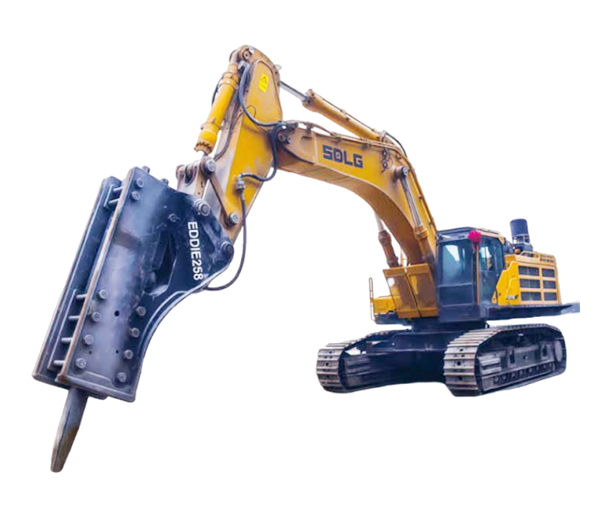
A heavy excavator makes sense when the job requires more than light earthmoving. I normally see this class of machine considered for large construction projects, quarry operations, infrastructure work, excavation, demolition-related work, and other demanding applications.
Road projects often involve excavation, earth removal, drainage preparation, slope work, and material handling. A heavy excavator can support these operations where a smaller machine would require more working cycles.
When the machine is paired with the correct attachment, it can also support pavement breaking and other preparation work. The exact attachment should always be selected according to the material and working conditions.
Quarries can be tough environments for machinery. Dust, hard rock, uneven ground, long working hours, and heavy material loads all place demands on the machine.
In this type of project, I pay special attention to cooling, filtration, undercarriage condition, attachment selection, and maintenance planning. A machine that looks suitable on paper still needs to match the real site.
Mining applications can vary greatly. Some projects involve overburden removal, material loading, site preparation, or supporting work around mining areas.
Before supplying equipment for a mining project, I ask about altitude, temperature, ground condition, working hours, transportation access, and required attachments. These details help avoid choosing a machine simply because its nominal capacity looks suitable.
Large infrastructure projects often operate several types of machinery together. Excavators may work alongside Wheel loaders, dump trucks, graders, rollers, cranes, and other equipment.
In these situations, machine productivity is not only about the excavator itself. The loading cycle, truck capacity, travel distance, and site layout all affect the actual result.
The HB configuration is particularly relevant when hydraulic breaker work is required. A breaker can be used for suitable rock, concrete, pavement, and demolition-related tasks.
However, I always remind buyers that “bigger breaker” does not automatically mean “better result.” The breaker must match the excavator's hydraulic system and the material being broken. Correct matching usually matters more than simply choosing the largest attachment available.
When customers ask me whether they should buy a heavy excavator, I usually compare the machine with smaller excavators and wheeled excavators. There is no universal answer because each type is built around a different working environment.
| Excavator Type | Typical Strength | Common Working Environment | What I Consider |
|---|---|---|---|
| Heavy crawler excavator | Strong digging and stable working platform | Quarries, mining, infrastructure, large earthwork | Transport, undercarriage and site access |
| Wheeled excavator | Road mobility and flexible relocation | Municipal work, roads, utilities and urban projects | Road regulations and ground conditions |
| Mid-size excavator | Balance between size and versatility | General construction and earthmoving | Required digging force and transport cost |
| Mini Excavator | Compact size and easy access | Landscaping, utilities and small construction | Limited digging and lifting capacity |
The comparison above describes general equipment characteristics rather than exact model specifications. For the E6950HB, I would confirm the exact configuration and machine type shown on the quotation and machine documents before purchase.
This point is especially important for international SEO and online inquiries. A buyer may search for “E6950HB Wheel Excavator,” while the actual machine offered in a particular market may have a different chassis configuration. Search keywords should help customers find the product, but the final quotation should always describe the actual equipment correctly.
Supplying a large excavator internationally is much more than sending a price by email.
At Ganglong, I normally start by understanding the customer's project. I need to know the destination country, application, required machine configuration, quantity, attachment requirements, delivery schedule, and any special documentation requirements.
Once the requirements are clear, I can check the available machine and confirm the configuration. For third-party branded equipment, I work as a machinery supplier and international trade service provider. I do not describe myself as the original manufacturer of another company's brand.
For our supply process, timing depends on the selected model, configuration, order quantity, and machine availability. This is why I avoid promising a fixed delivery period before checking the actual order.
For an available machine, the process can focus on inspection, documentation, payment and shipping preparation. For machines that require production or configuration arrangements, the schedule needs to be confirmed separately.
Before delivery, we can arrange checks based on the confirmed order. These may include machine appearance, main operating functions, hydraulic and electrical systems, working equipment, attachments, accessories, and required documents.
If the customer has a specific inspection checklist, I prefer to receive it before the machine is prepared. That makes the process much clearer for both sides.
For international orders, payment is commonly arranged through T/T, with a deposit and balance before shipment when agreed by both parties. The exact payment structure depends on the confirmed order and commercial terms.
I always recommend that buyers confirm the payment schedule, machine configuration, documents, delivery terms, and inspection requirements in writing before payment.
Complete construction machines are generally transported by sea for international orders. Depending on the machine and destination, shipping arrangements can vary.
Before loading, the machine is prepared for transportation. Loose accessories can be packed separately in cartons or wooden cases, while the complete machine is secured and protected according to the shipping arrangement.
Spare parts and suitable smaller accessories may be shipped by air or express when this makes sense for the order.
| Supply Stage | What I Usually Confirm | Customer Benefit |
|---|---|---|
| Requirement review | Application, destination, configuration and quantity | Clear equipment selection |
| Quotation | Machine, attachment, commercial terms and delivery plan | Fewer misunderstandings |
| Pre-delivery check | Appearance, main functions, systems and accessories | Better order transparency |
| Packing | Machine protection and loose-part packing | Safer transportation |
| Shipping | Sea, air or express according to cargo type | Practical logistics arrangement |
| Documents | Required commercial and machine documents | Smoother import process |
This table describes our general international supply process. Exact arrangements are confirmed according to the customer's order, destination, machine condition, and shipping requirements.
Ganglong Heavy Industry Technology (Hefei) Co., Ltd. was founded in 2013. Together with Hefei Ganglong International Trade Co., Ltd., our business covers construction machinery, mining machinery, agricultural machinery, attachments, equipment sourcing, customization, sales, and international trade.
Our own HKLOONG range includes excavators, loaders, Backhoe loaders, and swamp excavators. At the same time, we provide complete machine sales and leasing services involving domestic and international brands such as Hitachi, SANY, Lonking, Hyundai, XCMG, SHANMON, and LOVOL.
This gives me a practical way to look at equipment from the customer's side. Sometimes the customer comes to me asking for one specific excavator model. After discussing the project, we may find that the customer also needs attachments, spare parts, a loader, a transport solution, or another type of machine.
That is where a broader machinery supply network becomes useful.
Our international trade team has experience serving customers in Asia, Africa, America, and other markets. Every market has its own requirements for shipping, documents, machine configuration, local working conditions, and spare parts.
I do not believe that international machinery supply should be based only on sending a catalogue and waiting for an order. The useful part is understanding what happens after the machine arrives at the customer's site.
Can it be transported properly? Does the attachment match? Are the documents ready? Does the buyer understand the maintenance requirements? Are spare parts available? Can the machine work under the customer's actual ground conditions?
These are the questions I prefer to discuss before the sale.
The E6950HB is a hydraulic excavator model associated with heavy-duty excavation and hydraulic breaker applications. Public regulatory information identifies E6950HB as an excavator model and lists it together with other HB hydraulic breaker configurations. Buyers should confirm the exact configuration supplied for their market before ordering.
The product name used for this page is “E6950HB Wheel Excavator,” but I recommend confirming the chassis type before purchase. The public information I could verify identifies E6950HB as a hydraulic excavator with a hydraulic breaker configuration rather than providing reliable evidence that it is a standard wheeled excavator. For this reason, I would not quote a wheel configuration without confirming the actual machine.
Yes, the HB designation is associated with hydraulic breaker configurations. However, the actual breaker model, hydraulic flow, pressure, mounting arrangement, and working conditions must be confirmed before matching the attachment.
Typical applications can include heavy construction, earthmoving, quarry-related work, infrastructure projects, rock breaking, demolition support, and other demanding excavation operations. The correct application depends on the exact machine configuration and attachment.
I normally start with the project details, destination country, required configuration, quantity, attachment requirements, and delivery schedule. After confirming machine availability and configuration, we can discuss inspection, commercial terms, documents, packing, and transportation.
Complete machines are generally shipped by sea for international orders. The machine is prepared and secured for transportation, while loose accessories can be packed separately. The exact loading and shipping arrangement depends on the destination and logistics plan.
Yes. According to the confirmed order, we can arrange checks covering machine appearance, major functions, hydraulic and electrical systems, accessories, documents, and other agreed inspection points.
Yes. Ganglong works with construction machinery, mining machinery, agricultural machinery, and matching attachments. Depending on the project, we can discuss excavators, loaders, backhoe loaders, swamp excavators, and other equipment or attachments.
When I look at a machine such as the E6950HB, I do not think the buying decision should be based on a model name alone. A heavy excavator is a working tool, and the right choice depends on what that tool needs to do every day.
I would first confirm the machine configuration, then look at the working environment, attachment requirements, hydraulic system, transport conditions, inspection points, and spare parts plan. If hydraulic breaker work is required, I would also make sure the breaker and excavator are correctly matched.
For customers searching online for an E6950HB Wheel Excavator, I recommend checking the exact machine type carefully before placing an order. This avoids a common problem in international machinery trading: the search keyword says one thing while the actual machine configuration says another.
At Ganglong, my approach is simple. I want the customer to know exactly what machine is being supplied, what it is suitable for, what needs to be confirmed before shipment, and how the international delivery will be handled.
Whether the project involves heavy excavation, infrastructure construction, quarry work, rock breaking, road construction, or another demanding application, the machine should be selected around the real job rather than around a product name alone. That is the practical starting point I use when helping customers source construction machinery for international projects.
 RELATED
2435092534@qq.com
86 158 5511 9567


©2026 HKLOONG Heavy Industry Technology (Hefei) Co., Ltd. All Rights Reserved.

This website uses cookies to ensure you get the best experience on our website.
 Español
 Pусский
 Français
 العربية
 WhatsApp
 Phone
Phone E-mail
 Message