
 Español
 Pусский
 Français
 العربية


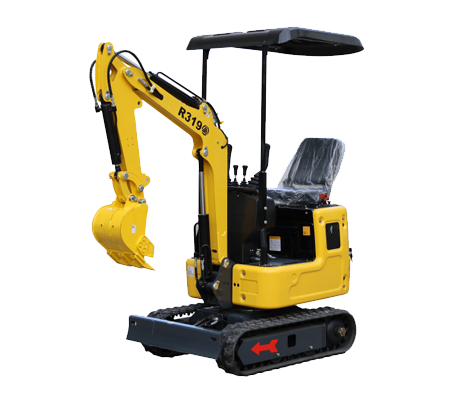
When I talk about small excavation equipment, I always come back to one simple question: where will the machine actually work? A machine may have plenty of digging power, but if it cannot get through a gate, move around a building, or work safely beside a finished landscape, that power does not help much. This is the reason I put so much attention on compact design when developing and positioning the R319 Small machinery.
At HKLOONG Heavy Industry Technology (Hefei) Co., Ltd., we work across equipment R&D, precision manufacturing, quality testing, customized modification, and global distribution. Under our HKLOONG brand, we supply crawler excavators, Wheel loaders, Backhoe loaders, and amphibious wetland Excavators. Our goal is not simply to make construction equipment. We want each machine to have a clear purpose in the field.
The RIPPA mini Excavator platform follows that thinking. It combines a compact structure with flexible maneuverability, making it suitable for narrow job sites and many smaller excavation tasks. I see the R319 as a practical option for contractors, farmers, landscapers, municipal maintenance teams, and rental businesses that need a machine capable of handling different jobs without taking up unnecessary space.
The machine can be used for digging and trenching, while suitable attachments can extend its working range. Augers, Hydraulic Breakers, and grapples can turn a basic small excavator into a more flexible work platform. The optimized hydraulic system is designed for smooth digging and precise control, while the operator area is designed with comfort and protection in mind.
In this product page, I will explain how I look at the R319 Small machinery, where it fits, how its main systems work, what buyers should check before ordering, and why the final machine configuration matters just as much as the model name.
1. Why Compact Excavation Equipment Matters
Large Excavators have an important place in construction. They are built for demanding earthmoving work, deep excavation, large sites, and high production requirements. But not every job is a large job.
A landscaping contractor may need to dig around an existing garden. A farmer may need to repair a drainage channel. A municipal crew may need to open a narrow trench beside a road. A renovation contractor may need excavation equipment in a restricted area. In these situations, the working environment can be more important than raw machine size.
That is where a Compact Mini Excavator can make sense.
Compact equipment is now a recognized category within the construction equipment industry. The Association of Equipment Manufacturers maintains a dedicated Compact Equipment and Attachments Committee covering Compact Excavators and related equipment. This reflects the established role of smaller machines in construction and maintenance work. Source: Association of Equipment Manufacturers.
When I evaluate a small excavator, I do not judge it only by digging force. I look at access, maneuverability, hydraulic response, attachment compatibility, operator control, maintenance, and transport.
For the R319 Small machinery, compactness is one of the key points. A smaller machine can enter work areas that may be difficult for larger equipment. Once inside the site, flexible movement helps the operator position the machine for the actual task.
This can be especially useful for residential landscaping, farm maintenance, small utility work, and selected municipal projects. The machine does not need to replace a large excavator. Instead, it fills a different role.
| Work Condition | Large Excavator | Compact / Mini Excavator | Practical Issue to Consider |
|---|---|---|---|
| Large open construction site | Usually suitable | Suitable for smaller tasks | Required production rate |
| Narrow residential yard | Access may be difficult | Often more practical | Gate and pathway dimensions |
| Landscaping around existing structures | May require more space | Better suited to restricted work | Ground protection and control |
| Small farm maintenance | May be oversized for some jobs | Useful for smaller excavation tasks | Transport and attachment needs |
| Utility trenching in confined areas | Depends on access | Often useful | Underground utility safety |
Source: General equipment application comparison based on common compact-equipment use cases and industry practice. It is not a performance test of the R319 against a particular large excavator.
For me, the best machine is the one that matches the job. That sounds obvious, but it is an important point when comparing construction equipment.
2. How the R319 mini excavator Turns Engine Power into Digging Work
The working principle of the R319 is easier to understand than it may first appear. The engine supplies the primary power, while the hydraulic system transfers that power to the working functions of the excavator.
The operator uses the controls to direct hydraulic oil through the machine's hydraulic circuit. This allows the boom, arm, bucket, and compatible hydraulic attachments to move in a controlled way.
For example, when the operator wants to dig a trench, the boom positions the arm, the arm brings the bucket into the working area, and the bucket cuts into and collects soil. The operator then raises the working equipment, swings or repositions the machine as required, and places the excavated material in the chosen location.
It sounds simple, but smooth control matters. On a wide open site, a small movement error may not be a major problem. Beside a house, tree, drainage pipe, or existing utility, the same error can be much more serious.
The RIPPA mini excavator uses an optimized hydraulic system intended to provide smooth digging performance and precise control. This is one reason I consider hydraulic response an important part of the R319 Small machinery rather than treating the hydraulic system as just another component.
| System | What It Does | Why It Matters to the Operator |
|---|---|---|
| Engine | Provides the machine's main power | Supports excavation and hydraulic functions |
| Hydraulic circuit | Transfers controlled hydraulic power | Helps create smooth working movement |
| Boom | Moves the working equipment vertically and positions it | Helps reach the required digging area |
| Arm | Extends and positions the bucket | Supports controlled digging and material handling |
| Bucket | Cuts, collects and moves suitable material | Provides the basic excavation function |
| Attachment system | Connects suitable optional tools | Allows one machine to perform more types of work |
Source: Functional description is based on the supplied RIPPA mini excavator product information. The hydraulic operating principle reflects standard Hydraulic Excavator engineering practice.
My advice to buyers is to look at the complete system rather than one component. A strong engine alone does not automatically create a good digging machine. The engine, hydraulic system, structure, controls, attachments, and operator interface all need to work together.
3. Main Features I Focus on in R319 Small Machinery
The first feature is compact construction. The R319 is intended for work where space is limited. That includes landscaping projects, farm maintenance, municipal piping work, and selected indoor renovation applications.
The second feature is maneuverability. A compact excavator must be able to move into position without making every small adjustment difficult. Flexible maneuverability helps the operator work around obstacles and approach the excavation area with better control.
The third feature is hydraulic performance. I focus on smooth movement because precise control is useful when the machine is working close to existing structures. The optimized hydraulic system supplied with the RIPPA mini excavator platform is designed around this requirement.
The fourth feature is attachment flexibility. The R319 can support suitable attachments such as augers, breakers, and grapples. These tools allow the machine to take on tasks beyond standard bucket excavation.
The fifth feature is operator protection and comfort. The supplied product information specifies a ROPS safety frame and ergonomic operating layout. ROPS stands for Roll-Over Protective Structure. It is intended to provide operator protection during qualifying rollover conditions when the machine is correctly operated and used within its approved conditions.
Safety should never be treated as a marketing sentence. The exact protective structure, testing requirements, and operating rules depend on the machine configuration and destination market. OSHA, for example, provides specific requirements covering rollover protective structures for certain construction equipment. Source: U.S. Occupational Safety and Health Administration.
Finally, I pay attention to maintenance. Construction equipment works in dust, soil, vibration, moisture, and changing loads. Easy maintenance and stable running can help reduce unnecessary downtime and make daily ownership easier for contractors and rental operators.
4. R319 Small Excavator Compared with Other Equipment Choices
One mistake I often see in equipment selection is comparing machines only by size. Size is important, but it is not the complete picture.
A buyer should first understand the type of work. If the project involves large earthmoving volumes, a larger excavator may be more appropriate. If the work takes place in narrow spaces, a compact machine may offer better access and easier positioning.
The following table gives a general category-level comparison. It should not be treated as a specification sheet for R319 Small machinery or for any particular competitor.
| Equipment Type | Typical Strength | Typical Application | Potential Limitation |
|---|---|---|---|
| Mini excavator | Compact size and flexible movement | Landscaping, small trenches, farm maintenance | Lower capacity than larger excavators |
| Compact excavator | Balance of size and working capability | General construction and utility work | May need more access space than a very small machine |
| Standard crawler excavator | Large working range and earthmoving capability | Major construction and excavation | Requires more space and transport planning |
| wheel excavator | Mobility between road-based work areas | Municipal and road maintenance | Application depends on ground and site conditions |
Source: General industry equipment classification and application practice; compact equipment category reference: Association of Equipment Manufacturers.
I would choose the R319 type of machine when access and flexibility are important. I would not recommend using a small excavator simply because it costs less if the project actually requires the reach, lifting ability, or production rate of a larger machine.
Good equipment selection starts with the job, not the brochure.
5. Where I See R319 Small Machinery Being Most Useful
Landscaping Projects
Landscaping is one of the clearest applications for compact excavation equipment. The machine may need to work between trees, garden beds, fences, buildings, paving, and other finished areas.
A compact excavator can be used for suitable trenching, soil removal, drainage preparation, planting-related excavation, and site shaping. Because the R319 is designed for flexible movement, it can be considered when a contractor needs a small excavator for landscaping rather than a large earthmoving machine.
Farm Maintenance
Farms often have many small infrastructure jobs. Drainage channels, water lines, fence post preparation, land maintenance, and other digging work can appear throughout the year.
A mini excavator for farm maintenance can provide a useful balance between machine capability and physical size. The attachment system also gives the owner more ways to use the machine.
Municipal Piping and Utility Work
Municipal and utility work can involve narrow excavation areas where careful control is important. The R319 can be considered for suitable trenching and maintenance tasks where its size and final configuration match the project.
There is one important warning here: underground utility work must follow local safety procedures. Before digging, operators should identify underground services and follow the requirements of the relevant authority or utility provider.
Small Construction and Renovation
Construction renovation work can create unusual access conditions. There may be a narrow entrance, limited outdoor space, or a need to work around an existing building.
The R319 Small machinery can be considered for suitable excavation tasks in these conditions. For indoor use, however, I always recommend checking ventilation, floor loading, access, machine dimensions, emissions, and local safety rules before bringing an engine-powered machine inside a building.
Rental Equipment
Rental businesses need machines that can serve different customers. A compact excavator with suitable attachment options can be useful because one base machine may support several types of small projects.
For rental operators, I would pay particular attention to ease of inspection, maintenance access, attachment compatibility, operator instructions, and the ability to support local customer requirements.
6. Attachment Options: Making One Compact Machine More Useful
When I explain the value of the R319, I do not want to focus only on the bucket. The attachment system is an important part of the machine's flexibility.
An auger attachment can be used for suitable hole-drilling tasks. This can be helpful in landscaping, fencing, agricultural work, and other applications where the ground and attachment specifications are appropriate.
A hydraulic breaker changes the type of work the excavator can perform. It is intended for breaking suitable materials and can be useful in selected renovation, construction, and maintenance work.
A grapple provides another way to handle suitable materials. It can be useful when the job involves picking, sorting, or moving objects rather than simply digging soil.
| Attachment | Example Application | Important Selection Check |
|---|---|---|
| Bucket | Digging and trenching | Material type and required bucket size |
| Auger | Hole drilling | Hydraulic flow, pressure and soil condition |
| Hydraulic breaker | Breaking suitable hard material | Hydraulic requirements and machine compatibility |
| Grapple | Material handling | Attachment weight and operating capacity |
Source: Attachment types and applications are based on the supplied RIPPA product information. Final compatibility must be confirmed against the R319 hydraulic system, mounting interface, operating capacity, attachment weight, and approved configuration.
I always recommend checking hydraulic flow and pressure before ordering a hydraulic attachment. A tool may physically fit the machine but still be unsuitable if its hydraulic requirements do not match.
This is also why I prefer to discuss the complete working application with customers. If you tell me what you want to dig, drill, break, or handle, I can start from the actual job instead of guessing from the model name.
7. How We Approach Manufacturing, Quality and After-Sales Support
At HKLOONG, I see manufacturing as a complete process rather than a single assembly step. Our company combines R&D, precision manufacturing, quality testing, customized modification, and global distribution.
For compact excavation equipment, the relationship between different systems is important. The hydraulic system needs to work with the engine and controls. The working equipment needs to match the machine structure. Attachments need to match hydraulic and mechanical requirements. The operator area needs to provide practical access to the controls.
That is why quality testing matters. Excavators face repeated loading, vibration, dust, mud, temperature changes, and continuous hydraulic movement. A machine that works well in a factory but is difficult to maintain in the field is not a complete solution.
I also understand that international buyers may have different requirements. Engine and emissions configuration, attachments, safety equipment, electrical components, documentation, and other details can vary by market.
The supplied RIPPA information states that the mini excavator is powered by reliable engines and meets Euro Stage 5 and EPA emission standards. I recommend confirming the exact engine model, applicable certification, and destination-market configuration before purchase because emissions requirements are tied to specific engine and equipment configurations.
For reference, the U.S. Environmental Protection Agency regulates emissions from nonroad engines and equipment, including construction equipment. Source: U.S. EPA.
Our role at HKLOONG is therefore not only to supply equipment. We also look at customization and configuration so that the machine can better match the customer's intended working conditions.
If a customer operates a rental fleet, for example, the focus may be on attachment flexibility and straightforward maintenance. A landscaping contractor may care more about access and precise control. A farm customer may have different transport and attachment requirements.
Those are different jobs, so I do not think every customer should receive exactly the same setup.
8. Why Choose R319 Small Machinery from HKLOONG?
If I were buying a R319 mini excavator, I would not make the decision from one number on a specification sheet. I would first look at the working environment.
How narrow is the access route? What type of ground will the machine work on? What materials need to be excavated? How often will attachments be changed? Will the machine be transported between different sites? What local emissions and safety rules apply?
These questions help determine whether a compact excavator is actually the right choice.
The R319 Small machinery is built around several practical strengths: compact structure, flexible maneuverability, smooth hydraulic operation, attachment versatility, operator-focused design, and maintainability.
At HKLOONG, we also have a wider equipment background. Our product range includes crawler excavators, wheel loaders, backhoe loaders, and amphibious Wetland excavators. This gives us experience across several types of working equipment and allows us to look at the R319 as part of a broader equipment system.
For contractors, the machine can be considered for landscaping, utility work, small construction, and maintenance. For farmers, it can support suitable farm improvement and digging tasks. For rental businesses, the combination of compact size and attachment flexibility can broaden the range of jobs the equipment can serve.
Most importantly, I encourage customers to provide the actual application before confirming the final configuration. A good supplier should be willing to discuss the working conditions, not simply send a generic product sheet.
R319 Small Machinery FAQ
What is R319 Small machinery?
R319 Small machinery refers to a compact excavation equipment solution based on the RIPPA mini excavator platform. It is designed for flexible operation in applications such as landscaping, farm maintenance, municipal piping, small construction, and suitable renovation work.
Is R319 a mini excavator?
Yes. The R319 is positioned as a compact mini excavator suitable for narrow and restricted work areas. Its exact dimensions and operating specifications should be confirmed from the final machine configuration.
What can a R319 small excavator be used for?
Typical applications include landscaping, farm maintenance, municipal piping, small construction, utility work, and selected renovation projects. The final application should always be checked against the machine's working capacity and local operating requirements.
Can the R319 work with an auger?
The supplied RIPPA product information lists augers among the supported attachment types. Before selecting an auger, the hydraulic flow, hydraulic pressure, mounting interface, attachment weight, and machine operating limits should be checked.
Can the R319 use a hydraulic breaker?
Yes, hydraulic breakers are included in the supplied attachment information. The breaker must be correctly matched to the excavator hydraulic system and approved machine configuration.
Can a grapple be used with R319?
The supplied product information includes grapples as an attachment option. The correct grapple should be selected according to mounting requirements, weight, hydraulic needs, and the machine's operating capacity.
Does the RIPPA mini excavator meet EPA requirements?
The product information supplied to us states that the RIPPA mini excavator meets Euro Stage 5 and EPA emission standards. Because emissions certification depends on the specific engine and destination market, buyers should confirm the exact certification and engine configuration before ordering.
Does R319 have ROPS protection?
The supplied product information specifies a ROPS safety frame. ROPS is designed to provide operator protection under qualifying rollover conditions when the machine is operated correctly. The exact protective structure and applicable certification should be confirmed for the final machine and destination market.
Is R319 suitable for indoor renovation?
The compact design can make this type of machine suitable for selected restricted-space renovation applications. However, indoor operation requires careful checking of ventilation, emissions, floor loading, access dimensions, noise, and local safety requirements. The site must be suitable before operation.
Is R319 suitable for a rental business?
It can be considered for rental operations because compact excavators can serve different types of small jobs and can use multiple suitable attachments. Rental operators should pay particular attention to maintenance access, operator instructions, attachment management, safety checks, and local rental regulations.
How can I choose the correct R319 configuration?
I recommend starting with the application. Tell us the required excavation work, site dimensions, soil conditions, expected attachments, working environment, transport method, and destination country. We can then discuss the configuration instead of selecting equipment based only on the model name.
My view as a manufacturer: I see the R319 Small machinery as a machine for customers who value access and flexibility as much as digging capability. A compact excavator does not need to compete with a large excavator on every job. Its real value comes from being able to reach smaller sites, work around obstacles, accept suitable attachments, and perform useful tasks without bringing oversized equipment into a restricted area.
That is the role I believe a good R319 small excavator should play. At HKLOONG, I focus on matching the machine to the real job, supporting the right configuration, and building equipment that makes practical sense from the first working day through long-term maintenance.



 WhatsApp
 Phone
Phone E-mail
 Message