
 Español
 Pусский
 Français
 العربية


When I talk with contractors about small excavation equipment, I usually ask one question before we talk about power: where are you going to use the machine?
That question matters because many excavation jobs are not carried out on wide, open construction sites. A landscaper may need to work behind a house. A farmer may need to dig drainage channels between buildings and fields. A municipal contractor may need to prepare a narrow trench beside an existing road. A renovation team may have only a small entrance through which machinery can pass.
This is where I see the practical value of the R327 Small machinery. I developed the compact Excavator concept around the needs of users who want useful digging performance without bringing a large machine into every job. The compact structure, flexible maneuverability, hydraulic working system and attachment options make the R327 suitable for many small and medium excavation tasks.
At HKLOONG Heavy Industry Technology (Hefei) Co., Ltd., we work across equipment R&D, precision manufacturing, quality testing, customized modification and global distribution. Under our HKLOONG brand, our product range includes crawler excavators, Wheel loaders, Backhoe loaders and amphibious wetland Excavators. We build our equipment with a focus on practical field use rather than specifications that only look good on paper.
For the R327, that means making a compact machine that can be useful to contractors, farmers, landscapers, utility teams and rental businesses. I want the operator to have a machine that is straightforward to use, easy to maintain and flexible enough to handle more than one type of job.
1. Why I Developed the R327 for Compact Excavation
A larger excavator can offer impressive digging capability, but size can become a disadvantage when the work area is tight. Getting through a narrow gate, moving between buildings or working beside an existing structure can be difficult with a machine designed for large earthmoving projects.
I designed the R327 Small machinery with these everyday problems in mind.
The basic idea is simple: keep the machine compact while providing the hydraulic control and attachment flexibility needed for common excavation work. I do not expect a small excavator to replace a large machine on a major infrastructure project. Instead, I see the R327 as a practical tool for jobs where access and maneuverability are just as important as digging force.
Landscaping is a good example. A contractor may need to remove soil, prepare a planting area or create a drainage trench in a backyard. There may be a fence on one side, a house on another and mature trees around the working area. A Compact Excavator can be much easier to position than a full-size machine.
Farm maintenance presents a similar situation. Farmers may need to repair drainage, prepare irrigation routes, dig small trenches or maintain areas around farm buildings. These jobs are important, but they do not always justify the size of heavy earthmoving equipment.
Municipal and utility work can also benefit from compact equipment. Working beside roads, sidewalks, buildings and existing infrastructure requires careful positioning. A smaller machine can give the operator more freedom to work within a restricted area.
For me, the value of a compact excavator is not simply that it is small. It is that its size allows the machine to reach jobs that may otherwise be difficult to mechanize.
2. How the R327 Small Machinery Works
The R327 uses the basic working principle found in Hydraulic Excavators. The engine provides power, while the hydraulic system transfers that power to the working equipment and travel functions.
The hydraulic pump creates oil flow and pressure. Hydraulic oil then passes through control valves and lines to the appropriate cylinders or motors. When the operator moves a control, the system directs hydraulic oil to the selected component.
This is what allows the boom, arm and bucket to move.
In everyday terms, I would describe the hydraulic system as the machine's working muscle and control system at the same time. It provides the force needed for digging while allowing the operator to control the movement.
Good hydraulic performance is not only about maximum pressure. I also care about how smoothly the machine responds. If an operator is digging close to a water pipe, wall or tree, sudden movement can make the job harder. Controlled movement allows the operator to make smaller adjustments.
The crawler undercarriage allows the R327 to travel around the work area. After positioning the machine, the operator can lower the working equipment, penetrate the soil, curl the bucket to collect material and move the material to the required location.
When a different attachment is installed, the same basic hydraulic power can be used for another type of task. An auger, for example, changes the machine from a digging tool into a hole-drilling tool. A Hydraulic Breaker provides a way to perform selected breaking work, while a grapple can help with material handling.
| System | Basic Function | Practical Role |
|---|---|---|
| Engine | Generates mechanical power | Provides the power source for machine functions |
| Hydraulic pump | Produces hydraulic flow and pressure | Transfers engine power into hydraulic work |
| Control valves | Direct hydraulic oil | Controls the selected machine function |
| Hydraulic cylinders | Convert hydraulic pressure into movement | Moves the boom, arm and bucket |
| Crawler undercarriage | Provides travel and ground contact | Helps the machine move around the work area |
Source: HKLOONG product information supplied for the R327 Small machinery; system descriptions reflect established hydraulic excavator operating principles used in construction equipment.
3. The R327 Features I Think Matter on a Job Site
Compact Structure
The first thing I consider is access. If a machine cannot reach the working area, its digging capacity does not matter.
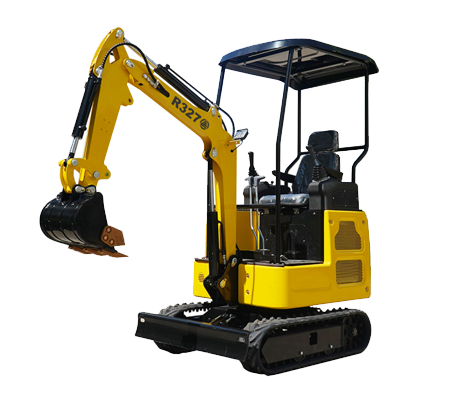
The R327 has a compact structure intended for restricted job sites. This makes it a useful candidate for landscaping, farm maintenance, municipal piping, utility work and selected renovation applications.
I always suggest that customers measure the actual entrance before ordering. Do not measure only the work area. Check the gate, driveway, doorway, access road and the narrowest point along the route.
Flexible Maneuverability
Compact sites often require frequent repositioning. The operator may need to move forward, adjust the working angle and approach another excavation point a few meters away.
A machine designed for flexible maneuvering can make this process easier. This is especially useful when several small trenches or digging points are located close to one another.
Optimized Hydraulic Performance
The hydraulic system is designed to provide smooth digging performance and precise control. I consider this important because excavation is not always about digging as quickly as possible.
Sometimes the operator needs to remove a small amount of soil at a time. Sometimes the bucket needs to work close to an existing structure. Predictable control gives the operator more confidence during these jobs.
Attachment Flexibility
I want the R327 to be useful beyond basic digging. Suitable attachments can change the way the machine is used.
Augers can be used for drilling holes. Hydraulic breakers can be used for selected demolition or breaking work. Grapples can assist with branches, debris and other loose materials.
Attachment compatibility must be checked before use. Hydraulic flow, hydraulic pressure, attachment weight and machine operating limits all need to match. I do not recommend selecting an attachment based only on whether it physically fits the machine.
ROPS Safety Frame
The R327 uses a ROPS safety frame. ROPS means Roll-Over Protective Structure. Its purpose is to help protect the operator during a qualifying rollover event when the equipment is used correctly and within its approved operating conditions.
Operator comfort also matters. Excavator work can involve repeated control movements throughout the day, so an ergonomic operating layout can make routine work less tiring.
4. R327 Compared with Different Excavator Classes
I often tell customers that choosing an excavator is a little like choosing a work vehicle. A heavy truck is useful when you need to carry a lot of material, but it is not necessarily the best vehicle for every road. Excavators work in much the same way.
A Large Excavator makes sense for large earthmoving operations. A compact machine makes more sense when access, transportation and maneuverability are important.
The following comparison is intended as general industry guidance. It should not be treated as an official R327 specification sheet because the exact dimensions and operating parameters depend on the final machine configuration.
| Excavator Category | Typical Work | Restricted-Site Access | Typical Advantage |
|---|---|---|---|
| Micro excavator | Small landscaping and residential work | Very high | Very compact footprint |
| Mini Excavator | Landscaping, utilities, farms and construction | High | Balance of size and capability |
| Compact excavator | General construction and utility work | Medium to high | Broader working capability |
| Large excavator | Infrastructure, quarrying and major earthmoving | Low in confined spaces | High production for large projects |
Source: General construction-equipment category and application information from the Association of Equipment Manufacturers (AEM) and U.S. Environmental Protection Agency (EPA) nonroad equipment resources. The categories above are general industry descriptions and are not R327 technical specifications.
For someone searching for an R327 mini excavator or R327 compact excavator, I would therefore start by checking the job site rather than comparing engine numbers alone.
Ask yourself: Can the machine enter the site? Can it turn around? Can it reach the excavation point? Can it be transported easily between jobs? Can the attachment you need work correctly with the hydraulic system?
These questions often tell me more about whether a machine is suitable than a single headline specification.
5. Applications: Where I See the R327 Working Best
Landscaping
Landscaping is one of the most natural applications for the R327 Small machinery. Contractors may need to dig planting areas, remove soil, prepare drainage, create small trenches or shape sections of a property.
The work is often close to finished surfaces and existing structures, so a compact machine can be easier to position.
Farm Maintenance
Farm work can involve many different small excavation tasks. Drainage channels, irrigation preparation, fence-related work and property maintenance are all examples.
A compact excavator gives farmers a mechanical option for these jobs without requiring a large earthmoving machine every time.
Municipal Piping and Utility Work
Utility projects can be challenging because underground infrastructure is often already present. Roads, cables, pipes, sidewalks and buildings can limit the available working space.
The R327 can be considered for small trenching and excavation tasks where compact equipment is appropriate. However, underground utility locating must always be completed before excavation, and local work-zone safety procedures must be followed.
Renovation Projects
Some renovation projects require excavation or material handling in limited areas. A small excavator can be useful when a larger machine cannot easily access the site.
For indoor work, I would be especially careful. The customer needs to check ventilation, engine emissions, floor loading, access conditions and local regulations. The fact that a machine can physically enter a building does not automatically mean that it is safe to operate there.
Rental Fleets
Rental businesses have a different concern: utilization. A machine that can serve several types of customers has the potential to be useful across more rental projects.
A compact excavator with attachment flexibility can appeal to landscapers, farmers, utility contractors and small construction companies. The exact rental suitability will depend on local demand and the machine configuration.
| Application | Typical Task | Possible Attachment | Why Compact Size Helps |
|---|---|---|---|
| Landscaping | Soil removal and trenching | Bucket | Can work around gardens and buildings |
| Farm maintenance | Drainage and small excavation | Bucket or auger | Useful around farm access areas |
| Utility work | Small trenches and pipe preparation | Bucket | Easier positioning in restricted zones |
| Breaking work | Selected concrete or material breaking | Hydraulic breaker | Suitable for smaller work areas |
| Material handling | Branches and loose debris | Grapple | Provides another use beyond digging |
Source: HKLOONG product application information and established compact excavator applications in construction and agricultural work. Actual attachment compatibility must be confirmed for the specific R327 configuration.
6. Manufacturing, Inspection and Maintenance: What I Pay Attention To
I have always believed that machine quality starts well before the excavator reaches the customer. A reliable machine needs a good design, suitable components, accurate manufacturing, proper assembly and meaningful testing.
At HKLOONG Heavy Industry Technology (Hefei) Co., Ltd., we combine equipment R&D, precision manufacturing and quality testing. This allows us to look at the R327 as a complete machine rather than as a collection of unrelated parts.
The structural frame, boom, arm, hydraulic system, crawler undercarriage, power system and controls all need to work together. If one system is not properly matched to another, the overall machine may not perform as expected.
During manufacturing and inspection, I pay attention to dimensional accuracy, structural assembly, hydraulic connections, component installation and operating functions. Hydraulic systems deserve particular care because leaks or incorrect connections can affect performance and create maintenance problems.
Functional testing is also important. Before delivery, the machine needs to be checked under controlled conditions to verify basic operating functions and identify obvious issues.
Maintenance is another part of ownership that I do not like to ignore. Operators should follow the manufacturer's maintenance schedule, inspect fluid levels and hydraulic lines, check the undercarriage and keep the working equipment in proper condition.
Simple daily checks can often catch problems before they become larger repair jobs. This is especially important for rental fleets, where machines may be operated by different customers.
For export projects, we also need to consider the destination market. Emission requirements, safety regulations, documentation and equipment configuration may vary between countries. The final R327 configuration should therefore be confirmed according to the destination before production and shipment.
7. Why I Work with Customers Through HKLOONG
When a customer buys construction machinery from another country, the purchase is about more than the machine itself. The buyer also needs accurate technical information, suitable configuration, clear communication and a practical way to discuss modifications.
That is where our manufacturing background becomes important.
HKLOONG Heavy Industry Technology (Hefei) Co., Ltd. is headquartered in Hefei, China. We operate the HKLOONG brand and integrate equipment R&D, precision manufacturing, quality testing, customized modification and global distribution.
Our product range covers crawler excavators, wheel loaders, backhoe loaders and amphibious Wetland excavators. Because we work with different types of heavy equipment, we understand that working conditions can vary greatly from one project to another.
For the R327 Small machinery, I prefer to understand the application before confirming the configuration. If a customer tells me only, “I need a small excavator,” there are still many questions to answer.
What material will the machine excavate?
How narrow is the site entrance?
What type of terrain will it work on?
What digging tasks are required?
Will an auger, breaker, grapple or other attachment be needed?
How many hours per day will the machine operate?
How will the machine be transported between job sites?
Which country will the machine be used in?
Are there specific local emission or safety requirements?
Once these details are clear, it becomes much easier to determine whether the R327 is suitable and what configuration should be considered.
I also believe this approach helps avoid a common purchasing mistake: choosing a machine because it looks inexpensive at the beginning, only to discover later that it does not fit the working conditions or attachment requirements.
8. R327 Small Machinery FAQ
What is the R327 Small machinery used for?
The R327 is intended for compact excavation applications such as landscaping, farm maintenance, municipal piping, utility work and selected renovation projects. It is designed for customers who need flexible machinery for restricted or relatively small work areas.
Is the R327 a mini excavator?
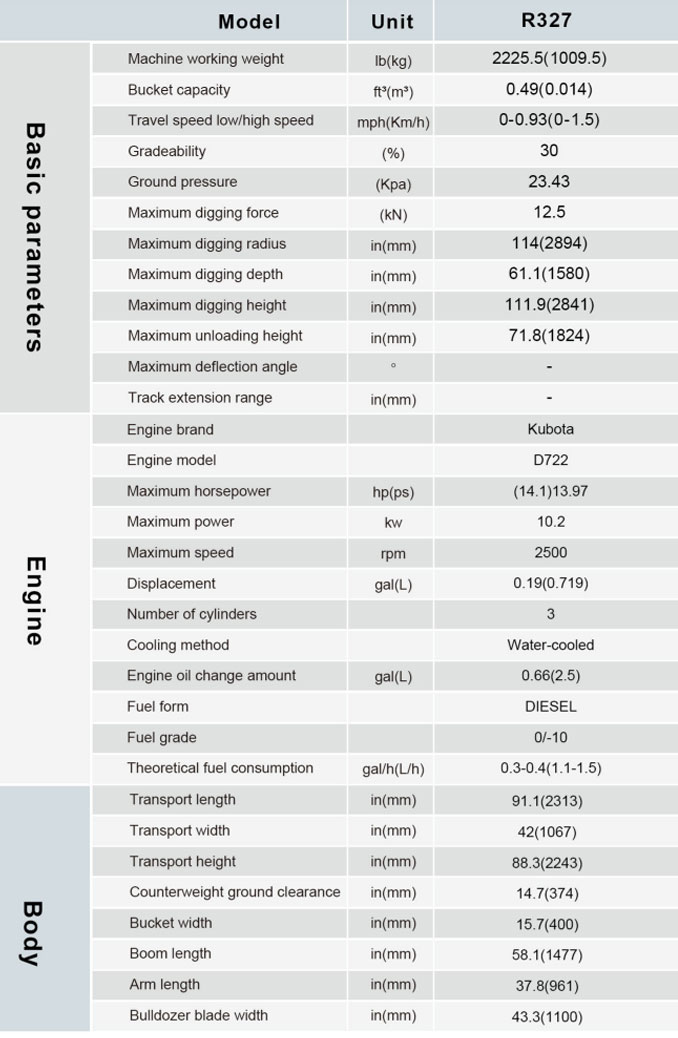
The R327 is positioned as compact digging equipment within the small machinery category described by the supplied product information. For purchasing purposes, I recommend confirming the exact machine specifications, dimensions and operating parameters with HKLOONG.
Can the R327 work on narrow job sites?
Yes. Compact structure and flexible maneuverability are central to the R327 concept. However, customers should always compare the actual machine dimensions with the narrowest access point before ordering.
What attachments can I use with the R327?
The supplied product information identifies augers, hydraulic breakers and grapples as supported attachment types. Compatibility depends on hydraulic flow, pressure, attachment weight and the final machine configuration.
Is the R327 suitable for landscaping work?
Yes. Landscaping is a practical application for compact excavation machinery. The machine can be used for suitable digging, trenching and soil preparation tasks where the configuration and site conditions allow.
Can farmers use the R327 for maintenance work?
Yes. Farm drainage, small trenching, irrigation preparation and general property maintenance are examples of work where a compact excavator can be useful.
Does the R327 support Euro Stage 5 and EPA requirements?
The supplied RIPPA mini excavator product information states that the relevant engine configuration meets Euro Stage 5 and EPA emission standards. The exact engine and certification configuration should be confirmed for the destination market and final machine before purchase.
Does the R327 have a ROPS safety frame?
Yes. The supplied product information specifies a ROPS safety frame. Operators should always follow the machine operating manual and applicable local safety regulations.
Is the R327 suitable for rental companies?
It can be considered for rental fleets because compact excavators can serve several customer groups, including landscapers, farmers, small builders and utility contractors. Attachment flexibility can further expand the range of possible rental applications.
How can I select the right R327 configuration?
I recommend providing information about the job site, access width, ground conditions, working tasks, expected operating hours, attachments and destination country. We can use this information to discuss the suitable configuration with you.
My Final View of the R327 Small Machinery
I developed the R327 Small machinery around a simple but important need: customers often want real excavation capability without bringing a large machine into a small working area.
The R327 combines a compact structure, flexible maneuverability, hydraulic digging control, attachment flexibility and operator-focused features. These characteristics make it worth considering for landscaping, farm maintenance, municipal piping, utility work, selected renovation projects and rental applications.
I would not say that a compact excavator is the answer to every excavation problem. Large infrastructure projects and heavy earthmoving operations may require larger equipment. The right choice depends on the actual work.
For that reason, when a customer asks me about an R327 mini excavator, I look at the complete application. Site access, soil conditions, required digging work, attachment selection, transportation and local regulations all need to be considered together.
At HKLOONG, our goal is to provide practical equipment backed by R&D, manufacturing, testing and customization capabilities. If you are searching for an R327 small excavator, compact excavator for narrow job sites, small excavator for landscaping, mini excavator for farm maintenance or small digging machine with attachments, send us your working requirements.
I can then help you check the appropriate machine configuration, attachment requirements and destination-market considerations before you make a purchasing decision.
Source and specification note: Product-specific information in this article is based on the R327 product information supplied by HKLOONG Heavy Industry Technology (Hefei) Co., Ltd. General industry comparisons and application descriptions are based on established construction-equipment information and publicly available resources from the Association of Equipment Manufacturers (AEM) and U.S. Environmental Protection Agency (EPA). The comparison tables are for general reference only and are not an official R327 specification sheet. Actual operating weight, dimensions, engine output, hydraulic parameters, digging range and attachment limits should be confirmed with HKLOONG for the specific machine configuration.



 WhatsApp
 Phone
Phone E-mail
 Message