
 Español
 Pусский
 Français
 العربية


When I talk about the R350 Small machinery, I usually start with one simple point: a small Excavator should not mean a machine that can only do small jobs. In many real work areas, the challenge is not how much power a machine has. The challenge is whether the machine can actually reach the working area, move around it, and complete the job without causing unnecessary trouble.
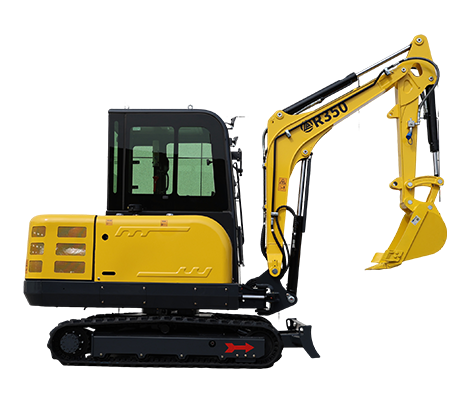
That is where the R350 Small machinery makes sense. I developed this type of compact digging equipment for contractors, farmers, landscapers, municipal workers, rental companies and other users who often work in narrow or difficult spaces. A compact body, flexible movement and hydraulic control allow the machine to work where a larger excavator may simply be too large.
At HKLOONG Heavy Industry Technology (Hefei) Co., Ltd., we work across equipment R&D, precision manufacturing, quality testing, customized modification and global distribution. Under our HKLOONG brand, our product range covers crawler excavators, Wheel loaders, Backhoe loaders and amphibious wetland Excavators. The R350 Small machinery follows the same practical idea: build equipment that is useful in the field, easy to operate and suitable for demanding daily work.
1. Why I Designed the R350 for Compact and Flexible Work
Large Excavators are excellent when there is plenty of room. But many jobs do not offer that luxury. A garden may have a narrow entrance. A farm may have trees, fences and small paths around the work area. A renovation project may require equipment to enter an existing building or work close to walls. Municipal pipe work can also take place beside roads, buildings and other structures.
For these situations, I prefer a Compact Excavator with a simple operating layout and enough hydraulic power for common digging tasks. The R350 Small machinery is designed around this requirement.
Its compact structure helps it move through restricted work areas, while its crawler-type undercarriage provides a stable working platform on many job sites. The operator can control the boom, arm and bucket with hydraulic controls, allowing digging, lifting and material handling to be carried out in a controlled way.
I also consider attachment flexibility important. A small excavator becomes much more useful when it can change from a digging bucket to an auger, breaker or grapple. Instead of keeping several machines for different tasks, a contractor can use one compact excavator for a wider range of work.
For me, that is the real value of compact machinery. It is not simply about making the machine smaller. It is about making the whole work process easier.
2. How the R350 Small Machinery Works
The R350 works through a hydraulic system. In simple terms, the engine provides mechanical power, while the hydraulic system transfers that power to the working components.
Hydraulic oil is pressurized by the hydraulic pump and sent through control valves to different hydraulic cylinders or motors. When I move a control lever, the valve directs hydraulic flow to the selected actuator. This creates the movement needed to raise the boom, move the arm, curl the bucket or operate another attachment.
This system is especially useful for excavation because hydraulic control can provide smooth and accurate movement. Instead of relying only on mechanical force, the operator can make small control inputs when working close to a wall, pipe, tree root or other obstacle.
The travel system allows the excavator to move around the site, while the upper structure provides the working platform for excavation. During normal digging, the operator positions the machine, lowers the working equipment, penetrates the soil with the bucket, curls the bucket to collect material and then swings or repositions the machine to discharge it.
That sounds simple, but good results depend on how the hydraulic system, engine, controls, boom and working attachment work together. This is why I pay attention to hydraulic response and control smoothness during machine development and testing.
| Compact Excavator Working Factor | Why It Matters | R350 Design Approach |
|---|---|---|
| Machine size | Determines whether the excavator can enter restricted areas | Compact structure for narrow work sites |
| Hydraulic control | Affects digging smoothness and operator control | Optimized hydraulic system |
| Attachment compatibility | Expands the number of jobs one machine can perform | Supports buckets and optional attachments such as augers, breakers and grapples |
| Operator protection | Important for daily construction and maintenance work | ROPS safety frame and ergonomic operating layout |
Source: HKLOONG product design information supplied for the R350 Small machinery; general Hydraulic Excavator operating principles are based on established construction-equipment engineering practice.
3. Main Features I Focused On
Compact Size for Narrow Work Areas
The first feature most users notice is the compact structure. I designed the R350 with narrow job sites in mind. This makes it suitable for landscaping, farm maintenance, municipal piping, indoor renovation and similar applications where working space is limited.
For a landscaping contractor, this can mean getting closer to a backyard work area without removing large sections of a property. For a farmer, it can mean working around trees, irrigation systems and farm buildings. For a renovation contractor, a compact excavator can provide digging capability in places where larger equipment cannot easily enter.
Flexible Crawler Mobility
The crawler system helps distribute machine weight over a larger contact area than a simple wheeled machine. This is useful when working on soil and other ground surfaces where traction and stability matter.
I still recommend that operators inspect the ground before working. No compact excavator should be treated as suitable for every surface or slope. Good machine operation starts with understanding the site.
Responsive Hydraulic Operation
I place a lot of attention on hydraulic response because digging is not just about maximum force. The operator also needs predictable movement. When the bucket is working around underground utilities or close to existing structures, smooth control can be more useful than simply having a high peak output.
Multiple Attachment Options
The R350 can be configured for different jobs with attachments such as augers, Hydraulic Breakers and grapples. This makes the machine more than a basic mini digger.
An auger can be used for drilling holes. A breaker can help with demolition and breaking hard material. A grapple can assist with handling branches, debris or other materials. The exact attachment configuration should always be matched to the machine's approved operating capacity and hydraulic specifications.
ROPS Protection and Operator Comfort
Safety is not something I treat as an optional feature. The R350 uses a ROPS safety frame to provide a protective operator structure when used according to the applicable safety requirements and operating instructions.
The operating area is also arranged with practical controls in mind. A comfortable operator is generally better able to maintain concentration during repetitive work, especially on long working days.
4. R350 Compared with Other Compact Excavator Categories
When customers ask me whether a Mini Excavator is suitable for their project, I do not simply tell them to buy a certain machine. I first look at access width, ground conditions, digging depth, required attachment, transportation method and daily working hours.
The table below gives a general industry comparison. It is not presented as an R350 specification sheet, because actual R350 dimensions and performance should be confirmed from the machine configuration and quotation.
| Excavator Category | Typical Operating Weight | Typical Use | Access Advantage |
|---|---|---|---|
| Micro excavator | Generally below 1.5 tonnes | Very small landscaping and residential work | Excellent |
| Mini excavator | Approximately 1.5–6 tonnes | Landscaping, utilities, farms and construction | Very good |
| Compact excavator | Generally below conventional full-size excavator classes | Construction, utilities and general excavation | Good to very good |
| Large excavator | Often above 10 tonnes | Large earthmoving, quarrying and infrastructure projects | Limited in confined areas |
Source: U.S. Environmental Protection Agency, Nonroad Compression-Ignition Engines and Vehicles; Association of Equipment Manufacturers and established construction-equipment category practices. Weight ranges are general industry classifications and should not be treated as R350 specifications.
In practical terms, I see the R350 as a machine for customers who value access and versatility. If your project requires heavy bulk excavation on a large open site, a larger excavator may be more appropriate. If your work takes place in backyards, farms, gardens, utility areas or restricted construction zones, compact machinery can make much more sense.
5. Where I Recommend Using the R350 Small Machinery
Landscaping and Garden Work
Landscaping is one of the clearest applications for a mini excavator. Digging drainage channels, preparing planting areas, removing soil and creating small foundations can all require excavation equipment.
The compact form of the R350 helps contractors work around existing landscaping instead of relying completely on manual digging.
Farm Maintenance
Farm work often involves repeated small excavation jobs rather than one large earthmoving project. The R350 can be useful for drainage work, trenching, land preparation, fence-related work and general property maintenance, depending on the attachment and site conditions.
Municipal Piping and Utility Work
Utility work often requires controlled digging near existing infrastructure. A compact excavator provides a practical balance between machine power and access. Operators should always identify underground utilities before excavation and follow local excavation safety procedures.
Indoor Renovation and Restricted Construction
Some renovation projects need machinery inside or close to existing structures. Access, floor loading, ventilation and machine emissions must be carefully evaluated before using an engine-powered excavator indoors. Where indoor use is appropriate, the compact format can be an important advantage.
Rental Fleets
For rental companies, versatility matters. A compact excavator that can support several attachment types can serve different customer groups, from landscapers and farmers to small construction contractors.
| Application | Typical Task | Useful Attachment | Why Compact Size Helps |
|---|---|---|---|
| Landscaping | Soil removal and trenching | Digging bucket | Works around gardens and property boundaries |
| Farm maintenance | Drainage and small excavation | Bucket or auger | Moves through farm access areas |
| Utility work | Trenching and pipe preparation | Bucket | Suitable for restricted work zones |
| Demolition | Breaking selected materials | Hydraulic breaker | Can work in smaller areas than large excavators |
| Material handling | Moving branches and loose materials | Grapple | Useful for smaller handling areas |
Source: Application mapping based on HKLOONG product information and common compact excavator applications described by the Association of Equipment Manufacturers and major construction-equipment safety guidance.
6. How We Approach R350 Manufacturing and Quality Control
As a machinery manufacturer, I know that the final machine is only as reliable as the process behind it. A good-looking excavator is not enough. The machine needs to operate correctly after transport, installation, commissioning and repeated field use.
At HKLOONG Heavy Industry Technology (Hefei) Co., Ltd., our work covers R&D, manufacturing, quality inspection, customized modification and distribution. This allows us to look at the machine from several angles rather than treating production as simple assembly.
We pay attention to the main structural components, hydraulic system, power system, control components, undercarriage and attachment interface. Parts must work together as a complete system.
During manufacturing and inspection, important areas include dimensional accuracy, component installation, hydraulic connections, control response and general machine operation. Functional testing is especially important because hydraulic leaks, abnormal movement or poor control response may not be obvious from visual inspection alone.
I also understand that different markets can have different requirements. Engine emission regulations, machine safety rules, electrical requirements and documentation may vary by destination. The final machine configuration therefore needs to be confirmed according to the target market and customer requirements.
7. Why Work with HKLOONG for Compact Excavation Equipment?
When I work with an overseas buyer, I know that the purchase is not only about the machine itself. The buyer also needs clear product information, suitable configuration, reliable communication and support during the purchasing process.
HKLOONG Heavy Industry Technology (Hefei) Co., Ltd. is built around a complete industrial operation covering equipment development, precision manufacturing, testing, customized modification and global distribution.
Our product portfolio includes crawler excavators, wheel loaders, backhoe loaders and amphibious Wetland excavators. This broader product range also gives us a useful understanding of different working environments and equipment requirements.
For the R350 Small machinery, I focus on practical customer needs rather than adding features simply to make a specification list look longer. If a customer needs an attachment, different working configuration or market-specific adjustment, we first need to understand the actual job.
I normally recommend that buyers provide several basic details before ordering:
Target application and job-site conditions
Required digging and trenching tasks
Available access width
Preferred attachment types
Expected working hours per day
Destination country and local regulatory requirements
Transportation and delivery requirements
This information helps us determine whether the R350 configuration is suitable or whether another excavator in our product range would be a better fit.
8. R350 Small Machinery FAQ
What is the R350 Small machinery used for?
The R350 is designed for compact excavation work such as landscaping, farm maintenance, municipal piping, utility work and selected renovation applications. Its compact structure makes it useful where access space is limited.
Can the R350 use different attachments?
Yes. The machine can support different attachment types, including augers, hydraulic breakers and grapples, subject to the machine's hydraulic capacity, attachment specifications and approved configuration.
Is the R350 suitable for farm work?
Yes. Small excavation, drainage, trenching and property maintenance are common situations where compact excavators can be useful. Before operation, the operator should consider soil conditions, slopes, underground utilities and access routes.
Can the R350 work in narrow areas?
That is one of its main design purposes. The compact structure allows the R350 to work in areas where a larger excavator may have difficulty entering or maneuvering. Buyers should still confirm the actual machine dimensions against the site entrance before ordering.
What engine emission standards does the R350 support?
The product information provided for this model states that it uses reliable engines designed to meet Euro Stage 5 and EPA emission requirements. The exact engine specification and certification configuration should be confirmed according to the destination market and final machine configuration.
How does the hydraulic system improve operation?
The hydraulic system transfers engine power to the working equipment and travel system. An optimized hydraulic circuit can provide smoother movement and better control, which is useful when digging around structures, pipes and other obstacles.
Is the R350 suitable for rental companies?
It can be a practical option for rental fleets because compact excavators are used across several customer groups. Attachment flexibility can also expand the number of jobs that one machine can support.
How do I choose the right R350 configuration?
I recommend starting with the job rather than the machine specification. Tell us what material you need to dig, how much space is available, what attachments you need and where the machine will operate. We can then check the suitable configuration with you.
Final Thoughts from the Manufacturer
I see the R350 Small machinery as a practical tool for people who need real excavation capability without bringing a large machine into every job. Its compact structure, flexible crawler movement, hydraulic control, attachment options and operator-focused design make it suitable for many small and medium excavation tasks.
At the same time, I do not believe that one excavator is right for every project. Machine size, working weight, digging range, hydraulic output, attachment requirements and site conditions all need to be considered together.
That is why our approach at HKLOONG is based on the actual application. We combine equipment R&D, manufacturing, quality testing and customized modification to help customers select a configuration that fits their working conditions.
If you are looking for a R350 Small machinery, R350 mini excavator, small excavator for narrow job sites, compact excavator for landscaping, mini excavator for farm maintenance or small digging machine with attachments, send us your application details. I can help you check the suitable machine configuration, attachment requirements and technical information before you make a purchase decision.
Source note: Product-specific information in this article is based on the R350 product information supplied by HKLOONG Heavy Industry Technology (Hefei) Co., Ltd. Industry comparison and application references are based on publicly available guidance and classification information from the U.S. Environmental Protection Agency and the Association of Equipment Manufacturers. General safety and operating recommendations should be verified against the machine's official manual and the regulations applicable in the country of use.



 WhatsApp
 Phone
Phone E-mail
 Message