
 Español
 Pусский
 Français
 العربية

When I talk with farmers or agricultural machinery buyers about peanut harvesting, one thing comes up again and again: harvesting peanuts is not just about getting the crop out of the ground. The machine has to handle digging, lifting, separating, picking, cleaning, and collecting without creating unnecessary losses or damage.
That is why I look at a Peanut Harvester as a complete working system rather than simply another farm machine.
Peanuts grow underground, which makes harvesting different from wheat, rice, or corn. The machine needs to work close to the soil, lift the plants carefully, separate peanuts from vines and soil, and then collect the harvested product. If the field is dry, wet, hard, uneven, or heavily covered with crop residue, the working conditions can change quickly.
For customers looking for a Peanut Harvesting Machine, I normally start by asking about the peanut variety, field size, soil condition, harvesting method, expected working hours, and destination country. These details help me understand whether a self-propelled peanut harvester is suitable for the actual job.
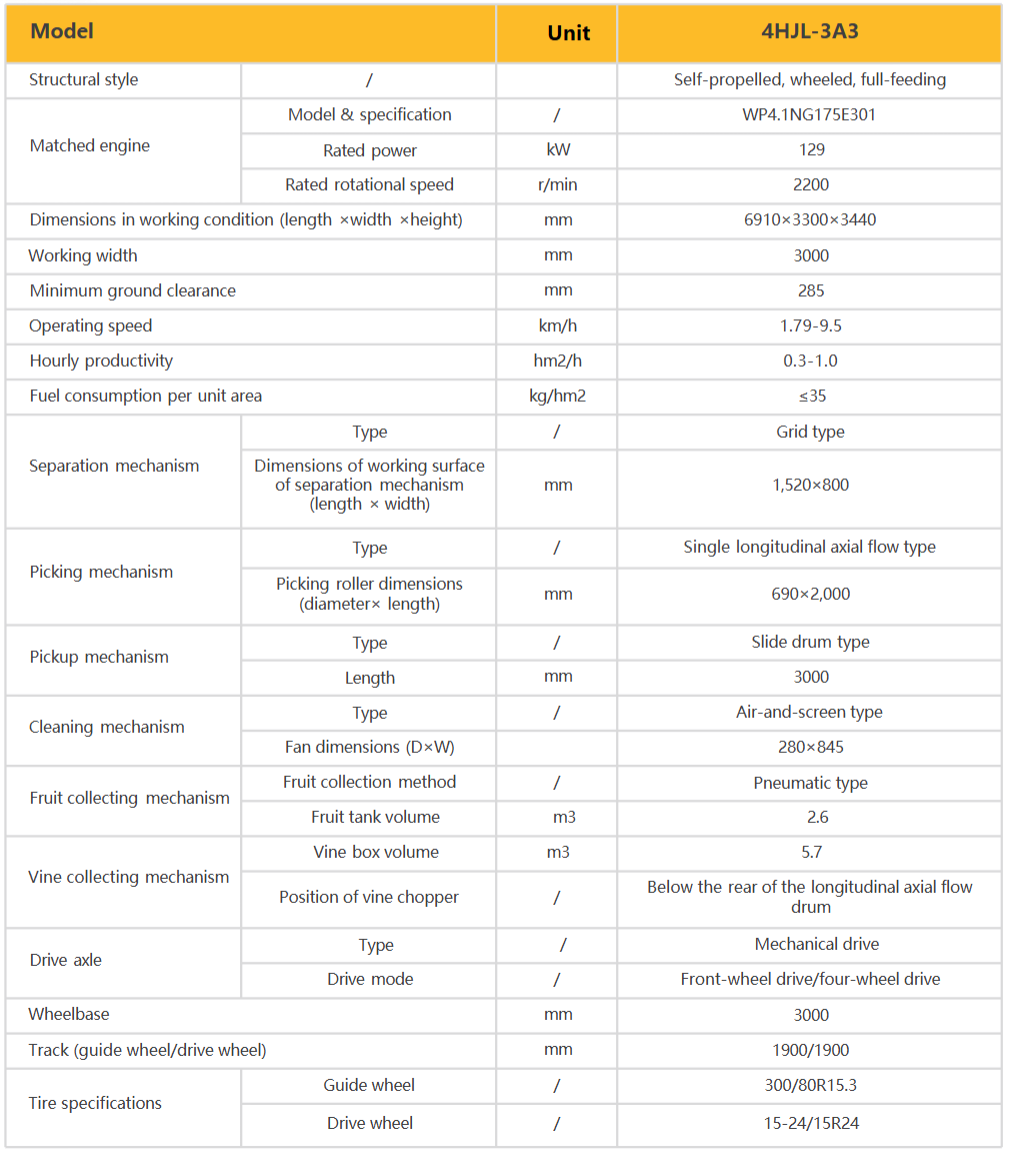
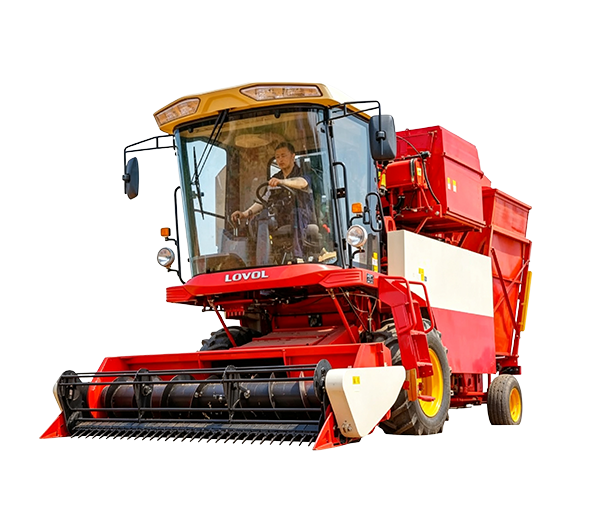
LOVOL currently lists a self-propelled peanut picking harvester under its special harvesting machinery range. The published model is 4HJL-3A1(G4), with a 175 PS engine, 2.6 m cutting width, 6,110 kg machine weight, 2.1 m³ grain tank capacity, and a published working efficiency of 0.4–0.8 hm²/h. LOVOL identifies its threshing and separation method as single longitudinal axial flow and its cleaning method as air-and-screen cleaning. The figures come from the official LOVOL product information and may change with later product updates.
At Ganglong Heavy Industry Technology (Hefei) Co., Ltd., I work with agricultural machinery buyers who need more than a product name and a price. Together with Hefei Ganglong International Trade Co., Ltd., we handle international machinery supply and can help customers confirm configuration, inspection, documentation, packing, shipping, and delivery arrangements.
When we supply LOVOL machinery, I make the product relationship clear. LOVOL is the equipment brand and manufacturer, while Ganglong acts as the machinery supplier and international trade partner. That distinction is important when an overseas customer is preparing a purchase.
1. What Is a Peanut Harvester and Why Does It Matter?
A Peanut Harvester is designed to mechanize the harvesting process for peanuts, also called groundnuts in many agricultural markets.
The basic job sounds simple: collect peanuts from the field.
In practice, it is not quite that simple.
Peanut plants grow close to the soil and produce pods underground. During harvest, the machine needs to work around the plant, soil, roots, vines, and peanut pods at the same time. A good harvesting process therefore needs to balance digging depth, lifting, crop feeding, soil separation, peanut picking, cleaning, and collection.
This is why peanut harvesting equipment can look very different from a normal grain combine.
A traditional grain combine mainly cuts plants standing above the ground. A peanut harvester has to deal with the crop below the soil surface first.
For commercial farms, this difference can have a big effect on labor requirements. Manual peanut harvesting requires digging and picking by hand or with several separate machines. A suitable mechanical harvesting system can combine several operations and help farmers cover more land during the limited harvest window.
LOVOL's agricultural equipment information describes its peanut machinery as including peanut picking and pod harvesting applications, with a 2,600 mm working width for its peanut harvester product line.
| Item | LOVOL 4HJL-3A1(G4) | Practical Meaning |
|---|---|---|
| Machine type | Self-propelled peanut picking harvester | Harvesting functions are integrated into one machine |
| Engine power | 175 PS | Provides power for field harvesting and machine systems |
| Cutting / working width | 2.6 m | Provides a broad harvesting path in suitable fields |
| Machine weight | 6,110 kg | Shows the size and working class of the machine |
| Grain tank volume | 2.1 m³ | Provides temporary storage before unloading |
| Working efficiency | 0.4–0.8 hm²/h | Published reference range; actual output varies by field conditions |
| Threshing / separation | Single longitudinal axial flow | Supports continuous crop separation |
| Cleaning | Air-and-screen cleaning | Helps separate harvested peanuts from lighter material |
Source: LOVOL official Peanut Harvester product information for model 4HJL-3A1(G4). Specifications are subject to product updates and actual machine configuration.
When I use these figures in an overseas quotation, I treat them as reference specifications rather than promising that every field will produce exactly the same working output.
Soil type, moisture, peanut yield, crop condition, operator settings, field shape, and travel speed can all change actual performance.
2. How the Peanut Harvesting Machine Works
The easiest way to understand a Peanut Harvesting Machine is to follow the crop through the machine.
Step 1: Entering the Peanut Field
The self-propelled design means the harvester carries its own power unit and driving system. The operator drives the machine through the peanut field while the harvesting system works continuously.
Before starting a harvesting operation, I would always check the field condition. The soil should be suitable for the selected harvesting method, and the crop should be ready for harvest. Very wet soil can make separation more difficult, while extremely dry and hard soil can also increase digging resistance.
Step 2: Lifting the Peanut Plants
Unlike a normal grain combine, the peanut harvester must work close to the ground.
The harvesting section lifts the peanut plants and brings the crop into the machine. This stage is important because the pods are attached below ground.
If the digging or lifting process is not correctly adjusted, peanuts can remain in the soil or unnecessary soil can enter the machine.
That is why I always tell customers that the machine specification is only half the story. Correct operation and field preparation matter just as much.
Step 3: Feeding the Crop
Once the plants enter the machine, the crop moves through the feeding system toward the separation area.
The goal is to maintain a steady crop flow.
If too much material enters the machine at once, the separation system can become overloaded. If the machine is moving too slowly or the crop is too light, the available harvesting capacity is not being fully used.
The operator therefore needs to adjust working speed according to actual field conditions.
Step 4: Threshing and Separation
The published LOVOL 4HJL-3A1(G4) configuration uses a single longitudinal axial-flow threshing and separation system.
In simple terms, the crop travels through a longitudinal working path while mechanical action helps separate the peanut pods from the plant material.
The design is intended to provide continuous crop processing rather than requiring separate manual separation after the crop has been collected.
Step 5: Cleaning
After separation, the harvested material still contains unwanted material such as leaves, stems, and lighter particles.
The machine therefore uses an air-and-screen cleaning system.
The screens help separate material by size and physical characteristics, while airflow can remove lighter material.
For me, cleaning is an important part of a peanut harvester because collecting a large quantity of material is not enough. The harvested product also needs to be handled in a useful condition for the next stage of farm processing.
Step 6: Collection
The cleaned peanuts are transferred into the machine's storage system.
The published 4HJL-3A1(G4) specification gives a 2.1 m³ tank volume. Once the storage section reaches the required level, the harvested peanuts can be unloaded according to the machine's operating procedure.
This continuous collection process reduces the need for workers to repeatedly pick up harvested peanuts from the field.
3. Main Features I Look For in a Peanut Harvester
175 PS Engine
The published LOVOL peanut harvester configuration uses a 175 PS engine.
For a self-propelled harvesting machine, engine power is not only about driving speed. The engine also needs to provide power for the harvesting, feeding, separation, cleaning, hydraulic, and other machine systems.
That is why I look at the whole power system rather than judging a harvester only by its horsepower number.
2.6-Meter Working Width
The published working width is 2.6 meters.
A wider harvesting path can help cover more land in each pass when the field layout and crop conditions are suitable.
However, I would not automatically recommend the widest machine to every customer. Field size, row spacing, turning space, road access, and local crop conditions should all be considered.
2.1 m³ Collection Capacity
The 2.1 m³ tank gives the machine a useful temporary storage area for harvested peanuts.
For commercial harvesting, storage capacity affects how often the machine needs to stop and unload. The receiving vehicle or storage arrangement should therefore be planned together with the harvester.
Self-Propelled Design
A self-propelled peanut harvester integrates the power and harvesting systems into one complete machine.
For large farms and agricultural contractors, this can make field operations easier to organize because the operator does not need to build the harvesting system around a separate tractor for the main machine movement.
Air-and-Screen Cleaning
The cleaning system uses airflow and screens to separate harvested material.
This is a familiar approach in agricultural harvesting machinery. The exact result depends heavily on crop moisture, crop condition, machine adjustment, and working speed.
4. Peanut Harvester Performance: What the Numbers Really Tell Me
Machine specifications are useful, but I always tell customers to read them with some common sense.
For example, the LOVOL 4HJL-3A1(G4) has a published working efficiency of 0.4–0.8 hm²/h.
That does not mean a farmer should simply multiply 0.8 by the number of working hours and expect the same result every day.
Real fields are messy.
There are turns, uneven areas, crop variations, transport stops, unloading, weather changes, maintenance, and operator breaks. A machine can have a strong specification and still produce different daily results in different regions.
This is why I use published efficiency as a reference point when discussing machinery selection rather than a guaranteed production figure.
| Factor | How It Can Affect Peanut Harvesting | What I Usually Check |
|---|---|---|
| Soil moisture | Changes digging resistance and soil separation | Local soil condition and harvest timing |
| Peanut yield | Higher crop volume increases machine load | Expected yield per hectare |
| Crop moisture | Can affect separation and cleaning | Harvest condition and weather |
| Field size | Small fields require more turning | Average plot size and field layout |
| Row arrangement | Affects harvesting alignment | Planting method and row spacing |
| Operator experience | Affects travel speed and machine adjustment | Operator skill and local training |
| Unloading plan | Frequent unloading can interrupt field work | Transport vehicle and storage location |
Source: Practical operating considerations based on the published LOVOL peanut harvester specifications and standard agricultural harvesting workflow. Actual performance depends on local operating conditions.
This table is perhaps more useful to a buyer than simply looking at horsepower.
For example, a customer may have a 300-hectare peanut project, but if the land is divided into dozens of very small plots, the actual daily output can be very different from a 300-hectare farm with large, open fields.
That is the kind of detail I want to know before discussing the final machine configuration.
5. Where a Peanut Harvester Can Be Used
Commercial Peanut Farms
Commercial peanut farms are one of the most obvious applications.
When the planted area becomes large enough, manual harvesting can become a serious labor challenge. A mechanical Peanut Harvester for sale can help reduce the amount of manual work required during the harvest period.
The key is to match the machine capacity with the farm's actual planting area.
Agricultural Machinery Contractors
Another important customer group is agricultural machinery service providers.
These companies may harvest peanuts for multiple farms during the same season. In that situation, machine utilization becomes very important.
The harvester may need to move between different fields and sometimes different regions. Transport planning, service support, spare parts, and operator familiarity become just as important as the machine itself.
Large Agricultural Projects
For overseas agricultural projects, a peanut harvester may be part of a larger farm mechanization plan.
The customer may also require tractors, planting equipment, soil preparation machinery, trailers, irrigation equipment, or other agricultural attachments.
Because Ganglong supplies construction machinery, mining machinery, agricultural machinery, and matching attachments, I can look at the machinery requirement as a complete project rather than treating the peanut harvester as an isolated product.
Peanut Processing Supply Chains
Some agricultural businesses operate close to peanut processing facilities.
For them, harvesting speed and product handling can influence the entire supply chain. If the harvesting process is too slow, downstream processing may not receive enough material during the required period.
A suitable mechanized harvesting system can therefore play a role beyond the field itself.
6. Peanut Harvester vs. Traditional Harvesting Methods
When customers ask me why they should consider mechanical peanut harvesting, I do not simply say that a machine is faster. The better question is what changes in the whole farm operation.
| Harvesting Method | Labor Requirement | Field Coverage | Consistency | Typical Use |
|---|---|---|---|---|
| Manual harvesting | High | Limited by available workers | Depends strongly on workers | Small farms or labor-rich areas |
| Tractor-mounted equipment | Lower than manual work | Depends on tractor and attachment | Depends on operator and equipment | Small to medium mechanized farms |
| Self-propelled peanut harvester | Lower manual labor requirement | Designed for continuous field operation | More consistent machine-based process | Commercial farms and contractors |
Source: General agricultural harvesting workflow comparison; machine-specific specifications for the self-propelled option are based on LOVOL official peanut harvester information.
There is no universal answer for every farm.
A small farm with inexpensive seasonal labor may have different economics from a large commercial farm where labor is difficult to find during harvest season.
For the latter, the value of a self-propelled peanut harvester is not just speed. It is the ability to keep a harvesting team working with fewer people and less repeated manual handling.
That can be a major practical advantage when the harvest window is short.
7. How I Handle Peanut Harvester Orders for International Customers
Buying agricultural machinery internationally is different from buying a small spare part online.
There are more details to confirm.
When a customer contacts us about a LOVOL Peanut Harvester, I normally start by asking what the customer actually plans to harvest and where the machine will operate.
I want to know:
Peanut variety and crop condition
Total planting area
Average field size
Soil type and moisture conditions
Local row arrangement
Expected harvesting period
Required attachments or configuration
Destination country and port
Inspection and documentation requirements
Spare parts requirements
Once those details are clear, we can confirm the available LOVOL configuration.
The preparation period depends on the selected model, configuration, quantity, and machine availability. I do not use one fixed delivery promise for every order because actual preparation time can change.
Pre-Shipment Inspection
Before shipment, we can arrange checks according to the order requirements.
For an agricultural machine, this may include the engine, hydraulic system, electrical system, tires, harvesting functions, working controls, attachments, loose parts, and documents.
If the customer has a specific inspection checklist, I prefer to discuss it before the order is processed.
Payment
International orders are commonly arranged by T/T. A deposit is normally required before order processing, with the balance arranged before shipment. The exact payment terms are agreed between both parties according to the order.
Shipping
Complete agricultural machines are generally transported by sea.
Smaller spare parts and suitable accessories may be shipped by air or express when speed is more important than freight cost.
Before loading, the machine is prepared and secured for transportation. Loose components can be packed separately in cartons or wooden cases according to the product and shipping requirements.
This part may sound boring, but anyone who has dealt with international machinery knows that shipping preparation is not something to leave until the last minute.
8. Why Work with Ganglong for a Peanut Harvester?
Ganglong Heavy Industry Technology (Hefei) Co., Ltd. was founded in 2013.
Together with Hefei Ganglong International Trade Co., Ltd., we operate across equipment R&D, manufacturing, testing, customization, sales, leasing, and international trade.
Our equipment range covers construction machinery, mining machinery, agricultural machinery, and matching attachments.
We also have the HKLOONG brand for Excavators, loaders, Backhoe loaders, and swamp excavators. In addition, we supply complete machines from several domestic and international brands, including LOVOL.
For overseas agricultural buyers, our international trade team is particularly relevant.
Hefei Ganglong International Trade Co., Ltd. has experience serving customers in Asia, Africa, America, and other international markets. That means our work does not stop when the customer chooses a machine.
We still need to deal with configuration confirmation, order processing, inspection, documents, packing, loading, shipping, and delivery arrangements.
That is where I think an experienced machinery supplier can make the buying process much easier.
For example, if a customer simply tells me, “I need a peanut harvester,” that is not enough information for me to make a useful recommendation.
I want to know how many hectares they plan to harvest.
I want to know whether the field is flat or uneven.
I want to know whether the soil is sandy, heavy, dry, or wet.
I want to know what tractor or transport equipment is already available.
And if the customer is buying from overseas, I need to know the destination port and local operating environment.
Once we have those answers, we can discuss the machine in a much more practical way.
Peanut Harvester FAQ
What is a Peanut Harvester?
A Peanut Harvester is agricultural equipment designed to mechanize peanut harvesting. Depending on the machine type, it can perform operations such as lifting, feeding, separating, picking, cleaning, and collecting peanuts.
What is the LOVOL peanut harvester model?
LOVOL's official peanut machinery information lists the self-propelled peanut picking harvester model 4HJL-3A1(G4). The published configuration uses a 175 PS engine and 2.6 m working width.
What is the working width of the LOVOL Peanut Harvester?
The published 4HJL-3A1(G4) configuration has a 2.6 m cutting or working width.
What is the engine power?
The official LOVOL specification lists 175 PS engine power for the 4HJL-3A1(G4).
What is the working efficiency?
LOVOL publishes a working efficiency range of 0.4–0.8 hm²/h. Actual field output can be higher or lower depending on peanut yield, soil, moisture, field size, crop condition, operator settings, and unloading arrangements.
Is the Peanut Harvester self-propelled?
Yes. The referenced LOVOL model is described as a self-propelled peanut picking harvester, meaning the machine integrates its own power and harvesting systems.
Can a peanut harvester reduce manual labor?
Yes. Mechanical harvesting can reduce the amount of manual digging, lifting, picking, and collection work required. The actual labor saving depends on the harvesting method previously used on the farm.
Can this machine work on different peanut fields?
The machine is designed for peanut harvesting, but field conditions still matter. Before ordering, I recommend checking soil type, moisture, field layout, planting method, and local peanut varieties to confirm that the configuration is suitable.
Can I buy a Peanut Harvester for an overseas farm?
Yes. Ganglong can discuss international supply of suitable LOVOL agricultural machinery, including configuration confirmation, inspection, documentation, packing, and sea transportation.
How is a Peanut Harvester shipped internationally?
Complete agricultural machines are generally transported by sea. Smaller spare parts and accessories may be shipped by air or express depending on their size, weight, urgency, and destination.
Can you arrange pre-shipment inspection?
Yes. We can arrange checks according to the order requirements, including the engine, hydraulic system, electrical system, tires, harvesting functions, attachments, loose parts, and required documents.
What payment method is commonly used?
International machinery orders are commonly arranged by T/T, with a deposit before order processing and the balance before shipment. Exact payment terms are confirmed between both parties.
Final Thoughts on Choosing a Peanut Harvesting Machine
When I look at a Peanut Harvester, I do not judge it only by horsepower or working width.
I look at the entire harvesting job.
Peanuts are an underground crop, so the machine needs to deal with soil, roots, vines, pods, moisture, and field conditions at the same time. That makes correct harvesting equipment especially important for farms that want to reduce manual labor and improve field efficiency.
The LOVOL 4HJL-3A1(G4) provides a clear example of a self-propelled peanut harvesting machine, with a published 175 PS engine, 2.6 m working width, 2.1 m³ tank capacity, 0.4–0.8 hm²/h working efficiency, single longitudinal axial-flow separation, and air-and-screen cleaning. These are published reference specifications, and the actual configuration should always be confirmed before an order.
For a small farm, a simpler harvesting setup may be enough.
For a large peanut farm, agricultural contractor, or international agricultural project, a self-propelled machine can make more sense because it brings more harvesting functions into one working unit.
At Ganglong, my approach is straightforward: first understand the farm, then confirm the machine.
If the customer needs a Peanut Harvester for sale, a LOVOL Peanut Harvester, a Peanut Harvesting Machine, or a Self-Propelled Peanut Harvester for an overseas project, we can help work through the practical details from configuration and inspection to packing and international shipping.
The right machine is not simply the one with the biggest specification sheet.
It is the machine that can work properly in the field where it will actually be used.



 WhatsApp
 Phone
Phone E-mail
 Message