

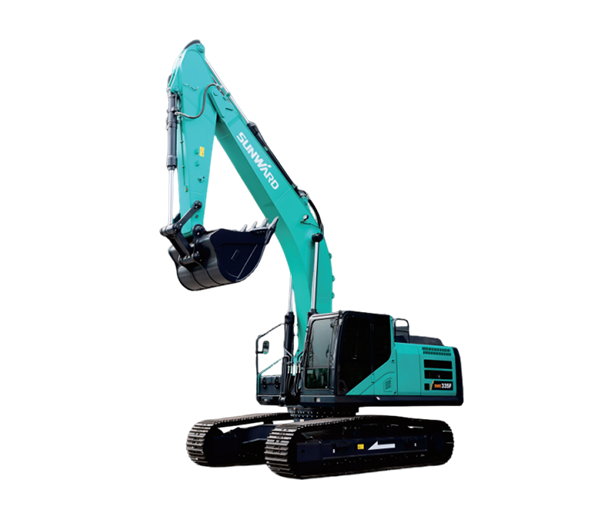
SWE335F Large Excavator: Practical Heavy-Duty Excavation for Demanding Jobsites
When I talk with customers about a SWE335F Large Excavator, I usually start with one simple question: what kind of work do you expect the machine to do every day?
That question matters more than simply looking at the machine size. A large Excavator may be used for road construction, quarry work, mining support, earthmoving, land development, municipal projects, or other heavy-duty jobs. The working conditions are different, the ground is different, and the attachments may be different. So, choosing an excavator is really about matching the machine with the job.
At Ganglong Heavy Industry Technology (Hefei) Co., Ltd., we work with customers who need construction machinery for different markets and working conditions. Founded in 2013, our group combines equipment services, customization support, international trade, machine sales and leasing. Through Hefei Ganglong International Trade Co., Ltd., we also serve customers in Asia, Africa, America and other international markets.
For customers looking for a SWE335F Excavator, we can help with machine sourcing, configuration communication, inspection, documentation, transportation arrangements and related international trade services. We do not present ourselves as the manufacturer of Sunward equipment. Instead, our role is to help customers source and arrange suitable equipment according to their project needs.
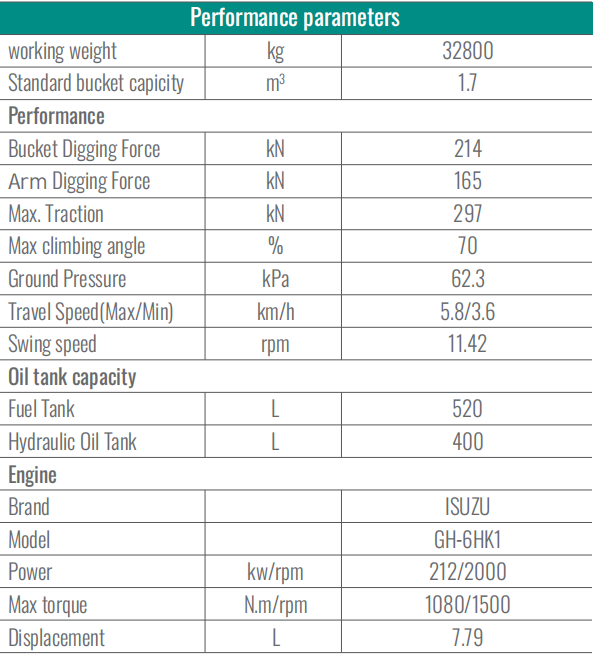
The SWE335F family belongs to Sunward's large excavator range. Current official information lists both the SWE335F-5 and SWE335F-1 versions. The SWE335F-5 has a published total weight of 33,600 kg, 209 kW engine power and a 1.7 m³ bucket, while the SWE335F-1 is listed at 32,800 kg, 212 kW and a 1.7 m³ bucket. Because configurations can vary, I always recommend confirming the exact model and final specification before placing an order.
From a working point of view, I see the SWE335F Large Excavator as a machine built around three basic needs: digging power, working stability and practical durability.
That sounds simple, but these three things are closely connected. If the excavator has plenty of engine power but the working equipment is not matched properly, the operator may not get the expected productivity. If the hydraulic system is strong but the machine is not stable on the jobsite, working efficiency can also suffer.
This is why the SWE335F configuration is interesting. The current SWE335F-5 specification combines a 209 kW engine, a 1.7 m³ bucket and a published bucket digging force of 214 kN. Sunward also describes the machine as using a high-efficiency hydraulic system together with a 2.9 m short arm and reinforced bucket.
The SWE335F-1 follows a similar basic direction, but uses a 212 kW Isuzu engine. Its official specification also lists a 1.7 m³ bucket and 214 kN bucket digging force.
For a customer, the difference between the two versions is not just a number on a brochure. Engine brand, machine weight, hydraulic configuration, local emissions requirements, spare parts availability and working conditions can all influence the final choice.
When I help customers compare machines, I therefore prefer to look at the whole working package instead of focusing on engine power alone.
| Model | Total Weight | Engine Power | Bucket Capacity | Position in Current Range |
|---|---|---|---|---|
| SWE335F-1 | 32,800 kg | 212 kW / 2,000 rpm | 1.7 m³ | Large Excavator |
| SWE335F-5 | 33,600 kg | 209 kW / 2,000 rpm | 1.7 m³ | Large Excavator |
| SWE375F | 37,500 kg | 212 kW / 2,000 rpm | 1.8 m³ | Large Excavator |
| SWE385F Mining Configuration | 38,500 kg | 241 kW / 2,000 rpm | 1.8 m³ | Mining Configuration |
Source: Sunward official large excavator range and official product information. The figures above are published reference specifications and should be checked against the final configuration before purchase.
An excavator looks straightforward from the outside, but several systems need to work together every time the operator moves the machine.
The basic working process starts with the engine. Engine power is transferred through the hydraulic system, which controls the boom, arm, bucket and other hydraulic functions. At the same time, the travel system moves the excavator around the jobsite, while the upper structure can swing to position the working equipment where it is needed.
For normal excavation, the operator lowers the boom and arm, positions the bucket into the soil, and then uses hydraulic force to pull the bucket through the material. Once the bucket is filled, the upper structure can swing toward the loading area or material stockpile. The bucket is then raised and emptied.
This cycle happens again and again.
That is why I pay attention to the balance between hydraulic performance, digging force, bucket size and machine stability when evaluating a Large Excavator. A machine that works well during one short cycle is not necessarily a machine that performs comfortably through a full working day.
The official SWE335F-5 information lists a 214 kN bucket digging force. Sunward also describes its hydraulic system as a high-efficiency, large-displacement system. The working equipment uses a 2.9 m short arm and a 1.7 m³ reinforced bucket.
In practical terms, this configuration is intended to provide a useful balance between digging capability and material handling. The 1.7 m³ bucket is large enough for substantial earthmoving work while remaining within a machine size that can be practical for many construction and industrial projects.
Of course, actual productivity depends on soil conditions, bucket type, operator skill, haul distance, loading arrangement and the overall jobsite layout. I would never promise one fixed production figure without knowing those conditions.
One of the first areas I check is the working equipment. According to Sunward's official information, the SWE335F uses heavy-duty working equipment supported by 36-ton-class forged structures.
This matters because the boom and arm experience repeated loads during digging. Hard soil, rock, uneven ground and continuous bucket loading can place considerable stress on these parts.
The SWE335F-5 is equipped with a 2.9 m short arm and a 1.7 m reinforced hyperbolic bucket according to the manufacturer's published information. This configuration is designed around heavy working conditions rather than light-duty landscaping alone.
Hydraulics are the part of an excavator that I often describe as its working muscle. The engine supplies power, but the hydraulic system turns that power into movement at the boom, arm and bucket.
The SWE335F-5 uses a high-efficiency hydraulic system designed to support strong digging performance while keeping the working cycle practical. For customers operating many hours per day, hydraulic response is important because slow or inconsistent movement can make the whole operation feel inefficient.
The goal is not simply to make every movement as fast as possible. Smooth control is just as important. An experienced operator usually prefers predictable movement because it makes digging, loading and positioning easier.
The lower structure is another part that should not be overlooked.
Sunward states that the SWE335F uses a 36-ton-class chassis system. The SWE335F-5 information describes a configuration with four rollers, one carrier and one idler, designed to provide carrying capacity and durability.
For jobsites where the machine needs to travel over rough ground, the undercarriage takes a lot of punishment. Mud, stones, uneven surfaces and repeated turning can all increase wear.
For this reason, I recommend that customers consider the ground conditions before finalizing a configuration. A machine working mainly on prepared construction ground may have very different requirements from one working continuously in a quarry or mining environment.
A large excavator is only useful when the operator can control it comfortably.
The SWE335F F-series design focuses on a modern machine appearance while incorporating mining-inspired styling. More importantly, the machine's control and working systems are designed around practical operation.
For customers who operate several machines, operator familiarity is also useful. A straightforward control layout can reduce the learning curve and help operators work more naturally.
When customers ask me for a SWE335F Large Excavator price, I usually explain that price is only one part of the buying decision. The actual configuration is equally important.
For example, the SWE335F-5 official specification lists a working weight of 33.6 tonnes, a 1.7 m³ standard bucket and 209 kW engine power at 2,000 rpm. The same published specification lists 214 kN bucket digging force and 165 kN arm digging force.
The official material also gives a maximum digging height of 10,330 mm, maximum dumping height of 7,280 mm, maximum digging depth of 7,010 mm and maximum digging reach of 10,570 mm.
These numbers give customers a useful starting point when planning a jobsite. They help answer practical questions such as whether the machine can reach a particular excavation depth, load a truck at the required height, or operate within a planned working area.
| SWE335F-5 Reference Specification | Published Value |
|---|---|
| Working Weight | 33,600 kg |
| Engine Power | 209 kW / 2,000 rpm |
| Standard Bucket | 1.7 m³ |
| Bucket Digging Force | 214 kN |
| Arm Digging Force | 165 kN |
| Maximum Digging Height | 10,330 mm |
| Maximum Dumping Height | 7,280 mm |
| Maximum Digging Depth | 7,010 mm |
| Maximum Digging Reach | 10,570 mm |
| Maximum Ground-Level Reach | 10,370 mm |
| Minimum Front Swing Radius | 4,005 mm |
| Swing Speed | 9 rpm |
| Maximum Travel Speed | 5.8 km/h |
Source: Sunward official SWE335F-5 product information and technical brochure. Specifications may change with configuration, market and production version, so the final technical sheet should be confirmed before ordering.
One detail I always tell customers is that working range figures should not be viewed separately. Digging depth, reach and dumping height all affect how the machine fits into the actual project.
For example, if the excavator is mainly used for loading trucks, dumping height becomes important. If the machine is used for deep trenching, digging depth and reach become more important. For quarry work, bucket type and undercarriage requirements may become more important than a small difference in maximum reach.
| Sunward Model | Total Weight | Engine Power | Bucket Capacity |
|---|---|---|---|
| SWE335F-5 | 33,600 kg | 209 kW | 1.7 m³ |
| SWE335F-1 | 32,800 kg | 212 kW | 1.7 m³ |
| SWE375F | 37,500 kg | 212 kW | 1.8 m³ |
| SWE400E-3H | 39,200 kg | 214 kW | 2.0 m³ |
| SWE500E-3H | 49,000 kg | 280 kW | 2.6 m³ |
Source: Sunward official product literature and large excavator product information. The comparison is intended as a reference rather than a direct productivity ranking. Different working conditions, attachments and configurations can change actual performance.
I would not describe the SWE335F Excavator as a machine for only one type of project. Its size and working configuration make it suitable for a broad range of heavy excavation and earthmoving work.
Road projects often involve large volumes of soil, trenching, slope work and material loading. A large excavator can handle these jobs while working alongside dump trucks, loaders, graders and other equipment.
The SWE335F can be considered for excavation, site preparation, drainage work, foundation preparation and general earthmoving where its working range and machine size match the project.
Mining and quarry environments are usually harder on machines than ordinary construction sites. Ground conditions can be rough, material can be abrasive, and the machine may work long hours.
The SWE335F's heavy-duty working equipment and 36-ton-class undercarriage make it relevant for demanding applications. However, I always recommend confirming the exact bucket, undercarriage and attachment configuration when the machine will work continuously in rock or mining conditions.
Large-scale land preparation often involves moving soil, preparing foundations, clearing working areas and reshaping ground. In these applications, the excavator may work continuously with trucks or other material-handling equipment.
The 1.7 m³ bucket configuration gives the SWE335F a practical working size for this type of operation, although the actual bucket selection should depend on material density and the specific job.
Municipal construction can include drainage, road repair, utility work and site preparation. Different projects can require different attachments, so I usually ask about the complete application before discussing a final machine configuration.
Some customers use large Excavators for land improvement, pond construction, irrigation-related work, farm infrastructure and other heavy earthmoving tasks. The machine needs to be matched carefully to access conditions because agricultural sites can have soft or wet ground.
If the ground is particularly soft, a customer may need a different machine configuration or even a different type of excavator. This is exactly why I prefer discussing the job first rather than simply recommending a model based on its name.
Buying a SWE335F Large Excavator from overseas involves more than finding a machine and arranging a payment. There are several steps between the first inquiry and the machine arriving at the customer's site.
At Ganglong, our role is to help connect the machine requirement with the correct equipment and trade process. Our group has experience in construction machinery, mining machinery and agricultural machinery, while our international trade team works with customers across different overseas markets.
We first need to understand the customer's project. I normally want to know the working material, expected operating hours, required bucket, destination country, shipping port, working environment and any local requirements.
If the customer is choosing between SWE335F-1 and SWE335F-5, we also confirm which version is available and suitable for the destination market.
The final configuration can include the excavator itself, bucket, attachments, optional equipment, documents and other accessories. We check these details before production or delivery arrangements are finalized.
Before shipment, the machine should be checked for appearance, major functions, hydraulic and electrical systems and basic operating performance.
For an overseas buyer, this step is especially useful because the customer may not be physically present at the supplier's location. Inspection records, photos and relevant documents can help both sides confirm what is being shipped.
Standard documents and accessories are prepared according to the order requirements. If a customer has specific documentation needs for customs clearance or local registration, those requirements should be discussed as early as possible.
International equipment transactions are commonly handled through T/T arrangements, such as a deposit before production or delivery and the balance before shipment. The exact payment terms depend on the transaction and are confirmed between the buyer and seller before the order moves forward.
Complete excavators are generally transported by sea for international shipments. Suitable spare parts or smaller accessories may be shipped separately by air or express.
Before shipment, machines can be protected with suitable film and secured according to transportation requirements. Loose accessories and spare parts can be packed separately in cartons or wooden cases.
The final shipping method depends on the destination, shipping route, port conditions and customer requirements.
There is a big difference between selling a machine and helping a customer complete an international equipment purchase.
At Ganglong Heavy Industry Technology (Hefei) Co., Ltd., we have built our business around construction machinery, mining machinery, agricultural machinery and related attachments. Founded in 2013, we combine equipment-related services with international trade through Hefei Ganglong International Trade Co., Ltd.
Our product scope includes our own HKLOONG brand equipment as well as machinery supplied through domestic and international brands. Depending on the customer's project, we can discuss complete machine sales, leasing services, equipment sourcing and related attachments.
For overseas customers, our international trade experience is particularly important. A customer may know exactly what excavator they want but still need help with inspection, shipping, documents, payment arrangements and delivery coordination.
That is where we add practical value.
We also understand that the cheapest machine on a quotation sheet is not automatically the lowest-cost solution. Transport, spare parts, downtime, attachments, local service conditions and machine configuration can all affect the total cost of ownership.
So when a customer asks us for a SWE335F Large Excavator for Sale, we look beyond the model name. We want to understand what the customer will actually do with the machine.
If the job requires heavy rock excavation, the bucket and attachment should be considered carefully. If the machine is mainly for soil excavation and truck loading, the working range and bucket configuration may be more important. If the machine will operate in a remote area, spare parts and maintenance planning deserve more attention.
That practical approach helps reduce surprises after the machine arrives.
Yes. Sunward currently places the SWE335F-1 and SWE335F-5 in its large excavator range. The published total weight is 32,800 kg for the SWE335F-1 and 33,600 kg for the SWE335F-5.
The current official product pages list a 1.7 m³ bucket capacity for both the SWE335F-1 and SWE335F-5. The final bucket specification should be confirmed with the actual machine configuration and application.
The official SWE335F-5 information lists 209 kW at 2,000 rpm. The published product material identifies the engine as a Cummins configuration. The final engine and emissions specification should be confirmed for the destination market.
The current Sunward product page lists the SWE335F-1 at 212 kW at 2,000 rpm and identifies an Isuzu engine configuration.
The official SWE335F-5 and SWE335F-1 product information lists a bucket digging force of 214 kN. Actual digging performance depends on the working attachment, material, operating method and site conditions.
The machine can be considered for construction, road and infrastructure work, quarrying, mining support, land development, municipal projects and general heavy earthmoving. The correct configuration depends on the specific application.
Yes. Through our international trade operation, we can discuss overseas machine sourcing and shipping arrangements. Complete excavators are generally transported by sea, while suitable parts and accessories may be shipped by air or express.
There is no single delivery time that applies to every order. Production and delivery depend on the exact model, available configuration, order quantity, customization requirements and destination. We confirm the expected schedule before the order is finalized.
Before shipment, the machine can be checked for appearance, major functions, hydraulic and electrical systems and basic operating performance. Standard documents and accessories are also prepared according to the order requirements.
Complete machines are generally secured and protected according to the shipping requirements. Loose accessories and spare parts can be packed separately in suitable cartons or wooden cases. The final packing method can be adjusted according to the shipping route and destination.
Attachment requirements should be discussed before the order is confirmed. Bucket type, size and other attachments should match the material and working conditions. For specialized applications, we recommend confirming compatibility and hydraulic requirements in advance.
For me, the value of a SWE335F Large Excavator is not simply its engine power or operating weight. It is the way the complete machine fits into a real job.
The current SWE335F family offers a practical large excavator configuration around the 33-ton class. The SWE335F-5 is officially listed at 33,600 kg with 209 kW engine power and a 1.7 m³ bucket, while the SWE335F-1 is listed at 32,800 kg with 212 kW and the same bucket capacity. Both versions are designed around strong digging capability, an efficient hydraulic system and heavy-duty structural components.
For customers comparing the SWE335F Excavator with other large excavators, I recommend looking at the whole working package: machine weight, engine, bucket capacity, digging force, working range, undercarriage, attachment requirements, fuel and maintenance considerations, transport cost and local service conditions.
At Ganglong, we can help customers work through these details instead of treating the purchase as a simple model-number transaction. Our team can discuss the application, confirm the available configuration, arrange inspection and documentation, and coordinate international transportation according to the destination.
If your project involves road construction, quarrying, mining support, land development, municipal work or heavy earthmoving, the SWE335F Large Excavator can be evaluated as part of the equipment plan. The key is to confirm the exact version and configuration before purchase.
For an overseas equipment order, I always recommend confirming the model, engine configuration, bucket, attachments, inspection requirements, payment terms and shipping plan in writing. A clear order at the beginning makes the rest of the process much easier.
That is how we approach heavy equipment supply at Ganglong: understand the job first, match the equipment second, and make the delivery process clear from beginning to end.
2435092534@qq.com
86 158 5511 9567


©2026 HKLOONG Heavy Industry Technology (Hefei) Co., Ltd. All Rights Reserved.

This website uses cookies to ensure you get the best experience on our website.
 Español
 Pусский
 Français
 العربية
 WhatsApp
 Phone
Phone E-mail
 Message