
 Español
 Pусский
 Français
 العربية

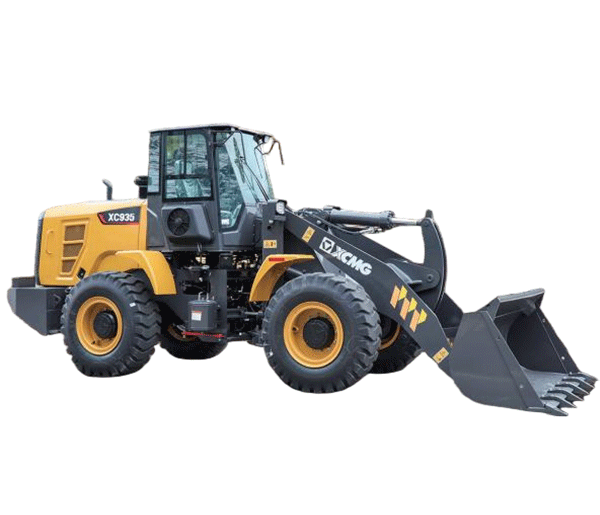
When I talk with customers about wheel loaders, I usually tell them not to choose a machine only by looking at its appearance or engine power. A good wheel loader has to fit the actual job. The material, working space, loading height, daily working hours, road conditions and maintenance environment all matter. For customers looking for a compact and practical machine in the 3-ton class, the XC935 Wheel Loader is a model worth looking at.
The XC935 is an XCMG medium wheel loader with a rated load of 3,000 kg, rated power of 96 kW and a bucket capacity range of 1.7–3.0 m³. XCMG lists its operating weight at 9,500 ± 300 kg, with a dumping height of 3,275 mm and a dumping distance of 1,010 mm. The official product information positions the machine for working conditions including steel plants, power plants, coking plants, coal chemical plants and coal yards.
From my point of view, those numbers tell us something useful. The XC935 is not designed simply to look powerful. It is built around a fairly straightforward idea: provide enough loading force and machine stability for regular material handling while keeping the machine practical to operate and maintain.
At Ganglong Heavy Industry Technology (Hefei) Co., Ltd., we work with construction machinery, mining machinery, agricultural machinery and matching attachments. Together with Hefei Ganglong International Trade Co., Ltd., we also support international customers with machine sales, configuration, inspection, transportation and export delivery. That means when I discuss an XC935 Loader with a customer, I look at the whole purchasing process rather than just the machine itself.
1. XC935 Wheel Loader Overview: What Kind of Machine Is It?
The XC935 is a medium-size wheel loader developed by XCMG as part of its XC9 platform. XCMG describes it as a new-generation special lifting model developed through market and technical research, with improvements in reliability, safety, comfort and maintainability compared with the previous generation.
The official specification gives the machine a 3,000 kg rated load and 96 kW rated power. Its bucket capacity can be configured from 1.7 to 3.0 m³. With an operating weight of about 9.5 tonnes, it has enough machine mass to remain stable during normal loading work while still being much easier to move around than a large Mining Wheel Loader.
| XC935 Specification | Published Value | Practical Meaning |
|---|---|---|
| Rated Load | 3,000 kg | Suitable for 3-ton-class loading applications |
| Rated Power | 96 kW | Provides power for loading, travel and material handling |
| Bucket Capacity | 1.7–3.0 m³ | Allows different bucket configurations for different materials |
| Operating Weight | 9,500 ± 300 kg | Provides a stable base for regular loading work |
| Dumping Height | 3,275 mm | Supports loading into trucks and other receiving equipment |
| Dumping Distance | 1,010 mm | Helps position material during discharge |
Source: XCMG official XC935 product page. Final specifications may vary according to configuration and market, so the confirmed technical document should be used for the final order.
I find the bucket range particularly useful. A 1.7 m³ bucket and a 3.0 m³ bucket do not behave the same way when handling different materials. Loose material with lower density can allow a larger bucket, while heavy or abrasive material may require a different setup. So when a customer asks me which bucket to choose, I first ask what the machine will actually be loading.
The XC935 can also be considered where working space is not unlimited. It is smaller than many 5-ton-class wheel loaders, which can be helpful for plants, yards and construction sites where the loader has to turn frequently or work around fixed equipment.
2. How the XC935 Loader Works
The basic working principle of a wheel loader is quite simple. The engine generates power. The transmission transfers that power to the drive axle and wheels. At the same time, the hydraulic system controls the boom and bucket. The operator drives toward a pile, fills the bucket, lifts the boom, reverses or turns, and then carries the material to the loading point.
In real work, however, the simple principle hides a lot of engineering details. A loader is repeatedly exposed to impact loads, vibration, changing ground conditions and sudden changes in material resistance. The engine, transmission, axle, hydraulic system, frame and working equipment therefore need to work together.
The XC935 uses a Yuchai engine with air-to-air intercooling, electronically controlled high-pressure common-rail injection and ECU intelligent control. XCMG states that the engine has an exhaust treatment system and meets China Stage IV emission requirements. The manufacturer also describes the engine as being designed for construction machinery operating conditions, with low fuel consumption and low emissions.
The engine is matched with a fixed-shaft powershift transmission and a single-stage, single-phase, three-element torque converter. The transmission provides four forward gears and two reverse gears. This gives the operator different speed ranges for loading, traveling and maneuvering around the worksite.
I like this type of setup for customers who want a machine that is not overly complicated. A powershift transmission has a relatively straightforward mechanical structure, and XCMG specifically highlights its serviceability and smooth shifting characteristics.
The drive axle is an reinforced axle designed for construction machinery. That matters because wheel loaders transfer a lot of force through the axle when the bucket is full and the machine is pushing into a pile.
3. Hydraulic System, Steering and Working Equipment
Hydraulic performance is one of the areas I always pay attention to when discussing a wheel loader. The hydraulic system controls the boom and bucket, while the steering system controls the machine's direction. If these functions are slow or difficult to control, the operator feels it immediately.
The XC935 uses a single-pump flow-dividing system together with load-sensing full hydraulic steering. XCMG states that the integrated distribution valve helps improve system efficiency and reduce energy loss. The hydraulic lines are also optimized to reduce pressure loss and heat generation within the system.
In simple words, the hydraulic system is designed to send hydraulic power where it is needed instead of making the system work harder than necessary. That is useful when the loader is performing repeated boom lifting, bucket filling and steering movements throughout the day.
The XC935's working device uses a Z-type reverse six-linkage design with a single rocker arm, short connecting rod and horizontally positioned boom cylinder. This arrangement is widely used on wheel loaders because it provides useful bucket breakout and lifting characteristics in a compact structure.
The boom cross member uses a rectangular tube structure. XCMG says this helps avoid stress concentration and welding defects and improves structural strength. The working equipment and linkage system are optimized through structural analysis and fatigue testing based on load conditions.
The bucket itself uses high-strength wear-resistant plates, while the bucket teeth are from an international brand according to XCMG's official description. The main pivot pins use special materials and heat-treatment processes to improve strength and wear resistance.
Another small but important point is lubrication. The pivot-pin lubrication points use dust-resistant structures to help protect the grease from contamination. In a dusty site, this is not a glamorous feature, but it can make a difference to long-term maintenance.
4. Frame Design, Operator Cab and Maintenance
For me, a wheel loader's frame is just as important as its engine. The machine may have plenty of horsepower, but that power has to pass through the frame and working equipment during every loading cycle.
The XC935 uses reinforced front and rear frames with key load-bearing areas strengthened. XCMG states that the structure uses welding fatigue-life improvement technology to reduce the risk of weld cracking under difficult working conditions. The distance between the upper and lower articulation pins has also been increased to distribute stress more effectively and support bearing life.
The front frame provides a strong mounting point for the boom and cylinders. This is important because the front frame absorbs twisting forces and impact loads when the bucket enters a material pile.
XCMG also uses finite element analysis and load-spectrum-based structural optimization for the main structural components and linkage system. In plain language, engineers analyze where the machine receives the most stress and then reinforce or reshape those areas rather than simply making every part heavier.
The XC935 also uses powder electrostatic coating and corrosion-protection technology on structural components. For machines working outdoors, especially in wet or dusty environments, surface protection is not something I would ignore.
The cab is another practical part of the machine. XCMG describes the XC935 cab as a new micro-pressurized cab with a large interior space, good sealing and a wide field of view. The cab is connected to the frame through high-performance shock absorbers to reduce vibration. The cab and engine hood also receive damping and noise-reduction treatment.
The large curved windshield provides a wide view of the work area. This is particularly useful when the operator needs to see the bucket edge, nearby material piles and the area around the machine.
Maintenance access is another area where the XC935 has a practical design. XCMG places oil-level inspection points, fluid filling points and grease points in locations that are relatively easy to reach. The air-filter element and electrical equipment are also designed for convenient inspection and replacement.
That may sound like a small thing, but anyone who has maintained construction equipment knows that easy access saves time. A machine that is easy to inspect is more likely to receive regular maintenance.
5. XC935 Wheel Loader Applications
I would not limit the XC935 to one particular industry. It is a general-purpose wheel loader, and the right bucket and working configuration can make it useful in several types of operations.
Steel Plants
XCMG specifically lists steel plants as one suitable working condition for the XC935. In a steel-related yard, a loader may be used for handling bulk materials, moving production-related material or keeping storage areas organized. The exact bucket and attachment should be selected according to the material being handled.
Power Plants
Power plants can involve regular movement of bulk materials and waste materials. The XC935's compact size and loading capability can be useful where the machine has to operate around fixed facilities and storage areas.
Coal Yards
Coal yards often involve repeated loading and stockpile management. Dust protection, maintenance access and the correct bucket configuration become especially important here. XCMG identifies coal yards among the listed working conditions for the XC935.
Coking and Coal Chemical Plants
The XC935 is also listed for coking plants and coal chemical plants. These environments normally require reliable material handling equipment that can operate repeatedly around storage and production areas.
Construction and Earthmoving
For construction work, I would use the XC935 for moving soil, sand, gravel and other loose materials. It can support site preparation, loading trucks, stockpile management and general earthmoving.
Aggregate and Material Yards
Material yards are another natural application. A loader may spend most of the day filling trucks, moving material between stockpiles and keeping loading areas organized. The 1.7–3.0 m³ bucket range gives the buyer room to match the machine to the material and required loading volume.
Agricultural and General Farm Work
Depending on the attachment and local operating requirements, a wheel loader can also support farm material handling, such as moving soil, feed, manure or other bulk materials. For this type of work, machine width, tire choice, bucket type and ground conditions should be considered before purchase.
| Application | Typical XC935 Task | Configuration Consideration |
|---|---|---|
| Construction | Soil, sand and aggregate loading | Bucket size and truck loading height |
| Steel Plant | Bulk material handling | Material density and wear conditions |
| Power Plant | Yard and bulk material handling | Working space and duty cycle |
| Coal Yard | Stockpile management and loading | Dust conditions and bucket selection |
| Coking Plant | Material movement | Operating environment and maintenance access |
| Aggregate Yard | Sand, gravel and crushed material loading | Bucket capacity and wear resistance |
| Agriculture | General bulk material handling | Attachment and ground conditions |
Source: XCMG official XC935 listed working conditions and technical information. Application suitability depends on the final configuration and actual jobsite conditions.
6. XC935 Compared with Other XCMG Medium Wheel Loaders
Customers often ask me to compare several XCMG loaders before they make a decision. I think this is the right approach because model numbers alone do not tell the whole story.
For example, the XC936 is listed by XCMG with a 3,300 kg rated load, 99–100 kW rated power and a 1.8–3.0 m³ bucket range. Its listed operating weight is 10,100 ± 200 kg. XCMG identifies mining, ports, coal yards, steel plants, transportation construction, municipal sanitation and aggregate yards as suitable conditions.
The XC938 is another nearby model. XCMG's current official Chinese page lists a 3,500 kg rated load, 107 kW rated power and a 1.8–3.0 m³ bucket range.
| Model | Rated Load | Rated Power | Bucket Range | Operating Weight |
|---|---|---|---|---|
| XC935 | 3,000 kg | 96 kW | 1.7–3.0 m³ | 9,500 ± 300 kg |
| XC936 | 3,300 kg | 99–100 kW | 1.8–3.0 m³ | 10,100 ± 200 kg |
| XC938 | 3,500 kg | 107 kW | 1.8–3.0 m³ | Not listed in the cited Chinese page |
Source: XCMG official product pages for XC935, XC936 and XC938. Specifications can differ between markets and configurations; confirm final technical documents before ordering.
There is an important lesson here: I would not choose between these models just by looking at the rated load. If a customer needs a 3-ton rated load and has a tight working area, the XC935 may fit the job requirements. If the customer needs a higher rated load or a different operating configuration, the XC936 or XC938 may also need to be considered.
For international projects, I also check the destination country's emission requirements and the exact engine configuration. XCMG's international pages can sometimes show specifications that differ from the Chinese domestic product page, so I always recommend using the final quotation and technical sheet as the purchasing reference.
7. Manufacturing, Inspection and International Delivery
When I handle an international wheel loader order, I look at much more than production. The machine has to be configured correctly, inspected before shipment, documented properly and prepared for transportation.
For our general wheel loader orders, the typical production cycle is around 15–30 days after order confirmation. The exact period depends on the model, configuration, order quantity and production schedule. If a customer requests special attachments, a non-standard bucket or other customized equipment, I confirm the production schedule before the order is finalized.
During production, the main components and configuration are checked against the confirmed order. Before delivery, our normal inspection scope covers the engine, hydraulic system, transmission, drive axle, tires, working equipment, electrical system, braking system and overall operating performance.
For me, the pre-delivery inspection is particularly important for overseas customers. Once a machine has left the factory and is already at sea, fixing a simple configuration mistake becomes much more troublesome. It is much easier to catch the problem before loading.
Standard delivery normally includes the complete XC935 wheel loader, standard bucket, basic tools, operation and maintenance manuals and necessary technical documents. Additional attachments and spare parts are included when they are part of the confirmed order.
Payment is commonly arranged by T/T. A typical arrangement is 30% deposit with the remaining 70% paid before shipment. L/C may be available for qualified international orders. The final terms depend on the contract, destination and order conditions.
For transportation, I normally choose between bulk vessel, Ro-Ro vessel, container and flat-rack container according to the machine dimensions, destination and shipping arrangement. The final method is confirmed after checking the machine configuration and loading requirements.
For export packing, the loader is cleaned first. Areas that need protection are treated against rust and moisture, and the machine is firmly secured for transportation. Exposed areas can be covered according to the shipping method. Spare parts are generally packed separately in wooden cases or strong export cartons.
| Export Stage | Our Normal Work | Customer Benefit |
|---|---|---|
| Order Confirmation | Confirm model, bucket, attachments and destination | Clear machine configuration |
| Production | Coordinate manufacturing according to confirmed order | Controlled delivery schedule |
| Inspection | Check engine, hydraulics, transmission, axle, tires, brakes and working equipment | Reduce delivery-related problems |
| Documentation | Prepare manuals and necessary technical documents | Support operation and import procedures |
| Packing | Clean, protect and secure the machine | Better protection during transportation |
| Shipment | Arrange suitable vessel or container solution | Match transport method to destination |
Source: Ganglong Heavy Industry Technology's customer-supplied production, inspection, payment, transportation and export-packing process. Actual terms and delivery contents are confirmed in the final sales contract.
8. Why I Work With Ganglong for XC935 Wheel Loader Supply
Ganglong Heavy Industry Technology (Hefei) Co., Ltd. was founded in 2013. Together with Hefei Ganglong International Trade Co., Ltd., we operate as a comprehensive industrial group covering equipment R&D, manufacturing, testing, customization and global sales.
Our product range includes construction machinery, mining machinery, agricultural machinery and matching attachments. We also offer self-branded HKLOONG Excavators, loaders, Backhoe loaders and swamp excavators. At the same time, we provide machine sales and leasing services for domestic and international brands including Hitachi, SANY, Lonking, Hyundai, XCMG, SHANMON and LOVOL.
Hefei Ganglong International Trade Co., Ltd. focuses on international machinery business. Our team has experience in construction machinery, mining machinery and agricultural machinery, with customers and market experience across Asia, Africa, America and other regions.
When a customer contacts me about an XC935 Wheel Loader, I prefer to ask a few practical questions before talking about the final quotation:
What material will the loader handle?
What is the approximate material density?
What bucket capacity do you expect?
What is the loading height of the receiving truck or hopper?
How many hours will the machine work each day?
Will the loader work indoors or outdoors?
What is the destination country and port?
Do you need special attachments or spare parts?
These questions may look simple, but they can prevent a lot of trouble later. A wheel loader is a working tool, and the best configuration is the one that matches the actual job.
For customers buying from overseas, we can also discuss shipping arrangements, inspection requirements, export documents and spare-parts preparation. If the customer has local technical or import requirements, I prefer to know them early rather than trying to solve them after production is complete.
XC935 Wheel Loader FAQ
What is the rated load of the XC935 Wheel Loader?
The XCMG official product page lists a rated load of 3,000 kg. The actual safe working condition still depends on the machine configuration, bucket, material and jobsite conditions.
What is the rated power of the XC935?
The official XC935 specification lists a rated power of 96 kW. XCMG describes the engine as a Yuchai electronically controlled high-pressure common-rail engine with air-to-air intercooling and ECU intelligent control.
What is the bucket capacity of the XC935?
The published bucket capacity range is 1.7–3.0 m³. I recommend choosing the bucket according to material density, loading height, truck size and working cycle instead of simply choosing the largest available bucket.
How much does the XC935 weigh?
XCMG lists the operating weight as 9,500 ± 300 kg. The final operating weight can vary with configuration and attachments, so the confirmed technical specification should be used for the final purchase.
What industries use the XC935?
XCMG specifically lists steel plants, power plants, coking plants, coal chemical plants and coal yards as suitable working conditions. The machine can also be used for construction, earthmoving and general material handling when properly configured.
Is the XC935 suitable for aggregate yards?
Yes. Wheel loaders are commonly used for stockpile management and aggregate loading. The XC935's 1.7–3.0 m³ bucket range provides several configuration options. For abrasive aggregate, I would pay particular attention to bucket teeth, cutting edges and other wear parts.
What transmission does the XC935 use?
The XC935 uses a fixed-shaft powershift transmission combined with a single-stage, single-phase, three-element torque converter. The official specification lists four forward gears and two reverse gears.
What hydraulic system does the XC935 use?
The machine uses a single-pump flow-dividing hydraulic system and load-sensing full hydraulic steering. XCMG states that the hydraulic layout is optimized to reduce pressure loss and heat generation while improving system efficiency.
How long is the production cycle?
For our general wheel loader orders, the typical production cycle is around 15–30 days after order confirmation. The actual schedule depends on the model, configuration, quantity and production status.
What is included in standard delivery?
Standard delivery normally includes the complete wheel loader, standard bucket, basic tools, operation and maintenance manuals and necessary technical documents. Additional attachments and spare parts are included when they are part of the confirmed order.
What payment method can I use?
T/T is commonly used for international orders, with a typical arrangement of 30% deposit and 70% balance before shipment. L/C may be available for qualified orders. Final payment terms are confirmed in the sales contract.
How is the XC935 transported overseas?
Depending on machine dimensions and destination, the XC935 can be shipped by bulk vessel, Ro-Ro vessel, container or flat-rack container. We confirm the transport method according to the final configuration and loading plan.
How is the XC935 packed for export?
The machine is normally cleaned before shipment, with rust and moisture protection applied where required. It is then securely fixed for transportation and covered where necessary. Spare parts are generally packed separately in wooden cases or strong export cartons.
Can you help me choose the right XC935 configuration?
Yes. I normally start with the actual working condition. If you provide the material type, approximate density, bucket requirement, truck loading height, daily working hours and destination country, I can help you prepare a suitable configuration and quotation request.
Final Thoughts on the XC935 Loader
For me, the main value of the XC935 Wheel Loader is its straightforward working concept. It is a 3-ton-class machine with a 96 kW rated engine, 1.7–3.0 m³ bucket range and approximately 9.5-ton operating weight. The powertrain, hydraulic system, frame, working equipment and cab are all designed around regular material loading and handling work.
It is also a good example of why machine selection should start with the job instead of the model number. If the customer works in a coal yard, aggregate yard, steel plant, construction site or general material-handling operation, the actual material and loading process should determine the bucket and configuration.
For buyers searching for an XC935 Wheel Loader, XC935 Loader, 3 ton wheel loader, compact wheel loader for material handling or XCMG XC935 wheel loader for construction, we can support the process from configuration confirmation to production, inspection, export packing and international shipment.
If you already know the destination country and application, send us the material type, required bucket size, expected working hours and shipping port. We can then work out the suitable machine configuration, production schedule, delivery arrangement and commercial terms for your project.



 WhatsApp
 Phone
Phone E-mail
 Message