
 Español
 Pусский
 Français
 العربية

When I talk with customers about a large wheel loader, I usually start with one simple question: what kind of work will the machine do every day? A loader working in a quarry does not face the same conditions as one working in a port, coal yard, construction site, or aggregate plant. The machine needs enough loading force, a strong frame, dependable hydraulics, good visibility, and a configuration that matches the real job.
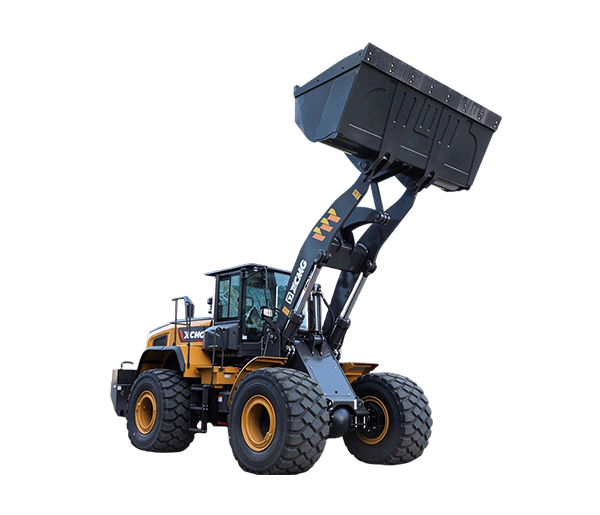
The XC975 Wheel Loader is a 7-ton-class heavy-duty wheel loader from XCMG. According to XCMG's current official product information, the standard XC975 has a rated load of 7,000 kg, rated power of 210 kW, operating weight of approximately 22,600 ± 300 kg, maximum breakout force of 200 ± 5 kN, and a listed dumping height of 3,400 mm. XCMG positions the machine for demanding applications including mines, ports, terminals, construction sites, stations, material yards, and coal mines.Source: XCMG official XC975 product page.
From my experience working with construction machinery buyers, these numbers matter, but they are not the whole story. A wheel loader has to work as part of a complete loading cycle: drive into the material, fill the bucket, reverse, carry the load, approach the truck or stockpile, lift, dump, and repeat. If one part of this cycle is too slow or unreliable, the whole operation loses time.
That is why I look at the XC975 as a complete working machine rather than simply a 210 kW loader. Its large bucket options, reinforced structure, automatic transmission, hydraulic system, heavy-duty axles, long wheelbase, operator cab, and maintenance layout are all designed around repeated loading work.
1. What Makes the XC975 Wheel Loader Different on a Real Jobsite?
The first thing I notice about a large loader is its overall balance. A machine with a big engine but a weak working structure is not enough. Likewise, a strong frame does not help much if the hydraulic response or transmission control is difficult for the operator.
The XC975 brings several systems together for heavy-duty work. XCMG describes it as a large XC9-series loader developed from previous product experience and updated for newer emissions requirements. The official product page highlights a ZF automatic transmission with electro-hydraulic control, a high-power engine, an upgraded drive axle, a heavy-duty articulated structure, an energy-saving hydraulic system, and a large bucket configuration.
For customers buying a machine for continuous loading, I would pay particular attention to three areas: the loading force, the bucket configuration, and the cycle time.
The official XC975 configuration lists a 7,000 kg rated load and a maximum breakout force of 200 ± 5 kN. In simple terms, breakout force is the force available when the loader pushes the bucket into material and needs to fill it. This becomes important when the machine is working with compacted aggregate, rock, coal, sand, or other bulk materials.
XCMG also lists a standard 4.5 m³ bucket and optional bucket capacities ranging from approximately 3.0 to 6.0 m³ depending on configuration. This gives buyers room to match the bucket to material density, truck size, and loading conditions instead of using one bucket for every job.
| Item | XC975 Official Data | Why It Matters |
|---|---|---|
| Rated load | 7,000 kg | Defines the rated loading capability for the machine |
| Rated power | 210 kW | Provides the power needed for heavy loading and travel |
| Operating weight | 22,600 ± 300 kg | Supports stability and traction during heavy work |
| Maximum breakout force | 200 ± 5 kN | Important when penetrating and filling the bucket |
| Dumping height | 3,400 mm | Useful for truck loading and material transfer |
Source: XCMG official XC975 product specifications. Actual machine configuration should be confirmed before ordering.
2. How the XC975 Wheel Loader Works
A wheel loader looks simple from outside, but several systems have to work together every time the bucket moves. I normally explain the working process to customers in five basic steps.
First, the operator drives toward the material pile. The front working equipment is positioned so that the bucket can enter the pile at a suitable angle. The machine needs enough traction and breakout force to push into the material without wasting engine power.
Second, the hydraulic system controls the lifting arm and bucket. Hydraulic cylinders convert hydraulic pressure into mechanical movement. The operator can raise the boom, lower it, tilt the bucket, and hold the working equipment in position.
Third, once the bucket is filled, the operator reverses and carries the load. This is where the loader's frame, axles, tires, transmission, steering system, and braking system all work together. The machine must remain stable while carrying a heavy bucket.
Fourth, the loader approaches a truck, hopper, stockpile, or other unloading point. The lifting system raises the bucket to the required height. The XC975's official listed dumping height is 3,400 mm, although the actual working height can depend on the selected working equipment and bucket configuration.
Finally, the bucket tips and the material is discharged. The loader then returns to the pile and starts the next cycle.
This sounds straightforward, but in a busy quarry or aggregate yard, the same cycle can happen hundreds of times during a working shift. Small differences in cycle time, hydraulic response, operator comfort, and machine availability can therefore become important over the course of a month.
XCMG states that the XC975 uses an automatic transmission with electro-hydraulic control. It supports automatic and manual shifting modes, with four forward and three reverse gears listed in the product information. The purpose is not simply to add more gears; it is to make power delivery easier to manage across different loading and travel conditions.
3. Main Features I Look At When Evaluating the XC975
Heavy-Duty Structure
For a 7-ton-class loader, the frame is one of the first things I check. The XC975 uses a heavy-duty articulated structure with a long wheelbase. XCMG describes the frame as a heavy-load design developed for demanding conditions, with structural components analyzed and key areas robot-welded during manufacturing.
This matters because loading is not a gentle movement. When the bucket enters a pile, the machine experiences pushing forces. When the operator lifts a full bucket, the load transfers through the boom, frame, articulation point, axles, and tires. Repeated shock loads can be hard on equipment if the structure is not properly designed.
Large Bucket Capacity
The official XC975 information lists a 4.5 m³ standard bucket and optional buckets from approximately 3.0 to 6.0 m³. The correct bucket should always be selected according to material density and application. A larger bucket is not automatically better because very dense materials can change the actual payload and digging behavior.
For example, a customer moving relatively light aggregate may benefit from a larger bucket. A quarry handling dense rock may need a different bucket design with greater wear resistance and a more suitable capacity.
Automatic Transmission
The XC975 uses a ZF automatic transmission with electro-hydraulic control. XCMG lists automatic and manual shifting modes, four forward gears and three reverse gears. This setup is intended to reduce unnecessary operator workload while keeping the machine responsive during loading and travel.
In daily operation, I consider this particularly useful when the loader moves repeatedly between a pile and a truck. The operator can focus more on positioning the bucket and machine rather than manually managing every gear change.
Hydraulic Performance
Hydraulics are at the heart of a wheel loader's working equipment. The XC975 uses a hydraulic system designed to provide lifting and bucket movement while also supporting steering functions. XCMG states that the loader uses a mature variable hydraulic system and reports energy-saving improvements compared with its previous design.
For the buyer, the practical question is not only how much hydraulic pressure the system can produce. It is also whether the boom and bucket respond smoothly, whether the system maintains performance during repeated cycles, and whether maintenance points are easy to access.
Reinforced Axles and Braking
Heavy material creates heavy loads on the axles. The XC975 uses reinforced drive axles, and XCMG specifically highlights the upgraded axle structure and front-axle braking arrangement for high-load applications.
For mining, coal handling, ports, and aggregate yards, this is an area I would discuss carefully during machine selection. The loader may spend many hours carrying full buckets, turning on uneven ground, and working under dusty conditions.
4. XC975 Wheel Loader Technical Data and Configuration Comparison
When customers compare wheel loaders, I recommend starting with measurable information rather than relying on phrases such as “heavy duty” or “high performance.” The following table summarizes the official XC975 specifications currently published by XCMG.
| Specification | XC975 | Practical Meaning |
|---|---|---|
| Rated load | 7,000 kg | Suitable for heavy material loading operations |
| Rated power | 210 kW | Provides engine power for loading and travel |
| Operating weight | 22,600 ± 300 kg | Helps provide stability and traction |
| Maximum breakout force | 200 ± 5 kN | Supports bucket penetration into material |
| Dumping height | 3,400 mm | Supports loading into suitable trucks and receiving equipment |
| Standard bucket | 4.5 m³ | Designed for high-volume material handling |
| Optional bucket range | Approx. 3.0–6.0 m³ | Allows configuration for different materials and working conditions |
Source: XCMG official XC975 product page. Bucket configuration and other equipment can vary by machine version and application.
There is another useful comparison that buyers sometimes overlook. The standard XC975 is not the same machine as the XC975-EV or XC975-HEV. These are different powertrain versions, even though the model family name looks similar.
| Model | Power System | Rated Load | Rated Power | Operating Weight |
|---|---|---|---|---|
| XC975 | Conventional diesel | 7,000 kg | 210 kW | 22,600 ± 300 kg |
| XC975-EV | Pure electric | 7,000 kg | 320 kW | 22,800 ± 300 kg |
| XC975-HEV | Hybrid | 7,000 kg | 320 kW | 23,000 ± 300 kg |
Sources: XCMG official XC975, XC975-EV and XC975-HEV product pages. These are separate product configurations and should not be treated as interchangeable specifications.
This distinction is important when requesting a quotation. If a buyer simply writes “XC975,” the seller should confirm the required powertrain, emission standard, bucket, working equipment, destination market, and optional equipment before preparing a final offer.
5. Where I Would Use an XC975 Wheel Loader
The XC975 is designed around heavy material handling, so I would normally consider it for jobs where a smaller wheel loader would require too many loading cycles.
Mining and Quarrying
Mining and quarrying are obvious applications for a large wheel loader. The machine can be used to load aggregate, move blasted material, feed crushers, maintain stockpiles, and load suitable transport vehicles.
These environments can be hard on machinery. Dust, vibration, uneven ground, abrasive materials, and long working hours all affect equipment. For this reason, I would pay attention to the bucket material, tires, filtration system, cooling system, axle configuration, and maintenance plan rather than looking only at engine power.
Aggregate Yards
Aggregate yards need frequent movement of sand, gravel, crushed stone, and similar bulk materials. The loader may repeatedly fill trucks or move material between different stockpiles.
Here, bucket size and cycle time become especially important. A suitable bucket allows the operator to move enough material per cycle without creating unnecessary stress on the machine.
Ports and Terminals
XCMG lists ports and terminals among the intended working conditions for the XC975.
Port work can involve different materials, including bulk mineral products, coal, aggregate, and other loose cargo. Depending on the material, customers may select different buckets or attachments. Ground conditions are also worth checking because a loader operating on paved surfaces may have different tire and attachment requirements from one working on rough ground.
Coal and Industrial Material Handling
Coal yards, industrial plants, power-related facilities, and material storage yards often require continuous loading and stockpile management. The XC975's rated load and large bucket options make this type of work a natural application.
Construction and Infrastructure
On construction sites, the XC975 can be used for earthmoving, aggregate loading, backfilling, stockpile handling, and general material movement. The exact attachment should be selected according to the work rather than assuming that the standard bucket is suitable for every task.
Agricultural Bulk Material Handling
Large loaders can also be useful in agricultural operations that handle large quantities of bulk material. Depending on the material and site, the machine can support loading and stockpile work. For lighter materials, a suitable larger-volume bucket may be more useful than a standard digging bucket.
6. Manufacturing, Inspection and Export: How We Handle an XC975 Order
For an international buyer, purchasing a wheel loader is not simply a matter of choosing a model and paying an invoice. The machine has to match the application, destination requirements, shipping method, documents, and after-sales expectations.
At Ganglong Heavy Industry Technology (Hefei) Co., Ltd., I treat the order process as a complete project. Our group was founded in 2013 and works across construction machinery, mining machinery, agricultural machinery, and related attachments. Together with Hefei Ganglong International Trade Co., Ltd., we handle equipment sales, international trade, customization, and related machinery services.
For an XC975 Wheel Loader inquiry, I first want to understand the customer's actual application. I would normally ask about the material being handled, working hours per day, expected load, truck or hopper height, bucket requirements, jobsite conditions, destination country, and preferred shipping method.
After the configuration is confirmed, the production and preparation period is normally around 15–30 days after order confirmation, depending on the model, configuration, order quantity, and current production schedule.
Before shipment, we arrange inspection of the major systems. The inspection normally covers the engine, hydraulic system, transmission, axles, tires, working equipment, electrical system, braking system, and general operating condition.
I consider this pre-delivery inspection especially important for overseas customers because the buyer may not be able to visit the factory every time. The goal is simple: identify obvious issues before the machine leaves the supplier.
Standard delivery can include the complete wheel loader, standard bucket, basic tools, operation and maintenance manuals, and necessary technical documents. The exact list should be confirmed with the quotation because attachments, spare parts, manuals, and local compliance documents can vary by order.
Payment and International Shipping
For international orders, payment is commonly arranged by T/T, with a typical structure of 30% deposit and the balance before shipment. L/C may also be considered for qualified international orders, subject to the transaction terms.
For transportation, the XC975 can be arranged by bulk vessel, Ro-Ro vessel, container, or flat-rack container depending on the machine dimensions, shipping route, destination port, and carrier requirements.
Export preparation also matters. Before loading, the machine is cleaned and protected against moisture and rust. It is securely fixed according to the shipping method, and exposed areas can be covered where appropriate. Spare parts are generally packed separately in wooden cases or strong export cartons.
| Order Stage | What We Check | Customer Information Needed |
|---|---|---|
| Application review | Material, site, working hours, loading method | Jobsite and working conditions |
| Configuration | Bucket, attachments, tires and options | Required working equipment |
| Production | Machine preparation and configuration | Confirmed order specifications |
| Pre-delivery inspection | Engine, hydraulics, transmission, axle, brakes and working equipment | Inspection requirements if applicable |
| Export preparation | Cleaning, protection, fixing and packing | Destination and shipping method |
| Shipment | Shipping arrangement and documents | Port, consignee and import information |
Source: Ganglong Heavy Industry Technology product and export process information supplied for this product page.
7. Why I Recommend Confirming the Details Before Buying
There is one thing I always tell machinery buyers: do not compare wheel loaders using the model name alone.
Even within the same model family, specifications can change according to market, emission requirement, bucket, tires, attachments, powertrain, and optional equipment. This is particularly clear with the XC975 family because XCMG also offers XC975-EV and XC975-HEV versions with different power systems and specifications.
For a standard XC975 purchase, I would confirm at least the following points before signing the final order:
Rated load and machine configuration
Engine and applicable emission standard
Bucket capacity and bucket type
Dumping height and required working range
Tire size and tread pattern
Working attachments
Operating weight and transport dimensions
Destination-country requirements
Spare parts package
Warranty and after-sales service terms
Shipping method and destination port
Delivery schedule
This checklist may look basic, but it prevents many problems. A loader can be technically suitable and still be the wrong configuration for a specific site.
Our group also has experience with a wider range of construction, mining, and agricultural equipment. In addition to XCMG equipment, we work with brands and machinery including Hitachi, SANY, Lonking, Hyundai, SHANMON, and LOVOL. This gives us a broader view when a customer needs to compare machine types or build a mixed equipment fleet.
For customers who are not sure which loader configuration fits their work, I prefer to start from the job rather than push a particular machine. The material, loading height, daily working hours, site conditions, transport distance, and local service situation usually tell us much more than a product name.
8. XC975 Wheel Loader FAQ
What is the rated load of the XC975 Wheel Loader?
The official XCMG XC975 product page currently lists a rated load of 7,000 kg. This places the machine in the 7-ton-class heavy-duty wheel loader category. The actual working payload should still be considered together with the bucket, material density, operating conditions, and applicable safety requirements.
What is the engine power of the XC975?
XCMG currently lists the standard XC975 with a rated power of 210 kW. The XC975-EV and XC975-HEV are different versions with different power systems, so their specifications should not be mixed with the conventional XC975.
What bucket capacity can the XC975 use?
XCMG lists a 4.5 m³ standard bucket and optional bucket capacities of approximately 3.0–6.0 m³. The correct bucket depends on the material, density, loading height, site conditions, and customer requirements.
What industries use the XC975 Wheel Loader?
The official application list includes mines, ports, terminals, construction sites, stations, material yards, and coal mines. In practical terms, the machine can also be considered for quarrying, aggregate handling, stockpile management, earthmoving, and other heavy material handling work when the selected configuration matches the job.
How long does it take to prepare an XC975 for delivery?
For our international machinery orders, the typical production cycle is around 15–30 days after order confirmation. The actual schedule depends on machine configuration, order quantity, production status, inspection requirements, and shipping arrangements.
How is an XC975 shipped internationally?
Depending on machine dimensions, destination, and carrier requirements, international transportation can use bulk vessel, Ro-Ro vessel, container, or flat-rack container. We confirm the shipping method after checking the machine configuration and destination.
What is included in standard delivery?
Standard delivery normally includes the complete wheel loader, standard bucket, basic tools, operation and maintenance manuals, and necessary technical documents. Optional attachments, spare parts, and additional documents can be discussed before order confirmation.
What payment terms are available?
A common international payment arrangement is 30% deposit by T/T with the balance paid before shipment. L/C may be available for qualified international orders. Final payment terms depend on the specific transaction and should be confirmed in the commercial contract.
Can I order spare parts with the XC975?
Yes. For overseas customers, I normally suggest discussing a basic spare-parts package before shipment, especially when the machine will work far from a major service center. Common wear and maintenance parts can be reviewed according to the working hours, material, climate, and local service conditions.
How do I choose between XC975, XC975-EV and XC975-HEV?
These machines use different powertrain technologies. The conventional XC975 is the diesel-powered version, while XC975-EV is a pure electric model and XC975-HEV is a hybrid model. XCMG publishes different specifications for these versions, so the choice should be based on site energy availability, operating pattern, local regulations, charging or fuel infrastructure, and total operating requirements rather than the model number alone.
Final Thoughts on the XC975 Wheel Loader
When I evaluate a heavy wheel loader, I do not look at one impressive number and stop there. I look at the complete working cycle. Can the machine enter the pile properly? Can it lift a full bucket with stable control? Can it move safely across the site? Can the operator work comfortably for a long shift? Can the machine be inspected and maintained without wasting unnecessary time?
The XC975 Wheel Loader is built around this type of heavy-duty working requirement. Its official configuration includes a 7,000 kg rated load, 210 kW rated power, approximately 22.6-ton operating weight, 200 ± 5 kN maximum breakout force, large bucket options, automatic transmission, reinforced structure, and hydraulic systems designed for demanding loading operations.
For customers in mining, quarrying, ports, aggregate yards, coal handling, construction, and general heavy material handling, the key is to match the machine configuration with the actual job. Bucket capacity, material density, truck height, site surface, working hours, tires, attachments, transport requirements, and local service support should all be discussed before the final quotation.
At Ganglong Heavy Industry Technology (Hefei) Co., Ltd., I see our role as more than simply supplying a machine. Through our construction machinery and international trade operations, we help overseas customers work through configuration, inspection, export preparation, transportation, and related equipment requirements. For customers who need an XC975 Wheel Loader for sale, Heavy Duty Wheel Loader for mining, XC975 Loader for quarrying, or a large wheel loader for bulk material handling, we can discuss the actual application first and then build the equipment and delivery plan around it.
That approach is usually more useful than starting with a brochure. The right loader is the one that fits the work you actually need to do.



 WhatsApp
 Phone
Phone E-mail
 Message