

When I talk with customers about a 20-ton class Excavator, I usually do not start with the price. I start with the job. What material will the machine dig? How many hours will it work each day? Will it be used for road construction, municipal work, farm water projects, river dredging, demolition, or general earthmoving? These questions sound simple, but they can make a big difference when choosing a hydraulic excavator.
The XE205GA Hydraulic Excavator is a medium-class crawler excavator developed for demanding excavation and loading work. According to XCMG's published product information, the XE205GA has an operating weight of 21,500 kg, a bucket capacity of 0.9–1.1 m³, an engine rated power of 129 kW, and a bucket digging force of 157 kN. XCMG also lists agricultural water projects, river dredging and municipal construction among its application areas, with the machine capable of supporting excavation, breaking and demolition work.
From my experience working with construction machinery buyers, this is a useful working class. A machine around 20 tons has enough size for serious earthmoving, but it is still more flexible to transport and operate than a much larger Mining Excavator. For contractors who need one machine to handle several types of jobs, this balance can be important.
At Ganglong Heavy Industry Technology (Hefei) Co., Ltd., we work with construction machinery, mining machinery, agricultural machinery and related attachments. Our company was founded in 2013, and together with Hefei Ganglong International Trade Co., Ltd., we integrate equipment R&D, manufacturing, testing, customization and global sales.
We also offer our own HKLOONG Excavators, loaders, Backhoe loaders and swamp excavators, while providing complete machine sales and leasing services for brands including Hitachi, SANY, Lonking, Hyundai, XCMG, SHANMON and LOVOL. This gives us a practical view of different machine classes and customer requirements.
In this page, I want to explain the XE205GA in a straightforward way: what the machine is, how its hydraulic system works, which features matter in daily operation, where it can be used, how it compares with nearby models, and what we check before an excavator leaves for an overseas customer.
The XE205GA is designed as a medium hydraulic excavator for jobs that need more digging and loading capacity than a compact or small excavator can normally provide. Its 21,500 kg operating weight gives the machine a solid working platform, while the published 0.9–1.1 m³ bucket range provides room to match the bucket to different materials and working conditions.
One thing I always remind buyers is that an excavator is a complete system. It is easy to focus on engine power or bucket size, but those numbers only tell part of the story. The engine, hydraulic pump, main valve, boom, arm, bucket, swing system, travel system and control system all need to work together.
XCMG describes the XE205GA as using a customized twin-turbocharged engine with adjustable two-stage turbocharging. The manufacturer says this design is intended to provide strong power and high-altitude adaptability. The machine also uses a full electronically controlled hydraulic system, which XCMG says provides fast response and smooth control.
For a contractor, the practical question is not simply whether the technology sounds advanced. The question is whether the machine feels predictable when the operator uses it all day. When digging, loading, leveling or moving around a jobsite, smooth response can make the machine easier to control.
The XE205GA also uses EGR+DOC+DPF after-treatment technology. According to XCMG, the system does not require urea addition. The manufacturer also states that the machine uses long-life hydraulic oil and has a hydraulic-oil warranty period of at least 4,000 hours. These are manufacturer-published claims, so actual maintenance intervals should still follow the final machine manual and local operating conditions.
| XE205GA Main Specification | Published Value | Why I Check It |
|---|---|---|
| Operating weight | 21,500 kg | Helps determine machine class, stability and transportation planning |
| Bucket capacity | 0.9–1.1 m³ | Allows bucket selection for different excavation and loading tasks |
| Engine rated power | 129 kW | Provides the main power source for the machine |
| Bucket digging force | 157 kN | Important reference for excavation performance |
| Powertrain type | Diesel hydraulic | Suitable for jobs without external electrical power infrastructure |
Source: XCMG official XE205GA product information. Final machine configuration should be confirmed against the technical documents supplied with the actual order.
The working principle of a hydraulic excavator is actually quite simple once we break it down. The diesel engine generates power. The hydraulic system converts that power into controlled movement. Pressurized hydraulic oil travels through the hydraulic circuit to operate cylinders and motors. These components then move the boom, arm, bucket, upper structure and crawler system.
When an operator digs into the ground, several movements may happen almost at the same time. The boom controls the height of the working equipment. The arm moves the bucket toward or away from the machine. The bucket cuts into and collects material. The upper structure can then swing toward a truck or stockpile.
This is why hydraulic control is so important. If every movement reacts too sharply, the machine can feel difficult to control. If the response is too slow, the operator may spend more time completing each working cycle. XCMG says the XE205GA uses a full electronically controlled hydraulic system designed for fast response and smooth control.
The machine also provides standard and comfort operating modes, with adjustable impact levels according to XCMG's product description. In simple terms, the operator can select a working feel that suits the task instead of using exactly the same response for every job.
For example, excavation in loose soil does not necessarily require the same operating approach as digging harder ground. Similarly, a demolition attachment may require a different working setup from a standard digging bucket. This is one reason why mode selection and hydraulic control matter in a machine that may be used for different jobs.
The crawler excavator is positioned on suitable and reasonably stable ground.
The boom and arm move the bucket toward the material.
The bucket penetrates and collects soil or other material.
The upper structure swings toward the unloading position.
The bucket unloads into a truck, pile or prepared area.
The upper structure returns to the excavation area.
The cycle is repeated according to the required working depth and loading position.
The actual cycle time depends on many factors. Soil hardness, bucket size, operator experience, truck position, digging depth, swing angle and site layout all make a difference. For that reason, I avoid giving customers a single guaranteed hourly output number without first understanding the jobsite.
This is also why I consider the XE205GA as more than an engine-plus-bucket product. The complete hydraulic and mechanical system needs to work as one machine.
The XE205GA has a published engine rated power of 129 kW. For a 21.5-ton-class machine, this provides the power needed for general excavation, loading and earthmoving operations. XCMG's published information highlights the customized twin-turbocharged engine and its adjustable two-stage turbocharging system, with the stated goal of maintaining useful power performance in different conditions, including higher-altitude environments.
For international buyers, altitude can be an important question. A machine working at sea level and one working in a high-altitude region may face different operating conditions. When customers tell me the machine will work in mountainous or high-altitude areas, I recommend confirming the final engine specification and operating requirements before ordering.
One of the key features of the XE205GA is its full electronically controlled hydraulic system. XCMG states that the system does not need traditional throttling in the same way and is designed to improve power utilization, response and smooth operation.
For an operator, the benefit is easier to feel than to explain. When you move the controls, the working equipment should respond in a predictable way. Smooth movement is especially useful during grading, loading and combined boom-arm-bucket movements.
XCMG lists a bucket digging force of 157 kN for the XE205GA. This is a useful reference when comparing excavators in the same general class.
However, I would never use digging force alone to promise performance. The result in the field also depends on soil density, rock content, bucket design, tooth condition, digging angle and operator technique.
XCMG specifically highlights accessible maintenance components on the XE205GA. The company says maintenance parts are within easy reach, helping reduce maintenance time.
This may not sound as exciting as engine power, but anyone who has managed an excavator fleet knows that maintenance access matters. A machine spends a lot of its life being checked, cleaned, serviced and repaired. If basic service work is easier to reach, it can make routine maintenance less troublesome.
The XE205GA uses a new-generation cab design. XCMG highlights increased visibility, lower interior noise and improved operator comfort and safety.
I see this as a practical feature rather than a luxury. Operators may spend eight hours or more in a machine during a normal working day. Clear visibility, simple controls and a comfortable seat can affect how easily they work over long periods.
The XE205GA is designed for a broad group of medium-duty and heavy-duty earthmoving applications. XCMG lists agricultural water projects, river dredging and municipal construction as key applications. The manufacturer also states that the machine can support excavation, breaking and demolition operations.
Municipal projects often involve drainage channels, utility trenches, road preparation, pipeline work and site excavation. These jobs can change from one location to another, so a versatile crawler excavator is useful when the contractor does not want a machine dedicated to only one task.
Before choosing the XE205GA for an urban project, I recommend checking access roads, working space, transport restrictions and the required attachments. A 21.5-ton excavator needs enough room for safe operation and transport.
River dredging and agricultural water projects can involve soil removal, channel shaping, drainage work and bank preparation. Ground conditions can be wet or uneven, so machine positioning is important.
In these applications, I also recommend paying attention to bucket selection. A bucket designed for general soil excavation may not be the best option for every dredging or water-management task.
Road projects involve excavation, trenching, material handling, slope preparation and site clearing. The XE205GA's working class makes it suitable for projects that require more digging capacity than a small excavator can comfortably provide.
Construction sites can require foundation excavation, underground utility work, soil removal and loading. The machine can be used with different working tools depending on the project.
XCMG lists breaking and demolition among the XE205GA's possible working requirements. When using a Hydraulic Breaker or other attachment, the attachment specification must match the machine's hydraulic system and control configuration.
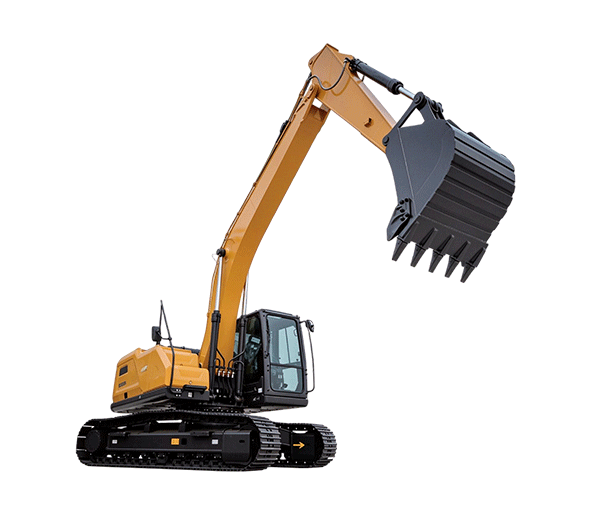
For contractors handling site preparation, land shaping, material loading and soil excavation, the XE205GA can serve as a general-purpose machine. This is one reason medium excavators remain common in construction fleets: they can handle many different jobs without being as large as specialized mining machines.
| Industry / Application | Typical Work | What I Recommend Checking |
|---|---|---|
| Municipal construction | Drainage, trenching, utility excavation | Site access, working radius, attachments |
| River and water projects | Dredging, channel excavation, bank preparation | Ground condition, bucket type, site stability |
| Road construction | Excavation, loading, site preparation | Material type, transport plan, working cycle |
| Building construction | Foundation excavation, earthmoving | Digging depth, bucket choice, site space |
| Demolition | Breaking and material removal | Breaker specification, hydraulic compatibility |
| Agricultural projects | Drainage, irrigation and land preparation | Ground pressure, seasonal conditions |
Source: XCMG official XE205GA application information. The actual suitability of an excavator depends on project conditions and final configuration.
When customers ask me to compare excavators, I prefer to use a few basic numbers first. Operating weight tells us the general machine class. Bucket capacity gives an idea of the intended digging and loading range. Engine power indicates the available power source, while bucket digging force provides another useful reference for excavation capability.
For the comparison below, I use XCMG's published specifications for the XE205GA, XE200GA and XE215G. The figures are useful for understanding the differences between these models, but they should not be treated as a complete jobsite performance test.
| Model | Operating Weight | Bucket Capacity | Engine Rated Power | Bucket Digging Force |
|---|---|---|---|---|
| XE200GA | 21,200 kg | 0.93 m³ | 125 kW / 2,200 rpm | 149 kN |
| XE205GA | 21,500 kg | 0.9–1.1 m³ | 129 kW | 157 kN |
| XE215G | 22,500 kg | 0.8–1.3 m³ | 129 kW | 165 kN |
Source: XCMG official product pages for XE200GA, XE205GA and XE215G.
The numbers show that these models are relatively close in overall working class, but their published specifications are not identical. The XE200GA is listed at 21,200 kg with a 0.93 m³ bucket, 125 kW engine and 149 kN bucket digging force. The XE205GA is listed at 21,500 kg, with a 0.9–1.1 m³ bucket range, 129 kW engine and 157 kN bucket digging force. The XE215G moves to 22,500 kg and lists a 0.8–1.3 m³ bucket range with 129 kW and 165 kN digging force.
There is no single specification that tells me which machine should be used for every project. If a customer mainly handles general excavation, I look at the complete configuration. If the project includes frequent breaker work, I check the attachment and hydraulic requirements. If the machine needs to travel long distances, I look at transport and site access. If it will work at high altitude, I check the engine and environmental conditions.
This approach prevents a common mistake: choosing an excavator simply because one specification is larger. A larger bucket, for example, does not automatically mean better results. The bucket must match the material, hydraulic system and working conditions.
For an overseas customer, the machine purchase does not end when the factory finishes assembly. There are still inspections, documents, packing, port handling and international transportation to arrange. At Ganglong, I treat these steps as part of the complete equipment supply process.
For diesel-powered excavators, our usual production planning period is around 15–30 days after order confirmation. The exact time depends on the selected model, configuration, order quantity and production schedule.
If a customer needs a special bucket, breaker, Quick Coupler, additional attachment or other configuration, I recommend confirming these requirements before the order is finalized. It is much easier to plan the production schedule when the machine specification is clear from the beginning.
Before delivery, we inspect the major working systems. The inspection normally covers the engine, hydraulic system, crawler system, working equipment, electrical system, safety functions and overall operating condition.
I pay particular attention to the basic functions that the customer will depend on immediately after receiving the machine. The engine should start correctly. The hydraulic system should respond properly. The boom, arm and bucket should perform their intended movements. The crawler should travel correctly. Instruments and controls should work as expected.
| Inspection Area | Typical Check | Purpose |
|---|---|---|
| Engine | Starting and operating condition | Confirm basic power system operation |
| Hydraulic system | Movement response and visible leakage | Confirm working equipment functions |
| Boom and arm | Movement and operating response | Check excavation functions |
| Bucket | Bucket movement and connection | Confirm digging and loading operation |
| Crawler system | Travel and basic movement | Confirm site mobility |
| Electrical system | Displays, switches and controls | Check operating information and controls |
| Safety functions | Relevant safety controls | Support safe machine operation |
Standard delivery normally includes the complete excavator, standard working equipment, basic tools, operation and maintenance manuals and necessary technical documents. Additional attachments and spare parts can be prepared according to the customer's order.
For international orders, T/T is commonly used. A typical payment structure is 30% deposit and 70% balance before shipment. L/C may also be available for qualified international orders. The final payment method and schedule should always be confirmed in the commercial contract.
A 21.5-ton excavator needs a proper logistics plan. Depending on machine dimensions, destination and shipping conditions, transportation can be arranged by bulk vessel, Ro-Ro vessel, container or flat-rack container.
Before shipment, I normally look at the machine's final dimensions, port requirements, destination country, unloading method and inland transportation. Choosing the right shipping method at the beginning can help avoid unnecessary handling problems later.
Before export, the machine is normally cleaned and prepared against moisture and rust. It is then secured properly for transportation and covered where necessary. Spare parts can be packed separately in wooden cases or strong export cartons.
For long-distance transportation, details matter. Loose components should not be left unsecured, and documents and spare parts should be organized clearly so that the customer can identify them after arrival.
When a customer buys an excavator from another country, the supplier's role goes beyond selling the machine. There are technical questions, payment arrangements, export documents, shipping, spare parts and after-sales communication. I believe these details deserve as much attention as the machine itself.
Ganglong Heavy Industry Technology (Hefei) Co., Ltd. was founded in 2013. Together with Hefei Ganglong International Trade Co., Ltd., we are affiliated with China Construction Machinery (Group) Co., Ltd. Our business covers equipment R&D, manufacturing, testing, customization and global sales.
Our own HKLOONG product range includes excavators, loaders, backhoe loaders and swamp excavators. We also provide complete machine sales and leasing services for brands including Hitachi, SANY, Lonking, Hyundai, XCMG, SHANMON and LOVOL.
Because we work across construction machinery, mining machinery and agricultural machinery, we often see customers who need more than one type of equipment. One project may require an excavator, loader, attachment and spare parts at the same time. In these cases, understanding the whole job is more useful than looking at one machine in isolation.
Hefei Ganglong International Trade Co., Ltd. is our professional international trade arm. Our team has experience serving markets across Asia, Africa, America and other regions. This international experience helps us understand that buyers in different markets may have very different requirements.
Before I prepare an XE205GA quotation, I normally want to know:
What type of material will the machine mainly excavate?
How many working hours are expected each day?
What bucket capacity is required?
Will the machine be used for standard excavation or attachment work?
Will a hydraulic breaker or other attachment be required?
What is the final destination country and port?
Are there local emission or import requirements?
Does the customer need spare parts with the first shipment?
Is the machine required for a single project or long-term fleet operation?
Once these details are clear, we can work out a more practical configuration and delivery plan.
I also believe that honest communication is important when selling construction machinery. If a machine specification depends on a particular configuration, I would rather confirm it with the technical documentation than give the customer a quick but uncertain answer.
XCMG publishes an operating weight of 21,500 kg for the XE205GA. The final machine configuration and actual shipping weight should be confirmed from the final technical and logistics documents before transportation planning.
The published bucket capacity is 0.9–1.1 m³. The correct bucket should be selected according to the material, excavation conditions, loading method and required working cycle.
The published engine rated power is 129 kW. XCMG describes the machine as using a customized twin-turbocharged engine with adjustable two-stage turbocharging.
XCMG lists the XE205GA bucket digging force at 157 kN. This is an important technical reference when comparing excavation machines, although real-world digging results depend on soil, rock, bucket type, machine position and operator technique.
Yes. Municipal construction is one of the application areas listed by XCMG. Typical work can include excavation, trenching, drainage and other earthmoving tasks. The actual configuration should be selected according to the project and local working conditions.
XCMG lists river dredging among the machine's application areas. For water-related projects, I recommend checking ground conditions, machine positioning, bucket selection and the required working reach before ordering.
The manufacturer lists breaking and demolition as possible work requirements. If a hydraulic breaker or other attachment is needed, the attachment's weight, hydraulic flow, pressure and mounting configuration should be confirmed before purchase.
XCMG's published XE205GA product information describes an EGR+DOC+DPF after-treatment route and states that the machine does not require urea addition. Buyers should still confirm the exact engine and emission configuration for the market where the machine will operate.
Our general production planning period for diesel excavators is around 15–30 days after order confirmation. The actual lead time depends on model, configuration, quantity and production scheduling.
Depending on the final dimensions, destination and shipping route, the excavator can be transported by bulk vessel, Ro-Ro vessel, container or flat-rack container. We confirm the appropriate method according to the actual machine and destination.
T/T is commonly used, with a typical structure of 30% deposit and 70% before shipment. L/C may be available for qualified international orders. The exact payment terms should be confirmed in the final contract.
Yes. For customers working far from major service centers, I usually recommend considering a basic spare-parts package when placing the machine order. Spare parts can be packed separately in wooden cases or strong export cartons.
I recommend confirming the final machine configuration, bucket, attachments, engine and emission specification, warranty terms, production schedule, payment terms, shipping method, spare parts and destination-country import requirements. These details help avoid misunderstandings after the order is placed.
For me, the XE205GA Hydraulic Excavator is interesting because it sits in a very practical working range. With a published operating weight of 21,500 kg, bucket capacity of 0.9–1.1 m³, engine rated power of 129 kW and bucket digging force of 157 kN, it is designed for serious excavation and earthmoving work without moving into the much larger excavator classes.
The machine's electronically controlled hydraulic system, customized engine, maintenance-focused design and new-generation cab are also worth looking at when choosing equipment for regular operation. XCMG positions the XE205GA for agricultural water projects, river dredging and municipal construction, while also supporting excavation, breaking and demolition applications.
But I always come back to the same point: the machine needs to match the job. A specification sheet cannot tell me everything about a construction site. Soil conditions, working hours, transport restrictions, attachment requirements, local regulations and operator habits all affect the final equipment choice.
That is why we prefer to discuss the project before confirming the machine. At Ganglong Heavy Industry Technology, we can support customers with equipment selection, configuration, inspection, export preparation, transportation planning and spare-parts arrangements.
If you are looking for an XE205GA Hydraulic Excavator, XE205GA Excavator, 20 ton hydraulic excavator, medium crawler excavator or a diesel hydraulic excavator for construction and earthmoving, send us your working conditions, destination and required configuration. We can then check the suitable specification, production schedule and international delivery plan for your project.
info@hkloong.com
86 158 5511 9567


©2026 HKLOONG Heavy Industry Technology (Hefei) Co., Ltd. All Rights Reserved.

This website uses cookies to ensure you get the best experience on our website.
 Español
 Pусский
 Français
 العربية
 WhatsApp
 Phone
Phone E-mail
 Message