

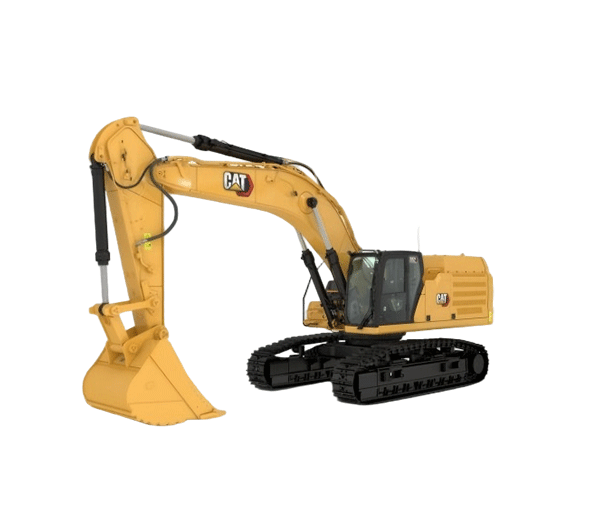
352 Hydraulic Excavator for Heavy-Duty Construction and Earthmoving Applications
When I talk with contractors about a 352 Hydraulic Excavator, I usually start with the job rather than the machine. That may sound simple, but it matters. A Large Excavator is a serious investment, and the right machine should match the amount of material you need to move, the ground you work on, the required digging depth, the attachments you plan to use, and the way the machine will be transported.
The 352 class is built for large-scale work. It sits in the heavy-duty crawler excavator category and is designed for jobs that need strong digging performance, a stable working platform, a large working range, and the ability to keep working through long shifts. I would consider this type of machine for major earthmoving, foundation excavation, infrastructure construction, quarry support, mining-related work, pipeline projects, road construction, and other demanding applications.
At Ganglong Heavy Industry Technology (Hefei) Co., Ltd., we have been working with construction machinery since our company was founded in 2013. Together with Hefei Ganglong International Trade Co., Ltd., we cover equipment R&D, manufacturing, testing, customization, sales, leasing, and international trade. Our own HKLOONG range includes Excavators, loaders, Backhoe loaders, and swamp excavators. We also provide complete-machine sales and leasing services involving brands such as Hitachi, SANY, Lonking, Hyundai, XCMG, SHANMON, and LOVOL, depending on actual availability and transaction conditions.
For customers searching specifically for a 352 Hydraulic Excavator, I pay close attention to one thing: clear machine information. The name alone is not enough. Different brands, model years, boom and stick combinations, buckets, undercarriages, counterweights, and regional specifications can change the final machine.
As a reference point, Caterpillar's current published Cat 352 specification lists 443 hp (330 kW) net power, approximately 48,900 kg operating weight, and a maximum digging depth of 8,210 mm. Caterpillar also publishes a Cat C13B engine for this configuration. These figures are useful when discussing the 352 class, but I always recommend checking the exact specification of the machine being offered before placing an order.
A large crawler excavator has a fairly simple job on paper: dig, lift, swing, dump, return, and repeat. In real construction work, however, every part of that cycle matters.
If the machine cannot maintain stable digging when the ground is uneven, productivity suffers. If the hydraulic response is slow, the operator spends more time waiting between movements. If the bucket is too large for the material, the machine may be working harder than necessary. If the undercarriage is not suited to the site, even a powerful excavator can struggle.
That is why I look at the whole machine rather than one impressive number on a specification sheet.
The crawler undercarriage is the foundation of the machine. Tracks provide a wide contact area with the ground and help the excavator maintain traction on rough or soft surfaces. For large excavation work, this stable base is important because the machine has to handle the forces created when the bucket enters the ground and when a loaded bucket is moved through the swing cycle.
The upper structure also plays an important role. The engine and hydraulic components provide power, while the counterweight helps balance the machine when the boom, stick, and bucket are working away from the center of the machine.
The front working equipment is another major consideration. The boom, stick, and bucket work together. A longer stick may provide a greater working range, while a heavier bucket may be more suitable for tough material. Neither option is automatically better. I select the combination according to the actual work.
For customers looking for a large hydraulic excavator for construction, this is usually the point where I ask about the project. Are you digging foundations? Loading trucks? Working in a quarry? Opening a pipeline trench? Moving overburden? Clearing a large site?
The answers determine what kind of 352 configuration makes sense.
The basic working principle of a hydraulic excavator is easier to understand than many people expect. The engine produces power, the hydraulic pumps move pressurized oil, and hydraulic cylinders or motors turn that energy into movement.
The boom cylinder controls the boom. The stick cylinder controls the stick. The bucket cylinder controls the bucket. Hydraulic motors handle functions such as swing and travel. The operator uses joysticks and other controls to tell the machine what movement is required.
When the operator pushes the joystick to dig, the hydraulic system sends oil to the relevant cylinder. The cylinder extends or retracts, moving the front equipment. At the same time, the control system manages the flow and pressure so that different functions can work together smoothly.
This is one reason modern excavators can perform several movements at once. An operator can raise the boom while pulling the stick and then swing the upper structure toward a truck. With experience, the operator can make the entire cycle feel like one continuous movement.
For a machine in the 352 class, hydraulic capacity becomes especially important because the machine is moving large amounts of material. Caterpillar's published 352 information describes an electrohydraulic system and features such as Auto Dig Boost and Auto Heavy Lift. Caterpillar states that Auto Dig Boost can increase bucket penetration by 8% when resistance is encountered, while Auto Heavy Lift can increase lift capacity by 8% for heavy lifting situations.
I find features like these useful because they are tied to actual work rather than being technology for its own sake. When the bucket enters harder ground, additional digging assistance can help. When the operator needs to lift a heavy object such as a pipe or similar load, additional lift support can be useful.
The machine also has different operating modes. Caterpillar describes Smart, Power, and Eco modes for the current 352. Smart mode can match engine and hydraulic power to the digging conditions, Power mode provides maximum power for demanding tasks, and Eco mode reduces engine speed to help limit fuel use.
From my point of view, this is important because an excavator does not spend every minute doing the hardest possible digging. A machine may spend part of the day trenching, part of the day loading trucks, and part of the day moving around the site. Matching machine power to the task can make the operation more practical.
The current Cat 352 reference specification lists 443 hp, or 330 kW, of net power under ISO 9249. That puts the machine firmly into the large excavator class. The engine is listed as the Cat C13B with 12.5 liters of displacement. Caterpillar states that the engine meets U.S. EPA Tier 4 Final, EU Stage V, and Japan 2014 emission standards for the published configuration.
For me, engine power is only useful when it can be turned into productive work. That means the hydraulic system, cooling system, drive system, and control system must all support the engine properly.
Caterpillar currently lists an operating weight of approximately 48,900 kg for the standard 352 reference configuration. This gives the excavator a substantial working platform for heavy digging and material handling.
However, operating weight should never be treated as a universal number for every machine called a 352. Attachments, buckets, counterweights, track shoes, boom and stick combinations, and other equipment can change the final weight.
The current Cat 352 specification lists a maximum digging depth of 8,210 mm. Caterpillar's published working range also lists a maximum reach at ground level of 12,150 mm, a maximum cutting height of approximately 10,730 mm, and a maximum loading height of approximately 7,420 mm for the cited configuration.
These numbers give the buyer a good idea of the machine's working envelope. In practice, I still check the actual working-range chart before confirming an order because changing the boom, stick, or bucket changes the machine's reach and digging performance.
Bucket selection has a direct effect on productivity. The current Caterpillar reference data lists a heavy-duty 3.3 m³ bucket in one published 352 configuration.
I would not simply choose the biggest bucket available. Loose soil, clay, gravel, rock, demolition material, and other materials behave differently. A bucket that works well in loose earth may not be the right choice for highly abrasive material.
The undercarriage has a hard life. Track shoes, rollers, idlers, sprockets, track chains, and final drives all experience wear. On a large excavator, these components can represent a significant maintenance cost, so I always recommend checking them carefully when evaluating a used machine.
Caterpillar's current 352 specification lists 600 mm, 750 mm, and 900 mm track shoe options, along with different undercarriage configurations.
Wider shoes can help spread machine weight over a larger ground area, but they can also change transport width and machine behavior. Again, the correct option depends on the job.
Below is a practical specification reference based on Caterpillar's currently published 352 information. I include it because buyers often want to compare machine size before asking for a quotation.
| Specification | Cat 352 Reference Data | Why It Matters |
|---|---|---|
| Engine Model | Cat C13B | Provides the main power source for heavy excavation |
| Net Power | 443 hp / 330 kW | Supports high-demand digging and hydraulic work |
| Operating Weight | 48,900 kg | Provides a stable platform for large-scale work |
| Maximum Digging Depth | 8,210 mm | Suitable for deep excavation with the specified configuration |
| Maximum Reach at Ground | 12,150 mm | Provides a broad working area around the machine |
| Maximum Cutting Height | 10,730 mm | Useful for high-level cutting and material handling |
| Maximum Loading Height | 7,420 mm | Supports loading into suitable high-sided trucks |
| Reference Bucket | HD 3.3 m³ | Designed for high-volume heavy-duty material handling |
Source: Caterpillar official Cat 352 product specifications. Exact figures depend on machine configuration, market, and selected equipment.
I also like to compare the 352 with nearby excavator classes. This prevents a common buying mistake: choosing a machine only because the model number sounds larger.
| Model | Net Power | Operating Weight | Maximum Digging Depth |
|---|---|---|---|
| Cat 340 | 346 hp / 258.3 kW | 37,700 kg | 8,210 mm |
| Cat 345 | 346 hp / 258 kW | 42,200 kg | 7,200 mm |
| Cat 352 | 443 hp / 330 kW | 48,900 kg | 8,210 mm |
| Cat 374 | 484 hp / 361 kW | 73,890 kg | 8,570 mm |
| Cat 395 | 542 hp / 404 kW | 94,000 kg | 9,670 mm |
Source: Caterpillar published model specifications for the referenced excavator range. The figures are model-level reference values and may change with regional and equipment configurations.
From this comparison, I would describe the 352 as a machine for customers who need more working capacity than a 340-class excavator but do not need to move into the much larger 374 or 395 class.
That distinction matters when we calculate transportation, fuel use, working space, truck matching, maintenance, and project productivity. Bigger is not automatically better. The machine has to fit the job.
Large construction sites can involve thousands of cubic meters of soil. The excavator may remove soil, load trucks, create slopes, prepare drainage areas, and reshape the site.
A 352 Hydraulic Excavator for earthmoving is useful when the contractor needs fewer digging cycles and wants to move a large volume of material during each working hour.
Large buildings often require substantial excavation before the foundation work begins. The 352's working range makes it suitable for deep excavation where there is enough space to safely position a large crawler machine.
I always recommend checking the actual site layout first. A large excavator needs room to swing, travel, and position itself. If the site is tight, a smaller excavator may actually be easier to operate even if it takes more cycles.
Road construction involves more than digging. The excavator may be used for drainage channels, slope work, earth removal, material handling, and site preparation. Railway projects can involve similar earthmoving and trenching tasks.
The 352 class can be used for selected mining and quarry support work, including overburden handling, stockpile work, bench preparation, loading, and large-scale material movement.
For abrasive materials, I pay special attention to bucket teeth, cutting edges, wear parts, track components, and protective equipment. Rock and abrasive aggregate can wear components much faster than ordinary soil.
Large pipeline projects may require long and deep trenches. A crawler excavator can work along the trench line while using its reach to remove spoil and prepare the excavation.
The important point is to select the boom and stick according to the required trench depth and working distance. A machine with more power is not automatically the correct machine if the front-end configuration does not match the trench.
Excavators are not only digging machines. With the right hydraulic circuits and approved lifting configuration, they can also handle certain heavy materials and attachments.
Caterpillar specifically highlights heavy lifting capability for the 352 and states that Auto Heavy Lift can increase lift capacity by 8% in appropriate conditions. Lifting operations still need to follow the machine's rated load charts, configuration limits, ground conditions, and site safety rules.
The basic 352 platform can also serve as the starting point for specialized configurations. Caterpillar, for example, offers 352 variants for applications such as long-reach excavation, demolition, and other purpose-built work. The 352 Long Reach version has a published maximum digging depth of 13,040 mm, but its weight and front equipment are different from the standard 352.
This is a good example of why I never mix specifications from different 352 configurations. A standard 352, a long-reach 352, a demolition version, and a frontless upper structure may share the 352 name but are not the same machine.
For our standard crawler excavator orders, the typical production cycle is around 30–60 days. The exact schedule depends on the machine model, configuration, order quantity, customization requirements, and component availability.
I prefer to confirm the configuration before discussing the final delivery date. It is much easier to give a realistic schedule when we know exactly which boom, stick, bucket, undercarriage, engine specification, hydraulic options, cab equipment, and attachments are required.
I first look at the job itself. The customer may tell me that they need a 352 Hydraulic Excavator, but I still want to know the material, digging depth, expected daily workload, site conditions, attachments, and destination.
This helps us avoid sending a machine with the wrong bucket or working configuration.
After understanding the job, we confirm the actual machine specification. For international customers, emissions requirements and regional regulations can also be important.
We check the machine configuration against the customer's requirements before moving forward.
During production, the major machine systems are assembled and checked. The engine, hydraulic system, upper frame, undercarriage, working equipment, cab, electrical system, and controls need to operate as a complete unit.
For large excavators, structural inspection is especially important. The boom and stick experience repeated digging loads, while the undercarriage carries the machine's working weight and absorbs loads while traveling across uneven ground.
Before delivery, we inspect the machine's hydraulic performance, engine operation, structural condition, controls, travel functions, working equipment, and general operating condition.
Depending on the order, delivery documents can include factory test information, inspection records, operating manuals, spare parts, and necessary certificates.
Large crawler excavators require careful transport planning. Depending on the destination and machine size, we can consider Ro-Ro vessels, bulk vessels, or container shipping where practical.
Before shipment, the machine is cleaned and prepared for transportation. Exposed areas can be protected against rust and moisture. The machine is securely fixed, covered or wrapped where appropriate, and detachable components can be packed separately to reduce transport space.
For overseas buyers, shipping is part of the machine purchase, not an afterthought. A good transportation plan can save both time and unnecessary handling costs.
Ganglong Heavy Industry Technology is not limited to one type of construction machine. Since 2013, we have developed a business covering construction machinery, mining machinery, agricultural machinery, attachments, international trade, and related equipment services.
Our own HKLOONG brand includes excavators, loaders, backhoe loaders, and swamp excavators. At the same time, our group works with a range of domestic and international equipment brands, including Hitachi, SANY, Lonking, Hyundai, XCMG, SHANMON, and LOVOL, depending on actual availability and transaction terms.
This broader product background is useful when a customer is not completely sure which machine class to buy.
For example, one contractor may ask for a 352 Hydraulic Excavator because that is the model they already know. Another contractor may simply tell me, “I need to remove 200,000 cubic meters of soil over several months.” Those are two different conversations.
In the second case, I want to understand the production target, truck fleet, ground conditions, working space, transport distance, and expected operating hours. The final machine selection should come from those details.
Our international trade arm, Hefei Ganglong International Trade Co., Ltd., has served customers across Asia, Africa, America, and other regions. For international buyers, we can discuss machine sourcing, inspection, shipping, packing, spare parts, documentation, and delivery arrangements.
Payment terms are commonly arranged by T/T. A deposit is paid after order confirmation, with the balance settled before shipment. Exact terms are confirmed according to the individual transaction.
I also believe in being clear about the machine's identity. If the customer is purchasing a Caterpillar 352, Caterpillar is the manufacturer. Ganglong is not the manufacturer of Caterpillar-branded excavators. Our role is as a machinery supplier, international trading company, and equipment service partner.
That distinction is important because buyers should know exactly who manufactures the machine, who supplies it, what condition it is in, and what documents are included.
A 352 Hydraulic Excavator is designed for large-scale excavation, earthmoving, foundation work, road construction, infrastructure projects, quarry support, mining-related applications, trenching, material handling, and major site preparation. It is intended for jobs where a medium-size excavator may require too many cycles to reach the required production level.
The current Caterpillar 352 reference specification lists an operating weight of approximately 48,900 kg. The final weight of an actual machine can vary with the boom, stick, bucket, counterweight, undercarriage, track shoes, and other selected equipment.
The current Cat 352 standard reference configuration lists a maximum digging depth of 8,210 mm. Other 352-based configurations can have very different working ranges. For example, Caterpillar's published 352 Long Reach model lists a maximum digging depth of 13,040 mm. I therefore recommend checking the exact working-range chart rather than relying only on the model name.
The current Cat 352 is listed with a Cat C13B engine. Caterpillar publishes 443 hp (330 kW) net power under ISO 9249 and 445 hp (332 kW) under ISO 14396 for the referenced configuration. The published engine displacement is 12.5 liters.
Bucket capacity depends on the selected configuration and application. Caterpillar's current published data includes a heavy-duty 3.3 m³ bucket for one standard 352 configuration. The right bucket should be selected according to material density, digging conditions, required production, and wear conditions rather than capacity alone.
Yes, it can be suitable for selected mining and quarry support applications. Typical tasks can include overburden handling, stockpile work, material movement, bench preparation, and loading. For very abrasive materials or hard rock, I recommend checking the bucket, teeth, wear protection, undercarriage, and attachment specification before ordering.
Yes. Its large working range, digging capability, operating weight, and hydraulic performance make this class suitable for major foundation and basement excavation. The site still needs enough working space for safe machine positioning and swing clearance.
A crawler excavator generally provides better ground contact and traction than a wheeled machine, but soft-ground performance depends on the actual soil condition, track shoe configuration, machine weight, slope, and site preparation. Wider track shoes or specialized undercarriage configurations may be considered when ground pressure is a concern.
For standard crawler excavator orders, our typical production cycle is around 30–60 days. The final schedule depends on the model, configuration, order quantity, customization, and component availability. Machines already in stock or used equipment can follow a different delivery schedule.
The transportation method depends on machine dimensions, destination, port facilities, and shipping availability. Ro-Ro, bulk vessel, and container transportation can be considered depending on the specific machine and logistics plan. For a large excavator, I recommend confirming transport dimensions and loading requirements before booking the shipment.
No. Caterpillar manufactures the Cat 352. Ganglong Heavy Industry Technology and Hefei Ganglong International Trade operate as machinery suppliers and international trade partners. When a customer requests a Cat-branded machine, we clearly distinguish the original manufacturer from our role as the supplier or trading partner.
I recommend sending your required machine model, application, digging depth, material type, bucket requirement, preferred machine condition, attachments, destination country or port, and expected delivery time. If you already have a specific 352 Hydraulic Excavator configuration in mind, sending the specification or machine reference number will make the quotation process much faster.
A 352 Hydraulic Excavator is a machine for serious work. It is built around the basic idea of moving a lot of material with strong digging force, a stable crawler platform, a large working range, and the hydraulic capacity needed for demanding construction tasks.
The current Caterpillar 352 provides a useful reference for this machine class. Its published specifications include 443 hp (330 kW) net power, approximately 48,900 kg operating weight, and 8,210 mm maximum digging depth. Caterpillar also publishes multiple track shoe and undercarriage options, different buckets, several operating modes, and technology features designed to support digging, lifting, monitoring, and maintenance.
But I would not tell a customer to buy a machine based on those numbers alone.
I want to know what the excavator will actually do. If the job is mass excavation, I look at bucket size and truck matching. If the job is foundation digging, I focus on depth and working range. If it is quarry work, I pay more attention to wear parts and bucket durability. If it is pipeline work, I look carefully at trench depth and reach. If the machine will be exported, I also check transport dimensions, shipping method, documents, and destination requirements.
That is the approach we take at Ganglong. We start with the application, confirm the machine configuration, check the inspection requirements, and then work through production and delivery.
For customers looking for a 352 Hydraulic Excavator for Sale, a 352 Crawler Excavator for Construction, a 352 excavator for heavy earthmoving, or a large excavator for mining and infrastructure projects, the most useful next step is to provide the actual project requirements. Once those details are clear, I can help identify the appropriate machine configuration, bucket, attachments, inspection requirements, and shipping plan.
A large excavator should earn its place on the jobsite. When the machine, configuration, operator, attachments, and working conditions are properly matched, the result is much more than a powerful machine. It becomes a practical production tool that can keep a large project moving.
info@hkloong.com
86 158 5511 9567


©2026 HKLOONG Heavy Industry Technology (Hefei) Co., Ltd. All Rights Reserved.

This website uses cookies to ensure you get the best experience on our website.
 Español
 Pусский
 Français
 العربية
 WhatsApp
 Phone
Phone E-mail
 Message