
 Español
 Pусский
 Français
 العربية

When I look at a modern construction site, I often see one machine doing several jobs instead of bringing a separate Excavator, loader, and material-handling machine for every task. That is where a Backhoe Loader makes practical sense. It combines a front loader with a rear excavator, giving me one machine that can dig, load, move material, backfill, trench, level ground, and handle many routine site jobs.
At HKLOONG, I approach the backhoe loader from a simple point of view: the machine should work well in real conditions, not just look impressive on a specification sheet. Contractors need a machine that can move around a jobsite, operators need controls they can understand, and equipment buyers need a configuration that matches the work they actually do.
Our excavator and construction equipment range is built around practical performance, stable operation, flexible attachment options, and different working environments. Alongside crawler excavators, Wheel loaders, and amphibious wetland Excavators, I see the construction backhoe loader as a useful solution for projects where mobility and multi-purpose operation are important.
Whether I am looking at road construction, utility work, landscaping, farm development, municipal maintenance, drainage, building foundations, or general earthmoving, I start with the same question: can one machine handle enough of the daily work without making the operation unnecessarily complicated?
1. What Is a Backhoe Loader and How Do I Use It?
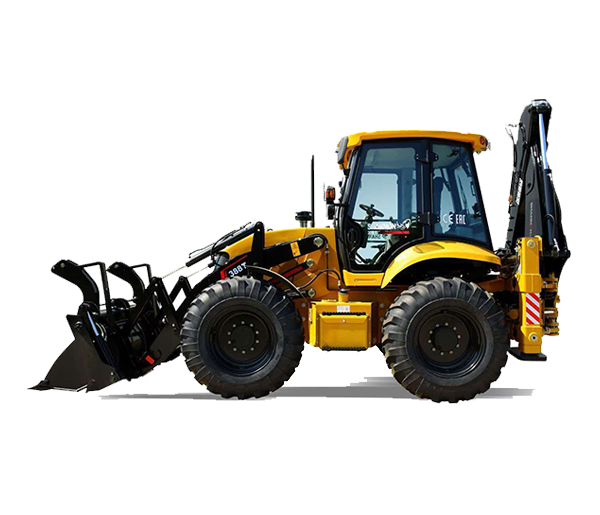
A backhoe loader is a wheeled construction machine with two main working systems. At the front, I have a loader bucket for lifting, carrying, loading, grading, and moving loose materials. At the rear, I have a backhoe arm designed mainly for digging, trenching, excavation, and backfilling.
This two-in-one layout is what makes a backhoe tractor loader useful. Instead of moving between several machines, I can use one machine for a sequence of related tasks. For example, I may dig a utility trench with the rear backhoe, use the front bucket to move excavated soil, and then use the same bucket to backfill or level the working area.
The machine normally uses a diesel engine, hydraulic system, transmission, axles, loader linkage, backhoe boom, stabilizers, tires, operator station, and a range of optional attachments. Each part has a clear job, but the real value comes from how these systems work together.
I also like the mobility of a wheeled backhoe. Unlike a tracked excavator that is mainly designed to work from one position, a backhoe loader can travel between different parts of a site and, depending on the model and local regulations, can also be suitable for road travel. JCB, for example, currently offers backhoe loader configurations designed for both working on site and road travel, with published models reaching up to 50 km/h. :contentReference[oaicite:0]{index=0}
That does not mean a backhoe loader replaces every excavator or wheel loader. I would still select a dedicated excavator for some heavy excavation work and a dedicated wheel loader for high-volume loading. The advantage of a backhoe loader is its balance of functions.
For smaller contractors, municipal teams, farms, utility crews, and general construction companies, that flexibility can be especially useful.
2. How I Understand the Working Principle
The working principle of a backhoe loader is easier to understand if I separate the machine into three basic systems: power, hydraulics, and working attachments.
Engine and Powertrain
The engine supplies mechanical power to the machine. That power is transferred through the drivetrain to the wheels and through the hydraulic system to the working functions. The engine size needs to be matched with machine weight, hydraulic demand, travel requirements, and expected workload.
I do not look at horsepower alone. A machine with more engine power is not automatically the right machine for every job. I also consider torque, transmission behavior, hydraulic output, operating weight, tire configuration, and attachment requirements.
Hydraulic System
Hydraulics are central to the backhoe loader. Hydraulic pumps move pressurized fluid to cylinders and motors. The cylinders then move the loader arms, bucket, boom, dipper, stabilizers, and other hydraulic functions.
When I operate the rear excavator, hydraulic pressure moves the boom and dipper while another circuit controls the bucket. The front loader uses hydraulic cylinders to raise the arms, tilt the bucket, and perform loading or grading work.
This is why hydraulic response matters. If the controls are predictable and the hydraulic system is well matched to the machine, I can make smoother movements and position the bucket more accurately.
Front Loader
The front loader is mainly used for material handling. I can use it for sand, soil, gravel, construction debris, agricultural materials, snow, and other loose materials, depending on the bucket or attachment.
With suitable attachments, the front end can also perform tasks such as fork handling, sweeping, grading, or other site work.
Rear Backhoe
The rear backhoe is designed for digging. I can use it for trenches, drainage channels, foundations, utility lines, landscaping, and general excavation. Stabilizers help keep the machine steady while the rear attachment is working.
The operator normally changes between loader and backhoe tasks depending on the job sequence. That ability to switch functions is one of the main reasons I consider a backhoe loader a multi-purpose machine rather than simply a small excavator.
3. Main Features I Look For in a Construction Backhoe Loader
When I compare a backhoe loader for sale, I usually start with the features that directly affect daily operation rather than focusing on marketing language.
Balanced Excavation and Loading Capability
The first thing I want is a reasonable balance between the front and rear working systems. A backhoe loader should be able to dig efficiently while still providing useful loading performance.
Published machines in this category show how wide the range can be. JCB's current 3CX and 4CX range, for example, lists different engine power levels, digging configurations, shovel capacities, drive arrangements, and steering options. :contentReference[oaicite:1]{index=1}
Four-Wheel Drive Options
For uneven construction sites, muddy areas, loose soil, and slopes, I pay close attention to traction. A 4WD backhoe loader can provide better drive capability in conditions where two-wheel drive may not be enough, although the actual benefit depends on tires, ground conditions, machine weight, and operator technique.
Stable Hydraulic Operation
Hydraulic performance affects digging force, loader movement, attachment operation, and control. I want hydraulic functions to respond smoothly rather than feeling abrupt.
Operator Visibility
Good visibility is another practical issue. The operator needs to see the bucket, trench, working area, nearby people, and obstacles. Modern backhoe loaders from major manufacturers increasingly include improved cab visibility, displays, cameras, and ergonomic controls. JCB's current 3CX/4CX range, for example, includes a rear camera and display on selected configurations, while its 3CX-14 highlights a wide field of view and an operator information display. :contentReference[oaicite:2]{index=2}
Attachment Flexibility
I also look at how easily the machine can work with different attachments. A backhoe loader becomes much more useful when the front and rear systems can support tools suited to the job.
Depending on the configuration, possible attachments may include buckets, forks, Hydraulic Breakers, augers, grapples, brooms, compactors, and other tools. Attachment compatibility must always be checked against hydraulic flow, mounting dimensions, machine capacity, and manufacturer recommendations.
4. Technical Comparison: How I Read Backhoe Loader Specifications
When I compare machines from different manufacturers, I prefer to put the important figures side by side. The following table uses current published specifications from JCB and CASE as an industry reference. These are not HKLOONG specifications; they are included to show the range of specifications available in the backhoe loader market.
| Reference Model | Engine Power | Maximum Dig Depth | Loader / Shovel Information | Source |
|---|---|---|---|---|
| JCB 3CX | 55 kW / 81 kW depending on configuration | Up to about 15 ft with Extradig configuration | 6-in-1 shovel up to 1.3 m³ in listed range | JCB official specifications |
| CASE 580 Super N | 97 hp / 72 kW | 17 ft 11 in / 5.47 m | Front loader and rear backhoe system | CASE official specifications |
| CASE 580 Super N WT | 110 hp / 82 kW | 18 ft / 5.48 m | Full-height loader lift capacity 8,425 lb / 3,822 kg | CASE official specifications |
These numbers immediately show me why model selection needs context. A machine designed for deeper excavation may have different priorities from one designed mainly for utility work or material handling.
CASE's current backhoe loader range also includes models from the 74 hp Utility Plus through the 110 hp 590 Super N and 695SV, with published digging depths ranging from approximately 4.4 m to almost 6.0 m depending on configuration. :contentReference[oaicite:3]{index=3}
I also compare operating weight and power when considering overall machine class.
| Reference Series | Published Power Range | Published Operating Weight Range | What I Would Check | Source |
|---|---|---|---|---|
| Cat 415–430 backhoe loaders | 70–107 hp in the referenced range | Approx. 6,997–10,140 kg in the referenced range | Dig depth, lift capacity, attachment and transport needs | Caterpillar published range data |
| JCB 3CX / 4CX / 5CX range | 55–81 kW in listed configurations | Approx. 7,887–9,500 kg in referenced technical data | Engine, drive, steering, digging and loader configuration | JCB published technical data |
Caterpillar's published backhoe data also shows that machine weight, engine power, loader capacity, and digging depth can vary significantly across a product range. Its published 415–430 data, for example, lists operating weights from approximately 6,997 to 10,140 kg and net power from about 70 to 107 hp. :contentReference[oaicite:4]{index=4}
For me, this is the key lesson: I should never compare two backhoe loaders using horsepower alone. I need to compare the complete working package.
5. Where I Would Use a Backhoe Loader
A backhoe loader fits a surprisingly wide range of applications because the machine combines excavation and loading functions.
Construction and Building Sites
I can use the rear backhoe for foundation trenches, drainage, utility lines, and general excavation. Once the digging work is complete, the front loader can move soil, gravel, sand, or construction materials.
This makes the machine useful for general contractors who need to switch between tasks during the same workday.
Road Construction and Maintenance
Road projects often involve excavation, material movement, drainage, shoulder preparation, and site cleanup. A mobile backhoe loader can move between working areas without requiring the same type of relocation process used by larger tracked machines.
Utility and Pipeline Work
Utility contractors often work in narrow areas where the ability to dig a trench, remove soil, backfill, and move around the site is valuable. I would select the boom, bucket, tire, and overall machine configuration according to trench dimensions and access conditions.
Municipal Engineering
Municipal maintenance teams may work on drainage, sidewalks, road repairs, landscaping, utility maintenance, and public infrastructure. Since these jobs can change from one day to the next, a multi-purpose machine can be practical.
Agriculture
On farms, I can use a backhoe loader for drainage work, ditch maintenance, land preparation, material handling, manure or aggregate movement, and general property maintenance. Attachment selection becomes especially important because agricultural jobs can vary significantly.
Landscaping
For landscaping contractors, a compact or appropriately sized backhoe loader can dig planting areas, move soil, prepare drainage, remove unwanted material, and handle bulk landscaping materials.
JCB specifically lists construction, municipalities, agriculture, landscaping, and other sectors among the applications for its backhoe loader range, which reflects the broad role this type of machine plays across the market. :contentReference[oaicite:5]{index=5}
6. How I Approach Backhoe Loader Manufacturing and Configuration
When I think about manufacturing a backhoe loader, I start with the complete machine rather than one individual component. The frame, engine, hydraulic system, axles, transmission, loader, backhoe, stabilizers, cab, controls, and attachments all need to work as one system.
Structural Manufacturing
The main frame carries loads from both the front loader and rear excavator. I pay attention to material selection, welding quality, joint design, machining accuracy, and structural alignment.
The working arms also experience repeated loading. Every digging cycle places force through the boom, dipper, bucket linkage, pins, and hydraulic cylinders. Good manufacturing therefore requires more than simply making the parts look strong. The components need to fit correctly and move smoothly.
Hydraulic System Assembly
Hydraulic lines and components need clean assembly and proper routing. I want hoses to have enough flexibility while staying away from unnecessary rubbing, sharp edges, and high-heat areas.
Hydraulic cleanliness is also important. Contaminated hydraulic oil can damage sensitive components and affect system performance, so manufacturing and maintenance procedures should both take cleanliness seriously.
Powertrain and Drivetrain
The engine and transmission need to match the machine's intended workload. A backhoe loader used mainly for light municipal work has different requirements from one working every day on demanding construction sites.
I therefore look at engine output, torque, transmission configuration, axle design, drive mode, tire selection, and machine weight together.
Testing
Quality testing is not something I leave until the final step. I want to check key systems during assembly and again after the machine is complete. Hydraulic functions, steering, braking, loader movement, backhoe operation, attachment interfaces, electrical systems, and operator controls all need practical inspection.
HKLOONG's wider business covers equipment R&D, precision manufacturing, quality testing, customized modification, and global distribution. That background is useful when I configure equipment for different working environments instead of treating every machine as a fixed product.
7. Why I Choose HKLOONG for Backhoe Loader Solutions
When I choose construction equipment, I want the machine to make sense for the project. I do not want unnecessary complexity, and I do not want a specification that looks good on paper but does not match the actual working conditions.
That is the approach I bring to HKLOONG.
HKLOONG Heavy Industry Technology (Hefei) Co., Ltd. is headquartered in Hefei, China. We focus on equipment R&D, precision manufacturing, quality testing, customized modification, and global distribution under the HKLOONG brand.
Our broader equipment range includes crawler excavators, wheel loaders, backhoe loaders, amphibious Wetland excavators, and compact machinery. This gives me a wider understanding of how different machines fit different jobs.
For a backhoe loader for sale, I focus on several practical questions before recommending a configuration.
What type of ground will the machine work on?
How deep does the operator need to excavate?
How much material needs to be loaded or moved?
Will the machine travel frequently between job locations?
Is four-wheel drive required?
What attachments will be used?
What are the local engine and emissions requirements?
What service and spare-parts support will be needed?
These questions are more useful to me than simply asking which machine has the highest horsepower.
I also understand that international buyers may have different requirements. A dealer may need a specific configuration for its local market. A contractor may need a machine for a particular project. An OEM customer may require modifications. An equipment rental company may prioritize simple operation and service access.
That is why customization is part of our overall equipment approach. Where the product platform allows it, I can evaluate working configuration, attachment requirements, operating environment, and customer-specific needs before finalizing a machine solution.
My goal is straightforward: provide a backhoe loader configuration that is easy to understand, practical to operate, and matched to the job.
8. Backhoe Loader FAQ
What is a backhoe loader used for?
A backhoe loader is used for digging, trenching, loading, material handling, backfilling, grading, landscaping, road maintenance, utility work, agriculture, and general construction. Its main advantage is the combination of a front loader and rear excavator in one machine.
What is the difference between a backhoe loader and an excavator?
A dedicated excavator is mainly designed around excavation and usually uses a tracked or Wheeled Excavator layout. A backhoe loader combines a front loader with a rear digging attachment and is designed for more varied work. I would choose an excavator when excavation is the dominant task and a backhoe loader when I need both digging and loading functions.
Is a 4WD backhoe loader better for construction sites?
Four-wheel drive can be useful when I need additional traction on loose soil, slopes, muddy ground, or uneven surfaces. However, I would still consider tire selection, ground conditions, machine weight, axle design, and the actual workload before choosing the drive configuration.
Can a backhoe loader be used for road travel?
Many backhoe loaders are designed with road mobility in mind. Some current JCB configurations, for example, publish road speeds of up to 40–50 km/h depending on the model. Actual road use must follow the machine specification and local transportation regulations. :contentReference[oaicite:6]{index=6}
What attachments can I use with a backhoe loader?
Depending on the machine configuration, attachments can include digging buckets, hydraulic breakers, augers, forks, grapples, brooms, compactors, grading tools, and different loader buckets. Before using an attachment, I always check mounting compatibility, hydraulic flow, machine capacity, and manufacturer requirements.
How deep can a backhoe loader dig?
Digging depth varies significantly by model, boom configuration, dipper, and optional equipment. For example, CASE publishes approximately 5.47 m maximum digging depth for the 580 Super N and approximately 5.48 m for the 580 Super N WT, while JCB publishes different digging configurations across its 3CX, 4CX, and 5CX range. :contentReference[oaicite:7]{index=7}
What should I check before buying a backhoe loader?
I recommend checking engine power, operating weight, maximum digging depth, loader capacity, hydraulic performance, transmission, drive configuration, tire size, attachment compatibility, cab visibility, service access, local emissions requirements, and spare-parts support.
Can HKLOONG customize a backhoe loader?
Customization depends on the specific machine platform and project requirements. I can evaluate the working environment, attachment needs, power requirements, operating configuration, and other application details before confirming what modifications are technically suitable.
Who should consider buying a backhoe loader?
I would consider a backhoe loader for general contractors, utility companies, municipal teams, road maintenance crews, landscaping businesses, agricultural operators, rental companies, equipment dealers, and project teams that need one machine to perform both excavation and loading tasks.
Final Thoughts
A Backhoe Loader is useful because it solves a very practical problem: many construction jobs require both digging and material handling. Instead of using one machine for excavation and another for loading, I can use a properly configured backhoe loader to perform both jobs.
The right machine, however, depends on the project. I look at digging depth, loader capacity, hydraulic performance, operating weight, drive system, attachments, terrain, transport needs, and operator requirements before selecting a configuration.
At HKLOONG, I take the same practical approach. Our background in equipment R&D, precision manufacturing, quality testing, customized modification, and global distribution allows us to work across different types of construction machinery and applications.
If I were selecting a construction backhoe loader today, I would start with the actual job rather than a catalog number. Once I know the digging depth, soil conditions, required attachments, travel requirements, working hours, and material-handling needs, it becomes much easier to identify the right machine configuration.



 WhatsApp
 Phone
Phone E-mail
 Message