
 Español
 Pусский
 Français
 العربية


When I look at a mobile crushing project, I do not start with the machine name or the price. I start with a few simple questions: What material are you crushing? How large is the feed? How much material do you need to process every hour? Will the machine stay in one place, or will it need to move around the jobsite? And, perhaps most importantly, what kind of power is actually available where the machine will work?
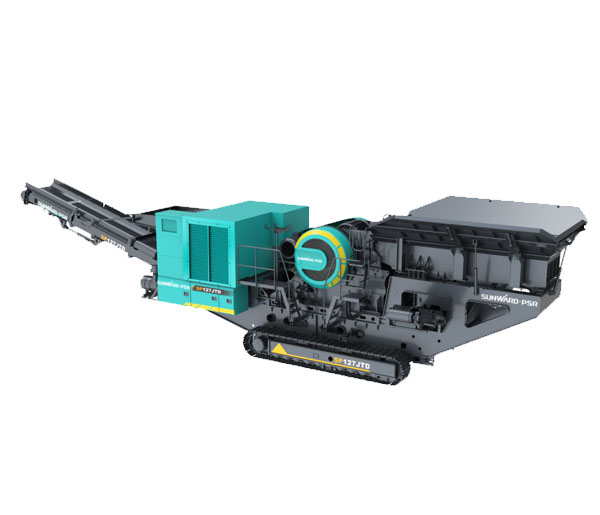
These questions are exactly why I pay attention to the SP127JTD Crawler Jaw Crushing Plant. It is a diesel-electric mobile Jaw Crusher designed for primary crushing, combining crawler mobility with a dual power arrangement. According to Sunward's published specifications, the SP127JTD has a 170–520 t/h processing capacity, a 700 mm maximum feeding size, a 1150 × 760 mm crusher inlet, and a total weight of about 60 tonnes. Its published transportation dimensions are approximately 16,700 × 3,600 × 3,950 mm.
In plain English, this is a crawler-mounted jaw crushing plant built for serious rock and mineral processing work. It is not the type of crusher I would recommend simply because a customer wants a “mobile crusher.” The machine makes more sense when the project needs a large primary crusher, high material throughput, crawler movement, and flexible access to power.
At Ganglong Heavy Industry Technology (Hefei) Co., Ltd., together with our subsidiary Hefei Ganglong International Trade Co., Ltd., we work with construction machinery, mining machinery, agricultural machinery, attachments, complete machines, and related equipment. Our international trade team has experience serving customers in Asia, Africa, America, and other markets.
So when I discuss the SP127JTD with a customer, I look at the complete job rather than one specification. A crushing plant has to work in the real world, not just on a brochure.
1. What Is the SP127JTD Crawler Jaw Crushing Plant?
The SP127JTD is a crawler jaw crushing plant with a diesel-electric drive system. Its main job is primary crushing: taking large pieces of rock, mineral material, or suitable construction material and reducing them into smaller pieces for further processing.
The word “crawler” is important. Unlike a traditional fixed jaw crusher installed on a concrete foundation, a crawler-mounted crusher is designed to move around the working area. The travel system is hydraulic, and Sunward's published specifications list a maximum climbing angle of 20 degrees. Actual movement always depends on ground conditions, slope stability, safety rules, and the machine's operating environment.
The “diesel-electric” part is equally important. Sunward lists the SP127JTD with a diesel-electric drive mode, a total working power of 165 kW, and a generator power of 320 kW. The published product description says the machine supports two power methods, including external and internal power supply. This gives the operator more flexibility when the project has access to grid electricity in some situations but needs onboard power in others.
That flexibility is one of the first things I would discuss with a mining or quarry customer. A machine may have a good crusher, but if its power arrangement does not fit the site, the whole project becomes difficult.
The basic crushing process is straightforward. Large material enters the hopper, moves through the vibrating feeder, enters the jaw crusher, and is broken down by compression. The crushed material then leaves through the discharge system and can be sent to stockpiles, screens, conveyors, or another crushing stage.
The SP127JTD is therefore best understood as the first major crushing stage in a larger material-handling process.
2. How Does a Diesel-Electric Crawler Jaw Crusher Work?
I usually explain a jaw crusher by comparing it with something familiar. Think about two strong surfaces pressing against a piece of stone. When enough force is applied, the stone breaks. A jaw crusher does something similar, but continuously and at a much larger scale.
First, an Excavator, Wheel loader, or another suitable loading machine places raw material into the hopper. The SP127JTD's published hopper capacity is listed as 10 m³, with a feeding height of about 4,277 mm.
The material then reaches the vibrating feeder. The feeder controls how quickly material enters the crushing chamber. This part may look simple, but it is very important. Feeding too much material too quickly can create unnecessary pressure on the crusher. Feeding too slowly can reduce the production rate.
The published maximum feeding size is 700 mm, while the jaw crusher inlet opening is 1150 × 760 mm. These figures give the customer a basic idea of the machine's feed range, but they should not be treated as permission to feed every 700 mm object regardless of shape or material. Real feed conditions should always be checked before operation.
Inside the jaw crusher, the moving jaw works against the fixed jaw. Large material is compressed, broken, and gradually moves downward. The size of the crushed material can be influenced by the closed-side setting, or C.S.S. Sunward's published data gives a C.S.S. range of approximately 70–200 mm for the SP127JTD.
After crushing, the material travels onto the main conveyor. The published conveyor width is 1,200 mm and the discharge height is approximately 3,712 mm.
The diesel-electric power system works behind the scenes. The diesel engine can provide the energy needed to generate electrical power, while the crushing and other driven systems use electric motors. When an external electrical supply is available and suitable, the dual-power concept can provide another operating option.
For me, this is the practical meaning of a diesel-electric crawler jaw crusher: the customer gets the mobility of a tracked machine and a power arrangement that can be adapted to different site conditions.
3. Main Features I Would Check Before Buying
3.1 Diesel-Electric Dual Power
The biggest difference between the SP127JTD and a standard electric crawler jaw crusher is the power arrangement. Sunward describes the machine as having two power methods, including external and internal power supply. This can be useful on projects where electricity availability changes from one location to another.
For example, a quarry may have a stable electrical connection at one processing area but need to move equipment to a less developed working area. A dual-power configuration gives the project more room to adapt.
It is still important to check the local electrical standard, available power supply, fuel conditions, working hours, and project regulations before choosing the final operating arrangement.
3.2 Large Primary Crushing Capacity
The published processing capacity is 170–520 tonnes per hour. That is a wide range, and I would not interpret the upper number as a guaranteed result for every rock type.
Actual production depends on material hardness, abrasiveness, feed gradation, moisture, crusher setting, loading method, operator habits, and the equipment connected before and after the crusher.
Still, the published range shows the kind of work the SP127JTD is designed to handle: large-volume primary crushing rather than small construction-site crushing.
3.3 700 mm Maximum Feeding Size
A 700 mm maximum feed size gives the machine a useful range for large quarry and mining applications. The advantage is obvious: larger raw material can enter the primary crushing process without requiring every piece to be reduced to a very small size beforehand.
However, feed size is only one part of the story. Material shape matters too. A long, flat, or irregular piece may behave differently from a roughly cubic rock of the same nominal size.
3.4 Deep “V” Crushing Cavity
Sunward states that the jaw crusher uses Atlas technology with a deep “V” cavity, a small meshing angle, and a large stroke. According to the manufacturer, this combination is intended to improve processing capacity, reduce energy consumption, and provide strong crushing performance.
For someone buying equipment, I would translate that into a much simpler question: can the crusher take material smoothly, break it consistently, and keep the material moving through the chamber?
That is what matters at the jobsite.
3.5 Strong Feeding Structure
The SP127JTD uses a solid hopper and a feeder fitted with high-strength wear-resistant plates. Sunward describes this arrangement as supporting the stability and durability of the feeding structure.
This is particularly relevant in quarry and mining work because the first part of the machine receives the raw material before the crusher even gets involved. If the feeding structure cannot handle the impact, the entire production process suffers.
3.6 Weldless Main Body Design
One detail that I find interesting is the weldless body design described by Sunward. The manufacturer says this approach is intended to avoid cracking and deformation associated with welding stress. The crusher also uses an integral cast bearing housing for the movable jaw assembly.
These are not features that look exciting in a product photograph, but they matter when a machine is expected to deal with repeated impact and vibration.
3.7 Centralized Lubrication
Lubrication is basic maintenance, but basic does not mean unimportant. The SP127JTD is equipped with a centralized lubrication system intended to support stable working performance.
I always remind customers that centralized lubrication does not mean “no maintenance.” It means the lubrication task can be organized more conveniently. Regular inspections and service are still necessary.
3.8 Electrical Protection
Sunward describes an integrated variable-frequency system with dust-proof, cooling, vibration-isolation, and water-proof functions for protecting the electrical system.
For machines working around dust, rock particles, vibration, and changing weather, electrical protection is not something I would ignore.
4. SP127JTD Technical Data at a Glance
Before talking about applications, I think it is useful to put the major specifications in one place. The following figures come from Sunward's published SP127JTD product data.
| Technical Item | SP127JTD Published Data | Why It Matters |
|---|---|---|
| Drive Mode | Diesel-electric | Supports internal and external power methods |
| Total Working Power | 165 kW | Reference for overall operating power |
| Generator Power | 320 kW | Provides onboard electrical generation capacity |
| Processing Capacity | 170–520 t/h | Suitable for high-volume primary crushing |
| Total Weight | 60 t | Important for transport and site planning |
| Maximum Feeding Size | 700 mm | Defines the published maximum feed size |
| Crusher Inlet | 1150 × 760 mm | Large opening for primary crushing |
| C.S.S. Range | 70–200 mm | Helps define the crushing setting range |
| Hopper Capacity | 10 m³ | Provides space for continuous feeding |
| Transportation Size | 16,700 × 3,600 × 3,950 mm | Important for shipping and route planning |
| Working Size | 18,251 × 5,032 × 4,541 mm | Useful for site layout planning |
Source: Sunward International and Sunward Australia published SP127JTD specifications. Actual delivered configuration should be confirmed before purchase.
5. What Industries Can Use the SP127JTD?
I would normally discuss the SP127JTD with customers in quarrying, mining, aggregate production, road construction, infrastructure projects, and some construction-material recycling applications.
Quarrying
Quarrying is one of the clearest applications for a crawler jaw crushing plant. Large blasted rocks need to be reduced before they can be screened or processed by secondary and tertiary crushers.
The SP127JTD can work as the primary crusher at the front of a larger aggregate production line. The crawler platform can also be useful when the working face changes over time.
For granite, basalt, limestone, and other rock materials, the actual configuration should be confirmed according to hardness, abrasiveness, feed size, moisture, and final aggregate requirements.
Mining
Mining operations often need to move large amounts of material through a controlled crushing process. A jaw crusher is commonly used as a primary size-reduction stage because it can accept relatively large feed material.
The SP127JTD's published 700 mm maximum feeding size and 170–520 t/h processing range make it relevant to larger mineral-processing projects. However, the suitability of any crusher depends on the specific ore and the complete processing line.
Road Construction
Road projects need crushed rock and aggregate for different layers and construction tasks. When suitable rock is available close to the project, mobile crushing can reduce the need to move large amounts of unprocessed material over long distances.
A crawler crusher can be useful when the work area changes as construction progresses. The actual transportation and operating plan still needs to follow local road, environmental, and safety requirements.
Infrastructure Projects
Large infrastructure projects often involve excavation, rock removal, temporary access roads, and aggregate preparation. A Mobile Jaw Crusher can become part of the material flow when the project needs primary crushing close to the excavation or construction area.
Construction and Demolition Recycling
Jaw crushers can also be used in suitable recycling applications involving concrete and other mineral construction waste.
But I would be careful here. Demolition material can contain reinforcing steel, wood, plastic, soil, and other unwanted material. Proper sorting and pre-processing are necessary. The SP127JTD should not be treated as a machine that can simply accept any mixed demolition waste without preparation.
| Industry | Typical Material | Possible SP127JTD Role |
|---|---|---|
| Quarrying | Granite, basalt, limestone and natural rock | Primary crushing |
| Mining | Ore and mineral-bearing rock | Primary size reduction |
| Aggregate Production | Quarried rock | First-stage crushing |
| Road Construction | Rock and construction aggregate | Aggregate preparation |
| Infrastructure | Excavated rock and mineral material | Mobile primary crushing |
| Recycling | Suitable concrete and mineral waste | Size reduction after sorting |
Source: Application descriptions are based on the operating role of crawler jaw crushing equipment and Sunward's published SP127JTD product information. Actual application suitability depends on material, configuration, site conditions, and local requirements.
6. SP127JTD vs. Electric Crawler Jaw Crusher
Because the SP127JTD and SP127JE are closely related crawler jaw crushing plants, customers sometimes ask me which type of power system they should consider. I would not answer that question without first asking about the jobsite.
Sunward lists the SP127JTD as diesel-electric and the SP127JE as electric. Both are published with a 170–520 t/h processing capacity and similar overall transportation dimensions, while the listed total weights are about 60 t for the SP127JTD and 58 t for the SP127JE.
| Comparison Point | SP127JTD | SP127JE |
|---|---|---|
| Drive Mode | Diesel-electric | Electric |
| Published Capacity | 170–520 t/h | 170–520 t/h |
| Maximum Feed Size | 700 mm | 700 mm |
| Crusher Inlet | 1150 × 760 mm | 1150 × 760 mm |
| Published Total Weight | 60 t | 58 t |
| Main Difference | Diesel-electric dual power | Electric power arrangement |
Source: Sunward International published SP127JTD and SP127JE product specifications.
If the project has reliable electrical infrastructure and the customer wants to operate primarily from an external power source, an electric crawler crusher may fit the operating plan. If the site needs more flexibility between external and onboard power, the diesel-electric SP127JTD provides that additional option.
So I would not make the decision from a generic “diesel versus electric” argument. I would look at the actual site.
7. Manufacturing, Inspection and International Delivery
For a 60-tonne mobile crusher, the buying process does not finish when the customer receives the quotation. There are several steps between order confirmation and actual production.
At Ganglong Heavy Industry Technology (Hefei) Co., Ltd., our business covers equipment R&D-related activities, manufacturing, testing, customization, global sales, and equipment services. Our subsidiary, Hefei Ganglong International Trade Co., Ltd., focuses on international trade and has experience serving customers across Asia, Africa, America, and other regions.
When we discuss an SP127JTD order, I prefer to confirm the working conditions first.
What material will the machine process?
What is the maximum feed size?
What capacity is required?
What output size is required?
Will the machine work in a quarry, mine, construction site, or recycling project?
How often will the machine need to move?
Is external electrical power available?
What is the destination country and port?
Are there special inspection or documentation requirements?
What spare and wearing parts should be supplied with the machine?
Once these points are clear, the machine configuration and delivery plan become much easier to discuss.
Production Cycle
I would not give every customer the same production period because large machinery orders are rarely identical. Production time depends on the confirmed configuration, order quantity, customization requirements, inspection arrangements, factory schedule, and delivery plan.
For this reason, the production schedule should be confirmed as part of the commercial order rather than copied from a general product page.
Pre-Shipment Inspection
Before shipment, the machine can be inspected according to the agreed requirements. Typical checks can cover appearance, major mechanical components, hydraulic functions, electrical systems, crushing functions, crawler travel, conveyors, safety-related components, accessories, and documentation.
For international customers, I think this step is especially important. A machine may travel thousands of kilometers before reaching the final project site, so checking important functions before dispatch can make the delivery process much smoother.
Transportation
The SP127JTD has published transportation dimensions of approximately 16,700 × 3,600 × 3,950 mm and a total weight of about 60 tonnes. These dimensions and weight need to be considered when arranging loading, port handling, shipping, inland transportation, and the final delivery route.
For overseas delivery, complete machines are generally planned for sea transportation, with the final method depending on the destination, shipping route, port conditions, cargo dimensions, and local regulations. Spare parts and suitable smaller accessories may be shipped separately by air or express where practical.
Packaging
A machine of this size is not packaged like a small industrial product. Key exposed areas need suitable protection, the machine needs to be secured for transportation, and loose components need to be packed separately when required.
We can prepare packing and shipping arrangements according to the destination and transportation method. Documents, accessories, tools, and spare parts can also be organized according to the agreed delivery list.
Payment
For international machinery orders, payment is commonly arranged by T/T, with a deposit before production and the remaining balance before shipment. The exact payment ratio and commercial terms should be confirmed in the final quotation and sales contract.
8. Why Choose Ganglong for SP127JTD Equipment Sourcing?
When customers buy a large crushing plant internationally, they are not only buying steel, motors, a crusher, and a crawler system. They are also buying a process.
That process includes product selection, technical communication, quotation, order confirmation, production coordination, inspection, documentation, transportation, customs preparation, and after-sales communication.
Ganglong Heavy Industry Technology (Hefei) Co., Ltd. was founded in 2013. Together with Hefei Ganglong International Trade Co., Ltd., the group is affiliated with China Construction Machinery (Group) Co., Ltd. Our business covers construction machinery, mining machinery, agricultural machinery, attachments, complete machine sales, leasing, customization, and international trade.
We also supply our own HKLOONG Excavators, loaders, Backhoe loaders, and swamp excavators, while providing complete machine sales and leasing services involving brands such as Hitachi, SANY, Lonking, Hyundai, XCMG, SHANMON, and LOVOL according to customer requirements.
That broad equipment background can be useful when a customer is planning a complete project rather than purchasing a single machine.
For example, a quarry may need a jaw crusher, screening plant, conveyors, excavator, wheel loader, and spare parts. A mining project may require crushing and screening equipment together with loading and transportation machinery. An infrastructure project may need equipment that can move between different working areas.
In these cases, I prefer to understand the complete material flow first and then discuss the equipment combination.
Our international trade team has served markets across Asia, Africa, America, and other regions. We understand that overseas customers often need more than an English quotation. They may need technical documents, packing details, shipping information, inspection arrangements, and quick answers when something changes.
That is where our role becomes practical: helping connect the machine, project requirements, and delivery process.
9. SP127JTD FAQ
What is the SP127JTD?
The SP127JTD is a crawler jaw crushing plant using a diesel-electric drive system. It is designed mainly for primary crushing applications involving rock, mineral material, aggregate feed, and suitable construction materials.
What is the capacity of the SP127JTD crawler jaw crusher?
Sunward's published specification gives a processing capacity of 170–520 t/h. Actual output depends on the material, feed conditions, crusher setting, feeding method, and complete production line.
What is the maximum feeding size?
The published maximum feeding size is 700 mm. The jaw crusher inlet opening is 1150 × 760 mm. The actual feed should be controlled according to the manufacturer's operating requirements and the characteristics of the material.
Is the SP127JTD diesel or electric?
It is a diesel-electric crawler jaw crushing plant. Sunward describes two power methods, including external and internal power supply.
Can the SP127JTD work without grid electricity?
The diesel-electric configuration includes onboard power generation, giving the machine an internal power option. However, actual operation should follow the manufacturer's instructions and the confirmed machine configuration.
What is the hopper capacity?
Sunward's published SP127JTD specifications list a 10 m³ hopper capacity and a feeding height of approximately 4,277 mm.
What is the crusher inlet size?
The published crusher inlet opening is 1150 × 760 mm.
What is the C.S.S. range?
The published C.S.S. range is approximately 70–200 mm. C.S.S. means closed-side setting and is one of the important factors affecting the size of the crushed material.
How much does the SP127JTD weigh?
The published total weight is approximately 60 tonnes. Because the machine is large and heavy, transportation and site access should be planned before shipment.
What are the transportation dimensions?
The published transportation dimensions are approximately 16,700 × 3,600 × 3,950 mm. The working dimensions are approximately 18,251 × 5,032 × 4,541 mm.
Can it climb slopes?
The published maximum climbing angle is 20 degrees. This should not be interpreted as a general recommendation for operating on any 20-degree slope. Ground conditions, surface stability, safety requirements, machine configuration, and local regulations must be considered.
Is the SP127JTD suitable for quarrying?
Yes, quarrying is one of the applications that can be considered for a crawler jaw crushing plant. The SP127JTD is designed for primary crushing and can be integrated with screening and further crushing equipment depending on the required aggregate product.
Can it be used for mining?
It can be considered for mining projects where a mobile primary jaw crushing stage is required. The exact suitability depends on the ore type, hardness, abrasiveness, feed size, required capacity, and downstream process.
Can it crush concrete?
Jaw crushers can be used for suitable concrete recycling applications. However, concrete demolition feed should be properly sorted and prepared. Reinforcing steel, wood, plastic, soil, and other unwanted material need to be considered before crushing.
How long is the production time?
The production cycle depends on the final configuration, order quantity, customization, factory schedule, inspection requirements, and delivery arrangement. We confirm the specific production schedule before the order is finalized.
How is the SP127JTD shipped overseas?
Because of its size and weight, overseas delivery normally requires detailed sea-freight and port planning. The final transportation method depends on the destination, route, port facilities, cargo dimensions, and local import requirements.
What payment terms are available?
International machinery orders are commonly arranged by T/T, such as a deposit before production and the balance before shipment. Exact payment terms are confirmed in the quotation and sales contract.
Can Ganglong help with other construction machinery?
Yes. Ganglong's product and service scope includes excavators, loaders, backhoe loaders, swamp excavators, construction machinery, mining machinery, agricultural machinery, and matching attachments. The group also provides complete machine sales and leasing services and works with multiple domestic and international equipment brands according to project requirements.
Conclusion: Looking at the SP127JTD From the Jobsite
When I look at the SP127JTD Crawler Jaw Crushing Plant (Diesel-Electric), I see a machine designed around a very practical problem: large-volume primary crushing does not always happen in a perfectly prepared factory environment.
A quarry may move its working face. A mining project may operate far from a stable power grid. A road project may change location as construction progresses. An infrastructure project may need to process material close to the excavation area.
In these situations, mobility and power flexibility become important.
The SP127JTD combines a crawler platform, diesel-electric power system, jaw crusher, vibrating feeder, hopper, conveyor, hydraulic travel system, centralized lubrication, and control-related equipment into one mobile crushing station. Its published processing capacity is 170–520 t/h, maximum feeding size is 700 mm, and total weight is about 60 tonnes.
But I would still make one point very clear: the machine specification is only the beginning. The best crushing result comes from matching the machine to the material and the complete production process.
If you are considering an SP127JTD diesel-electric jaw crusher, an SP127JTD crawler jaw crushing plant, or a complete mobile crushing solution, send us the basic project information: raw material, maximum feed size, target capacity, desired output size, working location, available power, and destination port.
From there, we can work through the equipment configuration, quotation, production schedule, inspection requirements, spare parts, packing, and international transportation step by step.
For a large machine, that practical preparation is often just as important as the machine itself.



 WhatsApp
 Phone
Phone E-mail
 Message