

E6205H Hydraulic Excavator for Construction, Earthmoving and Infrastructure Projects
When I talk with customers about a hydraulic Excavator, I usually do not start with the price. I start with the job.
What kind of ground are you working on? How deep do you need to dig? How much material needs to be moved every day? Is the machine going to work on a road project, a foundation site, a quarry, or a utility project? Will you use a standard bucket, or do you need a breaker or another attachment?
These questions may sound basic, but they can make a big difference when choosing construction equipment.
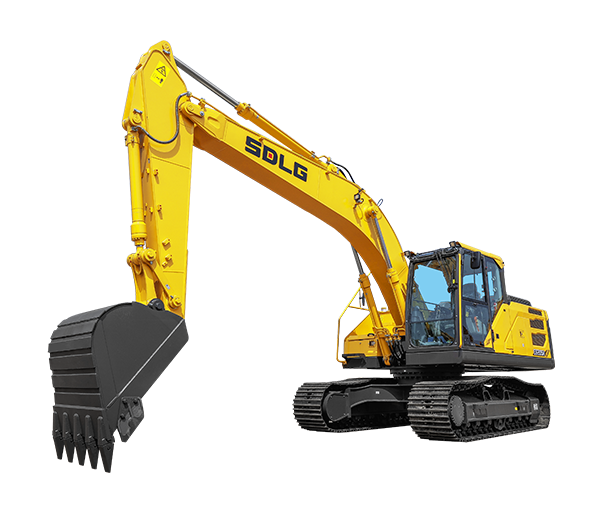
The E6205H Hydraulic Excavator is a medium-sized crawler excavator designed for general excavation, earthmoving, infrastructure construction, and other demanding working conditions. Publicly available E6205H technical information lists an operating weight of about 21,100 kg, rated engine power of 125 kW, a 0.95 m³ bucket, 147.1 kN maximum digging force, and a maximum excavation radius of 9,940 mm. The machine is also listed with a 600 mm track shoe width and 3.5/5.7 km/h travel speeds.
From my experience in construction machinery supply, this puts the E6205H in a useful working range. It is not a small excavator intended mainly for gardens and narrow residential projects, and it is not an ultra-large Mining Excavator either. It is the kind of machine that can be considered when a contractor needs real digging capacity for regular construction work.
At Ganglong Heavy Industry Technology (Hefei) Co., Ltd., I look at the E6205H from the buyer's point of view. Our business covers construction machinery, mining machinery, agricultural machinery, attachments, equipment sourcing, sales, leasing, inspection, and international trade.
For third-party brands such as SDLG, my role is to supply and arrange international trade services rather than describe the equipment as our own manufactured product. I think that distinction matters because a buyer should always know who makes the machine and who is handling the supply.
The simplest way I explain the E6205H is this: it is a crawler excavator built to dig, load, move and prepare material on construction sites.
The machine uses a crawler undercarriage instead of wheels. This gives the excavator a stable platform when it is working on soil, uneven ground, construction sites, and other areas where a road vehicle would not be the right tool.
Above the undercarriage is the upper structure. It includes the engine, hydraulic components, operator cab, counterweight, and swing system. At the front is the working equipment, normally made up of the boom, arm, and bucket.
The operator controls the machine from the cab. Hydraulic pressure moves the boom and arm, closes the bucket, rotates the upper structure, and drives the crawler system.
It sounds simple when explained this way, but there is a lot happening every time the machine completes one digging cycle.
The crawler design is one of the first things I look at. A crawler excavator does not need to behave like a road truck. Its main job is to provide a stable working platform and deliver digging force where it is needed.
For the E6205H, published specifications show a 21,100 kg operating weight and a 600 mm track shoe width. The overall dimensions in the referenced specification are approximately 9,720 mm long, 2,800 mm wide and 2,940 mm high.
Those numbers are important when I discuss shipping and jobsite access with a customer. A machine may be perfect for the digging work but still require careful transportation planning.
I would describe the E6205H as a medium-class hydraulic excavator for contractors who need a balance between working capability and machine size.
It can be used for digging trenches, preparing foundations, moving soil, loading material, drainage work, road construction, site preparation, and similar tasks.
It is also a useful platform for discussing attachments. Depending on the confirmed machine configuration, an excavator can be equipped for different jobs. However, I never recommend simply adding an attachment because it looks useful. Hydraulic flow, pressure, weight, mounting dimensions, and the actual working environment all need to be checked first.
When a customer asks me for an E6205H Hydraulic Excavator, I always check the technical sheet before discussing the final machine package.
There is a simple reason for this. Model names can look almost identical while specifications change according to engine, emission standard, market, year, or configuration.
For the E6205H configuration publicly documented in the available technical material, the machine has an operating weight of 21,100 kg, rated power of 125 kW at 2,200 rpm, 0.95 m³ bucket capacity, and a 4.5-liter F4.5CS4125 engine. The same published information lists a 350-liter fuel tank and 295-liter hydraulic tank.
| Specification | E6205H Published Data | Why I Check It |
|---|---|---|
| Operating weight | 21,100 kg | Shows the machine's working class and transport requirements |
| Rated engine power | 125 kW | Indicates available engine power |
| Engine speed | 2,200 rpm | Useful when checking engine configuration |
| Engine displacement | 4.5 L | Helps identify the specific engine package |
| Bucket capacity | 0.95 m³ | Important for material handling and cycle planning |
| Maximum digging force | 147.1 kN | Important for excavation performance |
| Maximum excavation radius | 9,940 mm | Shows the machine's working reach |
| Travel speed | 3.5 / 5.7 km/h | Useful for jobsite relocation |
| Swing speed | 12.1 r/min | Affects swing movement during digging cycles |
| Fuel tank | 350 L | Useful for working-cycle and service planning |
Source: SDLG E6205H published technical brochure and publicly available E6205H specification information. Exact specifications should be confirmed for the destination market and final configuration.
One specification I pay close attention to is digging force.
The published E6205H data gives a maximum digging force of 147.1 kN.
In everyday language, this tells me something about the machine's ability to push the bucket into material and break it loose.
But I would never use one number to promise a specific production rate. Soil type, bucket teeth, operator experience, digging angle, moisture, material density, and machine condition all affect actual performance.
The referenced E6205H specifications list a maximum excavation radius of 9,940 mm. Other published data identifies a maximum digging depth of approximately 6,650 mm and maximum digging height of approximately 6,730 mm.
These measurements help me decide whether the excavator can physically reach the required working area.
For example, a drainage contractor may care more about digging depth and trench reach than maximum dumping height. A loading application may place more importance on dumping height and swing range.
This is why I ask what the customer actually wants to do instead of sending the same specification sheet to everyone.
I find that customers understand an excavator much faster when we stop talking only about numbers and look at a normal working cycle.
Imagine the E6205H is preparing a foundation.
The operator moves the machine into position. The boom comes down. The arm moves forward. The bucket enters the soil. Hydraulic cylinders provide the force needed to fill the bucket.
Once the bucket is full, the operator raises the boom and rotates the upper structure toward a dump truck or material pile. The bucket opens and releases the material.
Then the machine swings back and repeats the cycle.
This happens hundreds of times during a working day.
The referenced E6205H specification uses a 125 kW engine rated at 2,200 rpm. Publicly listed data identifies the engine as the F4.5CS4125 with 4.5 L displacement.
The engine provides mechanical power, but the excavator cannot use that power directly for digging. The hydraulic system transfers and controls the power.
This is why I always look at the engine and hydraulic system together.
Hydraulic oil is pressurized and directed through valves to different cylinders and motors.
One group of components controls the boom and arm. Other hydraulic functions control the bucket, swing movement, and travel.
For the operator, the process feels simple. Move a control and the machine responds.
Behind that simple movement is a carefully matched hydraulic system.
The boom provides the first major movement at the front of the machine. The arm extends the working range, while the bucket performs the actual digging or material handling.
The published E6205H information gives a boom length of approximately 5,700 mm and an arm length of approximately 2,900 mm.
When I discuss the machine with a customer, I explain that these components should be considered together with the bucket.
A larger bucket may increase the amount of material handled per cycle, but it also changes the load on the working equipment. The correct bucket is the one that matches the material and machine, not necessarily the biggest one available.
The undercarriage supports the entire machine.
It includes tracks, rollers, sprockets, idlers, track shoes, and other components that allow the excavator to travel and stay stable during work.
The E6205H specification identifies 600 mm track shoes.
For customers working on rough construction sites, I pay close attention to undercarriage condition during inspection. Track components are wear parts, and their condition can tell me a lot about how a used machine has been operated.
When I evaluate the E6205H, I do not look only at the engine power. I want to know how the complete machine behaves.
Publicly available E6205H material describes a full electronic positive-flow hydraulic system.
In simple terms, the hydraulic system is designed to respond smoothly to the operator's commands while making good use of available engine power.
For everyday digging, smooth response matters. The operator does not want the boom to feel slow in one movement and too aggressive in another.
A well-matched hydraulic system can make the machine easier to control, especially when the operator needs to combine several movements.
The documented E6205H Tier 4 configuration uses an electronically controlled diesel engine. Public product information identifies the F4.5CS4125 engine and 125 kW rated power.
Electronic control allows the engine and machine systems to work together more precisely than a basic mechanical control setup.
For customers, the practical point is simple: the machine should provide useful power without making daily operation unnecessarily complicated.
The E6205H has also been promoted with a comfortable operator environment. Industry coverage based on SDLG's product information describes an 8-inch color LCD display and an integrated control panel for functions such as throttle, travel speed, and power settings.
I always think the cab is more important than it looks on a product brochure.
If an operator sits in the machine for eight hours a day, visibility and control layout can affect the entire working experience.
A clear display, sensible controls, good visibility, and a comfortable seat may not increase the excavator's digging force, but they can make daily operation less tiring.
Construction equipment is not a machine that can simply be parked and forgotten.
Engine oil, filters, hydraulic oil, fuel systems, cooling systems, track components, pins, bushings, and other parts need regular attention.
When I supply an excavator internationally, I therefore discuss spare parts and maintenance at the same time as the machine.
A buyer should know what parts are normally replaced, how often basic service is needed, and how replacement parts can be obtained.
| Feature | Published E6205H Information | Practical Meaning |
|---|---|---|
| Positive-flow hydraulic system | Full electronic positive-flow control | Supports smooth and responsive machine movements |
| Engine | F4.5CS4125, 125 kW in referenced configuration | Provides power for excavation and hydraulic work |
| Bucket | 0.95 m³ in referenced configuration | Suitable for regular earthmoving cycles |
| Track shoes | 600 mm | Supports crawler operation on construction sites |
| Operator display | 8-inch LCD reported for the referenced China IV configuration | Shows machine information and operating settings |
Source: SDLG E6205H technical material and SDLG-related product information. Features can differ according to production version and destination market.
The E6205H is the kind of machine I would consider for projects where a Compact Excavator is too small but a very Large Excavator would be unnecessary.
That covers a surprisingly wide range of work.
Building projects often need excavation before construction can really begin.
The excavator can be used for foundation excavation, soil removal, site preparation, drainage work, and material loading.
For larger commercial or industrial construction, the E6205H's working range can be useful when there is enough room for the machine to swing and travel.
Road projects usually involve a lot of earthmoving.
The machine can help with ditch excavation, drainage channels, roadbed preparation, soil removal, and general site work.
In road construction, I also pay attention to how the excavator works with other equipment. Dump trucks, loaders, graders, and rollers all need to work together.
If the excavator loads trucks too slowly, the trucks wait. If trucks arrive too slowly, the excavator waits.
Good equipment matching is often more important than simply buying the machine with the largest engine.
Utility construction is another practical application.
Water pipes, drainage systems, cables, and other underground infrastructure require controlled digging.
The E6205H has a published maximum digging depth of around 6.65 meters in the referenced configuration, which gives it useful working range for many larger trenching applications.
However, I would still check the actual trench dimensions and site conditions before confirming the machine.
An excavator used in a quarry can face much harder conditions than one working on ordinary soil.
Rock, dust, long operating hours, uneven surfaces, and heavy loads all increase machine stress.
For quarry customers, I usually spend more time discussing the bucket, teeth, undercarriage, hydraulic system, filtration, cooling, and maintenance plan.
If very hard rock is involved, a Hydraulic Breaker or another attachment may be needed. Again, I check the attachment requirements rather than assuming that every attachment will work with every E6205H configuration.
Earthmoving is probably the easiest application to understand.
The excavator digs soil, fills the bucket, swings, unloads, and repeats.
This basic cycle can be used for site leveling, foundation preparation, pond excavation, drainage, land development, and other projects where large amounts of soil need to be moved.
Construction machinery is also useful outside traditional construction sites.
Depending on the site, an excavator can support irrigation channels, drainage projects, farm roads, pond work, land preparation, and other rural infrastructure tasks.
The key point is always the same: the site needs enough room and ground conditions suitable for a crawler excavator of this size.
Customers often ask me whether they should choose a 15-ton, 20-ton, or 30-ton excavator.
There is no universal answer.
I usually explain that excavator size should follow the workload.
If the machine spends most of its day digging small utility trenches in narrow areas, a 20-ton excavator may be more machine than the job needs.
On the other hand, if a contractor is moving a large amount of material every day, a small excavator may create too many digging cycles.
| Excavator Class | Typical Strength | Common Applications | What I Would Check |
|---|---|---|---|
| Mini Excavator | Small size and easy access | Landscaping, small utilities, residential work | Space, reach and digging force |
| 10–15 ton excavator | Good balance for lighter construction | Utility work, road maintenance, general construction | Bucket size and required reach |
| 20–22 ton excavator | Higher digging and material handling capacity | Earthmoving, infrastructure, quarrying, foundations | Daily workload and transportation |
| 30+ ton excavator | Heavy material movement | Large infrastructure, quarrying, mining | Site size, fuel use and transport |
Source: Equipment-class comparison based on general construction machinery practice; E6205H position and specifications are based on published SDLG E6205H technical information.
For me, the E6205H sits in an interesting middle range.
With an operating weight of about 21.1 tonnes and 125 kW rated power in the referenced configuration, it provides substantially more working capacity than many compact machines while remaining smaller than very large quarry and mining Excavators.
That can make it a practical choice for contractors who have regular excavation work but do not need an ultra-large machine.
I also remind customers not to focus only on the excavator itself.
The bucket is directly connected to the work.
A general-purpose bucket can be useful for soil and common earthmoving. A heavier bucket may be considered for tougher material. A breaker can be useful for concrete or certain hard materials.
But every attachment changes the working conditions of the machine.
That is why I confirm attachment weight, hydraulic requirements, mounting dimensions, and application before adding an attachment to an E6205H order.
When I supply construction machinery to an international customer, I do not see the transaction as simply “machine plus shipping.”
There are several steps between the first inquiry and the machine arriving at the customer's site.
I first ask what the customer is actually doing.
I want to know the country, project type, working environment, expected operating hours, quantity required, attachment requirements, and target delivery schedule.
This information helps me decide whether the E6205H is a suitable machine to discuss.
This step is especially important for the E6205H.
Publicly available documents show that E6205H specifications can vary between configurations. For example, one referenced E6205H configuration is listed at 21,100 kg and 125 kW, while other market information may describe different engine or emission packages.
So I confirm the engine, emission standard, bucket, operating weight, dimensions, hydraulic configuration, attachments, and destination requirements before finalizing the machine.
Before delivery, we can arrange inspection according to the confirmed order.
I normally look at the machine appearance, main operating functions, hydraulic system, electrical system, working equipment, accessories, and required documents.
For used equipment, I would add additional checks for operating hours, engine condition, hydraulic performance, undercarriage wear, leaks, pins and bushings, and maintenance history.
For a new machine, the inspection focus is more about confirming the ordered configuration and making sure the machine is prepared correctly for shipment.
For our international supply process, payment is commonly arranged by T/T, such as a deposit followed by the balance before shipment. Exact payment terms depend on the confirmed order.
I also recommend that customers confirm the commercial invoice, packing information, machine documents, inspection requirements, and shipping arrangements before the final shipment.
The E6205H is a large crawler excavator, so transportation needs proper planning.
For international complete-machine orders, sea transportation is generally the practical choice. The machine is secured for transportation, while loose parts and accessories can be packed separately in cartons or wooden cases when appropriate.
For spare parts and smaller accessories, air or express transportation may be suitable when the size, weight, cost, and delivery time make sense.
| Supply Stage | My Main Check | Customer Benefit |
|---|---|---|
| Project discussion | Application and working conditions | Better machine selection |
| Configuration confirmation | Engine, bucket, emission and attachments | Reduces specification mistakes |
| Pre-delivery inspection | Functions, systems, appearance and documents | Provides clearer order control |
| Packing | Machine securing and loose components | Improves transport protection |
| Shipping | Loading, route and destination | Supports smoother international delivery |
Source: Ganglong Heavy Industry Technology and Hefei Ganglong International Trade supply process provided for international construction machinery orders.
Ganglong Heavy Industry Technology (Hefei) Co., Ltd. was founded in 2013. Together with Hefei Ganglong International Trade Co., Ltd., we operate across equipment R&D, manufacturing, testing, customization, sales, leasing, and international trade.
Our own HKLOONG product range includes excavators, loaders, Backhoe loaders, and swamp excavators.
At the same time, we supply complete machines and provide leasing services involving a range of domestic and international brands, including Hitachi, SANY, Lonking, Hyundai, XCMG, SHANMON, and LOVOL.
That experience gives me a broader view when a customer asks about an E6205H.
Sometimes the customer does not need one excavator. They may need an excavator together with a Wheel loader, attachments, spare parts, or other machines for the same project.
In that situation, I prefer to look at the whole equipment package instead of treating every machine as a separate purchase.
Our international trade arm, Hefei Ganglong International Trade Co., Ltd., focuses on construction machinery, mining machinery, agricultural machinery, and related equipment.
Our team has served customers across Asia, Africa, America, and other international markets.
Every market has its own practical issues. Port selection, shipping routes, import documents, emission requirements, machine configuration, local working conditions, and spare-parts availability can all affect an order.
That is why I try to keep the communication simple.
I want the customer to know exactly which machine is being supplied, which configuration is included, what inspection will be performed, how payment is arranged, and how the machine will be shipped.
When someone searches for an E6205H Hydraulic Excavator for Sale, they may focus immediately on the model name and price.
I think there are more useful questions.
Is this the correct engine version?
Is the emission standard suitable for the destination?
Does the bucket match the job?
Is the machine new or used?
What inspection is included?
What spare parts are available?
How will the machine be transported?
What documents will be supplied?
These details may not look exciting, but they can make a big difference after the machine leaves the factory.
The E6205H is a crawler-type hydraulic excavator in the medium excavator class. Publicly available specifications identify a referenced configuration with approximately 21,100 kg operating weight and 125 kW rated power.
The referenced E6205H technical information lists an operating weight of 21,100 kg. Because specifications can vary by version and market, I recommend confirming the exact operating weight on the final quotation and technical sheet.
The publicly available E6205H specification referenced here identifies the F4.5CS4125 engine, with 4.5 L displacement and 125 kW rated power at 2,200 rpm.
The referenced E6205H configuration is listed with a 0.95 m³ bucket. Bucket configuration may vary according to the machine version and working application, so I confirm the actual bucket before shipment.
The published E6205H technical data gives a maximum digging force of 147.1 kN. Actual excavation performance also depends on soil conditions, bucket configuration, operator technique, and machine condition.
The referenced E6205H information lists a maximum digging depth of approximately 6,650 mm. The actual working depth should be evaluated together with boom, arm, bucket, ground conditions, and site layout.
The published E6205H specifications list a maximum excavation radius of 9,940 mm. This measurement is useful when checking whether the machine can reach the required working area without frequent repositioning.
Yes. Its working range and digging capability make it suitable for many road construction tasks, including earthmoving, ditch excavation, drainage work, site preparation, and loading operations, provided that the machine size matches the project.
Yes. The machine can be considered for quarry and aggregate applications, but I would first check the material hardness, working hours, bucket type, undercarriage requirements, and whether a breaker or another attachment is needed.
Yes. Excavation for drainage, pipelines, cables, and other underground infrastructure can be suitable applications. The final choice depends on trench dimensions, working space, soil conditions, and required digging depth.
Yes. According to the confirmed order, we can arrange checks on machine appearance, main functions, hydraulic and electrical systems, accessories, working equipment, and required documents before delivery.
Complete machines are generally transported by sea for international orders. Because the E6205H is a large crawler excavator, loading, securing, shipping dimensions, port handling, and destination requirements should be confirmed before shipment.
When I look at the E6205H Hydraulic Excavator, I see a machine aimed at contractors who need useful digging capacity for regular construction and earthmoving work.
The published figures give a clear starting point: around 21.1 tonnes operating weight, 125 kW rated power, 0.95 m³ bucket capacity, 147.1 kN maximum digging force, and 9,940 mm maximum excavation radius in the referenced configuration.
But I would not choose the machine from these numbers alone.
I would first look at the project.
If the customer needs to dig foundations, trenches, drainage channels, roadbeds, or large areas of soil, the E6205H may be worth considering. If the site is extremely tight, a smaller excavator may make more sense. If the project involves very high-volume earthmoving or large-scale mining, a larger machine may be more appropriate.
The right excavator is the one that fits the actual work.
For customers searching for an SDLG E6205H Excavator, E6205H crawler excavator, E6205H Construction Excavator, or E6205H Hydraulic Excavator for sale, I recommend looking beyond the headline price.
Check the engine. Check the bucket. Check the emission standard. Check the working range. Check the undercarriage. Check the attachments. Check the inspection. Check the shipping dimensions.
Most importantly, confirm the exact configuration.
That last point is especially important for international machinery orders because different E6205H versions can carry different engine, emission, and equipment specifications.
At Ganglong, my approach is straightforward. I want to understand the customer's project first, confirm the right machine configuration second, and then handle the practical steps of inspection, payment, documentation, packing, shipping, and delivery.
A hydraulic excavator is a working machine, not simply a product sitting on a specification sheet. The real value comes when the machine, attachment, operator, jobsite, and supply plan all fit together.
That is how I approach the E6205H Hydraulic Excavator: not just as a model number, but as a practical piece of construction equipment that needs to make sense for the job it is going to do.
info@hkloong.com
86 158 5511 9567


©2026 HKLOONG Heavy Industry Technology (Hefei) Co., Ltd. All Rights Reserved.

This website uses cookies to ensure you get the best experience on our website.
 Español
 Pусский
 Français
 العربية
 WhatsApp
 Phone
Phone E-mail
 Message