

E6215H Hydraulic Excavator for Construction, Quarrying and Heavy Infrastructure
When I help a customer choose a hydraulic Excavator, I usually start with the job instead of the machine name. What will the excavator dig? How hard is the ground? How deep does the customer need to excavate? How many hours will the machine work every day? Will it mainly use a bucket, or will it also need other attachments?
These questions sound simple, but they are important. A hydraulic excavator is not just an engine with a bucket. It is a complete working system made up of the engine, hydraulic system, boom, arm, bucket, undercarriage, cab, control system, and many smaller components. When these parts work well together, the machine becomes a useful tool on the jobsite.
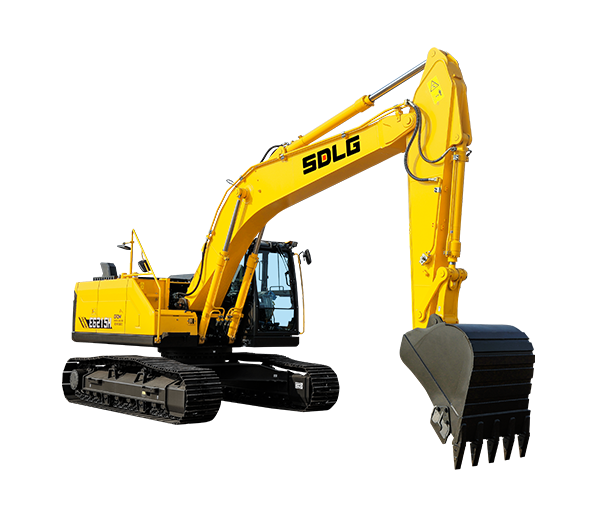
The SDLG E6215H Hydraulic Excavator is a medium-sized crawler excavator developed for demanding working conditions. SDLG's published product information lists the E6215H for utilities, heavy infrastructure, and quarries and aggregates. The published specification for one E6215H version gives an operating weight of 21,500 kg, a 1.1 m³ bucket, 127 kW rated power, 140.1 kN maximum excavation force, and 9,940 mm maximum digging radius. Other market versions, including a Stage V version, have different specifications, so I always confirm the actual configuration before an international order.
From my point of view, this makes the E6215H a practical choice for contractors who need more working capacity than a Compact Excavator can provide but do not necessarily need a very large Mining Excavator.
At Ganglong Heavy Industry Technology (Hefei) Co., Ltd., I approach the E6215H from the buyer's side. Our business covers construction machinery, mining machinery, agricultural machinery, attachments, equipment sourcing, sales, leasing, and international trade. For third-party brands, our role is supply and international trade service rather than claiming to be the original manufacturer.
If I had to explain the E6215H to someone who does not work in construction machinery, I would put it this way: it is a crawler excavator designed to dig, move, and load material on demanding construction sites.
The machine sits on a crawler undercarriage. The upper structure can rotate, while the boom and arm move the bucket into the working area. The hydraulic system provides the force needed to operate these movements.
The operator can use the bucket to excavate soil, prepare foundations, dig trenches, load trucks, move material, and carry out other earthmoving tasks. With a suitable attachment, the same basic machine can also support different types of work.
What I like about this type of machine is its flexibility. A contractor may use it for utility construction one month and earthmoving or road work the next. The machine does not need to be limited to one single task.
Of course, flexibility does not mean every configuration is suitable for every job. A 21-ton-class excavator still needs enough space to swing and travel. It also needs the right bucket or attachment for the material being handled.
That is why I always ask about the actual project before discussing the final E6215H configuration.
One point is worth making clear when preparing an online product page. The E6215H is listed by SDLG as a crawler excavator, not a conventional road-going Wheeled Excavator. Its published specifications include a crawler-based working platform and track dimensions.
This crawler layout gives the machine a stable base for excavation. That can be useful when working with a loaded bucket, digging harder ground, or operating on a large construction site.
It also means transportation needs to be planned properly. A crawler excavator is not something I would expect a contractor to simply drive from one city to another like a road vehicle. For international orders, shipping and loading arrangements need to be discussed before delivery.
Another detail I pay attention to is the market version.
SDLG currently publishes E6215H specifications that are not identical across every market. One official page lists 21,500 kg operating weight, 127 kW rated power, and a 1.1 m³ bucket. SDLG also publishes an E6215H Stage V version with 23,200 kg operating weight and 129.4 kW rated power.
This is why I avoid copying one specification sheet into every quotation. Before I confirm an E6215H order, I check the actual model version, destination market, engine, emission standard, attachments, and machine configuration.
When I receive an inquiry for an E6215H Hydraulic Excavator, I normally look at the technical data before talking about price. Specifications tell me whether the machine is physically suitable for the customer's project.
For the E6215H version published by SDLG, the main figures include 21,500 kg operating weight, 1.1 m³ bucket capacity, 127 kW rated power, 12.1 r/min swing speed, 3.5/5.7 km/h low and high travel speeds, 9,940 mm maximum digging radius, and 6,730 mm maximum digging depth.
| Specification | E6215H Published Data | Why I Check It |
|---|---|---|
| Operating weight | 21,500 kg | Shows the machine's working class and transport needs |
| Bucket capacity | 1.1 m³ | Helps estimate material handled per cycle |
| Rated power | 127 kW | Shows available engine power |
| Maximum excavation force | 140.1 kN | Important for demanding digging conditions |
| Swing speed | 12.1 r/min | Affects swing movement during loading |
| Travel speed | 3.5 / 5.7 km/h | Useful for jobsite relocation |
| Maximum digging radius | 9,940 mm | Shows the working range |
| Maximum digging depth | 6,730 mm | Important for deep excavation |
| Overall dimensions | 9,720 × 2,990 × 2,940 mm | Important for transportation and access |
| Fuel tank | 390 L | Useful for planning working cycles |
Source: SDLG published E6215H product information. Specifications may vary by market and configuration, so I recommend confirming the exact machine before purchase.
The dimensions also tell me something important about this excavator. With an overall width of approximately 2,990 mm and overall height of approximately 2,940 mm in the referenced version, the machine is large enough that transport planning should be considered from the beginning rather than after the order is placed.
The published E6215H information lists the BF6M2012-17T2 engine with 127 kW rated power for the referenced configuration. An earlier SDLG English brochure gives the same engine model and 127 kW rating, along with 6.06 L displacement and six cylinders.
For me, engine power is only one part of the story. A powerful engine is useful, but the power needs to be transferred efficiently through the hydraulic system and working equipment.
The E6215H technical material describes a double-pump constant-power positive-flow control hydraulic system, with a maximum flow rate of 2 × 230 + 18 L/min in the referenced version.
In simple language, the hydraulic system is what turns engine power into the movements the operator needs. It controls the boom, arm, bucket, swing, and travel functions.
For customers who need attachments, hydraulic compatibility becomes even more important. Before I confirm an attachment, I check the required hydraulic flow, pressure, mounting arrangement, and intended working conditions.
Looking at a machine specification sheet is useful, but I always try to imagine the excavator on the actual jobsite.
Suppose the customer is preparing a foundation. The E6215H moves into position, lowers the working equipment, cuts into the soil, fills the bucket, lifts the boom, swings toward the dump truck, and releases the material.
Then it repeats the cycle.
That sounds basic, but the quality of these repeated movements determines a large part of the machine's daily productivity.
The operator uses the boom and arm to position the bucket. Hydraulic cylinders control the movement, allowing the bucket to enter the material and fill.
Once the bucket is loaded, the operator raises the boom and swings the upper structure toward the truck or stockpile.
The E6215H's published maximum excavation force is 140.1 kN for the referenced version. That gives the machine useful digging capability for general earthmoving and more demanding construction conditions.
Still, I would not tell a customer that any 140.1 kN excavator can dig through any ground. Hard rock is a different problem. Ground conditions, moisture, material density, bucket teeth, operator technique, and attachment choice all affect real performance.
The published swing speed is 12.1 r/min.
For a normal digging cycle, the upper structure swings between the digging area and the unloading point. A smooth swing cycle helps reduce wasted movement.
But again, swing speed is not the same as productivity. If the truck is parked too far away, the excavator has to swing farther. If the truck is poorly positioned, the operator may lose time. If the material is difficult to dig, bucket filling takes longer.
This is why I prefer to discuss the entire working cycle rather than promise a simple hourly output number.
The E6215H published low and high travel speeds are 3.5 km/h and 5.7 km/h.
These speeds are useful for moving around a construction site. They are not intended to turn the excavator into a road vehicle.
When a project has several work areas, the machine can reposition itself around the site. For longer moves, especially international moves, I arrange transportation separately.
When I inspect construction machinery, I try to separate the exciting features from the features that actually matter during daily work.
SDLG describes the E6215H as using an exclusive electronic control system that can be customized for different applications and operator habits. The system provides different working modes intended to improve productivity and reduce fuel consumption.
I like this idea because not every operator works in exactly the same way.
For heavy excavation, the machine may need one working mode. For finer grading or lighter work, the operator may prefer another. Being able to adjust the machine's response can make the equipment easier to use across different tasks.
The E6215H is built around a reinforced chassis and working equipment. SDLG's product information also mentions thickened track shoes and a double-support structure around the sprocket area.
These are the parts I care about when thinking about long-term use.
A crawler excavator spends much of its life on rough ground. The undercarriage receives loads when the machine travels, turns, digs, and works on uneven surfaces. A strong chassis is therefore not just a nice feature; it is part of the machine's basic working foundation.
SDLG's published E6215H information describes an H-series cab with an 8-inch touch screen, air conditioning, and an air suspension seat with heating and ventilation in the relevant configuration. Safety equipment listed by SDLG includes a ROPS-certified cab, rear and right-side cameras, a beacon, travel alarm, and dual emergency shut-off switches.
From my point of view, the cab deserves more attention than it usually gets in online machinery shopping.
The operator may spend eight or ten hours inside the machine. Good visibility, a comfortable seat, simple controls, and a clear display can make a long working day easier.
The E6215H product information also emphasizes concentrated maintenance points. This is useful because regular service is much easier when filters, inspection points, and other service components can be reached without taking apart half the machine.
For an international customer, I also ask about spare parts before finalizing the machine package. A machine can be technically suitable but still become difficult to operate if important service parts are hard to obtain.
Some published E6215H versions use a Perkins engine with passive regeneration technology for diesel particulate control. SDLG states that this system can automatically remove diesel particulates without unnecessary downtime.
This feature is relevant to the Stage V configuration, not something I would automatically apply to every E6215H sold in every market. Emission standards and engine configurations need to be confirmed for the destination country.
| Feature | Published E6215H Information | What It Means in Daily Work |
|---|---|---|
| Electronic control | Customizable working modes | Allows different operating preferences |
| Double-pump hydraulic system | 2 × 230 + 18 L/min maximum flow in referenced version | Supports machine and attachment functions |
| H-series cab | 8-inch touch screen and air suspension seat | Improves operator control and comfort |
| Reinforced chassis | Strengthened working structure and undercarriage | Designed for demanding site conditions |
| Safety equipment | ROPS cab, cameras and travel alarm | Supports operator awareness |
Source: SDLG E6215H product information. Equipment and specifications can vary by market and version.
SDLG lists utilities, heavy infrastructure, and quarries and aggregates as the main application areas for the E6215H.
Those applications make sense to me because the machine sits in a useful middle ground. It is large enough for substantial excavation work, but it is not in the same size class as an ultra-large mining excavator.
Utility projects can include drainage, pipelines, water systems, cables, and other underground work.
The E6215H's published maximum digging depth of 6,730 mm and maximum digging radius of 9,940 mm give it a useful working range for larger trenching and excavation projects.
For a utility contractor, I would still check the actual trench dimensions and working space. A 21-ton excavator needs room to operate safely, especially when the upper structure is swinging close to roads, buildings, or other equipment.
Infrastructure projects are another natural application.
Roads, bridges, drainage systems, industrial facilities, foundations, and large site-preparation projects often require continuous excavation and material handling.
In these situations, I like to look at the excavator as part of a larger team of machines. Dump trucks need to match the excavator's bucket size. Loaders may move stockpiled material. Graders prepare surfaces. Rollers compact them.
If one machine is badly matched to the others, the whole working cycle can slow down.
Quarry work is usually harder on equipment than ordinary construction.
Dust, hard material, uneven ground, long working hours, and heavy loads can all increase machine stress.
For quarry customers, I pay close attention to undercarriage condition, cooling, filtration, bucket configuration, maintenance intervals, and operator habits.
If the customer is dealing with very hard rock, I also discuss whether the bucket is enough or whether a different method such as ripping, drilling, or hydraulic breaking should be considered.
Earthmoving is one of the most common uses for hydraulic Excavators.
The machine can remove soil, prepare foundations, shape excavation areas, dig drainage channels, load trucks, and move material around the site.
For large earthmoving work, bucket size and cycle time become especially important. The goal is not simply to have a strong excavator. The goal is to move the required amount of material efficiently.
The E6215H can also support larger municipal and road-related construction tasks where the available working area is suitable.
For tight city streets, however, I would not automatically recommend a 21-ton excavator. Space, traffic, transport restrictions, and swing clearance can change the equipment choice completely.
One question I hear regularly is: “Should I buy a 20-ton excavator, a 22-ton excavator, or a smaller one?”
My answer is always based on the project.
A smaller machine can be easier to transport and may fit into narrow spaces. A larger machine can move more material per cycle and may offer greater digging capability. The right choice is the one that fits the actual workload.
| Excavator Class | Main Advantage | Typical Application | What I Would Check |
|---|---|---|---|
| Mini Excavator | Compact size | Landscaping, small utilities, limited spaces | Working space and digging force |
| 10–15 ton class | Flexible transport and general work | Utilities, construction and earthmoving | Required reach and bucket size |
| 20–23 ton class | Balance of size and working capability | Infrastructure, quarrying and earthmoving | Site capacity and daily workload |
| 30+ ton class | Higher heavy-duty working capacity | Large earthmoving, quarrying and mining | Transport, fuel use and job volume |
Source: General construction machinery class comparison. E6215H specifications are based on SDLG published product information; the other categories represent general equipment classes rather than specific competing models.
I would not call the biggest machine the best machine. If the customer is digging small trenches in a crowded urban area, a Large Excavator may be more trouble than it is worth. If the customer is moving thousands of cubic meters of material every day, a small excavator may create too many cycles.
That is why I ask about production requirements before recommending a machine.
The standard E6215H configuration is published with a 1.1 m³ bucket, while SDLG's Chinese product page gives a bucket capacity range of 0.85–1.25 m³.
This is a useful reminder that bucket capacity can vary with configuration.
I would not choose a bucket simply because it has the largest volume. The bucket needs to match the machine, material, digging conditions, and required cycle.
A general bucket may be suitable for ordinary soil. Harder material may require a different tooth arrangement or bucket design. If an attachment is too heavy for the working system, it can also change machine behavior.
For international machinery supply, I see the machine and the supply process as two parts of the same order.
It is not enough to find an excavator and quote a price. The buyer also needs to know what exact configuration is being supplied, how it will be inspected, what documents are included, how payment is arranged, and how the machine will reach the destination.
I normally begin with the customer's project.
I ask about the country, application, ground conditions, expected working hours, required quantity, bucket or attachment requirements, and preferred delivery schedule.
This helps me understand whether the E6215H is actually suitable.
Next, I confirm the machine version.
This step is particularly important for the E6215H because different market versions have different published parameters. The standard version referenced on SDLG's international pages is around 21.5 tonnes and 127 kW, while the Stage V version published by SDLG is around 23.2 tonnes and 129.4 kW.
I therefore confirm the engine, emission standard, operating weight, bucket, dimensions, and other important configuration details before the final quotation.
Before shipment, we can arrange checks according to the confirmed order.
These checks can cover the machine appearance, major operating functions, hydraulic and electrical systems, working equipment, attachments, accessories, and required documents.
If a customer has a third-party inspection company or a specific checklist, I prefer to know this before the machine is prepared for delivery.
For our international supply process, payment is commonly arranged by T/T, such as a deposit followed by the balance before shipment. The exact payment terms are agreed according to the confirmed order.
I always recommend confirming the machine specification, attachments, inspection requirements, payment schedule, shipping terms, and documents in writing before payment.
The E6215H is a large crawler excavator. The published dimensions for the referenced version are approximately 9,720 mm long, 2,990 mm wide, and 2,940 mm high.
That means transportation needs to be planned carefully.
For international orders, complete construction machines are generally transported by sea. The machine is secured and protected for transportation, while loose parts, accessories, and suitable spare parts can be packed separately.
For smaller spare parts or accessories, air or express shipping may be practical depending on the weight, dimensions, urgency, and destination.
| Supply Stage | What I Confirm | Why It Matters |
|---|---|---|
| Project discussion | Application, ground and workload | Helps match the machine to the actual job |
| Configuration | Model, engine, emission standard and bucket | Avoids version confusion |
| Inspection | Appearance, functions and systems | Improves order transparency |
| Documents | Required machine and commercial documents | Supports export and import procedures |
| Packing | Machine protection and loose parts | Reduces transportation risk |
| Shipping | Route, loading and destination | Helps control delivery arrangements |
Source: General international machinery supply process provided by Ganglong Heavy Industry Technology and Hefei Ganglong International Trade. Exact arrangements depend on the confirmed order and destination.
Ganglong Heavy Industry Technology (Hefei) Co., Ltd. was founded in 2013. Together with Hefei Ganglong International Trade Co., Ltd., our business covers construction machinery, mining machinery, agricultural machinery, attachments, equipment sourcing, customization, sales, leasing, and international trade.
Our self-branded HKLOONG product range includes excavators, loaders, Backhoe loaders, and swamp excavators. At the same time, we provide complete machine sales and leasing services involving domestic and international brands such as Hitachi, SANY, Lonking, Hyundai, XCMG, SHANMON, and LOVOL.
For me, this broader machinery background is useful because customers rarely have only one equipment requirement.
A contractor may need an excavator for foundation work, a Wheel loader for material handling, an attachment for special work, and spare parts for maintenance. A mining customer may need several machines working together. An agricultural customer may need a completely different equipment combination.
Instead of looking at the E6215H as an isolated product, I prefer to understand the complete project.
Our international trade team has experience serving customers across Asia, Africa, America, and other markets. International construction machinery orders can involve different import requirements, port arrangements, shipping conditions, documents, and local working environments.
That is why I try to keep communication clear and practical.
I want the buyer to know exactly what machine is being offered, which configuration is included, what needs to be inspected, what documents will be prepared, and how transportation will be handled.
I also make an important distinction when supplying third-party brands. We do not describe another company's branded equipment as our own manufactured product. Our role is to provide sourcing, sales, inspection, logistics coordination, leasing where applicable, and international trade services.
The E6215H is a medium-sized crawler hydraulic excavator designed for demanding working conditions. SDLG lists utilities, heavy infrastructure, and quarries and aggregates among its application areas. A published E6215H configuration has 21,500 kg operating weight, 1.1 m³ bucket capacity, and 127 kW rated power.
One SDLG-published E6215H version has an operating weight of 21,500 kg. SDLG also publishes a Stage V version at 23,200 kg, so I recommend confirming the actual market version before ordering.
The referenced E6215H version uses the BF6M2012-17T2 engine with 127 kW rated power. An SDLG English brochure lists six cylinders and 6.06 L displacement for this configuration.
The international E6215H product page lists a 1.1 m³ bucket, while the Chinese SDLG product page gives a bucket capacity range of 0.85–1.25 m³. The exact bucket should therefore be confirmed according to the machine configuration.
The referenced E6215H configuration has a published maximum digging depth of 6,730 mm and maximum digging radius of 9,940 mm.
The published maximum excavation force for the referenced configuration is 140.1 kN. Another technical source lists bucket digging force and arm digging force separately, so I recommend checking the exact test standard and configuration when comparing specifications between models.
Yes. Quarrying and aggregates are specifically listed by SDLG as an application area for the E6215H. However, actual suitability depends on material hardness, working hours, ground conditions, bucket selection, attachment requirements, and maintenance planning.
Yes. Utilities are one of the published application areas. The machine's working reach and digging depth make it suitable for many larger trenching, drainage, pipeline, and earthmoving tasks when the site has enough operating space.
SDLG states that the E6215H electronic control system can be customized for different applications and operator habits, with different working modes intended to improve productivity and reduce fuel consumption.
Attachment availability depends on the machine configuration and destination. Before confirming an attachment, I check hydraulic flow, pressure, mounting arrangement, attachment weight, and the intended application. This is particularly important when the customer plans to use Hydraulic Breakers or other hydraulic tools.
There is no single delivery period for every order. Our supply timing depends on the selected version, configuration, order quantity, machine availability, inspection requirements, and destination. I confirm the actual schedule after the machine and order details are clear.
Yes. According to the confirmed order, we can arrange checks covering machine appearance, main functions, hydraulic and electrical systems, accessories, working equipment, and required documents. Customer-specific inspection requirements can also be discussed before shipment preparation.
Complete construction machines are generally shipped by sea for international orders. Because the E6215H is a crawler excavator with substantial dimensions and weight, loading, securing, port handling, and destination arrangements should be confirmed before shipment.
When I look at the E6215H Hydraulic Excavator, I see a machine designed for contractors who need a serious working tool without moving all the way into the very large excavator class.
The published numbers give a clear picture. The referenced configuration has about 21.5 tonnes operating weight, 127 kW rated power, a 1.1 m³ bucket, 140.1 kN maximum excavation force, 9,940 mm maximum digging radius, and 6,730 mm maximum digging depth.
But I would never tell a customer to choose the machine based on these numbers alone.
I would first check the jobsite. Then I would look at the soil, digging depth, working space, daily workload, truck capacity, bucket choice, transportation conditions, and maintenance plan.
I would also confirm the exact E6215H version. This matters because the published specifications are not identical across all markets. A standard version and a Stage V version can have different operating weights, engines, rated power, emission standards, and other details.
For customers searching for an E6215H Hydraulic Excavator for Sale, SDLG E6215H Excavator, E6215H crawler excavator, or E6215H Construction Excavator, my advice is simple: compare the complete machine, not just the headline price.
Check the configuration. Check the bucket. Check the hydraulic system. Check the inspection requirements. Check the shipping dimensions. Check the documents. And most importantly, check whether the machine actually fits the job.
At Ganglong, this is the approach I use when handling international construction machinery orders. I prefer to understand the project first, confirm the machine second, and then work through inspection, payment, documentation, packing, shipping, and delivery.
A hydraulic excavator is a working investment. When the machine is properly matched to the job, it can become an important part of the daily production system. For utilities, heavy infrastructure, quarrying, earthmoving, road construction, and other demanding projects, the E6215H provides a practical machine platform to consider.
And for me, that is what a good machinery purchase should be about: not simply buying a yellow machine, but putting the right piece of equipment into the right jobsite with the right configuration and a clear supply plan behind it.
info@hkloong.com
86 158 5511 9567


©2026 HKLOONG Heavy Industry Technology (Hefei) Co., Ltd. All Rights Reserved.

This website uses cookies to ensure you get the best experience on our website.
 Español
 Pусский
 Français
 العربية
 WhatsApp
 Phone
Phone E-mail
 Message