
 Español
 Pусский
 Français
 العربية


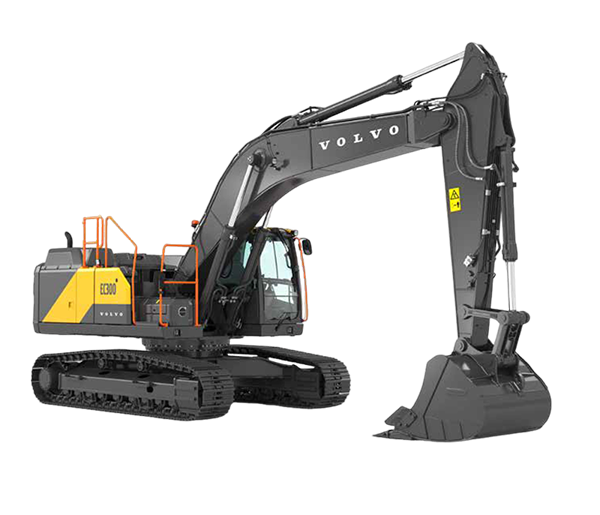
When customers ask me about the EC300F crawler excavator, I usually start with one simple point: this is not a small jobsite machine. It belongs to the heavy crawler Excavator class and is designed for projects where digging depth, working reach, machine stability and daily productivity all matter.
At Ganglong Heavy Industry Technology (Hefei) Co., Ltd., we supply construction machinery for customers working in different markets and different ground conditions. We work with our international trade team to arrange equipment sourcing, machine inspection, configuration confirmation, transportation and related documents. For Volvo equipment, I always recommend confirming the exact model, production year, market version and configuration before purchase, because specifications can change between markets and machine configurations.
The current official Volvo product information uses the name EC300, while the technical documentation also identifies the EC300F L configuration. That is why the phrase “EC300F Crawler excavator” is often used as a practical product-search term. The official Volvo EC300 specification lists an operating weight range of 29,700–38,800 kg, gross power of 189 kW, bucket capacity from 0.52 to 2.06 m³, maximum digging reach of 10,185 mm and maximum digging depth of 6,845 mm for the referenced configuration.
1. What Is an EC300F Crawler Excavator?
A crawler excavator uses a tracked undercarriage instead of normal wheels. This gives the machine a large contact area with the ground and helps it stay stable while digging, lifting and swinging. For large earthmoving projects, this basic design is very useful because the excavator has to handle heavy loads again and again during a normal working day.
When I look at an EC300F excavator, I pay attention to more than just engine power. The boom, arm, bucket, hydraulic system, undercarriage, counterweight and track shoes all have to work together. A strong engine alone does not make a good excavator. The machine needs balanced hydraulic power and enough stability to turn engine power into useful digging work.
The official Volvo EC300 data gives a gross power rating of 189 kW at 1,400 rpm, with an operating weight range of 29,700–38,800 kg. Bucket capacity is listed from 0.52 to 2.06 m³. The same official page gives a maximum digging reach of 10,185 mm and a maximum digging depth of 6,845 mm for its referenced configuration.
These figures are useful when comparing machines, but I never treat a catalog number as the whole story. A customer using the excavator for quarry work may need a different bucket and undercarriage setup from someone working on a construction site. A long-reach application also needs a different working range from a standard digging job.
For this reason, when we receive an inquiry for a Volvo EC300F excavator, we first ask what the machine will actually do. We look at the working environment, required bucket, digging depth, transport restrictions, local emission requirements and expected workload before confirming the equipment.
2. How Does the EC300F Excavator Work?
The working principle is actually easier to understand than many people think. The engine provides mechanical power, and the hydraulic system transfers that power to the main working functions. Hydraulic oil is pressurized and sent through the system to control the boom, arm and bucket. Separate hydraulic functions also control travel and machine rotation.
During a normal digging cycle, I can break the process into several simple steps. First, the crawler tracks position the machine. The boom moves the working equipment into the correct area. The arm brings the bucket toward the soil. The bucket cuts into the material and fills. The arm and boom then lift the loaded bucket, while the upper structure swings toward the dumping position. After the material is released, the machine returns to the digging position and repeats the cycle.
This repeated cycle is where an excavator earns its money. A machine that can dig hard material but wastes time during every swing, positioning movement or attachment change may not perform well in real work. That is why I look at the whole working process rather than one impressive specification.
The hydraulic system is especially important. Hydraulic pressure and flow control how smoothly the machine moves and how much force reaches the bucket and arm. Volvo's official EC300 data lists breakout force of 164 kN under normal conditions and 179 kN with boost, while arm tear-out force is listed at 158 kN normally and 172 kN with boost. These values are based on the stated test standard and configuration, so actual machine performance should always be checked against the exact unit being supplied.
In everyday language, this means the machine has the digging force needed for demanding earthmoving work. But I still advise operators to match the bucket and working method to the material. Clay, loose soil, gravel, rock and mixed construction waste do not behave in exactly the same way.
3. Main Features I Look for in the EC300F Crawler Excavator
Heavy-Duty Working Range
One of the reasons the EC300F Crawler excavator is interesting for large projects is its working range. The official Volvo EC300F product guide shows several arm choices for the EC300F L configuration. With the 6.2 m boom, the listed arms include 2.55 m, 2.75 m, 3.05 m and 3.7 m. The corresponding maximum digging reach ranges from 10,185 mm to 11,320 mm, while maximum digging depth ranges from 6,845 mm to 7,995 mm.
That difference matters in real projects. A shorter arm can be suitable when the priority is digging and loading with a strong, compact working envelope. A longer arm can make sense when more reach or depth is needed. I do not recommend choosing the longest arm simply because the number looks better. The right configuration depends on the job.
Strong Crawler Undercarriage
The undercarriage is the part of a crawler excavator that takes a lot of punishment. Tracks support the machine, help it move around the site and spread its weight across the ground. For customers working on large construction sites, earthmoving projects or ground with lower bearing capacity, track width deserves careful attention.
The Volvo EC300F technical guide shows different track-shoe configurations, so the overall machine width and ground pressure can change with the selected setup. This is a useful reminder that an excavator's working weight is not always one fixed number.
Flexible Bucket Selection
Bucket selection is another area where I spend time with customers. A general-purpose bucket may be suitable for common soil and earthmoving. Heavy-duty buckets may be more appropriate for tougher material. A larger bucket can move more material per cycle, but that does not automatically mean higher productivity if the material is heavy or the machine is not configured for it.
Volvo's current EC300 specification lists bucket capacity from 0.52 to 2.06 m³ depending on configuration. This wide range shows why the final bucket choice should be connected to the job rather than selected separately.
Operator Visibility and Access
construction equipment is used for long hours, often in busy environments. The operator needs to see the digging area, truck position, nearby workers and machine surroundings as clearly as possible. Volvo describes the current EC300 as offering improved machine access and visibility, together with longer service intervals and improved fuel efficiency.
From my side as a machinery supplier, I consider these practical points important because they affect the operator's daily experience. A machine can have good specifications on paper, but if routine inspection or service access is difficult, maintenance becomes harder over time.
4. EC300F Crawler Excavator Specifications and Configuration Comparison
Below are reference figures from Volvo's official technical information. I include them because customers often want to compare the machine in a simple way before asking for a quotation. The figures should be treated as reference data, not a promise that every EC300F machine will have exactly the same configuration.
| Specification | Official EC300 Reference | Practical Meaning |
|---|---|---|
| Operating weight | 29,700–38,800 kg | Machine weight changes with configuration and equipment |
| Gross power | 189 kW | Power available for demanding excavation work |
| Bucket capacity | 0.52–2.06 m³ | Different buckets can suit different materials and tasks |
| Max. digging reach | 10,185 mm | Useful for trenching, loading and general excavation |
| Max. digging depth | 6,845 mm | Suitable for deeper excavation work |
| Breakout force, normal | 164 kN | Bucket digging force under the stated test condition |
| Breakout force, boost | 179 kN | Higher bucket digging force with boost |
| Overall width | 3,190 mm | Important for transport and jobsite access |
Source: Volvo Construction Equipment official EC300 product information. The stated values are based on a specified EC300F L configuration and may vary by market and machine setup.
For customers who need more detailed working-range information, the Volvo EC300F guide provides several arm configurations. Here is a simplified comparison from the official product guide.
| EC300F L Arm | Max. Digging Reach | Max. Digging Depth | Typical Reason to Consider |
|---|---|---|---|
| 2.55 m | 10,185 mm | 6,845 mm | General excavation configuration |
| 2.75 m | 10,425 mm | 7,045 mm | More working reach and depth |
| 3.05 m | 10,715 mm | 7,345 mm | Deeper excavation and extended working range |
| 3.7 m | 11,320 mm | 7,995 mm | Projects needing greater reach and depth |
Source: Volvo EC300 product guide, EC300F L configuration with 6.2 m boom and direct-fit bucket.
There is also an EC300F LR long-reach configuration in Volvo's technical documentation. The product guide lists a 10.2 m boom and 7.9 m arm for the EC300F LR, with maximum digging reach of 18,590 mm and maximum digging depth of 14,755 mm. This is a very different working setup from a standard EC300F L machine and should be selected only when the project actually requires long reach.
5. Ground Pressure, Track Width and Difficult Jobsites
When customers tell me that they need an excavator for soft ground, muddy areas or large earthwork sites, I immediately ask about the undercarriage. This is not a small detail. Track width affects machine width, contact area and ground pressure.
The EC300F product guide provides different track-shoe options for the EC300F L. This gives customers more room to match the machine with their operating conditions. A wider shoe generally increases the contact area, although the final machine setup still needs to be checked as a complete system.
| Track Shoe | Reference Operating Weight | Ground Pressure | Overall Width |
|---|---|---|---|
| 600 mm | 30,560 kg | 59.0 kPa | 3,190 mm |
| 700 mm | 31,140 kg | 51.5 kPa | 3,390 mm |
| 800 mm | 31,510 kg | 45.6 kPa | 3,490 mm |
| 900 mm | 31,880 kg | 41.0 kPa | Configuration-dependent |
Source: Volvo EC300F technical product guide. Values shown are reference figures for EC300F L configurations and can change with machine equipment and track setup.
These figures are especially useful when planning work on softer ground. For example, the reference ground pressure drops as the track shoe becomes wider. At the same time, wider tracks also increase overall machine width, which can create transport or site-access limits.
That is why I always treat track selection as a balance. If a machine has to travel through a narrow gate or onto a restricted transport trailer, the widest possible track may not be practical. If ground pressure is a major concern, however, a wider undercarriage may deserve consideration.
For wetland, muddy or waterlogged projects, I also recommend checking whether additional undercarriage changes, mats, long-reach equipment or other attachments are required. The EC300F should not automatically be described as a factory Wetland excavator simply because some configurations can offer lower ground pressure. The exact machine setup has to match the actual project.
6. Where Can I Use an EC300F Excavator?
Construction and Infrastructure
General construction is one of the most common applications for a machine in this class. I can supply or arrange machines for projects involving site preparation, foundation excavation, road construction, drainage, earthmoving and large-scale material handling.
For trenching work, the digging depth and working reach are important. For loading trucks, the operator needs a working range that matches the truck position. For site preparation, the machine may work with a different bucket and attachment combination. This is why I prefer to discuss the application first rather than simply quote a machine name.
Quarrying and Mining
Quarrying puts heavy demands on Excavators. Material can be hard, abrasive and heavy, so bucket selection and machine configuration become especially important. Volvo lists quarrying among the applications for the current EC300.
For mining-related work, I would normally review the material type, loading method, bench conditions, bucket capacity and transportation requirements before confirming the machine. If the excavator will work continuously in tough material, wear parts and maintenance planning should also be included in the purchasing discussion.
Road Building
Road projects involve excavation, drainage, soil removal, slope preparation and material handling. A crawler excavator can move around a large site while keeping the working equipment stable during digging.
For customers buying an EC300F excavator for construction, roadwork can be a good example of why configuration matters. The machine may need to switch between digging, loading and attachment work during the same project.
Municipal Engineering
Municipal projects often involve water drainage, utility trenches, land preparation and infrastructure repairs. Working space may be limited, so the machine's overall width, tail swing and attachment choice should be checked carefully.
Agriculture and Land Development
Large farms and land-development projects may also use crawler excavators for drainage channels, pond construction, land preparation and material handling. For softer ground, track configuration becomes particularly important.
7. How We Handle Sourcing, Inspection and Delivery
Ganglong Heavy Industry Technology (Hefei) Co., Ltd. was founded in 2013. Together with Hefei Ganglong International Trade Co., Ltd., we work across construction machinery, mining machinery, agricultural machinery and related attachments. Our international trade team has experience serving customers in Asia, Africa, America and other overseas markets.
One important point is that we do not describe every international brand as our own manufactured product. For brands such as Volvo, Hitachi, SANY, Lonking, Hyundai, XCMG, SHANMON and LOVOL, our role is to provide complete machine sales and leasing services, sourcing and related international trade support according to the customer's requirements.
When a customer asks us for an EC300F Crawler excavator, the first step is configuration confirmation. I want to know the required model, production year if applicable, working hours for used equipment, attachment requirements, engine and emission requirements, track configuration, destination country and expected working conditions.
For a new or sourced machine, the production or preparation period depends on the selected model, configuration, quantity and availability. We confirm the estimated schedule before the order moves forward rather than giving one fixed delivery time for every machine.
Our Inspection Process
Before shipment, we arrange a practical inspection covering the machine appearance, engine, hydraulic system, undercarriage, working equipment and basic operating functions. For used equipment, I recommend going further and checking operating hours, leakage, wear condition, track components, cylinders, hydraulic performance and service records whenever those records are available.
We also prepare the standard accessories, operating manuals, spare parts and required documents according to the order. The final delivery package depends on the machine and destination market.
Payment and Transportation
For international orders, payment is commonly arranged by T/T, with a deposit before preparation and the balance before shipment. The exact payment terms are confirmed in the commercial contract.
Complete crawler excavators are normally transported by sea because of their size and weight. Smaller spare parts and accessories can usually be arranged by air or express service. We select the transportation method according to the cargo size, destination, urgency and shipping requirements.
Machine Packing
Large construction machines are not packed like small industrial products. Before loading, the machine is properly positioned and secured for transportation. Exposed or sensitive parts are protected according to shipping requirements. Loose tools, accessories and spare parts are packed separately in cartons or wooden cases when necessary.
For overseas delivery, I pay particular attention to securing the machine because a good packing and loading plan reduces unnecessary movement and damage during long-distance transportation.
8. Why Work With Ganglong for an EC300F Crawler Excavator?
Buying a heavy excavator internationally is not just about finding a machine and sending a payment. There are many small details between the first inquiry and the machine arriving at the customer's site. This is where our experience as a construction machinery and international trade company becomes useful.
We can help customers compare available configurations, confirm specifications, communicate with suppliers, arrange inspections, prepare export documents and organize transportation. When the customer has a specific working condition, we can also discuss suitable attachments and machine configurations instead of simply sending a standard product quotation.
Our group also handles different categories of machinery. Besides Construction Excavators and loaders, our business covers mining machinery, agricultural machinery and matching attachments. This makes it easier for customers who need several types of equipment for one project or want to source machinery from the same international trade team.
Another practical advantage is communication. Overseas machinery purchasing can involve model differences, shipping requirements, local regulations, documents and technical questions. We try to keep these details clear from the beginning. Before an order is finalized, we confirm the machine configuration and commercial terms so both sides have the same understanding.
For customers searching for a Volvo EC300F Excavator Supplier, EC300F crawler Excavator for Sale, EC300F heavy crawler excavator or an EC300F excavator for construction, our job is to connect the product with the actual project requirement.
9. EC300F Crawler Excavator FAQ
Is EC300F the official current Volvo model name?
Volvo's current public product pages use the name EC300, while official technical documentation identifies the EC300F L configuration. The phrase “EC300F Crawler excavator” is therefore useful as a search term, but customers should confirm the exact model designation on the quotation, machine plate and official documentation before purchasing.
What is the operating weight of the EC300F excavator?
The current Volvo EC300 official specification lists an operating weight range of 29,700–38,800 kg. The actual operating weight depends on machine configuration, attachments and other equipment.
What is the engine power of the EC300?
The current official Volvo specification lists gross power at 189 kW at 1,400 rpm. Because specifications can differ by market and machine version, I recommend checking the exact machine documentation before making a purchasing decision.
How deep can the EC300F excavator dig?
For the referenced EC300F L configuration with a 2.55 m arm, Volvo lists a maximum digging depth of 6,845 mm. The same technical guide shows deeper working ranges with longer arms, reaching 7,995 mm with the 3.7 m arm.
How far can the EC300F crawler excavator reach?
The official EC300F L working-range data lists a maximum digging reach of 10,185 mm with the 2.55 m arm and 11,320 mm with the 3.7 m arm. A dedicated long-reach EC300F LR configuration has a much longer working range and should be considered a separate configuration rather than a standard machine.
Can the EC300F be used on soft ground?
The machine can be configured with different track-shoe widths, and Volvo's technical data shows lower reference ground pressure with wider shoes. However, I would not call every EC300F a dedicated wetland excavator. For muddy or waterlogged sites, the complete undercarriage and working configuration should be selected according to the actual ground condition.
What industries use this type of crawler excavator?
This class of crawler excavator is suitable for construction, quarrying, trenching, road building, site preparation, municipal engineering, land development, agriculture and infrastructure work. Volvo specifically lists quarries, trenching and construction-site preparation among EC300 applications.
How long does delivery take?
There is no single delivery period for every EC300F machine. Preparation time depends on model availability, machine condition, configuration, order quantity and customization or sourcing requirements. We confirm the expected schedule before the order is finalized.
How is the EC300F shipped overseas?
Complete excavators are normally transported by sea. Depending on the destination and shipping plan, the machine is secured for transportation and loose accessories or spare parts are packed separately. Smaller parts can usually be shipped by air or express.
Conclusion: Choosing the Right EC300F Configuration
For me, the main value of the EC300F Crawler excavator is not one single number on a specification sheet. It is the combination of working range, digging force, crawler stability, bucket choice and configuration flexibility. The official Volvo data shows a machine class with around 30 tonnes of reference operating weight, 189 kW gross power and a broad selection of bucket and working-range configurations.
The important part is matching those capabilities to the job. A quarry, road project, drainage job, construction site and soft-ground project may all need different setups. Track width, arm length, bucket size, attachments and transport dimensions should be considered before the machine is purchased.
At Ganglong Heavy Industry Technology, we focus on the complete process rather than only the machine itself. From model and configuration confirmation to inspection, documents, payment arrangement, packing and sea transportation, we help overseas customers manage the practical steps involved in construction machinery sourcing.
If you are looking for an EC300F crawler excavator for sale, a Volvo EC300F excavator supplier, or a heavy Crawler Excavator for Construction, mining, road building or land development, send us your required configuration and working conditions. We can check the available machine, confirm the specifications and arrange the international delivery plan according to your project.



 WhatsApp
 Phone
Phone E-mail
 Message