
 Español
 Pусский
 Français
 العربية

When I work on demolition equipment, I always look at one simple question first: can the machine deliver enough breaking force without making the job harder than it needs to be? That is where a gasoline-powered demolition pick can make a real difference. It combines a compact handheld design with an independent gasoline engine, giving operators the freedom to work without an electric cable, air compressor or hydraulic power pack.
At HKLOONG Heavy Industry Technology (Hefei) Co., Ltd., I focus on practical equipment for real working conditions. Our wider product range covers crawler excavators, Wheel loaders, Backhoe loaders and amphibious wetland Excavators, while our small equipment line is designed for places where large machines simply cannot move comfortably. A gasoline-powered demolition pick fits naturally into this approach.
I see this type of machine as a useful tool for breaking concrete, asphalt, masonry, compacted ground and other hard materials during construction, repair and demolition work. It is particularly useful when the working area is remote, narrow or difficult to reach with larger equipment. Instead of bringing a compressor or electrical distribution system to the site, the operator can carry a self-contained power tool directly to the work area.
In this product page, I will explain how a gasoline demolition pick works, what I look for when selecting one, where it can be used, how the machine should be manufactured and maintained, and how I approach customization for different projects.
1. What Is a Gasoline-powered Demolition Pick?
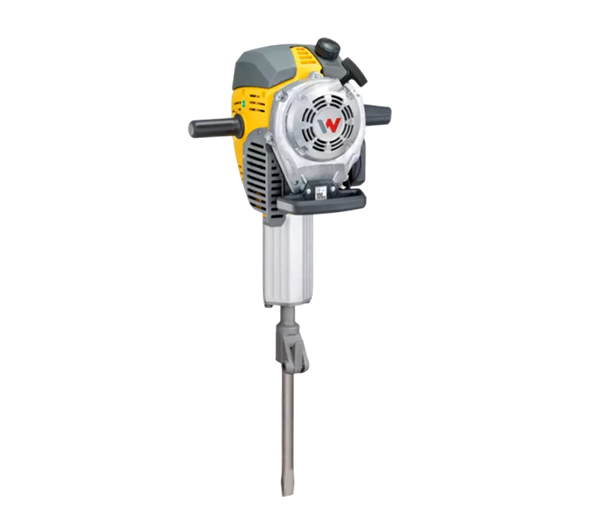
A gasoline-powered demolition pick is a handheld breaking machine driven by a gasoline engine. The engine provides mechanical power, and the internal mechanism converts that power into repeated impact strokes at the tool bit. The bit then transfers the impact force into concrete, asphalt, brick, stone or another hard surface.
The basic idea is quite simple. Instead of asking an external compressor, generator or hydraulic power unit to supply energy, the machine carries its own engine. That makes the equipment highly mobile. For construction crews working beside roads, in agricultural areas, on repair sites or in locations without convenient power access, this can save setup time.
I also pay attention to the difference between a demolition pick and a conventional electric demolition hammer. An electric hammer can be very convenient when stable electrical power is already available. But a gasoline-powered demolition pick offers a different working advantage: mobility. There is no long power cable running across the job site and no compressor hose that needs to be positioned and protected.
This makes the machine suitable for applications such as breaking concrete slabs, removing damaged pavement, opening small sections of road, repairing foundations, breaking masonry and preparing surfaces for further construction work.
The exact performance of any gasoline demolition pick depends on its engine, impact mechanism, tool holder, weight, vibration control system and working tool. For this reason, I do not judge a machine from engine power alone. The complete power-to-weight relationship and the way impact energy reaches the material are just as important.
Industry Reference: Published Gasoline Breaker Specifications
| Reference Model | Weight | Impact Energy | Blow Frequency | Published Power / Type | Source |
|---|---|---|---|---|---|
| Wacker Neuson BH55 | 22.8 kg | 55 J | 1,300 bpm | 2.1 hp / 1.6 kW | Wacker Neuson official specifications |
| Wacker Neuson BH55rw | Approx. 24.2–25.2 kg | 55 J | 1,300–1,350 bpm | 2.1 hp / 1.6 kW | Wacker Neuson official specifications |
| Atlas Copco Cobra PROe | 24–25 kg | 65 J | 1,440 bpm | Petrol-driven breaker | Atlas Copco official specifications |
| Atlas Copco Cobra Combi | Approx. 25 kg | 22–25 J | 2,700 bpm | Petrol-driven breaker/drill | Atlas Copco official specifications |
Important: The figures above are published specifications from other manufacturers and are provided only as industry reference data. They are not HKLOONG product specifications. Actual HKLOONG configurations should be confirmed according to the selected model, engine and application.
2. How I Understand the Working Principle
The working principle of a gasoline-powered demolition pick is easier to understand than it may look. The gasoline engine creates rotational mechanical power. A transmission and impact mechanism then convert this motion into repeated linear strokes. The piston or striking assembly moves rapidly inside the machine and transfers force to the working tool.
When the bit touches a hard material, each impact creates a concentrated force at a small contact area. Instead of trying to crush an entire concrete slab at once, the operator normally works progressively. The tool creates cracks and weak points, and repeated impacts gradually break the material into smaller sections.
This is why tool selection matters. A pointed bit can help start penetration or concentrate impact on a small area. A chisel-type tool can be useful for splitting concrete or masonry. Other tool profiles can be selected for particular breaking or surface preparation tasks.
I also consider operator control part of the working principle. The machine needs to stay reasonably stable while the impact mechanism is working. If the tool is poorly balanced or transmits excessive vibration to the handles, the operator may become tired quickly. That can affect both productivity and control.
For this reason, I look at the whole system rather than one number on a specification sheet. Engine performance, impact energy, stroke frequency, machine weight, handle design, vibration management and tool compatibility all influence the actual experience on site.
Gasoline power also changes the way the machine is deployed. A contractor can carry the unit to a remote location, add the required fuel according to the manufacturer's instructions, inspect the machine and begin work without first arranging a compressor or electrical cable. That simple workflow is one of the strongest reasons to consider a petrol demolition hammer for mobile construction work.
3. Main Features I Look For in a Gasoline Demolition Pick
When I evaluate a gasoline-powered demolition pick, I do not simply ask how powerful the engine is. I ask how well the entire machine matches the job.
Independent Gasoline Power
The biggest practical advantage is independent power. A gasoline engine allows the machine to operate away from fixed electrical outlets and without a separate compressor. This is useful for road maintenance, outdoor demolition, rural construction and emergency repair work.
Compact Handheld Design
A compact demolition pick can reach places that are difficult for Excavators or larger breakers. I find this especially useful around building edges, narrow passages, small repair zones, foundations and partially finished structures.
Strong Impact Performance
Breaking performance comes from more than engine horsepower. Impact energy and blow frequency both matter. A machine with strong single-stroke energy can transfer considerable force into hard material, while an appropriate impact frequency helps maintain a steady breaking rhythm.
Operator-oriented Handle Design
Demolition work creates vibration, so handle design matters. I prefer a layout that gives the operator a stable grip and keeps the machine reasonably balanced. Vibration-reduction features can also make longer work periods more manageable.
Flexible Tool Selection
The working bit is the point where machine energy reaches the material. For that reason, the tool holder should be compatible with suitable chisels, points or other accessories. A contractor may need different tools for concrete, asphalt, brickwork or compacted material.
Simple Field Maintenance
construction equipment is rarely used in a clean factory environment. Dust, concrete particles, mud and vibration are normal parts of the job. I therefore consider access to routine service points, air filtration, lubrication and inspection areas when reviewing a gasoline demolition pick.
4. Technical Advantages and How I Choose the Right Configuration
For me, the main technical advantage of a gasoline demolition pick is not simply raw force. It is the combination of force and mobility. A contractor may have enough power available but still lose time moving cables, hoses, compressors and other equipment into a difficult location.
A self-contained petrol demolition breaker reduces that setup requirement. This can be valuable when the work area changes frequently. For example, a road repair crew may need to open several small damaged sections rather than demolish one large area. A portable machine can move with the crew from point to point.
At the same time, I would not use a handheld gasoline breaker for every demolition job. Large reinforced concrete structures, deep foundations and major demolition projects may require excavators, Hydraulic Breakers or other heavy equipment. The handheld machine makes more sense when portability and local control are important.
| Working Condition | What I Would Check | Suitable Equipment Direction | Reason |
|---|---|---|---|
| Small concrete repair | Impact energy, tool size, operator control | Compact gasoline demolition pick | Easy to move between repair points |
| Road and asphalt maintenance | Breaking force, durability, tool selection | Portable petrol breaker | Useful where cables and compressors are inconvenient |
| Indoor renovation | Ventilation, emissions, noise, access | Electric or battery equipment may be considered | Indoor conditions can change the power-source choice |
| Large structural demolition | Material thickness and production volume | Excavator-mounted hydraulic breaker | Higher production capacity for large-scale work |
| Remote outdoor work | Fuel logistics, portability, service access | Gasoline-powered demolition pick | Independent operation is useful away from fixed power |
The table above is a practical application guide rather than a fixed equipment rule. Actual selection depends on material strength, thickness, work duration, site conditions and local safety requirements.
Power Source Comparison
| Power Source | Main Advantage | Typical Limitation | Where I Would Consider It |
|---|---|---|---|
| Gasoline | Independent and mobile | Fuel, exhaust and engine maintenance | Outdoor repair, road work, remote sites |
| Electric | Convenient where power is available | Requires cable or suitable electrical supply | Buildings, workshops, controlled sites |
| Battery | No direct power cable during operation | Battery runtime and charging requirements | Small repairs and mobile light-duty work |
| Hydraulic | High power from existing hydraulic systems | Needs a compatible power unit or carrier | Excavators and heavy construction equipment |
| Pneumatic | Strong and proven impact technology | Requires compressor and air hose | Sites already equipped with compressed air |
Atlas Copco's published Cobra range shows why petrol-powered breakers are often considered for mobile applications: the manufacturer describes its gas-driven tools as autonomous systems that avoid the need for hoses, cables or compressors. Wacker Neuson likewise positions its gasoline breakers around compact size, handling and impact performance. These published examples help explain the engineering logic behind this product category.
5. Applications: Where I Would Use This Machine
I see several practical application areas for a gasoline-powered demolition pick.
Concrete Breaking and Repair
Small sections of concrete often need to be removed before repair. Instead of bringing a Large Excavator into a restricted area, a handheld demolition pick can work directly on the damaged section.
Road and Asphalt Maintenance
Road crews frequently work outdoors and may need to break localized areas of asphalt or concrete. Portability becomes especially useful when the work zone changes during the day.
Building Renovation
During renovation, workers may need to remove masonry, floor sections or old construction material. The right compact breaker can provide controlled local demolition without moving a large machine into the building.
Agricultural and Rural Construction
Farm construction and rural infrastructure projects do not always have convenient access to electricity or compressed air. A self-contained gasoline machine can be easier to deploy around foundations, drainage structures and repair areas.
Municipal Maintenance
Municipal teams often deal with small repair tasks rather than continuous large-scale demolition. A portable demolition tool can support pavement repair, utility work and localized maintenance.
Landscaping and Site Preparation
Landscaping projects sometimes encounter small concrete blocks, old paving, masonry or compacted hard material. A small demolition pick can help prepare the area without bringing heavy machinery into a finished landscape.
For indoor applications, I would always consider ventilation and emissions before choosing a gasoline engine. Petrol-powered equipment is generally more suitable for properly ventilated outdoor or semi-outdoor work areas. Site rules, personal protective equipment and local regulations should always be followed.
6. How I Approach Manufacturing and Quality Control at HKLOONG
A demolition pick may look like a simple handheld machine, but its working environment is demanding. Every impact creates mechanical stress. The housing, engine mounting, impact mechanism, tool holder and handles all need to work together repeatedly.
At HKLOONG, our manufacturing approach combines equipment R&D, precision manufacturing, quality testing and customized modification. I use the same practical thinking when considering smaller construction equipment: the machine needs to make sense in the hands of the person using it, not just look good on a specification sheet.
The first area I focus on is structural design. The main housing must protect important components while keeping the overall machine manageable. The tool holder must maintain proper alignment with the impact mechanism, because poor alignment can increase wear and reduce effective energy transfer.
The second area is the power system. A gasoline engine must be matched to the impact mechanism rather than selected only because it has a certain horsepower rating. Fuel delivery, cooling, air filtration and starting behavior all influence practical use.
The third area is vibration management. Impact tools naturally generate vibration. A thoughtful handle and mounting structure can help separate some of that vibration from the operator. This is not only about comfort; better control can also help the operator work more consistently.
The fourth area is inspection. Before equipment leaves production, I pay attention to assembly quality, fasteners, moving parts, tool-holder fit and engine-related checks. For customized orders, the inspection plan can also be adjusted around the customer's application and configuration.
This process matters because industrial buyers usually care about more than the initial purchase. They also care about serviceability, spare parts, operating conditions, replacement tools and long-term usability.
7. Why I Work With Customers on the Complete Equipment Solution
At HKLOONG, I do not look at a gasoline-powered demolition pick as an isolated product. I look at it as one part of a construction equipment system. Some customers need a small machine because they have narrow access. Others need a complete equipment package that combines handheld tools with Mini Excavators, loaders or other machinery.
Our wider product portfolio includes crawler excavators, wheel loaders, backhoe loaders, amphibious Wetland excavators and smaller equipment for restricted working environments. This gives us a broader understanding of how different machines can fit different stages of a project.
For a contractor working on a narrow urban site, for example, a compact demolition pick may handle localized breaking while a mini excavator handles excavation and material movement. On a larger site, a hydraulic breaker mounted on an excavator may take over the heavy demolition work while handheld equipment deals with areas that are difficult for the carrier machine to reach.
I also understand that export customers may have different requirements. Engine configuration, tool standards, operating environment, packaging, spare parts and service expectations can vary between markets. That is why customization should start with the application rather than with a fixed product list.
My goal is straightforward: understand what the customer needs to break, where the machine will work, how often it will be used and what other equipment is already available. From there, the equipment configuration can be matched more logically to the actual project.
8. Gasoline-powered Demolition Pick FAQ
What is a gasoline-powered demolition pick used for?
It is mainly used for breaking concrete, asphalt, masonry, compacted hard material and other construction materials. It is particularly useful for localized demolition, repair work and outdoor projects where independent power is valuable.
Why choose gasoline power instead of an electric demolition hammer?
The main reason is mobility. A gasoline-powered machine does not require a direct electrical connection during operation. This can be useful on remote roads, outdoor construction sites and locations where electrical access is limited. For indoor work, however, ventilation and emissions must be considered carefully.
Can a gasoline demolition pick replace an excavator breaker?
No. These machines serve different purposes. A handheld demolition pick is designed for portable, localized work. An excavator-mounted hydraulic breaker is more suitable for large-scale demolition and high-volume breaking.
What materials can a petrol demolition breaker handle?
Depending on the machine and working tool, typical applications include concrete, asphalt, brick, masonry and other hard construction materials. The exact capability depends on material strength, thickness, tool selection and machine specifications.
What should I check before buying one?
I recommend checking impact energy, blow frequency, machine weight, engine type, tool-holder standard, vibration performance, maintenance access and spare-part availability. The working environment should also be considered. A machine designed for outdoor mobile work may not be suitable for enclosed areas.
How important is tool selection?
It is very important. The working tool transfers impact energy into the material. Different point and chisel designs can change how the machine interacts with concrete, asphalt and masonry. Buyers should confirm tool compatibility before ordering.
Can HKLOONG provide customized equipment?
HKLOONG works with customized equipment requirements across its machinery portfolio. For a specific gasoline-powered demolition pick configuration, I would recommend confirming the required engine, impact system, tool holder, handle configuration and intended application before finalizing technical specifications.
Is a gasoline-powered demolition pick suitable for remote construction sites?
Yes, this is one of the reasons the category is useful. A self-contained gasoline engine can reduce dependence on fixed electrical power, compressors and long hoses. Fuel supply, transportation, ventilation and local operating requirements still need to be planned correctly.
Conclusion: A Practical Tool for Mobile Demolition Work
I see the gasoline-powered demolition pick as a practical bridge between hand tools and larger construction machinery. It is small enough to move around a difficult site, yet powerful enough for demanding localized breaking work. Its biggest advantage is not simply impact force. It is the freedom to bring the power source directly to the job.
For concrete repair, asphalt maintenance, masonry removal, rural construction, municipal work and other outdoor applications, this type of equipment can provide a useful balance between portability and breaking performance. The right model still depends on the material, work volume, operator requirements and site conditions.
At HKLOONG Heavy Industry Technology (Hefei) Co., Ltd., I approach equipment selection from the application first. With experience across heavy machinery and compact equipment, I can work with customers to understand access limitations, working conditions, attachment needs and project requirements before determining the appropriate configuration.
If you are sourcing a gasoline demolition pick, petrol demolition breaker or portable concrete breaking machine for construction, road maintenance, agricultural projects or municipal work, the most useful starting point is a clear description of the material, working location and expected workload. From there, the machine can be configured around the actual job rather than around a generic specification sheet.
Reference Sources for Industry Data
Wacker Neuson published technical data for the BH55 and BH55rw gasoline breakers were used as reference points for weight, impact energy, blow frequency and engine output.
Atlas Copco published technical data for the Cobra PROe and Cobra Combi were used as reference points for impact energy, blow frequency and weight.
These third-party figures are industry reference data only and should not be interpreted as specifications for HKLOONG equipment.



 WhatsApp
 Phone
Phone E-mail
 Message