

TECHNICAL PARAMETERS

Smaller closed side settings can be often used depending on application and production requirements. For a performance estimation for your specific application,please sunward-psl minerals.Note: The processing capacity values in the table are for materials with a loose density of 1.6t/m³,The feeding is sufficient to smoothly enter the crushing cavity without bridge jamming. The smaller value is taken when the feeding material is smaller than the ore discharge port, and the larger value is taken when the fine material is contained.The actual output capacity may vary with the feeding mode and material properties such as particle size composition, water content, loose density and friability. Please consult us for specific application.
Jaw Crusher: A Practical Guide to Choosing the Right Crushing Solution
When people search for a jaw crusher, they usually have a simple problem in front of them: large rocks or other hard materials need to be reduced into smaller pieces before the next stage of processing. The real question is not simply whether a jaw crusher can crush the material. It is whether the machine can handle the feed size, reach the required output, fit the working site, and keep running without creating unnecessary trouble.
At Ganglong Heavy Industry Technology (Hefei) Co., Ltd., we deal with construction machinery, mining machinery, agricultural machinery and related attachments. We also provide equipment sourcing, sales and leasing services for different brands and working conditions. For customers who need crushing equipment, we look at the whole working process instead of only looking at one machine parameter.
That is especially important with a Jaw Crusher Machine. A crusher may have a large feed opening, but that does not automatically mean it is the right choice for every project. Rock type, feed size, required product size, hourly capacity, power supply, transport conditions and the machines working before and after the crusher all matter.
In this guide, I will explain how I normally look at a jaw crushing solution, what the machine actually does, where it works well, what specifications deserve attention, and how we handle equipment selection and delivery for overseas customers.
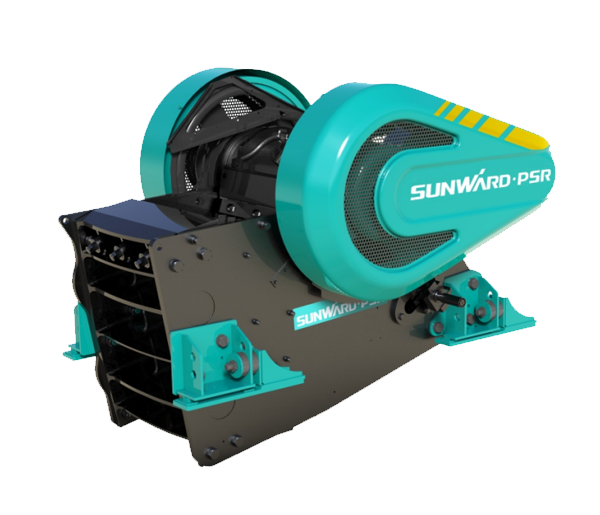
A jaw crusher is mainly used for primary crushing. In simple terms, it takes large pieces of rock and squeezes them between two crushing surfaces. One side stays relatively fixed while the other moves back and forth. The repeated movement breaks the material into smaller pieces, which then leave through the discharge opening.
This sounds simple, and in principle it is. But a good crushing plant depends on getting several simple things right at the same time.
First, the feeding system needs to deliver material steadily. If the crusher is constantly starved of material, its available capacity is not being used. If the feed is too large or badly distributed, the crushing chamber can become overloaded.
Second, the crusher needs a suitable crushing chamber. The shape and movement inside the chamber affect how the material enters, breaks and moves downward. This is one reason why jaw crusher design is more than just putting two metal plates together.
Third, the discharge opening needs to match the next stage. If the material leaving the primary crusher is still too large for the secondary crusher or screen, the complete production line will not work efficiently.
For this reason, I normally see a jaw crushing plant as the first major step in a material-processing line rather than an isolated machine.
A typical hard-rock production line may look like this:
Feeding → Jaw Crusher → Secondary Crusher → Screening → Finished Aggregate
Depending on the material and final product requirements, the secondary crusher can be an impact crusher or cone crusher. Screening equipment then separates different sizes so that the final materials can be sent to stockpiles or the next processing stage.
For customers working in quarrying, mining, road construction or infrastructure projects, this complete-line thinking often saves more time than simply comparing the purchase price of two crushers.
The basic working principle of a jaw crusher is easy to understand.
Large feed material enters through the top of the crushing chamber. Inside the chamber, the moving jaw approaches the fixed jaw and compresses the material. The material fractures under pressure. When the moving jaw moves away, the crushed material moves downward. The cycle then repeats.
The distance between the crushing surfaces at the bottom is closely related to the size of the material leaving the machine. This is commonly discussed as the discharge opening or CSS, depending on the crusher design and specification.
In real quarrying work, however, the crushing process is not just about squeezing. The shape of the crushing chamber, jaw movement, feed distribution and material characteristics all influence performance.
For example, hard basalt behaves differently from softer limestone. Granite can place high loads on wear parts. Manganese ore may have different crushing characteristics again. Moist or sticky material can also create feeding and screening problems that have little to do with the basic crushing force.
That is why we normally ask customers several questions before recommending a jaw crusher for mining or quarrying:
What material are you crushing?
What is the maximum feed size?
What is the normal feed size?
How many tonnes per hour are required?
What product sizes do you need?
Is the material being crushed once or in several stages?
Do you have grid electricity at the site?
Does the machine need to move between different working areas?
What are the road and sea transport restrictions?
Will the jaw crusher work together with a screening plant or another crusher?
These questions may look basic, but they can prevent an expensive mismatch later.
For customers looking for a high-capacity mobile primary crusher, one model we can discuss and arrange is the Sunward SP127JE crawler jaw crushing plant.
According to Sunward's published specifications, the SP127JE has a total weight of 58 tonnes and a processing capacity of 170–520 t/h. Its maximum feeding size is 700 mm, while the jaw inlet opening is 1,150 × 760 mm. The machine uses electric drive and has transportation dimensions of approximately 16,700 × 3,600 × 3,950 mm.
| SP127JE Parameter | Published Specification |
|---|---|
| Machine type | Crawler jaw crushing plant |
| Drive mode | Electric |
| Total weight | 58 t |
| Processing capacity | 170–520 t/h |
| Maximum feeding size | 700 mm |
| Inlet opening | 1,150 × 760 mm |
| Transport dimensions | 16,700 × 3,600 × 3,950 mm |
Source: Sunward official product information.
From a practical point of view, the 700 mm maximum feed size is one of the figures I would check first when a customer tells me that the project involves large blasted rock. The 170–520 t/h capacity range also gives the equipment room to work in different production conditions, although actual output always depends on the material, feed conditions, discharge setting and complete plant configuration.
The SP127JE uses a deep “V” crushing cavity, a small nip angle and a large stroke. Sunward states that this combination is intended to improve material intake, crushing capacity and energy performance.
Another interesting design detail is the weldless crusher body. Instead of relying on a conventional welded main crusher body, the design aims to reduce the risk of cracking or deformation associated with welding stress. The machine also uses an integral cast bearing housing for the movable jaw assembly.
For us, these details matter because customers rarely buy a crusher for one week. They normally expect it to work through long production periods, often under rough quarry or mining conditions.
The feed opening is one of the first numbers I check. A larger opening gives the machine more room to accept larger rock, but the maximum feed size still needs to be considered together with the actual shape and condition of the material.
For example, a long, flat piece of rock can behave differently from a roughly cubic piece even if both have similar measured dimensions. Good feeding practice is therefore still important.
The crushing chamber determines how the material enters and breaks. A deep chamber can help with material intake and continuous crushing. In the SP127JE, Sunward highlights its deep “V” cavity, small nip angle and large stroke.
These are technical details, but the practical meaning is straightforward: the crusher is designed to accept large material and keep the crushing process moving through the chamber.
A jaw crusher spends its working life dealing with heavy loads and vibration. The main frame, bearing housing, feeder and hopper therefore deserve as much attention as the crushing plates.
On the SP127JE, Sunward specifies a weldless crusher body, integral cast bearing housing, heavy-duty hopper and high-strength wear-resistant feeder structure.
Lubrication is not an exciting topic, but it is one of those small things that can become a big issue if ignored.
A centralized lubrication system makes routine lubrication easier to manage. It also helps keep important moving parts supplied with lubricant according to the maintenance plan.
For an electric jaw crusher, electrical protection is another practical point. Sunward describes an integrated variable-frequency system with dust-proof, cooling, vibration-isolation and water-proof functions on the SP127JE.
In dusty quarry environments, protecting electrical components is not simply about convenience. Dust, heat and vibration are normal parts of the working environment, so the electrical system needs to be designed with those conditions in mind.
Customers sometimes ask us why they should consider an electric jaw crusher instead of a diesel-electric version. There is no single answer for every site.
The better choice depends on the available power source, local fuel situation, mobility requirements, project location and complete production-line design.
For example, Sunward also lists the SP127JTD crawler jaw crushing plant with diesel-electric drive. Its basic crushing capacity and maximum feed size are similar to the SP127JE, while the total machine weight and power configuration are different.
| Feature | SP127JE | SP127JTD |
|---|---|---|
| Machine type | Crawler jaw crushing plant | Crawler jaw crushing plant |
| Drive mode | Electric | Diesel-electric |
| Total weight | 58 t | 60 t |
| Processing capacity | 170–520 t/h | 170–520 t/h |
| Maximum feeding size | 700 mm | 700 mm |
| Inlet opening | 1,150 × 760 mm | 1,150 × 760 mm |
| Transport dimensions | 16,700 × 3,600 × 3,950 mm | 16,700 × 3,600 × 3,950 mm |
Source: Sunward official SP127JE and SP127JTD product information.
If stable external electricity is available, an electric configuration can be practical for a fixed or semi-fixed production environment. If the project requires more flexible power arrangements, a diesel-electric configuration can offer another option.
I would not make this decision from the machine name alone. We first check the actual site conditions and then match the power arrangement with the complete production line.
Quarries are one of the most common applications for jaw crushers. Large blasted stone normally needs to be reduced before secondary crushing and screening.
For hard rock quarrying, the jaw crusher is often the first major crushing stage. The goal is not necessarily to make the final aggregate in one pass. Instead, we want to reduce the feed to a size that the next machine can handle efficiently.
Mining operations can involve hard and abrasive materials, which makes equipment selection especially important.
A jaw crusher can be used for primary reduction of ore before secondary crushing, screening or further processing. The correct configuration depends heavily on the ore type, feed size and required downstream process.
Road projects need a large amount of aggregate and base material. Mobile crushing equipment can be useful when material needs to be processed close to the construction area.
In this type of project, transportation cost can become a major part of the total operating cost. Crushing suitable local material on site or close to the site may reduce the amount of raw material that has to be transported long distances.
Large infrastructure projects often involve excavation, rock cutting and earthmoving. A mobile jaw crushing plant can provide a way to process suitable material within the project area.
The exact solution depends on project rules, material quality and environmental requirements, but mobile crushing gives contractors more flexibility than a fully fixed plant.
Jaw crushers can also be used in some recycling applications where suitable concrete or other mineral-based construction materials need to be reduced in size.
Here I would pay extra attention to feed cleanliness, reinforcement steel, unwanted materials and downstream separation equipment. A crushing machine is only one part of a recycling system.
One of the most common mistakes I see when discussing crushing equipment is focusing too heavily on the jaw crusher and not enough on the machines around it.
Suppose a customer wants to produce several aggregate sizes. The jaw crusher may perform the first reduction, but the final product still needs to pass through secondary crushing and screening.
Sunward's published project cases give us a useful example. In an Indonesia basalt road-base project, an SP127JE Crawler Jaw Crusher was used to process basalt with a feed size of up to 700 mm. The published project capacity was 230–280 t/h, with a final product size of 0–130 mm.
| Project | Raw Material | Feed Size | Equipment | Published Capacity | Application |
|---|---|---|---|---|---|
| Indonesia | Basalt | ≤700 mm | SP127JE | 230–280 t/h | Road base filling material |
| South Africa | Manganese ore | ≤700 mm | SP127JE + SP300CE + SP2065SE | 200 t/h | Metal smelting material preparation |
Source: Sunward·PSR official project cases.
The South Africa case is particularly useful because it shows the difference between a single crusher and a complete line. The project used a jaw crusher, cone crusher and screening plant together. The published final products were 0–4 mm, 4–8 mm, 8–32 mm and above 32 mm, with a reported capacity of 200 t/h.
For customers who need several final sizes, this kind of staged process is usually much more realistic than expecting one jaw crusher to produce everything directly.
When we arrange machinery for an overseas customer, our work does not stop when the equipment is selected.
Production time normally depends on the machine model, configuration, order quantity and any customization requirements. We confirm the expected delivery schedule before production so the customer can plan transportation and site preparation.
Before shipment, the machine should be checked according to the agreed inspection scope. For construction and crushing equipment, we normally pay attention to appearance, major functions, hydraulic and electrical systems where applicable, and basic operating performance.
Documentation and standard accessories are also prepared according to the order requirements. If the customer needs particular documents for customs clearance, project acceptance or local registration, those requirements should be discussed before shipment rather than after the machine reaches the destination port.
Packaging is another practical issue.
Complete machines are normally protected with suitable film and fixed securely for transportation. Loose accessories and spare parts are packed separately in suitable cartons or wooden cases. The final method depends on the machine, shipping route and destination.
For international orders, complete machines are generally shipped by sea. Smaller spare parts or suitable accessories may be sent by air or express when this makes sense.
Payment is commonly arranged through T/T, such as a deposit before production and the balance before shipment. The exact payment terms are confirmed between both parties according to the order.
None of these steps is particularly complicated, but getting them organized early makes international equipment delivery much smoother.
Ganglong Heavy Industry Technology (Hefei) Co., Ltd. was founded in 2013. Together with Hefei Ganglong International Trade Co., Ltd., we operate across equipment R&D, manufacturing, testing, customization, sales and international trade through the group structure.
Our own equipment portfolio includes HKLOONG Excavators, loaders, Backhoe loaders and swamp excavators. At the same time, we provide complete machine sales and leasing services involving a range of domestic and international construction machinery brands.
For crushing equipment, our role is practical: we help customers understand what machine configuration fits their working conditions, arrange the equipment supply, coordinate the required information, and support the international trade process.
We do not treat every jaw crusher inquiry as the same.
A contractor working on a road project may care most about mobility and transport. A quarry operator may focus on continuous production and feed size. A mining customer may be more concerned about hard and abrasive rock. Another customer may already own a screening plant and simply need a compatible primary crusher.
These are different requirements, so the equipment discussion should also be different.
Our international trade team has experience serving customers across Asia, Africa, America and other regions. That means we also look at practical issues such as shipping, documentation, payment arrangements, spare parts, packing and delivery planning.
For customers who need a complete crushing solution rather than one machine, we can also discuss how the jaw crusher works with secondary crushers, screening plants, conveyors and other equipment.
A jaw crusher is mainly used for primary crushing. It reduces large rocks, ore and other suitable hard materials into smaller pieces for secondary crushing, screening or further processing.
Jaw crushers are commonly used for rock, stone, ore and other mineral-based materials. The suitable material depends on the machine configuration, material hardness, abrasiveness, moisture and feed characteristics.
A jaw crusher normally works as a primary crusher and uses compression to break large feed material. An impact crusher uses impact force and is often used for further reduction and shaping. In many complete production lines, the two machines can work together rather than replacing one another.
That depends on the project. A mobile jaw crusher can be useful when the working area changes or when material needs to be processed close to different project locations. A stationary plant can make sense when production is concentrated in one permanent location with suitable infrastructure.
I recommend providing the material type, maximum feed size, target capacity, required output size, working location, power conditions and whether the machine will operate together with other crushing or screening equipment.
If you have photos of the material, existing equipment or the working site, they can also help us understand the application more clearly.
Sunward publishes a processing capacity of 170–520 t/h for the SP127JE crawler jaw crushing plant. Actual production should not be treated as a fixed guarantee because output depends on material properties, feed conditions, operating settings and the complete plant configuration.
The published maximum feeding size is 700 mm, with an inlet opening of 1,150 × 760 mm. The actual feed arrangement should still be checked against the material shape and site feeding system.
Yes. In fact, this is a common arrangement in aggregate and mining applications. The jaw crusher can perform primary reduction, while a secondary crusher and screening plant can process and separate the material into the required final sizes.
For complete machines, sea transportation is commonly used. Before shipment, we coordinate inspection, documents, accessories and packing requirements. Machines are protected and secured according to the shipping arrangement, while loose accessories and spare parts can be packed separately.
Yes. This is often more useful than selecting a crusher only from a catalogue. We can review the material, feed size, required capacity, final products and other equipment in the line, then discuss a suitable configuration and delivery plan.
A jaw crusher is a straightforward machine in principle, but choosing the right one requires more than looking at a capacity number.
I always recommend starting with the actual job. What material are you crushing? How large is the feed? How much material needs to be processed every hour? What size should the material be after primary crushing? Is the machine staying in one place or moving around the project? What power is available? What machines will work before and after it?
Once these questions are clear, it becomes much easier to compare jaw crusher machines.
For demanding primary crushing applications, the Sunward SP127JE offers a published capacity range of 170–520 t/h, a maximum feed size of 700 mm, electric drive, a deep “V” crushing cavity, weldless crusher body, integral cast bearing housing and centralized lubrication. Sunward also publishes real project cases showing the equipment working in basalt and manganese ore applications.
At Ganglong, our job is to connect the equipment with the customer's actual working conditions. We can help discuss machine selection, complete crushing-line configuration, sales or leasing requirements, inspection, documentation, payment, packing and international transportation.
If you are looking for a jaw crusher for quarrying, mining, aggregate production, road construction or infrastructure work, send us your material type, maximum feed size, target capacity and final product requirement. With those basic details, we can start from the actual application instead of simply recommending a machine by name.
info@hkloong.com
86 158 5511 9567


©2026 HKLOONG Heavy Industry Technology (Hefei) Co., Ltd. All Rights Reserved.

This website uses cookies to ensure you get the best experience on our website.
 Español
 Pусский
 Français
 العربية
 WhatsApp
 Phone
Phone E-mail
 Message