
 Español
 Pусский
 Français
 العربية


When I look at a Wheel loader, I do not see it as just a machine with a bucket on the front. I see it as a daily working partner on a construction site. A good wheel loader needs to move material quickly, load trucks smoothly, work on different ground conditions, and keep going through long working hours.
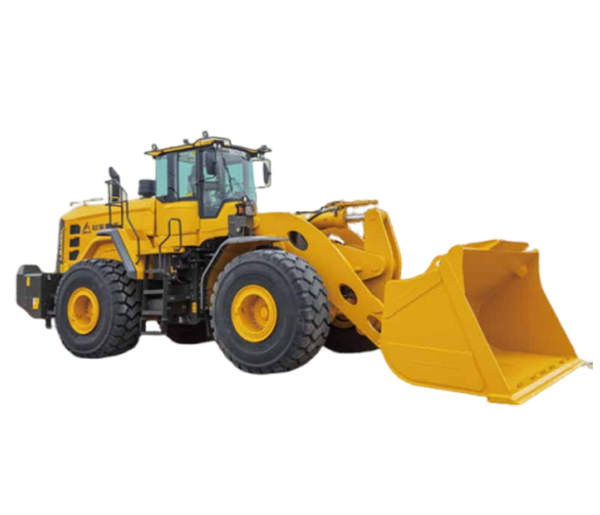
Our wheel loader is designed around these practical needs. It combines a powerful hydraulic working system, a durable loader structure, four-wheel drive, articulated steering, and a front bucket for loading and moving bulk materials. I can use it for soil, sand, gravel, stone, waste, agricultural materials, and many other loose materials.
What I like about the wheel-mounted design is its mobility. Compared with many tracked machines, a wheel loader can move quickly between working areas and does not need to be transported every time the job location changes slightly. This makes it useful for construction sites, aggregate yards, mines, farms, recycling facilities, road projects, and industrial material handling.
At HKLOONG Heavy Industry Technology (Hefei) Co., Ltd., we develop and manufacture heavy equipment with a focus on R&D, precision manufacturing, quality testing, customized modification, and global distribution. We operate the HKLOONG brand with a product range that includes crawler excavators, wheel loaders, Backhoe loaders, and amphibious wetland Excavators.
For us, the goal is straightforward: build a wheel loader that is practical to operate, strong enough for demanding work, simple to maintain, and flexible enough to fit different customer requirements.
1. What Is a Wheel Loader and What Does It Do?
A wheel loader is a self-propelled construction machine equipped with a front-mounted loading bucket. The bucket is connected to the loader arms, and hydraulic cylinders raise, lower, tilt, and dump the bucket.
The basic working cycle is simple. I drive the loader toward a pile of material, lower the bucket, enter the material, raise the loader arm, reverse or turn away, travel to the truck or stockpile, and then dump the bucket. The machine repeats this cycle many times during a normal working day.
That sounds simple, but the quality of the machine has a big effect on how smoothly this cycle works. The engine provides power. The drivetrain transfers that power to the wheels. The hydraulic system controls the loader arm and bucket. The steering system allows the machine to turn. The axles and tires keep the machine stable while carrying a load.
This is why I consider a wheel loader a complete working system rather than a single piece of equipment.
| Wheel Loader System | Main Function | Why It Matters in Daily Work |
|---|---|---|
| Engine | Provides power for driving and working functions | Supports loading, climbing and transport performance |
| Hydraulic system | Controls boom and bucket movement | Determines lifting, dumping and response behavior |
| Loader arm and linkage | Transfers hydraulic force to the bucket | Supports digging, lifting and material handling |
| Four-wheel drive system | Transfers driving force to the wheels | Helps the machine work on different ground conditions |
| Articulated steering | Changes the direction of the machine | Improves maneuverability around piles, trucks and structures |
| Bucket | Loads and carries bulk material | Directly affects the amount and type of material handled |
Source: Functional summary based on public wheel loader specifications and system descriptions from Caterpillar, Komatsu and Volvo construction equipment.
2. How I Understand the Working Principle of a Wheel Loader
The working principle of a wheel loader is based on the cooperation of mechanical, hydraulic, and powertrain systems.
Step 1: Approach the Material
I first drive toward the material pile with the bucket positioned close to the ground. Depending on the material, the operator adjusts the bucket angle and approach speed. Sand, loose soil, gravel, and crushed stone do not all behave in exactly the same way.
Step 2: Fill the Bucket
As the bucket enters the material, the machine needs enough traction and breakout force to push through the pile. The hydraulic cylinders control the bucket and loader arms while the drivetrain supplies the necessary wheel torque.
Step 3: Lift and Reverse
Once the bucket is filled, the loader raises the arms and reverses away from the pile. The articulated steering system allows the operator to change direction without requiring a large turning area.
Step 4: Carry the Load
The machine then travels to a truck, hopper, stockpile, feeding system, or another work area. A wheel loader is particularly useful here because it can move between loading points relatively quickly.
Step 5: Dump the Material
At the target position, the operator raises the bucket and tilts it forward. The material falls into the truck body, stockpile, hopper, or other receiving area.
Step 6: Return and Repeat
The bucket is lowered again and the machine returns to the loading point. Productivity often comes down to how efficiently this complete cycle is performed.
For this reason, I do not judge a wheel loader only by horsepower. Hydraulic response, bucket size, steering, visibility, stability, travel speed, and operator control all influence the real working cycle.
3. Main Features I Focus on When Designing a Wheel Loader
Every project has different requirements, but several features matter in almost every wheel loader application.
Powerful Hydraulic Working System
The hydraulic system is responsible for moving the loader arms and bucket. A well-matched hydraulic system helps the operator lift, tilt, and dump the bucket in a controlled way.
I pay attention to the relationship between hydraulic pump capacity, working pressure, cylinders, control valves, and engine output. These components need to work together rather than simply using a large pump or large cylinder.
Articulated Steering
Articulated steering is one of the features that makes a wheel loader different from many other construction machines. The machine bends around its center section when turning.
This gives the operator useful maneuverability around material piles, trucks, buildings, and other equipment. Komatsu's WA380-8, for example, uses full-hydraulic articulated power steering with a steering angle of 35 degrees each direction and up to 40 degrees at the end stop.
Strong Loader Structure
The loader arm, linkage, frame, and bucket are exposed to repeated loading forces. I therefore consider structural strength a basic requirement rather than an optional feature.
The machine should be able to handle repeated bucket loading without unnecessary deformation or excessive wear at major connection points.
Four-wheel Drive
Four-wheel drive helps transfer engine power to the ground. This becomes important when the loader works on gravel, soil, construction sites, stockpiles, ramps, or other surfaces where traction can change.
Bucket Flexibility
The bucket is the part that directly touches the material. A general-purpose bucket may work well for common materials such as soil, sand, and gravel, while other jobs may require a different bucket or attachment.
I therefore prefer to consider bucket capacity, bucket shape, material density, working height, and attachment requirements together rather than selecting bucket size by volume alone.
4. Wheel Loader Performance: Understanding the Numbers
When buyers compare wheel loaders, they often start with engine horsepower. That is understandable, but I recommend looking at several specifications together.
Operating weight affects stability and transport requirements. Bucket capacity affects the amount of material handled per cycle. Breakout force gives an indication of the machine's ability to work into a material pile. Tipping load is important when assessing the machine's lifting and stability characteristics.
Public specifications from major manufacturers show that machines in a similar general size class can have different combinations of weight, power, bucket capacity, and working performance.
| Reference Model | Engine Power | Operating Weight | Bucket Capacity | Source |
|---|---|---|---|---|
| Caterpillar 950 | 249 hp / 186 kW | 19,260 kg | Configuration dependent | Caterpillar |
| Caterpillar 950 GC | 225 hp / 168 kW | 18,849 kg | 2.9–4.4 m³ | Caterpillar |
| Komatsu WA380-8 | 191 hp / 143 kW | 18,385–19,020 kg | 2.7–3.3 m³ | Komatsu |
| Volvo L90H | 184 hp | 14,500–17,300 kg | 2.9–9.2 yd³ | Volvo CE |
Source: Public manufacturer specifications. These are external industry reference figures only and are not HKLOONG product specifications. Caterpillar 950 and 950 GC data: Komatsu WA380-8 data: Volvo L90H data:
These numbers also show why I would not recommend choosing a loader by horsepower alone. A buyer should consider the complete working combination.
| Specification | What It Tells Me | What I Would Check Before Purchase |
|---|---|---|
| Operating weight | Overall machine mass and transport class | Site conditions, stability and local transport limits |
| Engine power | Available power for driving and working | Material type, slopes and expected workload |
| Bucket capacity | Approximate material volume per cycle | Material density and loading target |
| Breakout force | Force available when entering or breaking material | Material hardness and pile conditions |
| Static tipping load | Indication of lifting stability under defined conditions | Load weight, lift height and operating conditions |
| Hydraulic cycle time | How quickly working functions can complete a cycle | Required production rate and duty cycle |
Source: Specification categories and terminology based on published wheel loader data from Caterpillar, Komatsu and Volvo Construction Equipment.
5. Where I Would Use a Wheel Loader
I consider the wheel loader one of the more flexible machines on a construction site because the basic bucket can handle many loose materials, while attachments can expand its working range.
Construction
Construction sites often need to move soil, sand, gravel, crushed stone, construction materials, and other bulk materials. A wheel loader can load trucks, build material piles, clean working areas, and feed other equipment.
Mining and Aggregate Handling
In quarry and aggregate operations, loaders are commonly used to move crushed stone, sand, gravel, and other materials. In these environments, bucket durability, tire selection, traction, cooling, and structural strength become especially important.
Road Construction
Road projects involve large quantities of aggregate, soil, asphalt-related materials, and base material. A wheel loader can support material feeding, stockpile management, loading and general site preparation.
Agriculture
With the right attachment, a wheel loader can handle feed, soil, manure, grain-related materials, silage, and other agricultural products. The exact attachment should be matched to the material and working conditions.
Recycling and Waste Handling
Waste and recycling facilities often need machines that can move material repeatedly between stockpiles, processing equipment, and trucks. Specialized buckets and protective configurations may be required depending on the material.
Industrial Material Handling
Factories, material yards, logistics areas, and processing plants can use wheel loaders for moving bulk raw materials and waste products. Komatsu lists waste, recycling, snow removal, road work, and paving among the applications for its WA380-8.
| Application | Typical Materials | Useful Wheel Loader Function |
|---|---|---|
| Construction | Soil, sand, gravel, stone | Loading, stockpiling and site preparation |
| Mining and quarrying | Aggregate, crushed rock | Heavy material loading and transport |
| Road building | Base material, aggregate | Feeding, loading and material handling |
| Agriculture | Feed, soil, manure, silage | Material loading and yard work |
| Recycling | Mixed recyclable materials | Stockpile and processing-area handling |
| Industrial yards | Bulk raw materials | Loading, unloading and stockpile management |
Source: Application examples based on manufacturer information from Komatsu and Caterpillar.
6. Manufacturing and Quality Checks I Consider Important
A wheel loader spends much of its life under repeated load. The bucket enters material hundreds or thousands of times, the loader arms move continuously, and the machine travels across uneven ground. That is why I believe manufacturing quality should focus on the parts that experience real working stress.
Frame and Structural Components
The front and rear frames need to work together under changing loads. Welding quality, structural alignment, connection points, and stress-sensitive areas should be checked during production.
Loader Arm and Bucket Linkage
The loader arm transfers hydraulic force to the bucket. Pins, bushings, cylinders, linkage components, and mounting points therefore need suitable matching and inspection.
Hydraulic Components
Hydraulic contamination can cause premature wear. During assembly, keeping hydraulic lines and components clean is important. I also pay attention to hose routing because hoses should not be exposed to unnecessary rubbing or sharp bending.
Axles and Drivetrain
The drivetrain must transfer power to the wheels under changing loads. Axle selection, final drive components, differential design, tires, and wheel mounting all influence traction and durability.
Testing Before Delivery
Before delivery, I would rather find a problem at the factory than leave it for the customer to discover on the jobsite. Functional testing should cover driving, steering, lifting, bucket tilting, hydraulic operation, braking, and other major systems according to the final configuration.
Our manufacturing process at HKLOONG combines R&D, precision manufacturing and quality testing. The final inspection requirements can also be adjusted according to the machine configuration and destination market.
7. Why I Choose HKLOONG for Wheel Loader Projects
When I work with a wheel loader buyer, I know that the machine is only part of the decision. The buyer also needs clear technical communication, suitable configuration, reliable production, and support during the purchasing process.
HKLOONG Heavy Industry Technology is based in Hefei, China. We operate our own HKLOONG brand and combine equipment R&D, manufacturing, quality testing, customized modification, and global distribution within our business.
Our product range covers crawler Excavators, wheel loaders, backhoe loaders, and amphibious Wetland excavators. This gives us experience across different types of construction and heavy-duty equipment.
For a wheel loader project, I prefer to start by understanding the application. For example, a loader working in a quarry may need a different bucket, tire configuration, protection package, and cooling arrangement from a loader working in an agricultural yard.
The same applies to international markets. Climate, fuel standards, emission regulations, road conditions, transport requirements, and operator preferences can vary significantly from one country to another.
That is why customization is part of our approach. Depending on the project, customers can discuss machine configuration, attachments, working conditions, operating environment, and other technical requirements with our team.
I also believe that after-sales maintenance should be considered before the machine is purchased. Filters, hydraulic components, tires, pins, bushings, fluids, and other wear parts are normal parts of a wheel loader's working life. Easy access and clear maintenance procedures can make a real difference over time.
8. Wheel Loader FAQ
What is a wheel loader mainly used for?
A wheel loader is mainly used for loading, moving, and stockpiling loose materials. Common applications include construction, mining, quarrying, agriculture, road building, recycling, waste handling, and industrial material handling.
What materials can a wheel loader handle?
Depending on the bucket and machine configuration, a wheel loader can handle soil, sand, gravel, crushed stone, aggregate, agricultural materials, waste, and other bulk materials. Material density and particle size should always be considered when selecting the bucket.
What is the difference between a wheel loader and an excavator?
A wheel loader is mainly designed for loading and carrying material with a front-mounted bucket. An excavator normally uses a boom, arm, and bucket for digging, trenching, lifting, and reaching below ground level. In many projects, both machines are used together.
Why does a wheel loader use articulated steering?
Articulated steering allows the front and rear sections of the machine to bend relative to each other. This gives the loader a useful turning ability when working around stockpiles, trucks, buildings, and other obstacles. Komatsu's WA380-8 is one example of a loader using full-hydraulic articulated steering.
How do I choose the right wheel loader bucket?
I start with the material. Soil, sand, gravel, rock, waste, and agricultural materials can have very different densities and handling characteristics. I then consider bucket capacity, machine stability, lifting height, breakout requirements, and the desired production rate.
Is a larger wheel loader always more productive?
Not necessarily. A larger loader may carry more material per cycle, but it also needs more working space, may require larger transport equipment, and can be inefficient on a small site. I prefer to match machine size to the loading target, material type, site layout, and working cycle.
Can HKLOONG customize a wheel loader?
Yes. HKLOONG provides customized modification and equipment development. The available configuration should be discussed according to the application, material, operating environment, destination market, attachment requirements, and other technical conditions. Final specifications should be confirmed in the official technical documentation.
What should I check before buying a wheel loader?
I recommend checking operating weight, engine power, bucket capacity, breakout force, tipping load, hydraulic performance, steering system, tire configuration, lifting height, travel speed, maintenance access, available attachments, and local service requirements. The machine should be selected around the actual job rather than one specification alone.
Final Thoughts: A Wheel Loader Should Work as Hard as the Job Requires
For me, the value of a Wheel loader comes from its ability to perform many tasks with one machine. It can load a truck in the morning, move aggregate during the day, clean a working area, and manage a material stockpile before the shift ends.
The most important part is getting the configuration right. Engine power, hydraulic performance, bucket capacity, operating weight, steering, tires, loader linkage, and attachments all need to work together.
At HKLOONG, we focus on building heavy equipment around real working conditions. Our wheel loaders are developed with practical material handling, reliable operation, maintenance access, and flexible configuration in mind.
Whether the application is construction, mining, agriculture, road building, recycling, quarrying, or industrial material handling, I believe the best starting point is always the same: understand the material, understand the site, understand the working cycle, and then choose the wheel loader configuration that fits those conditions.
That is the approach we take when developing and supplying wheel loaders for global customers.



 WhatsApp
 Phone
Phone E-mail
 Message