
 Español
 Pусский
 Français
 العربية


When I select a wheeled loader, I do not look at horsepower alone. For many real jobs, the machine needs to turn easily, move quickly between loading points, handle different bulk materials, and work efficiently in a limited area. These details are especially important when the main task is short-distance loading and transport.
Our wheeled loader is designed for exactly this type of work. It combines a compact turning radius, flexible operation, useful loading performance, and good mobility. I can use it to handle loose soil, sand, gravel, coal, refuse, and other small-to-medium-sized bulk materials.
This makes the machine suitable for construction sites, ports, sand and gravel plants, timber yards, material storage areas, and other places where materials need to be moved repeatedly over relatively short distances.
At HKLOONG Heavy Industry Technology (Hefei) Co., Ltd., we focus on equipment R&D, precision manufacturing, quality testing, customized modification, and global distribution. Our HKLOONG product range includes crawler excavators, Wheel loaders, Backhoe loaders, and amphibious wetland Excavators. I approach each machine from the actual working conditions rather than trying to use one configuration for every job.
1. What Is a Wheeled Loader?
A wheeled loader is a mobile loading machine with a front-mounted bucket. Its main jobs are simple: scoop material, lift it, carry it, and unload it. Because the machine runs on wheels, it is well suited to work areas where the loader needs to move frequently between piles, trucks, stockyards, or processing equipment.
I find this type of machine particularly useful when the loading distance is short and the work cycle is repeated many times. For example, the loader may collect gravel from a stockpile, carry it to a truck, unload it, and immediately return to the pile.
The same basic cycle can be used for soil, sand, coal, refuse, and many other loose materials.
The main functions include:
Loading: pushing the bucket into a material pile and filling it.
Lifting: raising the bucket to the required working height.
Transporting: carrying the material to another nearby location.
Dumping: tipping the bucket into a truck, hopper, stockpile, or working area.
Repositioning: returning quickly for the next loading cycle.
For this reason, I consider a wheeled loader a material-handling machine as much as a construction machine. Its value comes from how efficiently it connects different points of a worksite.
Why a small turning radius matters
A small turning radius may sound like a minor specification, but it can have a noticeable effect on daily work. When the loader operates between material piles, trucks, buildings, or other machines, there may not be much room for wide turns.
A more maneuverable machine can reduce unnecessary reversing and repositioning. This can make the loading cycle smoother and easier for the operator.
2. How My Wheeled Loader Works
The working principle of a wheeled loader is based on several systems working together. The power system supplies energy, the drivetrain moves the machine, the steering system controls direction, and the hydraulic system operates the loader arm and bucket.
| System | Main Function | Practical Importance |
|---|---|---|
| Power system | Provides energy for travel and working functions | Supports overall machine performance |
| Drivetrain | Transfers power to the wheels | Provides movement and traction |
| Hydraulic system | Controls boom and bucket movement | Provides lifting and loading force |
| Steering system | Changes machine direction | Supports maneuverability in limited spaces |
| Axles and tires | Carry the machine and transfer drive force | Affect stability and traction |
| Bucket | Collects and discharges material | Directly affects loading efficiency |
During a typical loading cycle, I first position the bucket close to the material pile. The bucket is lowered and pushed into the material. Hydraulic force then raises the loader arm and bucket while the machine reverses or turns away from the pile.
After the bucket is filled, I drive toward the unloading point. The machine's steering system helps me position the loader, while the hydraulic system raises and tilts the bucket to discharge the material.
The loader then returns to the material pile and starts the next cycle.
In short-distance transport work, this repeated cycle is very important. Even a small reduction in turning, reversing, or loading time can become meaningful after hundreds of cycles.
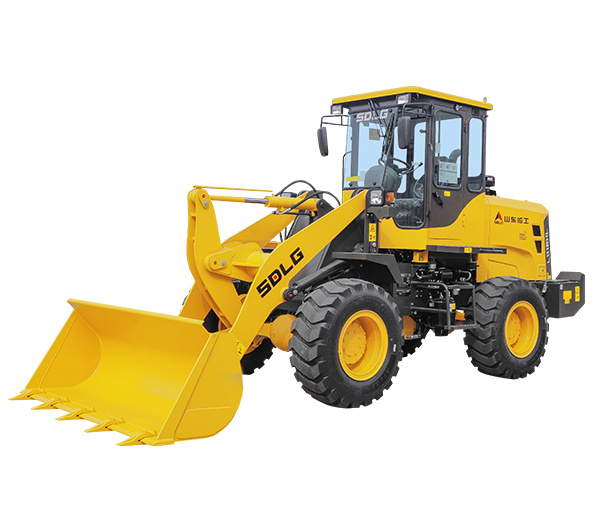
3. Main Features of Our Wheeled Loader
Compact turning radius
The machine is designed with maneuverability in mind. A compact turning radius helps the operator work in areas where space is limited. This can be useful around stockpiles, loading bays, construction structures, and material yards.
I especially value this feature when the loader needs to turn repeatedly between a pile and a truck. Less unnecessary movement means a cleaner working pattern.
Flexible operation
A wheeled loader needs to respond quickly to changes in direction and working position. The operator may need to move forward, reverse, turn, raise the bucket, and unload within a short period.
Good steering and hydraulic control make these movements easier to manage. This is one reason I prefer to evaluate the whole operating process rather than focusing on one isolated specification.
Efficient short-distance transport
The machine is intended mainly for short-distance loading and transport. It is not necessary to use a large machine for every material-handling task. When the work involves relatively short travel distances and repeated loading cycles, a compact or small wheeled loader can be a practical solution.
Adaptability to bulk materials
The machine can be used for loose soil, sand, gravel, coal, refuse, and similar materials. However, the bucket and machine configuration should always be matched to material density and operating conditions.
This point is important because the same bucket volume does not mean the same useful load for every material. Dense gravel and lighter loose materials can place very different demands on the loader.
Good site mobility
Because the machine is wheel-mounted, it can move between nearby work areas without relying on a separate transport method for every small relocation. This is particularly useful in ports, yards, construction sites, and aggregate plants.
4. Technical Advantages and Market Reference Data
When I compare a wheeled loader with other machines, I usually look at operating weight, bucket capacity, power, tipping load, turning radius, and the type of work the machine is expected to perform.
The following figures are public industry reference data from Caterpillar. They are included to help buyers understand the general specifications available in the compact and small wheel-loader market. They are not HKLOONG product specifications.
| Reference Model | Gross Power | Operating Weight | Bucket Capacity | Source |
|---|---|---|---|---|
| Cat 903 | 48 hp / 36 kW | 4,173 kg | 0.6–1.0 m³ | Caterpillar |
| Cat 906 | 74.7 hp / 55.7 kW | 5,730 kg | 0.75–1.55 m³ | Caterpillar |
| Cat 908 | 74.7 hp / 55.7 kW | 6,632 kg | 0.75–1.55 m³ | Caterpillar |
Caterpillar's published data lists the Cat 903 at 4,173 kg with 0.6–1.0 m³ bucket capacity, the Cat 906 at 5,730 kg with 0.75–1.55 m³ capacity, and the Cat 908 at 6,632 kg with the same published bucket-capacity range.
The Cat 906 provides another useful reference for maneuverability. Caterpillar publishes an outside-tire turning radius of 3,925 mm and an articulation angle of 39 degrees for the cited configuration.
These figures show why I would not choose a loader based on horsepower alone. The machine needs to balance power, operating weight, bucket capacity, stability, maneuverability, and the actual material being handled.
| Selection Factor | What I Check | Why It Matters |
|---|---|---|
| Material type | Soil, sand, gravel, coal, refuse or other bulk material | Material density affects bucket loading and stability |
| Bucket capacity | Required volume per cycle | Affects material handled per loading cycle |
| Turning radius | Available space at the worksite | Affects maneuverability and cycle efficiency |
| Operating weight | Machine weight and working stability | Influences transport, traction and safe operation |
| Travel distance | Distance between loading and unloading points | Helps determine the appropriate machine size |
| Discharge height | Truck, hopper or stockpile height | Determines required lifting capability |
5. Where I Use a Wheeled Loader
Construction sites
Construction sites are a natural application for a wheeled loader. I can use it to move loose soil, sand, gravel, construction waste, and other materials around the site.
Its value becomes more obvious when the material only needs to travel a short distance. The loader can move between the material pile and the working area without the need for complex handling equipment.
Ports
Ports and material terminals often require repeated movement of bulk materials. A wheeled loader can work around storage piles, loading areas, trucks, and other equipment.
The wheel-mounted design is particularly useful on firm surfaces where the machine needs to move frequently from one point to another.
Sand and gravel plants
Sand and gravel plants depend on continuous material movement. A loader can transfer sand, gravel, and crushed aggregate from stockpiles to trucks, hoppers, or other processing areas.
In this environment, bucket capacity, tire selection, traction, and loading-cycle speed all deserve attention.
Timber yards
Timber yards may use wheeled loaders for loose wood materials, yard cleanup, stockpile handling, and related tasks. The exact attachment should be selected according to the material being handled.
Coal handling
Coal is another bulk material suitable for loader handling. Because coal density can vary, I recommend matching the bucket capacity to the actual material and machine load limits.
Refuse handling
Refuse can be irregular, abrasive, and difficult to handle. For this type of work, the machine configuration, bucket design, tire protection, and maintenance plan should be considered together.
| Application | Typical Material | Main Loader Requirement |
|---|---|---|
| Construction | Soil, sand, gravel, waste | Flexible movement and general loading |
| Port handling | Bulk materials | Frequent movement and stable operation |
| Sand and gravel plant | Sand, gravel, aggregate | Bucket productivity and traction |
| Timber yard | Loose wood materials | Suitable attachment and maneuverability |
| Coal yard | Coal | Correct bucket-to-material matching |
| Refuse handling | Mixed waste | Durability and suitable working equipment |
6. How I Approach Wheeled Loader Manufacturing at HKLOONG
At HKLOONG, I believe the manufacturing process should start with the job the machine needs to perform.
Our company integrates R&D, precision manufacturing, quality testing, customized modification, and global distribution. This allows us to consider the machine as a complete system rather than simply putting individual components together.
Application and configuration
First, I consider the working environment. What material will be handled? How far will it be transported? How much room is available for turning? What is the ground condition? What discharge height is required?
These questions can affect the machine configuration, bucket selection, tire choice, and working equipment.
Structural manufacturing
The frame, loader arms, bucket connection, axles, and other load-bearing components experience repeated forces. Manufacturing accuracy and welding quality therefore matter for long-term use.
The goal is to create a structure that can handle repeated loading cycles while remaining practical to inspect and maintain.
Hydraulic system integration
The hydraulic system controls the main working movements of the loader. I want the boom and bucket to respond smoothly to operator input rather than making the machine difficult to control.
For repeated loading, predictable movement is useful because the operator can develop a consistent working rhythm.
Testing and quality inspection
Before delivery, key systems should be checked according to the machine configuration. These checks can include steering, braking, hydraulic functions, bucket operation, travel functions, structural components, and other working systems.
For me, testing is not simply a final factory step. It is part of making sure the machine is ready for the customer's actual working environment.
7. Why Choose HKLOONG Wheeled Loader?
When I purchase industrial equipment, I want more than a machine that looks good in a product photo. I want a supplier that understands the equipment, can discuss the application clearly, and can support the machine through manufacturing and delivery.
HKLOONG Heavy Industry Technology (Hefei) Co., Ltd. is headquartered in Hefei, China. We operate the HKLOONG brand and focus on equipment R&D, precision manufacturing, quality testing, customized modification, and global distribution.
Our wider product range includes crawler Excavators, wheel loaders, backhoe loaders, and amphibious Wetland excavators. This gives us experience with different working environments and heavy-equipment requirements.
For our wheeled loader, I focus on practical configuration. A machine working at a sand and gravel plant may need different tires and bucket arrangements from one working at a port. A construction site with limited space may place more value on turning radius and maneuverability.
That is why I prefer to discuss the application before finalizing the configuration. Material type, worksite size, travel distance, daily workload, ground conditions, attachments, and discharge requirements all matter.
Where customization is technically suitable, HKLOONG can discuss configuration changes according to the customer's operating environment and project requirements.
Wheeled Loader FAQ
What is a wheeled loader mainly used for?
A wheeled loader is mainly used for loading, lifting, carrying, and unloading bulk materials. Common applications include soil, sand, gravel, coal, refuse, aggregate, and other loose materials. It is especially useful when material needs to be moved over short distances.
What is the advantage of a small wheeled loader?
A small wheeled loader can be easier to maneuver in limited spaces while still providing useful loading performance. Its compact size can be practical for construction sites, yards, ports, landscaping areas, and small material-processing facilities.
Why is turning radius important for a wheel loader?
Turning radius affects how much space the machine needs to change direction. A smaller turning radius can make repeated loading cycles easier in narrow working areas and may reduce unnecessary reversing and repositioning.
Can this wheeled loader handle sand and gravel?
Yes. Sand and gravel are typical bulk materials for wheel-loader applications. The bucket capacity and machine configuration should be selected according to material density, working conditions, and safe operating limits.
Can a wheeled loader be used for coal?
Yes. Coal can be handled with a suitable bucket and machine configuration. Because material density varies, I recommend checking the required bucket volume, machine load limits, stability, and operating conditions before selecting the final configuration.
Is a wheeled loader suitable for ports?
Yes. Its wheel-mounted design and maneuverability make it suitable for many port and material-yard applications, especially where bulk materials need to be moved repeatedly over relatively short distances on firm surfaces.
What should I consider before buying a wheeled loader?
I would first consider the material, bucket capacity, operating weight, turning radius, lifting height, ground condition, travel distance, daily workload, and required attachments. For overseas buyers, I would also check transport dimensions, local regulations, spare parts, and service support.
Can HKLOONG customize the wheeled loader?
Customization can be discussed according to working conditions, material requirements, operating environment, and project needs. Specific options depend on the selected machine configuration and should be confirmed with the HKLOONG technical team before production.
Final Thoughts
For me, a good wheeled loader is not simply a machine with a powerful engine and a large bucket. It is a machine that fits the working cycle.
When the job involves short-distance loading and transport of soil, sand, gravel, coal, refuse, or other bulk materials, maneuverability can have a major effect on daily productivity. A compact turning radius, responsive hydraulic system, suitable bucket, good traction, and flexible operation can make repeated loading work much easier.
That is the purpose of our wheeled loader. I designed the product positioning around practical material handling in construction sites, ports, sand and gravel plants, timber yards, and similar working environments.
At HKLOONG, we combine equipment R&D, precision manufacturing, quality testing, customization, and global distribution. Instead of assuming that every customer needs the same machine, I prefer to start with the real job and then match the loader configuration to the application.
If you need a wheeled loader for short-distance material handling, a small wheeled loader for construction sites, or a flexible machine for sand, gravel, coal, refuse, or yard operations, the right starting point is always the actual material, worksite, and daily loading cycle.



 WhatsApp
 Phone
Phone E-mail
 Message