
 Español
 Pусский
 Français
 العربية

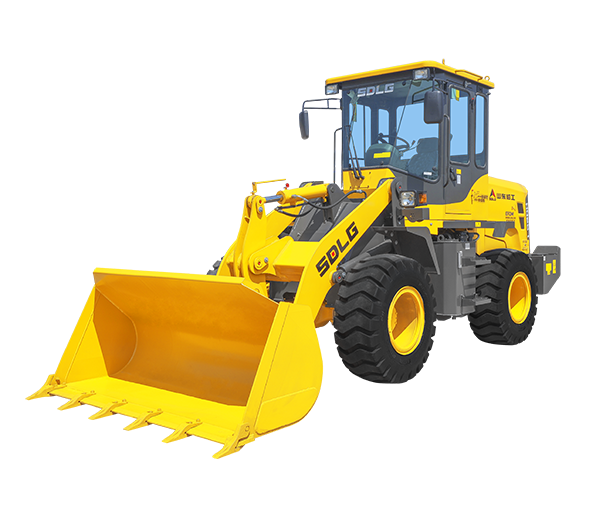
When I talk about a Pure electric wheeled loader, I focus on one simple question: can an electric machine do the same practical work that customers expect from a conventional Wheel loader? In many applications, the answer is yes, especially when the job involves repeated loading, short-distance material handling, indoor work, urban construction, farms, warehouses, landscaping, or sites where noise and direct exhaust emissions need to be reduced.
Our pure electric wheeled loader uses an electric drive system instead of a conventional diesel engine as its main power source. The machine combines battery power, electric drive motors, hydraulic working functions, articulated steering, wheels, and a front loading bucket into one working system.
I like this design because it keeps the basic working idea of a wheel loader familiar while changing the power system. The operator still drives toward a material pile, fills the bucket, lifts the load, carries it, dumps it, and returns for the next cycle. The major difference is how the machine produces and manages power.
Our pure electric wheeled loader is designed for construction, agriculture, logistics, landscaping, industrial material handling, and other applications where low-noise operation and reduced local emissions can be useful. It can handle soil, sand, gravel, waste, and other bulk materials, depending on the selected bucket and machine configuration.
At HKLOONG Heavy Industry Technology (Hefei) Co., Ltd., we develop and manufacture heavy equipment with a focus on R&D, precision manufacturing, quality testing, customized modification, and global distribution. We operate the HKLOONG brand with products including crawler excavators, wheel loaders, Backhoe loaders, and amphibious wetland Excavators.
1. What Is a Pure Electric Wheeled Loader?
A pure electric wheeled loader is a wheel-mounted loading machine powered by an electric energy system rather than a conventional diesel engine. The battery stores electrical energy, and electric motors use that energy to drive the machine and support its working functions.
The exact architecture can vary between models. Some electric loaders use separate electric motors for travel and hydraulics, while others use integrated electric drive systems. Battery capacity, motor output, hydraulic power, charging method, and control software all influence the final machine performance.
For me, the most important point is that “pure electric” does not mean that the machine becomes a completely different type of construction equipment. The basic loader functions remain familiar.
| Main System | Function | What I Focus On |
|---|---|---|
| Battery system | Stores electrical energy | Capacity, thermal management, charging and safety |
| Electric drive motor | Provides travel power | Traction, response and energy use |
| Electric hydraulic system | Provides power for loader functions | Lifting, bucket control and hydraulic response |
| Loader arm | Raises and lowers the bucket | Structural strength and lifting performance |
| Bucket | Loads and carries material | Capacity, material type and attachment compatibility |
| Steering system | Controls machine direction | Maneuverability and operator control |
Source: System description based on public electric wheel loader information from Volvo Construction Equipment and LiuGong. These functions are general industry references and do not represent a specific HKLOONG configuration.
Modern electric loaders already cover a wide range of machine sizes. For example, Volvo's L20 Electric is a compact electric wheel loader with a 40 kWh standard battery in its current U.S. specification, while LiuGong's 856HE is a much larger electric loader with 350 kWh or 423 kWh battery options.
2. How I Understand the Working Principle of an Electric Loader
The working cycle of a pure electric wheeled loader is not difficult to understand. The battery supplies electrical energy to the machine's drive and working systems. Electric motors convert that energy into mechanical power, while the hydraulic system controls the loader arm and bucket.
Battery Stores the Working Energy
The battery pack is the energy source of the machine. Unlike a diesel loader that carries fuel in a tank, an electric loader stores energy in a rechargeable battery.
Battery capacity is normally measured in kilowatt-hours, or kWh. A larger battery can store more energy, but battery size also affects machine weight, cost, charging requirements, and packaging. I therefore would not simply say that a larger battery is always better.
Electric Motor Provides Smooth Drive Power
The electric drive system transfers power to the wheels. One useful feature of electric motors is that torque can be controlled very quickly. This can make low-speed movement feel smooth and predictable when the control system is properly matched to the machine.
Electric Power Supports Hydraulic Work
The bucket still needs hydraulic cylinders to lift and tilt. In an electric loader, the hydraulic pump can be powered by an electric motor. When the operator moves the joystick, the control system responds and the hydraulic circuit sends pressure to the required cylinder.
Regenerative Energy Can Improve Efficiency
Some electric construction machines use energy recovery systems. When the machine slows down or certain working conditions allow energy recovery, part of the energy can be returned to the battery instead of being completely lost as heat.
For example, LiuGong's 820TE electric wheel loader lists an energy recovery system as part of its control and efficiency features.
Charging Replaces Refueling
Once the battery reaches a low state of charge, the machine needs to be connected to an appropriate charging system. Charging time depends on battery capacity, charger power, starting battery level, local electrical infrastructure, and the machine configuration.
This is an important point that I always discuss with customers. Electric equipment should be planned together with its charging environment. A machine may have excellent working performance, but the daily operating plan still needs to include when and where it will be charged.
3. Why I See Value in Pure Electric Wheeled Loaders
The main reason I would choose a pure electric wheeled loader is not simply that it uses a different power source. The real benefit comes from how electric power changes the working environment and operating costs.
Low Noise During Operation
Electric drive systems can significantly reduce powertrain noise compared with conventional diesel equipment. This can be useful in residential construction, landscaping, indoor facilities, farms, recycling areas, and other places where noise matters.
Volvo describes its electric construction equipment as providing low-noise operation, while its L20 Electric is designed for applications including confined and urban environments.
No Direct Exhaust Emissions During Use
A battery-electric machine does not produce tailpipe exhaust during operation. This can make it attractive for indoor or semi-enclosed applications and for projects with requirements to reduce local exhaust emissions.
However, I prefer to describe this accurately. “No direct exhaust emissions” does not mean the entire energy supply chain has zero environmental impact. The overall environmental result also depends on how electricity is generated and how batteries are produced and recycled.
Simpler Electric Powertrain
A conventional diesel machine has an engine, fuel system, exhaust system, engine oil system, cooling system, and many related components. A battery-electric machine removes several of these diesel-specific systems.
This can reduce some maintenance tasks. Volvo, for example, states that its L20 Electric can reduce maintenance requirements compared with the conventional machine concept.
Good Low-speed Control
Electric motors can respond quickly to control commands. For loader work, this can be useful when the operator needs controlled movement near a material pile or truck.
Suitable for Short and Repetitive Work Cycles
A loader that repeatedly moves material over short distances can be a good candidate for electrification. If the machine returns to a known location regularly, charging can also be easier to plan.
4. Performance Comparison: What Current Electric Loaders Show
Because the exact HKLOONG specifications for this product have not been provided, I do not use another manufacturer's figures as our own. Instead, I use public electric loader data to show what the market currently offers.
The difference between compact and heavy electric loaders is quite large. Volvo's L20 Electric is listed at 4,500 kg operating weight in its European specification, with a 0.8 m³ standard bucket, 40 kWh standard battery, and up to 20 km/h travel speed. LiuGong's 820TE is listed at 7,100 kg operating weight, 2,000 kg rated load capacity, and 70.5 kWh stored energy. LiuGong's much larger 856HE reaches 19,840–22,280 kg operating weight depending on configuration and offers 350 or 423 kWh battery options.
| Reference Electric Loader | Operating Weight | Battery / Energy | Bucket Capacity | Rated Load |
|---|---|---|---|---|
| Volvo L20 Electric | 4,500 kg | 40 kWh standard | 0.8 m³ | 1,800 kg fork payload at 80% |
| LiuGong 820TE | 7,100 kg | 70.5 kWh | 1.2 m³ | 2,000 kg |
| LiuGong 856HE | 19,840–22,280 kg | 350 / 423 kWh | 3.5 m³ standard | 5,800 kg |
Source: Public manufacturer specifications from Volvo Construction Equipment and LiuGong. These figures are external reference data and are not HKLOONG specifications.
This comparison tells me something important: “electric wheel loader” is not one fixed machine category. The correct battery size, bucket, motor output, and charging solution depend heavily on machine size and application.
| Specification | Why It Matters | What I Would Ask Before Purchase |
|---|---|---|
| Battery capacity | Determines stored energy available for work | What is the expected working cycle and daily runtime? |
| Charging power | Influences how quickly the machine can return to work | What electrical supply is available on site? |
| Operating weight | Affects stability, transport and ground pressure | Can the site and transport system handle the machine? |
| Bucket capacity | Affects material volume per loading cycle | What material is being handled? |
| Rated load | Indicates the intended loading capability | What is the normal material weight per cycle? |
| Travel speed | Affects movement between loading points | How far does the machine travel during each cycle? |
Source: Specification categories based on public electric loader data from Volvo CE and LiuGong.
5. Where I Would Use a Pure Electric Wheeled Loader
I would not choose an electric loader simply because a project is labeled “green.” I would first look at the actual work cycle. Electric machines are particularly interesting when the working environment benefits from low noise, no direct exhaust emissions, or predictable charging.
Urban Construction
City construction often takes place close to homes, offices, schools, shops, and public areas. Lower operating noise and no direct exhaust emissions can be useful in these environments.
Indoor Material Handling
Warehouses, industrial buildings, recycling facilities, and other enclosed areas can present ventilation challenges for combustion-powered machines. A battery-electric loader avoids direct exhaust emissions during operation.
Agriculture
Electric loaders can be useful around farms, barns, storage buildings, feed yards, and agricultural processing areas. Typical materials may include soil, feed, manure, compost, grain-related products, and other bulk materials.
Landscaping
Landscaping projects often involve soil, mulch, stone, sand, and green waste. Many jobs are located close to homes or public areas, so lower noise can be a practical benefit.
Recycling and Waste Handling
Electric power can be useful for recycling yards and waste handling facilities where the machine follows repeated loading and stockpile cycles. The bucket and attachments should be selected according to the material.
Industrial Material Handling
Factories and material yards may use wheel loaders for moving raw materials, production waste, aggregates, and other bulk goods. If the loader works near buildings or people for long periods, the lower-noise operating environment can be valuable.
Current electric loader applications already cover both compact and heavy-duty work. Volvo lists electric loaders for urban and confined applications, while LiuGong offers electric loaders for general construction and larger heavy-duty sectors such as quarrying and ports.
| Application | Typical Material | Potential Electric Loader Advantage |
|---|---|---|
| Urban construction | Soil, sand, gravel | Low-noise operation and no direct exhaust emissions |
| Indoor facilities | Waste, raw materials, processed goods | No direct exhaust emissions during use |
| Agriculture | Feed, soil, manure, compost | Useful for repeated short-distance loading |
| Landscaping | Soil, mulch, stone | Low noise can help near residential areas |
| Recycling | Recyclable materials and waste | Suitable for repeated loading cycles |
| Industrial yards | Bulk raw materials | Predictable charging can fit fixed work locations |
Source: Application references based on public product information from Volvo CE and LiuGong.
6. Battery, Charging and Maintenance: What I Think About Before Delivery
With a pure electric wheeled loader, the battery becomes one of the most important systems. I therefore treat charging and battery management as part of the machine specification, not as an afterthought.
Battery Capacity Must Match the Work
A customer who works four hours per day on light loading may not need the same battery capacity as a customer running intensive loading cycles throughout a long shift.
Volvo's current L20 Electric specification, for example, lists a 40 kWh standard battery and a 56 kWh optional battery, with indicative runtime depending on application. Its manufacturer also provides different AC and DC charging options.
This is why I avoid promising a fixed runtime without knowing the job. Battery consumption changes with load, travel distance, slope, ambient temperature, attachment, operator behavior, hydraulic workload, and stop-start frequency.
Charging Infrastructure Matters
Before purchasing an electric wheel loader, I would check the available electrical supply, charger location, charging time, operating schedule, and local electrical standards.
For example, Volvo's L20 Electric can use different charging solutions, while its published charging times vary according to charger power and battery state.
Battery Thermal Management
Battery temperature affects performance and service life. A suitable thermal management system helps keep the battery within an appropriate operating range.
LiuGong's larger 856HE, for example, specifies a lithium iron phosphate battery and an intelligent thermal management system for high-intensity operation.
Electric Systems Still Need Maintenance
Pure electric does not mean maintenance-free. The machine still has tires, hydraulic components, brakes, steering components, pins, bushings, filters where applicable, cooling components, electrical connections, and other wear parts.
The maintenance pattern simply changes. There may be less engine-related service, but battery, high-voltage components, connectors, electric motors, charging equipment, and thermal management systems require appropriate inspection.
For me, the best electric loader is not the one that promises “zero maintenance.” It is the one with a clear maintenance plan and accessible service points.
7. How We Approach Manufacturing and Customization at HKLOONG
At HKLOONG, I see electric equipment as an engineering system that needs careful matching between the battery, motors, hydraulics, frame, axles, controls, and working attachment.
Our company integrates R&D, precision manufacturing, quality testing, customized modification, and global distribution. This allows us to look at the machine from several angles instead of treating the electric drive as an isolated upgrade.
Structural Strength
The loader arm, front frame, rear frame, bucket linkage, and connection points still experience repeated working loads. Switching from diesel to electric power does not remove these mechanical forces.
Hydraulic Matching
The electric motor and hydraulic pump need to be matched properly. If the hydraulic system demands too much power, energy consumption can rise quickly. If the system is too small, lifting and bucket response may not meet the job requirement.
Battery Protection
The battery should be properly protected from vibration, dust, moisture, impact, and temperature changes according to the machine's intended working environment. Electrical safety and thermal management also need to be considered during system design.
Control System
An electric loader depends heavily on electronic control. Drive response, travel speed, hydraulic output, charging management, battery monitoring, and safety functions all need to work together.
Factory Testing
Before delivery, I want the machine to be tested as a complete working unit. Driving, steering, lifting, bucket tilting, hydraulic operation, braking, electrical systems, charging, displays, alarms, and safety functions should be checked according to the final configuration.
For international customers, I also consider the destination market during customization. Voltage standards, charging interfaces, climate, operating environment, transport rules, and local service conditions can all influence the final configuration.
8. Pure Electric Wheeled Loader FAQ
What is a pure electric wheeled loader?
A pure electric wheeled loader is a wheel loader powered by rechargeable batteries and electric drive systems instead of a conventional diesel engine. It retains the basic loader functions of driving, lifting, loading, carrying, and dumping materials.
What are the main advantages of a Pure Electric Wheel Loader?
The main advantages can include no direct exhaust emissions during operation, lower operating noise, smooth electric drive response, and the potential for reduced engine-related maintenance. The actual cost and environmental benefits depend on electricity prices, usage patterns, charging infrastructure, battery life, and the local power source.
How long can an electric wheel loader work on one charge?
There is no single runtime that applies to every electric loader. Actual runtime depends on battery capacity, load, working cycle, travel distance, terrain, hydraulic workload, temperature, and operator behavior. For example, Volvo publishes indicative runtime figures for its L20 Electric while noting that actual runtime depends on the application.
How long does it take to charge?
Charging time depends on battery capacity, charger output, starting state of charge, and available electrical supply. Different machines can support different charging methods. Volvo's published L20 Electric data, for example, lists different charging times for AC and DC charging configurations.
Can a pure electric loader handle heavy materials?
Yes, electric wheel loaders are available in different size classes. Current market examples range from compact machines such as the Volvo L20 Electric to large battery-electric loaders such as the LiuGong 856HE. The appropriate model depends on rated load, bucket capacity, operating weight, breakout force, battery capacity, and the actual working cycle.
Can an electric wheel loader work indoors?
It can be a suitable option for some indoor applications because a battery-electric machine produces no direct exhaust emissions during operation. However, ventilation, fire safety, charging arrangements, floor load limits, machine dimensions, and local regulations still need to be checked.
Is an electric loader suitable for agriculture?
Yes. Agriculture can be a good application when the loader performs repeated work around farms, barns, feed storage, material yards, or processing areas. The correct bucket and attachment should be selected for the material being handled.
Can HKLOONG customize the pure electric wheeled loader?
We provide customized equipment development and modification according to project requirements. The available options depend on the final machine platform, working conditions, battery requirements, charging environment, attachments, destination market, and other technical factors. Final specifications should be confirmed in the official technical documentation before production.
What should I consider before buying a pure electric wheeled loader?
I recommend checking the complete operating cycle first. Look at battery capacity, expected daily runtime, charging time, electrical infrastructure, machine size, rated load, bucket capacity, hydraulic performance, travel distance, terrain, ambient temperature, attachments, maintenance requirements, and local service support.
Final Thoughts: Choosing an Electric Loader Around the Real Job
For me, a Pure electric wheeled loader is not simply a diesel wheel loader with a battery added to it. The power system changes the way the machine stores energy, drives, manages hydraulics, charges, and requires maintenance.
At the same time, the basic job remains familiar. The operator still needs to load material, lift the bucket, move the load, dump it, and repeat the cycle efficiently.
The strongest reason to consider a pure electric wheel loader is when its operating conditions match the strengths of electric power. Urban construction, indoor material handling, agriculture, landscaping, recycling, and fixed-site industrial work can all provide useful conditions for electrification.
At HKLOONG, I prefer to start with the actual application rather than making a general promise about electric equipment. I want to know what material the customer handles, how many hours the machine works, how far it travels during each cycle, where it will be charged, what the local environment is like, and what level of loading performance is required.
From there, we can work on the appropriate battery, drive system, hydraulic configuration, bucket, tires, charging solution, and other equipment details.
That is our approach to developing and supplying pure electric wheeled loaders for global customers: keep the machine practical, match the technology to the job, and make the final configuration fit the real working environment.



 WhatsApp
 Phone
Phone E-mail
 Message