
 Español
 Pусский
 Français
 العربية


When I look at a Wheel loader for a modern worksite, I do not only think about bucket capacity or lifting force. I also look at where the machine will work, how often it will move, how much noise it creates, and how much time and money the owner will spend on daily operation. This is where a pure electric wheeled loader can make a practical difference.
Our pure electric wheeled loader is designed for material loading, transport, and site handling where low noise, clean operation, and easy control matter. Instead of using a conventional diesel engine as the main power source, the machine uses a lithium battery and electric drive system. This provides direct motor response, smooth acceleration, and no direct exhaust emissions during operation.
I see this type of electric wheel loader as particularly useful for indoor construction, underground projects, urban work, warehouses, agriculture, landscaping, snow clearing, and other areas where exhaust gases or high noise levels can become a real problem. At the same time, four-wheel drive gives the machine the traction needed for uneven ground and demanding outdoor work.
At HKLOONG Heavy Industry Technology (Hefei) Co., Ltd., we focus on equipment R&D, precision manufacturing, quality inspection, customized modification, and global distribution. Our approach is simple: build machines around real working conditions rather than treating every project as the same.
1. What Is a Pure Electric Wheeled Loader?
A pure electric wheeled loader is a type of wheel loader powered by an electric drive system instead of a diesel engine. Its main working functions remain familiar. The operator drives the machine, approaches a material pile, lowers the bucket, loads the material, raises the boom, and carries the load to another location.
The main difference is how the machine gets its power.
In a conventional diesel wheel loader, fuel is burned inside an engine to create mechanical power. In a pure electric wheeled loader, electrical energy stored in the battery is sent to electric motors and control systems. The drive motor provides traction, while the electric-hydraulic system provides the force required for steering, lifting, and bucket movement.
This arrangement has several practical effects. Electric motors can deliver torque quickly, so the machine can respond smoothly when starting or moving under load. There is also no tailpipe producing exhaust gases during operation. For enclosed or sensitive working environments, this can be an important advantage.
| System | Role in the Electric Wheel Loader | Practical Benefit |
|---|---|---|
| Lithium battery | Stores electrical energy | Provides the energy needed for driving and working functions |
| Electric drive motor | Provides travel power | Quick torque response and smooth movement |
| Electric-hydraulic system | Controls lifting, bucket and steering functions | Supports precise working movements |
| Four-wheel drive | Transfers power to the wheels | Improves traction on rough and uneven surfaces |
| Battery management system | Monitors battery operating conditions | Helps control charging, temperature and battery protection |
The exact battery capacity, motor output, bucket size, rated load, charging method, and operating time should always be selected according to the final machine configuration and working conditions. I do not recommend choosing an electric wheel loader based on one number alone.
2. How Does Our Pure Electric Wheeled Loader Work?
The working process starts with the battery. The lithium battery stores electrical energy and sends it through the machine's electrical control system. The controller regulates the power delivered to the drive motor and working system according to the operator's commands.
When I press the accelerator, electrical power is supplied to the drive system. The motor produces torque without the need to build engine speed in the same way as a diesel machine. This helps create smooth starting and quick response, which is useful when the machine repeatedly moves forward, stops, reverses, and loads material.
For loading work, the hydraulic system remains important. The electric system supplies the energy needed to operate the hydraulic components, which move the boom and bucket. The operator can therefore perform familiar wheel-loader actions while benefiting from an electric power source.
The basic loading cycle is straightforward:
The machine approaches a pile or material source.
The bucket enters the material and collects the required load.
The hydraulic system lifts the loaded bucket.
The electric drive system moves the machine to the discharge area.
The bucket is raised and tilted to unload the material.
The machine returns for the next cycle.
This repeated cycle is where an electric wheel loader can be particularly useful. Many construction and material-handling jobs involve short travel distances and frequent acceleration and braking. Electric drive technology can work well in these conditions because the motor responds directly to changes in operating demand.
3. Main Features I Focus on in an Electric Wheel Loader
Low-noise operation
Noise is not always a minor issue. In an underground project, indoor facility, urban construction site, farm, or work area close to people, machine noise can affect communication and the working environment.
Electric drive systems generally operate with less engine-related noise than diesel machines. This does not mean the machine is silent. Tires, hydraulic components, fans, attachments, and material impact still create sound. But removing the conventional diesel engine changes the overall noise profile.
No direct exhaust emissions during operation
A pure electric wheeled loader does not burn diesel fuel during operation, so there is no direct tailpipe exhaust from the machine. This makes the concept attractive for enclosed construction, underground work, indoor material handling, and environmentally sensitive locations.
For underground applications, this can also reduce the need to deal with diesel exhaust from the machine itself. However, ventilation, workplace safety, battery charging, and local regulations still need to be considered as part of the complete project plan.
Quick torque response
One thing I pay attention to with electric machinery is how the machine reacts when the operator needs power immediately. Electric motors can provide high torque at low speed, which can help the loader start smoothly and push into a material pile without waiting for a diesel engine to build up speed.
Four-wheel drive traction
A clean power source is useful only if the machine can actually perform the job. That is why traction remains important.
With four-wheel drive, power is transferred to all four wheels to help the machine maintain traction on rough, loose, or uneven surfaces. This is useful when handling soil, sand, gravel, snow, agricultural materials, and other bulk products.
Lower engine-related maintenance demand
A diesel engine has many service points, including engine oil, oil filters, fuel filters, belts, exhaust components, and other engine-related parts. An electric machine removes many of these engine-specific maintenance tasks.
That does not mean an electric wheel loader is maintenance-free. Tires, hydraulic oil, hydraulic filters, brakes, steering components, electrical connections, cooling systems, and the battery system still need proper inspection. The maintenance work simply changes.
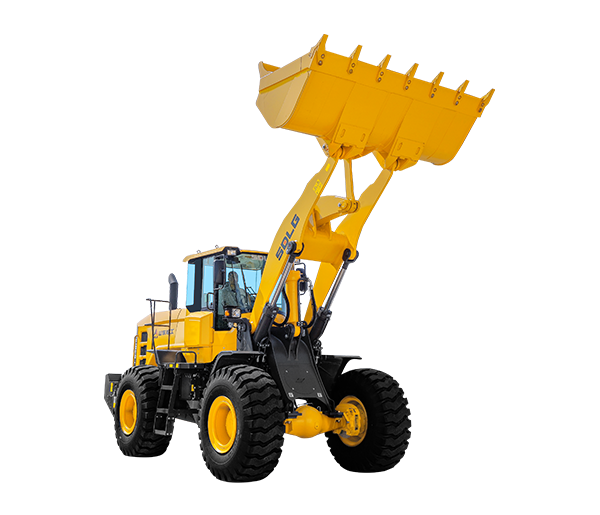
4. Electric Wheel Loader Technology: What the Market Data Shows
Electric wheel loaders are now available in different size classes, from compact machines for urban and indoor applications to larger machines designed for demanding material handling. Public specifications from established manufacturers show how wide this product range has become.
The following figures are included as industry reference data only. They are not specifications for the HKLOONG pure electric wheeled loader. Actual HKLOONG specifications depend on the selected configuration.
| Reference Model | Operating Weight | Battery | Bucket Capacity | Reference Source |
|---|---|---|---|---|
| Volvo L20 Electric | 4,500 kg | 40 kWh standard | 0.8 m³ | Volvo construction equipment |
| LiuGong 820TE | 7,100 kg | 70.5 kWh | 1.2 m³ standard | LiuGong |
| Volvo L120 Electric | 43,431–46,297 lb | 282 kWh | 4.3–7.2 yd³ | Volvo Construction Equipment |
Volvo lists the L20 Electric with a 40 kWh standard battery, 4,500 kg operating weight, and 0.8 m³ standard bucket in its European specification. LiuGong lists the 820TE at 7,100 kg operating weight, 70.5 kWh rated storage energy, and a 1.2 m³ standard bucket. Volvo's electric lineup also includes the much larger L120 Electric with a 282 kWh battery and 4.3–7.2 yd³ bucket capacity. :contentReference[oaicite:0]{index=0}
These figures show an important point: there is no single definition of the "right" electric wheel loader. A compact machine may be more suitable for indoor or urban work, while a larger machine may be needed for quarrying, stockpiling, or high-volume material handling.
| Selection Factor | What I Would Check | Why It Matters |
|---|---|---|
| Battery capacity | kWh and usable energy | Influences operating time and charging planning |
| Charging system | AC/DC method, charging power and site supply | Determines how quickly the machine can return to work |
| Operating weight | Total machine weight | Affects stability, transport and ground pressure |
| Bucket capacity | Bucket volume and attachment type | Should match material density and required production |
| Rated load | Safe lifting/load capacity | Helps prevent overload and supports safe operation |
| Traction | Drive configuration and tire selection | Important on slopes, loose ground and uneven surfaces |
| Hydraulic performance | Lifting force and cycle response | Directly affects loading productivity |
For example, the published LiuGong 820TE data includes a 70.5 kWh battery, 2,000 kg rated load capacity, 61 kN bucket breakout force, 1.2 m³ standard bucket, and a fastest total cycle time of 9.8 seconds. These numbers provide a useful reference when discussing what a modern electric wheel loader can be designed to achieve, but they should not be treated as HKLOONG specifications. :contentReference[oaicite:1]{index=1}
5. Where I Would Use a Pure Electric Wheeled Loader
I would not recommend an electric wheel loader simply because it is electric. The working environment should come first. When the site benefits from low noise, no direct exhaust emissions, and controlled operating costs, the value becomes much clearer.
Indoor construction
Indoor construction and renovation work often has limited ventilation. A pure electric wheeled loader avoids direct diesel exhaust and can create a more comfortable working environment. Compact configurations can also be useful where space is limited.
Underground construction
Underground projects are another natural application. Traditional diesel equipment can add exhaust and heat to an underground environment. Electric equipment removes the machine's direct tailpipe exhaust, although site ventilation and battery safety procedures remain essential.
Urban construction
Construction in residential areas, city centers, schools, public facilities, and other populated locations often comes with noise restrictions. A quieter electric loader can make communication easier and may help contractors meet project requirements.
Mining and quarry work
Electric wheel loaders can also be used in mining and quarry environments, especially when the machine configuration provides enough traction, ground clearance, load capacity, and operating time for the application. The correct battery and charging plan becomes particularly important for long shifts.
Agriculture
Farms and agricultural facilities use loaders for feed, soil, fertilizer, waste, grain-related materials, and general site handling. For indoor barns and enclosed agricultural buildings, low noise and the absence of direct exhaust can be useful.
Snow clearing
A wheel loader equipped with a suitable snow attachment can handle snow removal in parking areas, roads, commercial sites, and public facilities. Electric drive can provide smooth low-speed control, while four-wheel drive helps maintain traction in slippery conditions.
Landscaping and municipal work
Landscaping, parks, streets, and municipal projects often take place close to the public. A quieter machine with no direct exhaust emissions can be easier to integrate into these environments.
| Application | Main Requirement | Why Electric Drive Can Help |
|---|---|---|
| Indoor construction | Low exhaust and controlled noise | No direct tailpipe emissions during operation |
| Underground work | Clean operating environment | Removes machine tailpipe exhaust |
| Urban construction | Noise and emission control | Lower engine-related noise and no direct exhaust |
| Agriculture | Material handling and indoor work | Quiet operation and electric drive |
| Mining | Traction and heavy material handling | Four-wheel drive with electric torque response |
| Snow clearing | Low-speed control and traction | Smooth drive response with suitable tires and attachments |
6. Battery, Charging and Maintenance: What Owners Need to Know
The battery is one of the most important parts of a pure electric wheeled loader. When I discuss an electric machine with a customer, I do not only ask, "How many kWh does the battery have?" I also ask how the machine will be used.
Battery size should be matched to the actual work cycle. A loader moving light materials over short distances may consume very different amounts of energy compared with a machine continuously pushing heavy material uphill.
Charging is another key part of machine planning. A fast charger can reduce charging downtime when the machine and site electrical infrastructure support it. For example, LiuGong states that the 820TE can use fast and slow charging options, with its published fast-charging configuration capable of reaching 90% in one hour. Volvo lists multiple charging options for the L20 Electric, with charging time depending on charger type and local electrical conditions. :contentReference[oaicite:2]{index=2}
Actual charging time always depends on battery state, charger output, ambient conditions, battery temperature, and available grid power. Therefore, I recommend planning the charging system together with the machine rather than treating it as a separate purchase.
Maintenance also changes from diesel to electric.
Battery condition should be monitored according to the manufacturer's maintenance procedure.
Electrical connectors and high-voltage components require proper inspection.
Hydraulic oil and filters still need scheduled service.
Tires should be checked for wear, pressure, and damage.
Braking, steering, suspension, and loader arms require regular inspection.
Cooling and thermal management systems should be kept in proper working condition.
The goal is not to eliminate maintenance. The goal is to create a maintenance plan that matches the machine's actual power system and working environment.
7. How I Approach Manufacturing at HKLOONG
At HKLOONG Heavy Industry Technology (Hefei) Co., Ltd., I look at a wheel loader as a complete working system rather than a collection of individual parts.
Our company integrates equipment R&D, precision manufacturing, quality testing, customized modification, and global distribution. The HKLOONG product range covers crawler excavators, wheel loaders, Backhoe loaders, and amphibious wetland Excavators.
For a pure electric wheeled loader, manufacturing quality is especially important because the electric drive system, battery system, hydraulic system, chassis, axle, steering system, and loader working equipment all have to work together.
Our production approach can be viewed in several stages.
Engineering and configuration
We first consider the intended application. Indoor construction, mining, agriculture, snow clearing, and municipal work can require different machine configurations. Factors such as operating space, material type, working cycle, terrain, climate, attachments, and charging conditions should be considered before final configuration.
Component integration
The electric drive system and hydraulic working system must be matched to the machine's structure. Battery installation also requires attention to protection, accessibility, weight distribution, and service requirements.
Structural manufacturing
The frame, loader arm, bucket connection, axle mounting areas, and other load-bearing components need controlled manufacturing processes. Welding quality, dimensional accuracy, alignment, and surface treatment all influence long-term machine performance.
Electrical and functional testing
Before delivery, the machine needs functional checks covering travel, steering, braking, lifting, bucket operation, electrical control, and other key systems. The exact inspection items depend on the final configuration.
This is important for international customers because a machine is not only judged by how it looks when it leaves the factory. It has to work reliably after it reaches the customer's jobsite.
8. Why Choose HKLOONG for a Pure Electric Wheeled Loader?
When I choose a manufacturer for an industrial machine, I want more than a product name. I want to know whether the supplier understands equipment, customization, quality control, and after-sales service.
HKLOONG is based in Hefei, China, and operates its proprietary HKLOONG brand. Our business covers R&D, manufacturing, quality inspection, customized modification, and global distribution.
One practical advantage is that we can look at the complete application rather than forcing every customer into one standard configuration. Different customers may have different requirements for battery capacity, attachments, tires, operating environments, dimensions, or working functions. The final configuration should therefore be discussed around the actual project.
I also believe that communication before production is important. For an electric wheel loader, questions about working hours, daily operating cycles, charging infrastructure, material density, ground conditions, climate, transport, and attachments can all affect the machine configuration.
Our role is to turn these working requirements into an equipment solution that can be manufactured, tested, delivered, and used in the field.
Pure Electric Wheeled Loader FAQ
Is a pure electric wheeled loader suitable for heavy-duty work?
Yes, but the correct answer depends on the machine configuration and application. Electric wheel loaders are available in different size classes. Heavy-duty work requires suitable operating weight, rated load, bucket capacity, hydraulic performance, battery capacity, traction, and duty-cycle planning. I recommend matching the machine to the actual material and working cycle instead of judging it only by its power source.
What is the main difference between an electric wheel loader and a diesel wheel loader?
The main difference is the power system. A diesel wheel loader uses an internal combustion engine and fuel, while a pure electric wheeled loader uses a battery and electric motors. Electric machines provide no direct tailpipe exhaust during operation and can offer lower noise and quick motor response. However, charging infrastructure and battery planning become important parts of machine operation.
How long can an electric wheel loader work on one charge?
There is no single runtime figure that applies to every machine. Working time depends on battery capacity, material weight, travel distance, terrain, hydraulic workload, operator behavior, ambient temperature, and duty cycle. Public specifications from manufacturers also describe runtime as application-dependent. :contentReference[oaicite:3]{index=3}
Can the pure electric wheeled loader work indoors?
Yes. Indoor construction, warehouses, agricultural buildings, and other enclosed environments are important applications for electric wheel loaders because there is no direct diesel exhaust during operation. Noise can also be lower than with conventional diesel equipment. Site ventilation, charging safety, and local regulations still need to be followed.
Can it be used for mining and rough terrain?
It can be used for suitable mining and outdoor applications when the machine is configured for the terrain and load requirements. Four-wheel drive helps with traction, but tire selection, ground clearance, machine weight, bucket type, battery capacity, and duty cycle should all be evaluated before selecting the machine.
Does an electric wheel loader need maintenance?
Yes. Electric does not mean maintenance-free. Battery and electrical systems need inspection, while hydraulic components, tires, brakes, steering, axles, loader arms, attachments, and cooling systems also require maintenance. The difference is that many diesel-engine-specific service items are no longer part of the machine.
Can HKLOONG customize the electric wheel loader?
Customization can be discussed according to the working environment, material, project requirements, operating conditions, and desired configuration. The specific options depend on the final machine design and should be confirmed with the HKLOONG engineering and sales team before production.
Final Thoughts on the Pure Electric Wheeled Loader
I see the pure electric wheeled loader as a practical development of the traditional wheel loader rather than a completely different type of machine. The basic job remains the same: load, carry, lift, and unload materials efficiently. What changes is the way the machine receives and uses energy.
For indoor construction, underground work, urban projects, agriculture, landscaping, snow clearing, and selected mining applications, the combination of electric drive, low-noise operation, no direct exhaust emissions, quick torque response, and four-wheel drive can make strong practical sense.
The most important point is still application matching. Battery capacity, charging conditions, rated load, bucket size, hydraulic performance, traction, working hours, and terrain should all be considered together.
At HKLOONG, I approach the pure electric wheeled loader from this practical perspective. We combine equipment R&D, precision manufacturing, quality testing, customization, and international supply to develop machinery around real working requirements. If the goal is to reduce direct exhaust emissions, control operating noise, improve energy use, and keep the familiar loading performance of a wheel loader, an electric configuration is worth serious consideration.



 WhatsApp
 Phone
Phone E-mail
 Message