

Long-Reach Excavator Series (E) for Deep Digging, High Slopes and Extended-Distance Work
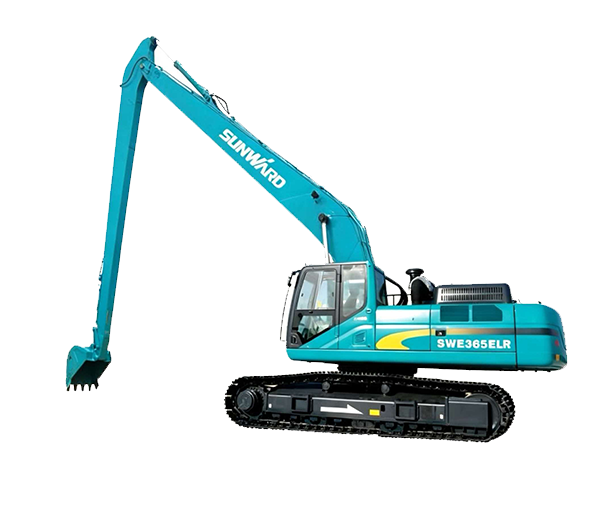
When I talk about the Long-Reach Excavator Series (E), I usually explain it in a very simple way: this is an Excavator designed to work farther than a standard excavator can comfortably reach.
That sounds obvious, but on a real jobsite, reach changes the whole working method. A normal excavator may need to move forward again and again to reach a deep trench, pond, slope, riverbank, stockpile, or other difficult working area. A long-reach excavator gives the operator more distance from the machine to the working point, which can reduce unnecessary repositioning and make certain jobs much easier.
Sunward's official long-reach excavator information describes this type of machine as being designed for places that are difficult to reach with a conventional excavator. The company highlights deep excavation, reaching over obstacles, working in restricted areas, and reducing the need to reposition the machine.
At Ganglong Heavy Industry Technology (Hefei) Co., Ltd., I look at a long-reach machine from a slightly different angle. I do not only ask how far the boom can reach. I also want to know what the customer needs to dig, how deep the work is, what material is involved, how stable the ground is, what attachment is required, and how the machine will be transported to the final jobsite.
That is because long reach is useful only when the complete machine is properly matched to the work.
The Long-Reach Excavator Series (E) can be considered when a standard excavator is simply not enough for the required working distance. Typical applications include deep excavation, slope shaping, waterway work, pond cleaning, material handling, land development, port work, and other jobs where the operator needs to work farther away from the machine.
Sunward's recent long-reach development also shows how far this equipment category has expanded. In January 2026, Sunward announced the delivery of its SWE1650FLR, a large long-reach excavator with a 10.8 m boom and 7.7 m reinforced stick. The company states that this machine reaches a maximum digging height of 17.2 m, maximum digging depth of 13.3 m, and 20.5 m ground-level reach.
Of course, those figures belong specifically to the SWE1650FLR. They should not be treated as the specifications of every machine in the Long-Reach Excavator Series (E). That distinction is important when buying construction machinery internationally.
A long-reach excavator is a crawler excavator equipped with an extended boom and arm so that the bucket can work farther away from the main body of the machine.
The basic machine still works like a normal crawler excavator. It has an engine, hydraulic system, upper structure, crawler undercarriage, boom, arm, bucket, cab, and control system. The big difference is the working equipment and the way the machine is balanced for extended reach.
With a standard excavator, the boom and arm are designed for a balance between digging force, reach, lifting ability, and general flexibility.
With a long-reach excavator, reach becomes a much bigger part of the design.
The longer working equipment allows the operator to reach farther without moving the crawler base as often. This can be very useful when the machine is working beside a river, above a deep excavation, at the bottom of a slope, near a pond, or in an area where moving the machine repeatedly is inconvenient.
Sunward's official long-reach application page specifically explains that the extended arm can reach areas that are difficult for conventional Excavators to access. It also notes that long-reach equipment can work over obstacles and in deep holes without constantly repositioning the machine.
This is something I always explain to buyers.
You cannot simply take a standard excavator and install an extremely long arm without considering the rest of the machine.
As the arm becomes longer, the load and digging forces acting on the machine change. The hydraulic system has to operate the longer working equipment. The undercarriage and upper frame need suitable stability. The counterweight may need to be matched to the configuration. The bucket also needs to be selected according to the available hydraulic and structural capacity.
So a proper long-reach excavator is a complete working system.
In ordinary excavation, moving the machine forward is not a big problem.
But imagine cleaning a pond where the bank is soft. Or imagine shaping a highway slope where moving the excavator too close to the edge could create a safety problem. Or think about a riverbank where the operator needs to work from a stable position on land.
In these cases, every extra meter of reach can make the working method different.
That is where the Long-Reach Excavator Series (E) becomes useful.
The basic working principle is still hydraulic excavation.
The engine supplies power to the hydraulic system. Hydraulic pumps move oil through the system. Hydraulic cylinders control the boom, arm, and bucket. Hydraulic motors handle travel and swing functions.
The operator uses the controls inside the cab to coordinate these movements.
The difference is that the boom and arm are designed for an extended working range.
Let me use a simple example.
Suppose I am cleaning a large pond from the edge.
With a standard excavator, I may have to move the machine closer to the water as the work progresses. Depending on the soil and bank condition, that may not be convenient.
With a long-reach excavator, I can position the machine at a suitable distance from the edge and use the extended boom and arm to place the bucket farther into the pond.
The bucket enters the material, curls to collect it, and the boom lifts it. The upper structure then swings toward the dumping area, and the material is released.
The machine can repeat this cycle while staying in a relatively stable position.
That is the real value of long reach. It is not simply about having a longer measurement on a specification sheet. It is about changing where the machine can work from.
Long-reach work requires careful control.
When the boom and arm are extended, small control movements can have a larger effect at the bucket. The operator needs smooth hydraulic response to place the bucket accurately.
For this reason, when I discuss a long-reach excavator with a customer, I pay attention to hydraulic system performance and control behavior, not just engine power.
Balance is another important point.
The farther the working equipment extends, the more important the relationship between the boom, arm, bucket, upper frame, undercarriage, and counterweight becomes.
This is why long-reach machines are designed as a complete configuration rather than simply being standard excavators with an extra-long arm.
The most obvious feature is reach.
Sunward's official long-reach information says the extended arm allows the machine to reach areas that would be difficult for a conventional excavator. The company also points to deep holes, obstacles, large jobsites, and reduced repositioning as typical benefits.
For a contractor, this can mean fewer machine movements during certain jobs.
That does not mean every long-reach project will automatically be faster. Soil type, bucket filling, swing distance, dumping arrangement, operator skill, and site layout still control actual productivity.
A long-reach excavator normally uses specially designed boom and arm components.
Sunward's SWE1650FLR provides a good example of how serious this design becomes on a large machine. The official specification states a 10.8 m boom combined with a 7.7 m reinforced stick.
The word “reinforced” is important. Extended working equipment cannot simply be treated like a standard lightweight arm. The structure must handle the loads created during operation.
The working envelope includes the areas the bucket can reach in height, depth, and horizontal distance.
For some projects, maximum ground-level reach is the key number. For others, maximum digging depth matters more. High-slope work may focus on digging height and reach.
That is why I always ask the customer for the actual working requirement instead of recommending a machine based on one reach figure.
Long reach increases the importance of stability.
The crawler undercarriage provides the base of the machine. Track width, track length, machine weight, ground condition, and machine position all affect stability.
When working near slopes, water, or soft ground, the operator must consider the actual bearing capacity of the site rather than assuming that a crawler excavator can work anywhere.
The hydraulic system needs to move the extended working equipment with enough control.
This becomes especially important when the operator is combining boom, arm, bucket, swing, and other movements.
Sunward's newest large long-reach SWE1650FLR uses four main pumps and two main valves, according to the company's 2026 announcement. Sunward says this arrangement is intended to improve coordination and smoothness during combined movements.
Again, that hydraulic configuration belongs specifically to the SWE1650FLR and should not be applied to the entire series.
The right bucket can make a big difference.
For loose sediment, the bucket requirement can be very different from a machine working in compact soil. Dredging, slope trimming, material handling, and general excavation can each require different working tools.
I prefer to choose the attachment based on the material and work cycle rather than selecting one simply because it has the largest capacity.
Because the phrase Long-Reach Excavator Series (E) describes a series or configuration rather than one single specification, I prefer to use individual Sunward models when discussing technical numbers.
The SWE1650FLR is currently one of the clearest official examples of Sunward's long-reach development.
| Technical Item | Sunward SWE1650FLR |
|---|---|
| Machine type | Long-reach excavator |
| Boom length | 10.8 m |
| Reinforced stick | 7.7 m |
| Maximum digging height | 17.2 m |
| Maximum digging depth | 13.3 m |
| Ground-level reach | 20.5 m |
| Heavy-duty bucket | 4 m³ |
Source: Sunward official announcement for the SWE1650FLR international delivery, published January 6, 2026. These figures apply specifically to the SWE1650FLR configuration.
These numbers give a good idea of what a modern large long-reach excavator can do. But I would not use a 20.5 m reach as a general specification for every Long-Reach Excavator Series (E) machine.
| Working factor | Standard Excavator | Long-Reach Excavator |
|---|---|---|
| Working distance | Normal | Extended |
| Deep excavation | Suitable within standard range | Designed for greater reach and depth |
| Work over obstacles | Limited by standard boom and arm | More flexible |
| Machine repositioning | May be required more often | Can be reduced in suitable jobs |
| Slope work | Depends strongly on site position | Useful for working farther from the slope edge |
| Waterway work | Depends on reach and ground conditions | Well suited to selected river, pond and water-edge applications |
| Stability requirements | Normal excavator considerations | Greater attention required due to extended equipment |
Source: General engineering comparison based on the operating principle described by Sunward for its long-reach excavator applications. Sunward identifies deep digging, reaching over obstacles, difficult-access work, and reduced repositioning as key use cases.
The table is intentionally practical rather than presenting unsupported numerical claims. A long-reach machine is not simply “better” than a standard excavator. It is designed for a different working problem.
Sunward's January 2026 announcement states that its long-reach lineup spans ten models from the SWE150ELR to the SWE1650FLR. The company also identifies the SWE950ELR, SWE750FLR, and SWE600FLR among its previous long-reach machines.
| Sunward long-reach reference | Role described by Sunward | Published information |
|---|---|---|
| SWE150ELR | Long-reach excavator series entry | Part of the ten-model lineup |
| SWE600FLR | Mining / port application | Part of Sunward long-reach lineup |
| SWE750FLR | Mining / port application | Part of Sunward long-reach lineup |
| SWE950ELR | Deep-digging long-reach model | Described as a world-record digging-depth model by Sunward |
| SWE1650FLR | Large long-reach excavator | 10.8 m boom, 7.7 m reinforced stick, 20.5 m ground reach |
Source: Sunward official January 2026 SWE1650FLR delivery announcement.
Deep excavation is one of the most obvious applications.
When the bottom of the working area is too far below the machine, a standard excavator may have to reposition repeatedly or use a different setup. A long-reach excavator can work from a more suitable position.
The exact depth depends on the machine configuration, boom, arm, bucket, and working conditions.
Long-reach excavators are particularly useful around rivers, canals, ponds, and other water-edge projects.
The machine can work from the bank while extending the bucket toward the water. This can reduce the need to put the machine itself close to unstable ground.
However, I always recommend checking soil bearing capacity, water level, slope condition, and machine stability before starting this type of work.
Pond cleaning is another practical application.
The operator can reach sediment or unwanted material farther from the bank. This can be useful when the water or mud makes machine movement difficult.
Sunward's official long-reach information specifically highlights deep holes and difficult-to-access areas as suitable applications.
Slope shaping is a job where reach can be very valuable.
The excavator may need to work from a lower or safer position while reaching upward along the slope.
Sunward's SWE1650FLR announcement specifically identifies high slopes along highways and railways as an application for the machine.
Large long-reach excavators can also be used around ports and material yards where operators need to reach across large working areas.
The SWE1650FLR is officially described as suitable for large-area operations in ports and material yards.
Land development often involves excavation, grading, drainage, slope preparation, and material movement.
A long-reach machine can be useful when the site layout makes frequent repositioning inefficient.
Environmental work can include pond cleaning, sediment removal, waterway maintenance, and restoration of damaged land.
The advantage of long reach is particularly clear when the operator needs to stay on firm ground while reaching into an area that is difficult to access directly.
Long-reach machines can also support selected quarry and mining applications, depending on the machine configuration and material.
For heavy rock or abrasive material, I would pay particular attention to bucket construction, teeth, boom and arm condition, hydraulic performance, and undercarriage condition.
At Ganglong Heavy Industry Technology (Hefei) Co., Ltd., I do not start with the quotation.
I start with the job.
How far does the bucket need to reach from the crawler track?
This is the first number I want to know.
But I also ask whether the customer needs the reach at ground level, below ground, above ground, or at a certain working height.
These are different requirements.
Soft sediment, ordinary soil, clay, gravel, rock, and demolition material do not behave in the same way.
Bucket selection and machine configuration should match the material.
Ground conditions can decide whether a long-reach excavator can work safely.
Near water, on a slope, or beside a deep excavation, the operator must understand the ground bearing capacity and machine position.
Long reach gives the machine more distance, but it does not remove the need for good site planning.
For an international machinery order, I check the model, production year, configuration, engine, working equipment, undercarriage, and available attachments.
This is particularly important when the customer uses a general search term such as Long-Reach Excavator Series (E) rather than a specific model number.
Before delivery, we arrange inspection of the machine appearance, main functions, hydraulic and electrical systems, working equipment, undercarriage, and basic operating performance.
For used equipment, I also pay close attention to visible wear, hydraulic leakage, cylinder condition, track components, boom and arm condition, and abnormal operating noise.
Standard documents and accessories are prepared according to the order requirements.
If the customer needs spare parts, additional buckets, hydraulic attachments, or special documents, those requirements should be confirmed before shipment.
Complete machines can normally be shipped by sea.
Suitable spare parts and accessories may be shipped by air or express.
The final method depends on the destination, shipping route, machine dimensions, and customer requirements.
Large construction machinery needs secure transport preparation.
We protect the machine with suitable film or protective materials, fix it securely according to shipping requirements, and pack loose accessories separately in suitable cartons or wooden cases.
Ganglong Heavy Industry Technology (Hefei) Co., Ltd. was founded in 2013. Together with Hefei Ganglong International Trade Co., Ltd., the group is affiliated with China Construction Machinery (Group) Co., Ltd.
Our business covers equipment R&D, manufacturing, testing, customization, sales, and international trade. We offer self-branded HKLOONG excavators, loaders, Backhoe loaders, and swamp excavators, while also providing complete machine sales and leasing services for domestic and international brands.
For branded equipment such as Sunward machinery, our role is to supply and arrange equipment rather than claim that we manufacture the Sunward brand.
A buyer may search for “Long-Reach Excavator Series (E)” because that is the product name or keyword they have found online.
But the actual project may require a specific reach, bucket size, machine weight, attachment, or transport arrangement.
That is where we can help narrow down the requirement.
Hefei Ganglong International Trade Co., Ltd. serves as our professional international trade arm.
Our team has experience in construction machinery, mining machinery, and agricultural machinery, with customers and market experience across Asia, Africa, America, and other regions.
International machinery trading has plenty of details. Shipping is only one part of the process. Machine inspection, documents, payment, accessories, packing, loading, and spare parts also need attention.
Before shipment, we arrange checks of machine appearance, main functions, hydraulic and electrical systems, working equipment, and basic operating performance.
This gives the buyer a clearer understanding of the equipment being shipped.
Depending on the market, equipment availability, and project requirements, we can discuss complete machine sales and leasing services.
The exact arrangement is confirmed according to the machine and customer requirements.
Long-reach equipment can have specialized working components, so I recommend confirming the attachment and spare-part requirements at the beginning of the order.
It is much easier to prepare suitable parts before shipment than to discover a missing component after the machine has arrived at a remote jobsite.
A long-reach excavator is a crawler excavator designed with extended working equipment so the bucket can reach farther than a conventional excavator. It is commonly used for deep excavation, slope work, waterway projects, pond cleaning, material handling, and other applications where the working point is far from the machine.
The main practical advantage is extended working distance. The machine can reach areas that may be difficult for a standard excavator to access, which can reduce repositioning in suitable jobs. Sunward specifically describes this benefit in its official long-reach excavator application information.
It can, depending on the machine and configuration. The exact digging depth depends on boom length, arm length, bucket, machine geometry, and operating conditions.
It can be useful for selected water-edge and waterway projects, but “long reach” does not automatically mean the machine is designed to operate inside water. Ground stability, water depth, electrical components, machine height, and the complete site condition must be evaluated before operation.
Yes. Pond cleaning and deep-hole excavation are common applications for long-reach equipment. Sunward's official long-reach information highlights deep holes and difficult-access areas as situations where long-reach equipment can be useful.
Yes. Long-reach excavators can be useful for selected slope-shaping and maintenance projects. Sunward specifically identifies high slopes along highways and railways as applications for its SWE1650FLR.
There is no single maximum reach for the entire series because different models have different configurations. As one current Sunward example, the SWE1650FLR has a published ground-level reach of 20.5 m. This figure belongs specifically to that model.
In Sunward's January 2026 announcement, the company described the SWE1650FLR as its latest and largest-tonnage model in the long-reach segment. The published machine uses a 10.8 m boom, 7.7 m reinforced stick, and 4 m³ heavy-duty bucket.
Sunward states that the SWE1650FLR is designed for challenging applications including high highway and railway slopes, ports, and material yards. Its published maximum digging height is 17.2 m, maximum digging depth is 13.3 m, and ground-level reach is 20.5 m.
I normally choose the bucket according to the material and working conditions. Loose sediment, ordinary soil, clay, gravel, and hard material require different considerations. Bucket weight and capacity also need to match the excavator configuration.
It can support selected mining and quarry applications, especially where extended reach is useful. However, the material, digging force, bucket type, machine stability, and working environment must be checked before choosing a specific configuration.
We arrange inspection of the machine appearance, main functions, hydraulic and electrical systems, working equipment, and basic operating performance. Standard documents and accessories are also prepared according to the order.
Production or sourcing time depends on the selected model, configuration, order quantity, machine availability, and customization requirements. We confirm the delivery schedule before production or sourcing.
Complete long-reach excavators are normally transported by sea. Suitable spare parts and accessories can be transported by air or express. The final shipping method depends on destination, machine dimensions, shipping route, and customer requirements.
Payment is commonly arranged by T/T, such as a deposit before production or preparation and the balance before shipment. Exact payment terms are confirmed between both parties.
When I evaluate a Long-Reach Excavator Series (E) machine, I do not start by asking how long the arm is.
I start by asking what the customer needs to reach.
That one question tells me a lot.
If the customer is cleaning a pond, I want to understand the bank condition and required digging depth. If the project is highway slope work, I want to know the slope height and working position. If the machine is going to a port, I want to understand the material and required working range. If it is a waterway project, I want to know the ground and water conditions.
Then I can look at the machine.
Sunward's official long-reach information explains the basic reason for choosing this type of excavator: the extended working equipment allows the machine to reach difficult areas, work in deep holes, work over obstacles, and reduce unnecessary repositioning.
The SWE1650FLR shows how far the technology can go. Sunward's 2026 announcement lists a 10.8 m boom, 7.7 m reinforced stick, 17.2 m maximum digging height, 13.3 m maximum digging depth, 20.5 m ground-level reach, and 4 m³ heavy-duty bucket for this specific large model.
But the important lesson is not simply “longer is better”.
A longer working range also means that stability, hydraulic control, machine balance, attachment selection, and ground conditions become more important.
That is why I prefer to match the complete machine to the project.
At Ganglong Heavy Industry Technology (Hefei) Co., Ltd., we can discuss the customer's working requirements, confirm available equipment and configuration, arrange inspection, prepare accessories and documents, and coordinate international delivery through our professional trade team.
For customers searching for a Long-Reach Excavator Series (E), long-reach excavator for deep digging, long-arm excavator for slope work, extended-reach excavator for waterway projects, or Sunward long-reach excavator, the first step is always the same: define the real working distance and site conditions.
Once those details are clear, choosing the machine becomes much easier.
And that is how I prefer to approach construction machinery: less focus on a flashy specification, more focus on whether the machine can actually do the job.
2435092534@qq.com
86 158 5511 9567


©2026 HKLOONG Heavy Industry Technology (Hefei) Co., Ltd. All Rights Reserved.

This website uses cookies to ensure you get the best experience on our website.
 Español
 Pусский
 Français
 العربية
 WhatsApp
 Phone
Phone E-mail
 Message