

SWE950E-3H Large Excavator for Heavy-Duty Construction and Mining
When I talk with customers about a Large Excavator, I usually start with one simple question: what kind of work do you need the machine to handle every day?
For a small construction site, a compact Excavator may be enough. But when the job moves into mining, large earthmoving, heavy material handling, quarry work, or other demanding conditions, machine size and working stability become much more important. This is where I would consider the SWE950E-3H Large Excavator.
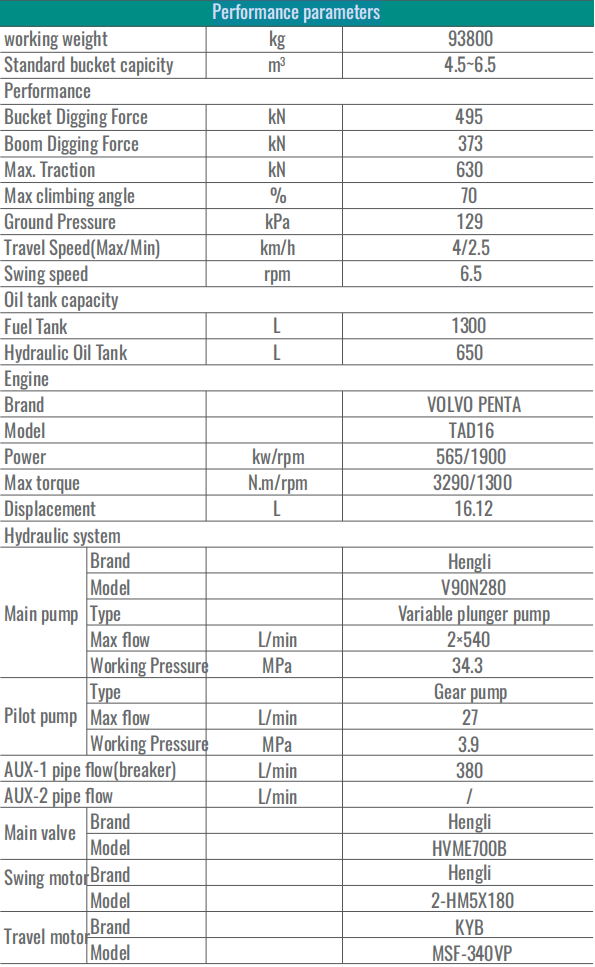
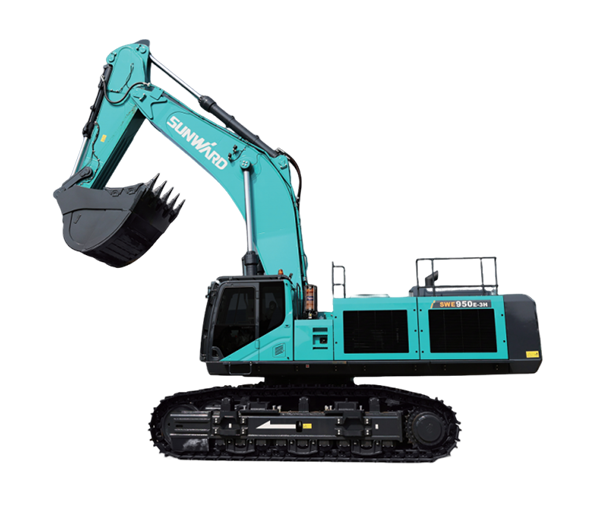
The SWE950E-3H is a heavy-duty excavator from Sunward's large excavator range. According to Sunward's published product information, the machine has a total weight of about 93,800 kg, engine power of 565 kW at 1,900 rpm, and a standard bucket capacity of 5.5 m³. The published configuration also uses a 7.1 m boom and a 2.95 m arm. These figures put the machine firmly into the large excavator class for demanding earthmoving and mining-related work.
From my side as a machinery supplier, I do not look at these numbers alone. I also look at how the machine is configured, where it will work, how it will be transported, what attachment is required, and how easy it will be for the customer to maintain. A large excavator is a serious investment, so the machine has to make sense as a complete working solution, not just as a specification sheet.
Ganglong Heavy Industry Technology (Hefei) Co., Ltd. and Hefei Ganglong International Trade Co., Ltd. work with customers in construction machinery, mining machinery, agricultural machinery, and related attachments. For Sunward equipment, our role is to help customers select, source, inspect, arrange and deliver suitable machines according to their project requirements.
In simple terms, the SWE950E-3H is built for jobs where a normal mid-size excavator is simply too small. Its nearly 94-ton operating class gives it the physical size and working stability needed for large-scale excavation and material handling.
I see this type of excavator as a machine for projects where production volume matters. If the operator needs to move large amounts of soil, rock, overburden or other materials, a large bucket and a powerful hydraulic system can make a noticeable difference to the working cycle.
The published standard bucket capacity is 5.5 m³. That does not mean every working condition should use the same bucket. Bucket choice should match the material density, digging conditions, attachment configuration and job requirements. In mining and quarry applications, for example, the working tool may be selected differently from a general earthmoving project.
Sunward's official product information also highlights a Volvo Penta engine, an energy-saving hydraulic system and proprietary matching technology. The machine is also described with a dedicated crushing circuit and reinforced mounting structure for larger breaker applications. These features are particularly relevant when the excavator is expected to work beyond ordinary soil excavation.
Another detail I pay attention to is the undercarriage. On a machine of this size, the lower structure has a direct relationship with stability, travel performance and long-term working conditions. Sunward describes the SWE950E-3H with a heavy-duty undercarriage, protected track chain mechanism and dual swing motors.
That combination tells me the machine is intended for serious work rather than occasional light excavation.
| Published Parameter | SWE950E-3H |
|---|---|
| Total Weight | 93,800 kg |
| Engine Power | 565 kW / 1,900 rpm |
| Standard Bucket Capacity | 5.5 m³ |
| Boom Length | 7.1 m |
| Arm Length | 2.95 m |
Source: Sunward official SWE950E-3H product information. Specifications may vary according to configuration and product updates.
People sometimes think an excavator works simply because the engine is powerful. In reality, the engine is only one part of the system.
When I explain a large Hydraulic Excavator to a customer, I normally describe the process in a straightforward way. The engine provides power. The hydraulic system converts that power into hydraulic flow and pressure. Hydraulic components then control the boom, arm, bucket, travel system and swing system.
The operator uses the controls to send hydraulic power where it is needed. If the operator is digging, the boom, arm and bucket work together. If the machine needs to swing, hydraulic power is directed to the swing system. When the excavator travels, power is transferred to the track motors.
The working cycle may look simple from outside, but several movements can happen together. A skilled operator can raise the boom, pull the arm, close the bucket and swing the upper structure in a coordinated way. This is one reason why hydraulic response and control feel matter just as much as raw engine power.
For a large excavator such as the SWE950E-3H, stability becomes especially important. The machine is heavy, the working equipment is large, and the loads involved can be substantial. A strong lower structure helps provide a stable base while the upper structure and working equipment perform the excavation cycle.
The SWE950E-3H also uses dual swing motors according to Sunward's published product information. Sunward says this arrangement helps reduce impact during starting and braking, increase driving torque and provide smoother rotation.
That is the kind of feature that may not look dramatic in a product photo, but it matters on a real jobsite. Large machines spend many hours repeating the same movements. Smooth control can make the working process easier for the operator and more predictable during long shifts.
The first thing I would look at is the working equipment. The SWE950E-3H uses a 7.1 m boom and 2.95 m arm according to Sunward's published specifications. The combination provides the machine with a substantial working structure for heavy excavation.
For customers working in mining, quarrying or large earthmoving projects, this is important because the machine is expected to handle large quantities of material rather than perform occasional small digging tasks.
A 5.5 m³ standard bucket gives the SWE950E-3H a large loading capacity. Of course, bucket capacity should never be considered separately from material density and machine configuration.
If the material is very dense or contains large rocks, the actual working conditions may require a different bucket or attachment. This is why I normally ask customers about the material first instead of simply recommending the biggest bucket available.
A large excavator spends a lot of time supporting its own weight while digging, swinging and travelling. The undercarriage therefore needs to be designed around the machine's working class.
Sunward describes the SWE950E-3H with a wide and robust undercarriage, multiple rollers, an idler and track shoes, together with a protected track chain mechanism. For demanding mining conditions, these details are worth paying attention to.
Not every excavator is used only with a digging bucket. In demolition, quarry and rock-related applications, Hydraulic Breakers can become important working tools.
The SWE950E-3H is published with a dedicated crushing circuit and reinforced attachment mounting structure. Sunward states that the configuration supports larger crushing hammers.
For a customer who expects the machine to work with a breaker, I would confirm the complete attachment requirements before placing the order. Hydraulic flow, pressure, mounting dimensions and working conditions all need to match.
The hydraulic system is where an excavator turns engine power into actual working movement. Sunward describes the SWE950E-3H as using an energy-saving hydraulic system combined with proprietary matching technology.
For me, the practical point is not simply the phrase "energy saving." The real question is how the machine performs during repeated work cycles, how the hydraulic system responds under load, and whether the configuration matches the customer's application.
The use of two swing motors is another published feature. Sunward says the arrangement reduces impact when starting and braking, increases torque and supports smoother swing movement.
For a nearly 94-ton excavator, controlled swing movement is important because the upper structure carries a large amount of mass. Smooth rotation is useful when loading trucks, positioning material or working repeatedly in one area.
| Feature | Practical Meaning on Site |
|---|---|
| 93,800 kg total weight | Designed for large-scale and heavy-duty applications |
| 565 kW engine power | Provides the power base for demanding excavation work |
| 5.5 m³ bucket | Suitable for moving substantial material volumes |
| 7.1 m boom | Supports a large working structure |
| 2.95 m arm | Works with the boom for excavation movement |
| Dedicated crushing circuit | Supports compatible hydraulic breaker applications |
| Dual swing motors | Supports smoother swing and higher swing drive torque |
Source: Sunward official SWE950E-3H product information. The practical application of each feature depends on the machine configuration, attachment and working conditions.
When customers compare Excavators, I always recommend looking at the actual job rather than comparing numbers randomly.
A 20-ton excavator, a 40-ton excavator and a nearly 94-ton excavator are not simply three versions of the same machine. They are normally selected for different production levels, working conditions, transport arrangements and budgets.
The following comparison is a simple working guide rather than a direct model-to-model specification comparison.
| Excavator Class | Typical Work Scale | Typical Application | Main Consideration |
|---|---|---|---|
| 20–30 ton class | Medium | General construction, road work, municipal projects | Mobility and versatility |
| 30–50 ton class | Medium to large | Heavy earthmoving, quarry work, infrastructure | Balance between capacity and transport |
| 50–80 ton class | Large | Mining, quarrying, major earthmoving | Production capacity and stability |
| 90 ton class | Very large | Large mining and heavy excavation | Heavy-duty output, site conditions and logistics |
Source: General equipment-selection guidance prepared for comparison purposes. This table is not a Sunward specification table and should not be treated as exact model data.
The SWE950E-3H sits in a much heavier class than ordinary Construction Excavators. Sunward's current large excavator range also lists models such as the SWE400E-3H, SWE500E-3H, SWE600F, SWE700F and SWE750F alongside the SWE950E-3H. This gives customers several machine sizes to consider depending on the project scale.
| Sunward Large Excavator | Published Total Weight | Published Engine Power | Published Bucket Capacity |
|---|---|---|---|
| SWE400E-3H | 39.2 t | 214 kW / 2100 rpm | 2.0 m³ |
| SWE500E-3H | 49,000 kg | 280 kW / 2000 rpm | 2.6 m³ |
| SWE750F | 79,000 kg | 565 kW / 1900 rpm | — |
| SWE950E-3H | 93,800 kg | 565 kW / 1900 rpm | 5.5 m³ |
Source: Sunward published product information for the listed models. The available specifications and configurations can vary by market and product update.
For example, Sunward's published SWE500E-3H technical material lists a 49,000 kg working weight, 280 kW engine power and 2.6 m³ standard bucket capacity. Sunward's large-excavator listing gives the SWE750F a published total weight of 79,000 kg and the SWE950E-3H 93,800 kg.
This is why I would not automatically tell a customer to choose the largest machine. If the project does not need that production capacity, the extra size may create unnecessary transportation and site-planning requirements. The right machine is the one that matches the actual work.
Mining is one of the clearest application areas for a large excavator. Large volumes of material need to be moved, and the machine may work for long hours under demanding conditions.
The SWE950E-3H is particularly relevant when the project needs a heavy machine with a large bucket, strong working equipment and a robust undercarriage. However, mining conditions differ widely. Rock type, bench height, haul-truck size, loading method and attachment requirements should all be checked before selecting the final configuration.
Quarry sites often combine excavation, rock handling and material loading. A large excavator can be used for digging, loading and, when properly configured, breaker work.
The dedicated crushing circuit described by Sunward makes the SWE950E-3H worth considering for customers who need hydraulic breaker capability. I would still confirm the breaker model and hydraulic requirements before delivery.
Major infrastructure projects can involve huge amounts of soil and material. When the work area is large and the production target is high, a large excavator can reduce the number of machine cycles needed to move material.
This can be useful in large-scale road construction, site preparation, land development and other earthmoving projects.
The machine can also be considered for heavy material handling applications where the attachment and lifting requirements are suitable.
Here I would be careful with the word "lifting." An excavator is not automatically a crane. Lifting operations need to follow the machine's rated limits, approved configuration and local safety requirements. Customers should provide the intended load and working radius so we can check the configuration before shipment.
With a suitable hydraulic breaker and the correct hydraulic configuration, a large excavator can support demanding demolition and breaking work.
The SWE950E-3H's published dedicated crushing circuit is relevant here. The reinforced mounting structure is also designed around heavier attachment use, according to Sunward's product information.
For a machine this large, I do not think the delivery process should stop at "the machine has arrived." Inspection before shipment is an important part of the buying process.
At Ganglong, we first confirm the exact model and configuration against the customer's order. If the customer needs a specific bucket, breaker piping, attachment or other configuration, those details should be checked before the machine leaves the supplier.
I also recommend checking the following areas:
Overall machine appearance and visible damage
Engine and basic operating condition
Hydraulic system and visible hydraulic components
Electrical system and basic control functions
Working equipment and attachment connection
Undercarriage and track condition
Cabin and operator controls
Oil and fluid levels according to the required inspection procedure
Standard accessories and spare parts
Operation manuals and required documents
The exact inspection checklist can be adjusted according to the order and destination market. If the machine is being purchased for a specific mining or quarry project, I would rather spend more time confirming the configuration before shipment than discover a mismatch after the machine reaches the jobsite.
This is also where working with an experienced international trade team can make a difference. A machine may be technically suitable but still need careful attention to export documents, shipping dimensions, loading arrangements and destination requirements.
When people hear "manufacturing process," they sometimes imagine only welding and assembly. For a large excavator, the practical process is much broader.
The machine begins with the selected configuration. The engine, hydraulic system, working equipment, undercarriage, bucket and optional attachments all need to work together. For a customer ordering a specific application machine, configuration confirmation is therefore the first step.
During production and preparation, the main assemblies need to be checked and tested according to the supplier's procedures. Large structural parts such as the boom, arm and lower frame need to match the intended machine configuration.
Once the machine is ready, we arrange inspection before shipment. Appearance, main functions, hydraulic and electrical systems and basic operating performance are checked. Standard documents and accessories are prepared according to the order.
Production time is not one fixed number for every order. It normally depends on the model, configuration, order quantity and customization requirements. Before production begins, I prefer to confirm the delivery schedule with the customer rather than give a general promise that may not fit the actual order.
For payment, international orders are commonly arranged by T/T, such as a deposit before production and the balance before shipment. The exact payment terms are confirmed between both parties according to the order.
For transportation, complete large excavators are normally shipped by sea. Spare parts and suitable accessories can be transported by air or express where practical.
Because the SWE950E-3H is a very large machine, shipping planning deserves attention. The final transportation method depends on the destination, shipping route, port conditions and local import requirements.
For packing, the machine is generally protected with film where appropriate and fixed securely for transportation. Loose accessories and spare parts are packed separately in suitable cartons or wooden cases. The final packing arrangement can be adjusted according to the shipping route and customer requirements.
Ganglong Heavy Industry Technology (Hefei) Co., Ltd. was founded in 2013. Together with Hefei Ganglong International Trade Co., Ltd., the group operates across equipment R&D, manufacturing, testing, customization, sales and international trade.
Our business covers more than one type of machine. We work with construction machinery, mining machinery, agricultural machinery and matching attachments. We also provide complete machine sales and leasing services for a range of domestic and international brands.
For Sunward equipment, my role is not to claim that Ganglong manufactures Sunward machines. Instead, we help customers source suitable equipment, confirm configurations, arrange inspection, handle export coordination and organize transportation.
This distinction matters to me because machinery buyers need clear information about who makes the machine and who supplies it. Sunward is the equipment brand, while Ganglong provides the sales and international trade support around the customer's purchasing process.
Our international trade team has experience serving customers in Asia, Africa, America and other regions. Every market can have different requirements, so I prefer to discuss the actual destination and application before preparing a final machine proposal.
If a customer asks me for a SWE950E-3H Large Excavator, I normally want to know several things first:
What material will the machine excavate?
Is the project mining, quarrying, infrastructure or general earthmoving?
What is the required bucket or attachment?
Will a hydraulic breaker be used?
What is the expected working environment?
Which country and port will receive the machine?
Does the customer need a new machine, complete machine package or leasing option?
Are spare parts required with the initial shipment?
These questions may sound basic, but they prevent many problems later. A large excavator is not a small purchase, and choosing the correct configuration is much more useful than simply comparing advertised horsepower.
Sunward's published product information lists the total weight of the SWE950E-3H at 93,800 kg. The actual shipping weight and transport arrangement should be confirmed according to the final machine configuration and shipment plan.
The published engine power is 565 kW at 1,900 rpm. Sunward's product information identifies a Volvo Penta engine for this model.
The published standard bucket capacity is 5.5 m³. The correct bucket for a particular project should be confirmed according to the material, density, digging conditions and required attachment configuration.
Yes, the machine is positioned in Sunward's large excavator range and its published features include a heavy-duty undercarriage, large working equipment and a configuration aimed at demanding conditions. For a specific mine, however, I would check the rock conditions, working cycle, loading method, haul-truck match and attachment requirements before confirming the final configuration.
Sunward's published product information describes a dedicated crushing circuit and reinforced mounting structure that supports larger crushing hammers. The exact breaker model and hydraulic requirements should be confirmed before ordering.
There is no single delivery period that applies to every order. Production and preparation time depend on the model, configuration, order quantity and customization requirements. We confirm the delivery schedule before production.
Complete machines are generally transported by sea. Depending on the part and destination, spare parts and accessories may be shipped by air or express. The final shipping method depends on the destination, route and logistics requirements.
International orders are commonly arranged by T/T, such as a deposit before production and the balance before shipment. Specific payment terms are confirmed between the buyer and seller according to the order.
Yes. I recommend discussing commonly required spare parts and consumable items before shipment, especially when the machine will work in a remote mining or construction area. The final spare-parts list should be based on the machine configuration and customer's maintenance plan.
I would describe the SWE950E-3H as a machine for customers who have genuinely large jobs to do.
With a published total weight of 93,800 kg, 565 kW engine power and 5.5 m³ standard bucket capacity, it belongs to a very different working class from the common excavators used for small and medium construction projects. Its 7.1 m boom, 2.95 m arm, heavy-duty undercarriage, dedicated crushing circuit and dual swing motors give it a configuration aimed at demanding work.
But size alone should never be the reason to buy a machine.
I would choose the SWE950E-3H when the project actually needs this level of excavation capacity, stability and production potential. For smaller sites, another machine in the Sunward range may make more practical sense. For mining, quarrying or major earthmoving, the larger configuration may be worth considering.
That is why our approach at Ganglong is straightforward: first understand the work, then check the machine, then confirm the configuration, and finally arrange the inspection and delivery.
If you are looking for a SWE950E-3H Large Excavator, large Excavator Supplier, heavy-duty excavator, or Sunward excavator for a construction, mining or earthmoving project, we can discuss the required configuration, attachments, inspection, payment arrangement, shipping method and spare parts package before you place the order.
 RELATED
 RELATED
 RELATED
 RELATED
2435092534@qq.com
86 158 5511 9567


©2026 HKLOONG Heavy Industry Technology (Hefei) Co., Ltd. All Rights Reserved.

This website uses cookies to ensure you get the best experience on our website.
 Español
 Pусский
 Français
 العربية
 WhatsApp
 Phone
Phone E-mail
 Message