
 Español
 Pусский
 Français
 العربية


When I work with a motor grader, I look beyond engine power and machine appearance. What matters to me is how accurately the machine can cut, spread, level, and shape material under real site conditions. With its long frame, adjustable moldboard, responsive controls, and flexible working geometry, a motor grader can handle land leveling, trenching, slope grading, dozing, snow removal, scarifying, and material mixing. For road, airport, mining, water conservancy, and farmland projects, I see it as a practical machine for turning rough ground into a controlled surface.
1. What Is a Motor Grader and How Does It Work?
A motor grader is a self-propelled construction machine built around a long frame and a centrally mounted moldboard. Unlike a simple dozer blade, the grader blade can be moved in several directions. I can adjust its height, angle, side position, and cutting attitude according to the work being done. This is what gives the machine its ability to create flat surfaces, slopes, shoulders, drainage paths, and controlled road profiles.
The basic working process is easier to understand when I break it into several steps. First, the machine moves across the work area at a controlled speed. The moldboard contacts the soil or loose material. As the blade cuts into the surface, material moves along the face of the moldboard instead of simply being pushed straight ahead. By changing the blade angle, I can control where this material travels.
For land leveling, I normally think about the grader as a surface-correction tool. The blade removes high spots and moves loose material toward low areas. Several passes can gradually reduce the difference between the existing surface and the required grade.
For slope grading, the blade is positioned at an angle relative to the machine. This allows the operator to cut and shape an inclined surface rather than producing only a horizontal plane. This function is useful for road shoulders, drainage channels, embankments, and other areas where water flow depends on the final surface angle.
The machine's long wheelbase also plays an important role. A longer frame can help distribute movement over a larger distance, which supports smoother grading when the operator makes controlled passes. However, the result still depends heavily on blade adjustment, tire condition, soil properties, operator input, and the accuracy of the grading process.
I also pay attention to the relationship between machine movement and blade position. A grader is not simply cutting soil. It is creating a surface profile while moving through the site. Small changes in blade height or angle can change the amount of material being moved, so precise control is more useful than simply having a large engine.
Modern motor graders commonly use hydraulic systems to control major blade movements. Hydraulic cylinders can raise, lower, shift, or tilt the moldboard, allowing the operator to make adjustments while working. The actual hydraulic configuration varies by machine and must be confirmed from the manufacturer's technical documentation.
As an industry reference, the Cat 140 motor grader is listed with a 250 hp net engine rating, a typical operating weight of 20,236 kg, and a 3.7 m blade width. Komatsu's GD655-7 is listed at 218 hp, approximately 17,350 kg operating weight, and a 4 m moldboard. These figures show the range of specifications used in conventional heavy motor graders, but they are not HKLOONG specifications. :contentReference[oaicite:0]{index=0}
Working principle summary: engine power moves the machine, the drivetrain controls travel, hydraulic systems position the working equipment, and the moldboard performs the actual cutting, spreading, and shaping operation.
2. Main Components I Look At When Evaluating a Motor Grader
When I inspect a road grading machine, I do not look at individual components in isolation. The engine, transmission, hydraulic system, frame, axle, moldboard, and operator controls need to work as one system. A strong engine is not enough if the blade response is difficult to control, and a precise blade cannot compensate for poor traction or an unstable machine.
| Component | Main Function | Engineering Importance | Typical Inspection Point |
|---|---|---|---|
| Diesel engine | Provides power for travel and working systems | Determines available power and torque for demanding ground work | Power response, cooling, lubrication, and operating stability |
| Transmission | Transfers engine power to the wheels | Controls travel speed and available tractive effort | Gear response, shifting behavior, and load performance |
| Hydraulic system | Moves the moldboard and other attachments | Controls working equipment movement | Response, leakage, pressure stability, and cylinder condition |
| Moldboard | Cuts, moves, spreads, and shapes material | Directly determines grading performance | Blade edge wear, angle adjustment, and structural condition |
| Frame and articulation | Supports the machine and working loads | Maintains machine geometry during operation | Welds, joints, deformation, and connection condition |
| Axles and tires | Provide traction and support | Transfer machine force to the ground | Tire condition, axle condition, and alignment |
The moldboard is the component I pay closest attention to during grading work. Its cutting edge contacts the material, while its angle determines how the material moves across the blade. A worn cutting edge changes the contact geometry and can make it harder to maintain a consistent grade.
The hydraulic system is equally important because blade adjustments must be controlled rather than simply powerful. If a cylinder responds unevenly, the blade can move differently from the operator's input. That can lead to inconsistent passes and more corrective work.
The frame carries loads created by the blade and the ground. During cutting, the moldboard can experience changing resistance as it moves through different soil conditions. I therefore look at the frame, blade support, articulation points, and hydraulic mounting areas as load-transfer paths rather than separate parts.
Industry machines show how these systems are combined. For example, Komatsu describes its GD655-7 as using a dual-mode transmission, high-flow hydraulics, and on-demand CLSS valves, with the machine designed around smooth control and grading accuracy. :contentReference[oaicite:1]{index=1}
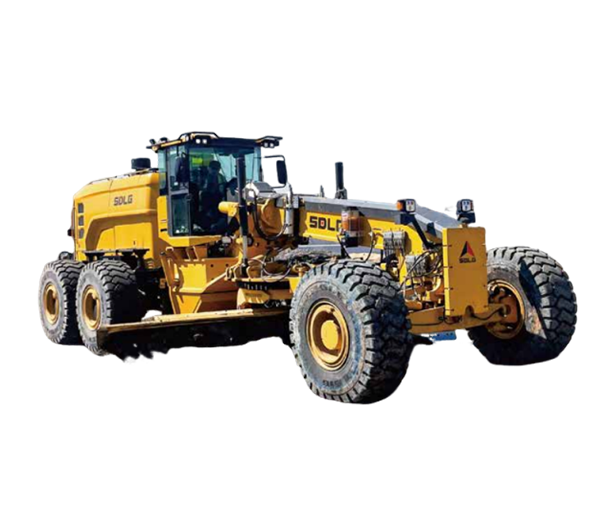
3. Motor Grader Technical Reference and Performance Comparison
Because the exact HKLOONG motor grader specifications were not provided, I use established manufacturer data only as an external engineering reference. This table is useful when I need to understand where a conventional road grading machine sits within the wider market. It should not be treated as a specification sheet for HKLOONG.
| Motor Grader | Published Power | Operating Weight | Moldboard / Blade Width | Source |
|---|---|---|---|---|
| Cat 140 | 250 hp net | 20,236 kg | 3.7 m / 12 ft | Caterpillar official product data |
| Komatsu GD655-7 | 218 hp | 17,350 kg approx. | 4 m / 14 ft | Komatsu official product data |
| Cat 140 GC | 197 hp net | 17,565 kg | 3.7 m / 12 ft | Caterpillar official product data |
The Cat 140 data comes from Caterpillar's current product page, while the Komatsu GD655-7 figures come from Komatsu's official product information. Cat also lists the 140 GC at 197 hp and 17,565 kg with a 3.7 m blade. :contentReference[oaicite:2]{index=2}
Another useful reference is John Deere. Its published 670G/GP material shows how motor grader power can vary by gear, with different net engine power levels depending on the operating gear. This is important because maximum engine power alone does not describe how a grader performs during every working condition. :contentReference[oaicite:3]{index=3}
| Performance Area | What I Evaluate | Why It Matters on Site |
|---|---|---|
| Engine output | Power and torque response under load | Supports cutting and material movement |
| Travel control | Gear selection and speed response | Helps maintain consistent grading passes |
| Blade control | Lift, angle, side shift, and tilt response | Controls final surface geometry |
| Hydraulic response | Smoothness and repeatability | Reduces unnecessary correction during grading |
| Traction | Wheel grip and axle performance | Prevents loss of forward movement during cutting |
For me, the key lesson from these industry references is simple: a motor grader should be evaluated as a complete working system. Engine power, machine weight, blade size, hydraulic response, drivetrain design, and operator control all influence the final result.
4. Key Advantages of This Motor Grader for Real Job Sites
The product information provided for this machine focuses on excellent performance, agile and precise operation, and ease of handling. I would connect those claims to practical work rather than repeat them as marketing language.
Precise surface grading: The moldboard is designed for controlled cutting and spreading. When I need to create a more even road surface, the blade can be adjusted to remove high areas and redistribute loose material.
Flexible working geometry: A motor grader can change the moldboard position instead of relying on one fixed blade angle. This gives the operator more options for flat grading, shoulder work, trench shaping, and slope work.
Agile operation: A grader needs to make controlled passes and adjust its position frequently. Responsive steering and working controls can reduce unnecessary repositioning, especially when the machine is working near road edges or other structures.
Multi-purpose working ability: I can use the same basic machine for land leveling, trenching, slope grading, dozing, snow removal, scarifying, and material mixing, provided the configuration and attachments are suitable for the task.
Snow removal capability: In cold regions, the grader can be configured for snow-clearing work. A front blade or snow wing can change the machine's role from earth grading to winter road maintenance. Cat's current motor grader information, for example, lists snow-wing and front-blade options within its versatility equipment. :contentReference[oaicite:4]{index=4}
Scarifying: When the existing road surface is too hard for direct grading, a scarifier can loosen the material before the moldboard reshapes it. This can make the grading process more controlled than trying to force the main blade through hard material.
Material mixing: During road improvement, different materials sometimes need to be blended across a working width. A grader can redistribute and mix loose material during repeated passes, depending on the material and selected attachment configuration.
For me, the practical advantage of a motor grader is its ability to change the surface rather than simply transport material. That makes it especially useful when the final geometry of the ground matters.
5. Where I Would Use a Motor Grader
I would normally consider a motor grader when the project requires controlled surface shaping rather than simple material pushing. The applications supplied for this machine cover a wide range of heavy-duty projects.
| Industry / Project | Typical Task | Why a Motor Grader Fits |
|---|---|---|
| Highway construction | Roadbed leveling, shoulder shaping, surface preparation | Adjustable blade geometry supports controlled road profiles |
| Airport construction | Large-area grading and surface preparation | Long working passes help prepare broad surfaces |
| Mine construction | Haul-road preparation and ground shaping | Heavy machine configuration can handle demanding terrain |
| Road building | Subgrade and shoulder work | Blade control supports progressive surface correction |
| Water conservancy | Embankment and slope shaping | Angled blade positions support slope work |
| Farmland improvement | Land leveling and surface preparation | Can redistribute loose soil across larger areas |
| Snow maintenance | Snow removal from roads and open areas | Compatible front or side snow equipment can extend use |
On highways, I would use the machine for roadbed preparation, shoulder shaping, and final grading stages. The goal is not simply to make the surface look flat. The finished profile needs to support drainage, traffic, and the next construction layer.
At airports, broad open surfaces create a different challenge. The machine needs to work across large areas while maintaining consistent grading passes. The actual project specification should determine the required grading tolerance and verification method.
For mine construction, the ground can be rougher and the working conditions harder. I would pay more attention to traction, frame durability, tire condition, and blade wear. The grader may be used to maintain access roads and working surfaces rather than perform fine finish grading only.
For farmland improvement, the material is often different from highway base material. Moisture, soil type, and existing ground conditions can change how the blade behaves. I would therefore adjust operating speed and blade position based on the actual soil response rather than using one fixed setup.
6. Manufacturing and Quality Control: What I Check Before Delivery
When I evaluate a heavy construction machine, manufacturing quality starts long before the final paint finish. The frame must be fabricated accurately, hydraulic components must be installed correctly, moving joints must have suitable alignment, and the completed machine needs functional testing before delivery.
Frame manufacturing: The frame is the main structural path between the axles, working equipment, and powertrain. Welding quality, dimensional control, joint alignment, and inspection of high-load areas all matter. A small dimensional error at one connection can become a larger alignment problem after multiple components are assembled.
Moldboard assembly: The blade must move smoothly through its working positions. I would inspect blade support points, hydraulic cylinder connections, cutting-edge installation, circle mechanism condition, and adjustment movement.
Hydraulic installation: Hydraulic hoses and fittings need proper routing and secure connections. The goal is to prevent rubbing, sharp bending, heat exposure, and unnecessary stress at connection points. After assembly, hydraulic functions should be tested through their intended operating range.
Powertrain inspection: Engine, transmission, axle, and drivetrain components need to work together under load. I would not judge powertrain quality from engine starting alone. Load response, gear engagement, steering behavior, braking, and working-equipment interaction should also be checked.
Control testing: Because a grader depends heavily on operator control, the completed machine should be tested through steering, blade movement, hydraulic functions, travel controls, and attachment functions. The objective is repeatable response rather than simply confirming that each component moves.
Final inspection: Before shipment, I would check fasteners, hydraulic connections, electrical connections, lubrication points, fluid levels, structural joints, tires, controls, safety equipment, and visible signs of leakage or abnormal movement. A heavy machine should leave the factory with its major systems checked as a complete unit.
7. Why I Would Choose HKLOONG for a Motor Grader
HKLOONG Heavy Industry Technology (Hefei) Co., Ltd. combines equipment R&D, precision manufacturing, quality testing, customized modification, and global distribution under the HKLOONG brand. Its product portfolio covers crawler excavators, Wheel loaders, Backhoe loaders, amphibious wetland Excavators, and other heavy-duty equipment configurations.
When I evaluate HKLOONG for a motor grader project, I would focus on the engineering process behind the machine. The useful questions are how the frame is designed and inspected, how the moldboard system is assembled, how hydraulic functions are tested, how customized configurations are controlled, and how the finished machine is verified before delivery.
Customization is particularly relevant for construction equipment because working conditions vary. A highway contractor may prioritize road grading, while a mining operation may need a different working configuration. Farmland improvement and snow removal can also create different attachment and operating requirements.
I also look at whether the manufacturer can provide clear technical documentation. A useful product file should identify the actual machine configuration, engine and drivetrain information, working equipment, dimensions, operating weight, hydraulic system, attachment options, maintenance requirements, and applicable test records.
For a motor grader manufacturer, engineering capability is ultimately visible in the consistency between design drawings, production assembly, testing, and the machine that reaches the job site.
8. Motor Grader FAQ
What is a motor grader mainly used for?
I use a motor grader mainly for controlled cutting, leveling, spreading, and shaping of soil and loose construction materials. Common applications include road construction, land leveling, slope grading, trench work, shoulder preparation, snow removal, and site development.
How is a motor grader different from a bulldozer?
A bulldozer is mainly designed to push and move material with a front blade, while a motor grader is designed for more controlled surface shaping. The grader's centrally mounted moldboard can be adjusted through multiple working positions, which gives me more control over final surface geometry.
Can a motor grader be used for slope grading?
Yes, provided the machine configuration and working conditions are suitable. By changing the moldboard angle and position, I can cut and shape inclined surfaces such as road shoulders, drainage slopes, and embankments.
Can a motor grader remove snow?
Yes, a suitable grader configuration can be used for snow removal. Front blades and snow wings are examples of equipment used with motor graders for winter maintenance; exact compatibility depends on the machine configuration. :contentReference[oaicite:5]{index=5}
What motor grader specifications should I compare?
I normally compare engine power, operating weight, blade width, blade movement range, hydraulic capability, drivetrain configuration, tire size, machine dimensions, attachment options, and service requirements.
Why is blade control so important?
The blade is the part that directly changes the ground surface. Even when the machine has enough engine power, poor blade response can make grading slow and inconsistent. I therefore pay close attention to hydraulic response, blade positioning, cutting-edge condition, and operator control.
Is a larger motor grader always better for road construction?
Not necessarily. I match machine size and working equipment to road width, soil conditions, required grading accuracy, transport limits, and project scale. A larger machine can provide greater capacity, but the correct configuration depends on the actual work site.
What should be checked before operating a motor grader?
I would check engine and hydraulic fluids, tires, steering, brakes, blade condition, hydraulic hoses, cylinders, attachment connections, fasteners, electrical systems, and visible leakage. The operator should also complete the manufacturer's required pre-start inspection before working.
A motor grader is most valuable when I need control over the final shape of the ground. Its performance depends on more than horsepower: blade geometry, hydraulic response, drivetrain behavior, frame strength, operator control, and maintenance all contribute to the finished surface. For highway, airport, mining, water conservancy, agricultural, and general earthwork projects, selecting the right motor grader configuration starts with understanding the actual grading task and then matching the machine to it.



 WhatsApp
 Phone
Phone E-mail
 Message