
 Español
 Pусский
 Français
 العربية


When I evaluate a road roller, I do not look only at engine power or drum size. I want to know how the machine behaves when the ground is loose, how evenly it compacts each pass, how easy it is for an operator to control, and how much work the maintenance team must do after a long day. That is why I pay close attention to the Mechanical Single-Drum Vibratory Roller.
Our mechanical single-drum vibratory roller is designed around a straightforward idea: put strong static weight and controlled vibration into a heavy steel drum, then use a reliable mechanical drive system to move that force through the soil. I use this type of compaction machine for road bases, backfill, earthwork, site preparation and other projects where a dense and stable ground layer is required.
The machine combines a heavy single steel drum, mechanical transmission, vibration system, reliable engine and solid frame. Its structure is practical rather than complicated. For contractors working in places where simple service, dependable operation and long working hours matter, that can make a real difference.
At HKLOONG Heavy Industry Technology (Hefei) Co., Ltd., we approach this machine from the viewpoint of a heavy-equipment manufacturer. Our business covers equipment R&D, precision manufacturing, quality testing, customized modification and global distribution. We operate the HKLOONG brand with a product range that includes crawler excavators, Wheel loaders, Backhoe loaders and amphibious wetland Excavators. That broader manufacturing experience also shapes how I think about a compaction machine: the frame, drive system, drum, vibration assembly and service points all need to work together.
1. What Is a Mechanical Single-Drum Vibratory Roller?
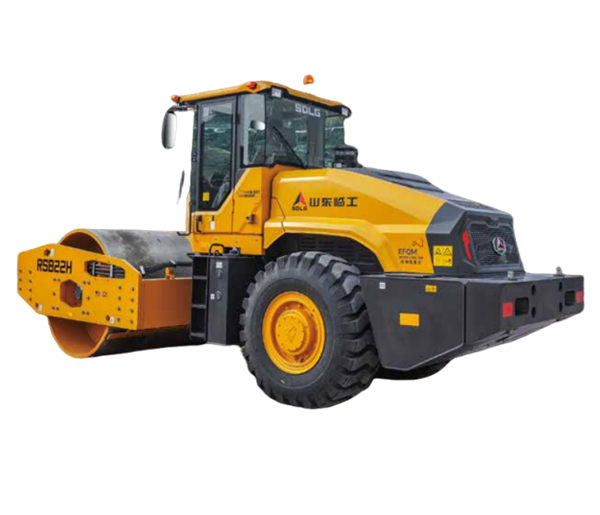
A mechanical single-drum vibratory roller is a soil compaction machine with one large steel drum at the front and driven wheels at the rear. The drum provides weight and vibration, while the drive system moves the machine forward and backward across the working surface. Instead of simply pressing the soil with static weight, the vibrating drum repeatedly applies dynamic force to help particles move closer together.
That simple difference is important. Loose soil normally contains spaces between particles. During compaction, the roller reduces those spaces and increases the density of the layer. A well-compacted base can provide better support for roads, yards, foundations and other structures built above it.
I normally think of the machine as having three jobs at the same time. First, the drum supplies contact pressure. Second, the vibration system sends repeated force into the material. Third, the mechanical drive keeps the machine moving at a controlled speed so that the operator can make consistent passes.
The result depends on more than vibration force. Soil type, moisture, layer thickness, roller weight, vibration settings, travel speed and the number of passes all affect final density. A good operator therefore does not simply drive the roller back and forth. The operator watches the material and adjusts the working pattern to match the site.
Single-drum rollers are widely used for soil and earthwork. Public product information from BOMAG, for example, describes its single-drum rollers as machines for soil compaction and lists applications such as road, dam and landfill construction. Caterpillar's soil-compactor information also treats operating weight, compaction width, amplitude and centrifugal force as important performance factors. These are useful industry references when I compare machines, but they are not specifications for our HKLOONG model. :contentReference[oaicite:1]{index=1}
2. How I Understand the Working Principle
The working process starts with the engine. Mechanical power is transferred through the machine's drive system to move the roller. At the same time, the vibration mechanism inside the drum creates repeated movement. The drum then transfers that vibration and its own weight into the soil below.
When the roller moves over loose material, the drum first contacts the surface and begins to apply load. Vibration adds a rapidly repeated dynamic force. Soil particles shift under this force and settle into a tighter arrangement. With enough suitable passes, the layer becomes denser and more stable.
I pay special attention to travel speed because it is easy to overlook. If the roller moves too quickly, the drum has less time to work on a given section of soil during each pass. If the machine moves at a controlled working speed, the vibration can act more consistently on the material. The correct speed, however, depends on the material and the target compaction result.
The same principle applies to vibration. Higher vibration is not automatically better for every material. The operator needs to match the machine's working mode to the soil, aggregate and layer thickness. This is why I consider operator control and a clear machine layout just as important as the mechanical power itself.
Another important factor is drum contact. A heavy steel drum creates a broad working area, while the machine's weight distribution affects how the load reaches the ground. Industry machines commonly publish values such as static linear load, nominal amplitude, centrifugal force and drum width because these figures help describe how a roller transfers force to the ground. Caterpillar, for example, lists amplitude, centrifugal force and static linear load among its soil-compactor specifications. :contentReference[oaicite:2]{index=2}
3. Main Construction Features I Look For
When I inspect a mechanical single-drum vibratory roller, I start with the basic structure. A compaction machine works under repeated vibration and heavy load, so the frame needs enough strength and stability for the intended working conditions. A solid frame also helps the operator feel more confident when the roller is moving over uneven ground.
Heavy Single Steel Drum
The steel drum is the main working part. Its weight provides static pressure, while the internal vibration system adds dynamic compaction force. For soil and aggregate work, this combination is useful because the roller can work below the surface rather than simply smoothing the top layer.
Mechanical Drive System
Our product concept uses mechanical drive technology rather than depending on a highly complicated electronic architecture. I like this approach for projects where straightforward construction and service access are important. A simpler mechanical arrangement can make inspection easier and help maintenance teams understand the machine's major working systems.
Reliable Engine
The engine provides the power needed for travel and machine operation. I do not judge an engine only by its peak output. For a roller, usable power, stable operation and suitability for long working hours are also important. The final engine configuration should be selected according to the required market, emission rules and machine specification.
Vibration System
The vibration system is what turns a conventional heavy roller into a vibratory compactor. The rotating eccentric mass inside the drum produces repeated force. Good bearing support, balanced rotating components and suitable isolation are important because the system works under continuous vibration.
Simple Service Layout
Maintenance should not feel like taking apart the whole machine. I prefer a layout where routine inspection points are easy to identify and service. Engine oil, filters, cooling areas, drive components and vibration-system inspection points should all be considered during machine design and final assembly.
| Feature | Why I Check It | Typical Industry Reference | Source |
|---|---|---|---|
| Operating weight | Influences static loading and overall compaction behavior | 3,300–6,950 kg in selected BOMAG single-drum models | BOMAG public product range |
| Working width | Helps determine coverage per pass | 1,200–1,690 mm in selected BOMAG models | BOMAG public product range |
| Vibration parameters | Help describe dynamic compaction force | Amplitude and centrifugal force are published for Cat soil compactors | Caterpillar product information |
Note: The figures above are external industry reference data, not HKLOONG specifications. Final HKLOONG specifications should be confirmed from the model-specific technical datasheet.
4. Mechanical Single-Drum Vibratory Roller Performance: What Really Matters
For me, the biggest advantage of this machine is the balance between compaction force and mechanical simplicity. A contractor may operate a roller for many hours, sometimes in dusty or demanding conditions. The machine therefore needs to do its basic job consistently without making daily operation unnecessarily difficult.
The first advantage is strong compaction action. The heavy steel drum presses down on the ground while the vibration system creates repeated dynamic loading. This makes the machine suitable for many soil and aggregate applications where a smooth static roller alone may not provide enough compaction effect.
The second advantage is stable travel. A roller should move in a predictable line so that each pass overlaps the previous one correctly. A stable frame and controlled drive system help the operator maintain a regular working pattern.
The third advantage is mechanical simplicity. I do not mean that the machine has no technology. I mean that the core working systems are easy to understand. This can be useful for contractors operating in areas where specialized service equipment or highly trained technicians are not always available.
The fourth advantage is maintenance practicality. Dust, vibration and long working hours are normal on construction sites. A machine that can be inspected and serviced without excessive downtime is more useful in the real world. BOMAG similarly describes several of its single-drum machines around robustness, reliability and low-maintenance operation, showing that these are practical concerns across the industry. :contentReference[oaicite:3]{index=3}
The fifth advantage is application flexibility. I can use a single-drum vibratory roller for road subgrades, granular base materials, backfill, construction sites and general earthwork. With the correct drum configuration and working method, the machine can also be matched to different soil conditions.
| Machine Factor | Effect on Compaction | What I Recommend Checking Before Purchase |
|---|---|---|
| Machine weight | Provides static load through the drum | Confirm operating weight for the actual model |
| Drum width | Affects coverage and pass planning | Match width with road or site size |
| Vibration force | Provides dynamic compaction energy | Check centrifugal force and amplitude |
| Travel speed | Changes the time available for each pass | Use controlled speed suited to material |
| Soil condition | Changes how particles respond to vibration | Consider soil type and moisture |
| Layer thickness | Affects how deeply compaction energy works | Follow project compaction requirements |
Source basis: Caterpillar and BOMAG public technical information identifies operating weight, compaction width, amplitude, centrifugal force, working speed and soil type as relevant considerations for vibratory soil compaction. The table is a practical interpretation, not a manufacturer test result for HKLOONG. :contentReference[oaicite:4]{index=4}
5. Where I Would Use This Soil Compaction Machine
I would position this mechanical single-drum vibratory roller mainly as an earthwork and soil-compaction machine. Its strongest role is preparing a dense, stable ground layer before the next construction stage.
Highway and Road Construction
Road construction is one of the clearest applications. Before asphalt or other surface materials are installed, the subgrade and base need suitable density. I can use the roller to compact soil, aggregate and selected base materials in controlled layers. Consistent passes help reduce weak spots that may later cause settlement.
Municipal Construction
Municipal projects often involve roads, sidewalks, drainage systems, utility trenches and public spaces. After excavation and backfilling, the material needs to be compacted before the surface is restored. A single-drum roller can be useful for accessible sections of these projects.
Site Preparation
Building sites need stable working surfaces for later construction. I can use the roller during earthwork and site preparation to improve ground density and create a more dependable base for subsequent operations.
Backfill and Trench Work
Backfill material can settle if it is not compacted properly. For suitable open areas and trench sections, controlled rolling can help reduce voids and improve the stability of the filled layer. The exact machine size must be matched to the available working space.
Water Conservancy and Earthwork
Water conservancy projects can involve embankments, access roads and large earthwork areas. These projects often require repeated compaction of soil and aggregate. The machine's heavy drum and vibration system make it suitable for this type of work when the material and site conditions are appropriate.
Farmland Improvement
Land improvement projects may involve earth moving, access roads, drainage construction and site leveling. The roller can be used where compaction is required, although I always consider whether compaction is actually desired for the specific agricultural soil layer. Not every part of farmland should be compacted heavily.
| Application | Main Compaction Task | Important Operating Consideration |
|---|---|---|
| Highways | Subgrade and aggregate base | Layer thickness, moisture and pass count |
| Municipal works | Roads, utility backfill and site areas | Available working space |
| Site preparation | General soil and fill compaction | Material type and target density |
| Water conservancy | Earthwork and embankment areas | Ground condition and slope management |
| Mine construction | Access roads and earthwork | Terrain and transport requirements |
| Farmland improvement | Selected earthwork and access areas | Avoid unnecessary soil compaction |
Industry reference: BOMAG identifies road, dam, landfill and general earthwork as applications for its single-drum rollers. Application suitability for any specific HKLOONG machine should be confirmed against the actual model, material and site conditions. :contentReference[oaicite:5]{index=5}
6. How I Approach Manufacturing and Quality Control
A roller may look simple from the outside, but repeated vibration creates demanding working conditions for its components. That is why I believe manufacturing quality starts before final assembly.
At HKLOONG, our manufacturing approach includes R&D, precision manufacturing, quality testing and customized modification. For a mechanical compaction machine, I would pay close attention to the frame structure, drum assembly, drive components, vibration mechanism, engine installation and connection points.
The frame needs to maintain its geometry under load. Welding quality matters because vibration can expose weak joints over time. Machined parts need suitable dimensional control so that shafts, bearings and rotating components work together correctly.
The drum is another major inspection point. Its surface needs to be suitable for the intended compaction work, while the internal vibration mechanism needs proper assembly and balance. Bearings and other rotating components must be installed according to the required tolerances and service procedures.
I also look at the hydraulic and mechanical interfaces, electrical connections, controls and protective structures. Even when the main drive system is mechanical, the complete machine still contains supporting systems that must work reliably as one unit.
Before delivery, quality control should not stop at checking whether the engine starts. A useful inspection process includes visual checks, fastener inspection, fluid checks, control-function checks, vibration-system checks and a general operational test. The exact factory inspection procedure should follow the machine's approved production and quality documents.
This is also where customization can become useful. Different markets can have different engine emission requirements, transport rules, operator protection requirements and working conditions. Instead of assuming one configuration works everywhere, I prefer to confirm the customer's destination, application and operating environment before finalizing the machine.
7. Why I Would Consider HKLOONG for a Mechanical Single-Drum Vibratory Roller
When I choose an industrial equipment supplier, I look beyond the machine photograph. I want to know whether the manufacturer can understand the application, control production quality, communicate clearly and provide practical support after delivery.
HKLOONG Heavy Industry Technology (Hefei) Co., Ltd. brings several capabilities together under one operation: equipment R&D, precision manufacturing, quality testing, customized modification and global distribution. That matters because construction equipment is rarely a one-size-fits-all purchase.
Our experience across crawler Excavators, wheel loaders, backhoe loaders and amphibious Wetland excavators gives us a broader understanding of heavy-duty machine design. Each machine has different working parts, but the basic engineering concerns remain familiar: structural strength, power transmission, operator control, serviceability and reliability under demanding conditions.
For buyers looking for a mechanical single-drum vibratory roller manufacturer, I would recommend discussing the actual job before choosing the configuration. Tell us what material you compact, the typical layer thickness, expected working hours, road or site size, climate, transport conditions and destination-market requirements. These details help determine whether the selected roller is appropriate.
I also believe technical honesty is part of a good purchasing process. If a specification has not been finalized for a particular model, I would rather mark it as subject to confirmation than provide a number that may be wrong. Buyers can then compare machines on the same technical basis and make a more useful decision.
8. Mechanical Single-Drum Vibratory Roller FAQ
What is a mechanical single-drum vibratory roller used for?
It is mainly used for compacting soil, aggregate, road base, backfill and other earthwork materials. Common applications include highway construction, municipal works, site preparation, water conservancy projects, mine access roads and selected farmland improvement work.
How does the vibration system improve compaction?
The vibrating drum creates repeated dynamic force in addition to its static weight. This helps soil and aggregate particles move into a denser arrangement. The actual result depends on material type, moisture, layer thickness, machine settings, travel speed and the number of passes.
Is a single-drum roller suitable for road construction?
Yes. A single-drum vibratory roller is commonly used for soil and aggregate compaction in road and earthwork projects. It is particularly useful for subgrade and base preparation before later road-surface operations. BOMAG, for example, lists road construction among the applications for its single-drum rollers. :contentReference[oaicite:6]{index=6}
What is the difference between static and vibratory rolling?
A static roller mainly relies on machine weight to press the material. A vibratory roller adds repeated dynamic force through the vibrating drum. This can allow the machine to achieve useful compaction results with fewer passes when the operating conditions are suitable.
Can this machine compact different soil types?
It can be used with many soil and aggregate materials, but the correct machine configuration and working method depend on the material. Granular materials, sand, gravel, crushed rock and different soil conditions can respond differently to vibration. For cohesive soil, drum configuration and compaction method deserve particular attention. Industry manufacturers publish different drum and roller configurations for this reason. :contentReference[oaicite:7]{index=7}
What should I check before buying a mechanical vibratory roller?
I recommend checking operating weight, drum width, vibration system, engine configuration, drive system, travel speed, service access, operator protection, spare-parts support and destination-market requirements. I would also ask the manufacturer for the official technical datasheet rather than relying only on a sales description.
Can HKLOONG customize the machine?
HKLOONG provides customized modification as part of its equipment business. The available configuration should be discussed according to the customer's working conditions, destination market, transport requirements and technical needs. Any customized specification should be confirmed in the final technical documentation before production.
How do I get the correct model for my project?
I would start with the job rather than the machine name. Share the soil or aggregate type, required compaction area, layer thickness, expected daily working hours, terrain, climate, transport conditions and project location. From there, the appropriate roller configuration can be evaluated against the actual requirements.
Final Thoughts: A Practical Roller for Real Compaction Work
I see the Mechanical Single-Drum Vibratory Roller as a practical piece of construction equipment built around a clear working principle: combine heavy drum weight, controlled vibration and dependable mechanical drive to create denser ground layers.
Its value is not simply in how strong the vibration feels from the operator's seat. What matters is whether the machine can deliver controlled compaction over repeated passes, maintain stable movement, withstand demanding site conditions and remain straightforward to inspect and maintain.
For highway construction, municipal projects, site preparation, backfill, earthwork, water conservancy and similar applications, this type of soil compaction machine can become an important part of the construction workflow. The final choice should always be based on material, site conditions and verified machine specifications.
At HKLOONG, I approach the product from a manufacturer's point of view: build the machine around practical working requirements, control the key manufacturing processes, test the finished equipment and communicate the technical details clearly. If you are sourcing a heavy duty vibratory roller, a single drum soil compactor or a mechanical road roller for construction, we can discuss your application and work toward a configuration that fits the project rather than forcing the project to fit the machine.



 WhatsApp
 Phone
Phone E-mail
 Message