
 Español
 Pусский
 Français
 العربية


When I look at a road compaction project, I always start with one simple question: can the machine create a dense, stable ground layer while keeping daily operation easy? For me, that is where a Hydraulic Single-Drum Vibratory Roller earns its place on a jobsite.
Our hydraulic single-drum vibratory roller is designed for soil, gravel, aggregate and road-base compaction. It uses a full hydraulic drive system together with an adjustable vibration system, giving the operator better control over travel and compaction work. The heavy steel drum supplies static pressure, while vibration adds dynamic force to help compact the material below the surface.
I see this machine as a practical choice for highway construction, municipal engineering, earthwork filling, site preparation and other road projects. Instead of relying on a complicated structure, the design focuses on the systems that matter most in daily work: hydraulic drive, vibration control, drum loading, stable operation and convenient maintenance.
At HKLOONG Heavy Industry Technology (Hefei) Co., Ltd., we work across equipment R&D, precision manufacturing, quality testing, customized modification and global distribution. Our HKLOONG product range covers crawler excavators, Wheel loaders, Backhoe loaders and amphibious wetland Excavators. That experience gives me a practical way to look at a compaction machine. I want the power system, frame, drum, vibration unit, controls and service points to work together rather than treating each component as a separate part.
1. What Is a Hydraulic Single-Drum Vibratory Roller?
A hydraulic single-drum vibratory roller is a heavy construction machine used to compact soil and aggregate with one large steel drum. The drum is the main working tool. It carries a large part of the machine's weight and transfers that load to the ground. At the same time, an eccentric vibration mechanism inside the drum creates repeated dynamic force.
The hydraulic drive system controls the movement of the machine. Instead of depending mainly on a traditional mechanical transmission, hydraulic motors and pumps transfer power to the travel system. This gives the operator smooth control over forward and reverse movement and allows the machine to work at a controlled speed.
I find this especially useful when the operator needs to make several passes over the same section. Compaction is not simply about driving over the ground once. The result depends on the material, moisture, layer thickness, roller weight, vibration setting, travel speed and number of passes.
The vibration system is another key part. When the drum vibrates, it sends repeated force into the material. Soil and aggregate particles can move closer together, reducing empty spaces and increasing density. This is why a vibratory roller can provide a deeper compaction effect than a machine that relies only on static weight.
Modern single-drum compactors commonly use hydraulic propulsion systems and controlled vibration. For example, Caterpillar's CS5 uses a single-speed hydrostatic transmission with separate propel pumps for the drum drive and rear axle, while its published vibratory specifications include frequency, amplitude and centrifugal force. These figures are useful for understanding how manufacturers describe compaction performance, but they are not HKLOONG specifications.
In simple terms, I would describe the machine like this: the engine provides the energy, the hydraulic system manages that energy, the drive system moves the roller, and the vibrating steel drum transfers compaction force into the ground.
2. How I Use the Hydraulic Drive and Vibration System
The working process begins with the engine supplying power to the hydraulic system. Hydraulic pumps convert engine power into hydraulic flow and pressure. Hydraulic motors then use that flow to drive the travel system and other working functions according to the machine design.
What I like about hydraulic drive is the smooth way it can control machine movement. On a compaction job, the operator often needs to maintain a steady travel speed. Sudden changes can make the compaction pattern less consistent. Smooth hydraulic control makes it easier to maintain a regular pass.
The vibration system works at the same time. Inside the drum, an eccentric weight rotates and creates an unbalanced force. That force causes the drum to vibrate. The vibration travels through the drum shell and into the material underneath.
The operator can select an appropriate vibration setting when the machine is equipped with an adjustable-frequency system. This matters because different materials do not respond in exactly the same way. A loose granular base, gravel layer and cohesive soil may need different compaction approaches.
I also pay attention to travel speed. If the roller moves too quickly, the drum has less time to apply its compaction effect to a particular section. If it moves too slowly, productivity may fall without necessarily improving the final result. The correct balance comes from the material and the project's compaction requirements.
Frequency is another important factor. Industry machines show that vibration frequency can vary by model and working mode. Volvo's published SD135B data, for example, lists vibration frequencies of 30.8 and 33.8 Hz, with an optional range including 23.3 and 30.8 Hz. Caterpillar's CS12 lists a standard frequency of 30.5 Hz and a variable-frequency range from 23.3 to 30.5 Hz. These examples show why frequency adjustment can be useful when matching machine operation to material.
I would never treat a higher frequency as automatically better. Good compaction comes from matching the machine settings to the actual job rather than simply choosing the highest available number.
3. Main Features I Check on a Hydraulic Single-Drum Roller
When I inspect a hydraulic single-drum vibratory roller, I focus on a few core systems. These are the parts that directly affect compaction, operating control and long-term service.
Heavy Steel Compaction Drum
The drum is the heart of the machine. Its weight creates static loading, while its vibration system adds dynamic force. A strong drum structure is important because the component experiences repeated impact and vibration throughout the working day.
For soil and aggregate work, a smooth drum is commonly used when the goal is to create a dense and even surface. Other drum configurations may be suitable for different materials, but the correct choice depends on the application and machine design.
Full Hydraulic Drive
The full hydraulic drive is one of the main differences between this machine and a basic mechanically driven roller. Hydraulic propulsion can provide smooth forward and reverse movement and precise speed control.
For me, the practical benefit is not just technical sophistication. It is easier control during repeated passes, turning and positioning. A road roller needs to move steadily, especially when the operator is following a planned compaction pattern.
Adjustable Vibration Frequency
Adjustable vibration frequency gives the operator more room to adapt the machine to the working material. Instead of using one fixed setting for every job, the operator can select a suitable operating range when the machine configuration supports it.
Stable Machine Frame
The frame carries the engine, hydraulic components, drum and operator system. It must remain stable under continuous vibration. I pay attention to structural connections, welding quality, component mounting and overall balance during manufacturing and inspection.
Practical Maintenance Layout
A machine can have good performance on paper and still be inconvenient if routine service takes too long. I prefer a layout where filters, fluid inspection points, hydraulic components and engine service areas can be reached without unnecessary disassembly.
Operator-Friendly Controls
Compaction work can involve many repeated passes, so simple controls matter. The operator should be able to understand travel direction, vibration control and basic machine status without having to fight with the controls.
| Key System | Role in the Machine | Why I Consider It Important |
|---|---|---|
| Steel drum | Transfers static and dynamic force to the ground | Directly affects compaction behavior |
| Hydraulic drive | Controls machine propulsion | Supports smooth travel and speed control |
| Vibration unit | Creates dynamic compaction force | Helps increase material density |
| Hydraulic system | Transfers engine power to working systems | Supports responsive machine operation |
| Frame | Supports major machine components | Needs strength under repeated vibration |
| Service points | Allow inspection and routine maintenance | Can reduce unnecessary downtime |
Source basis: system categories are based on common construction-equipment architecture and public manufacturer information from Caterpillar and Volvo. This table does not represent a certified HKLOONG specification sheet.
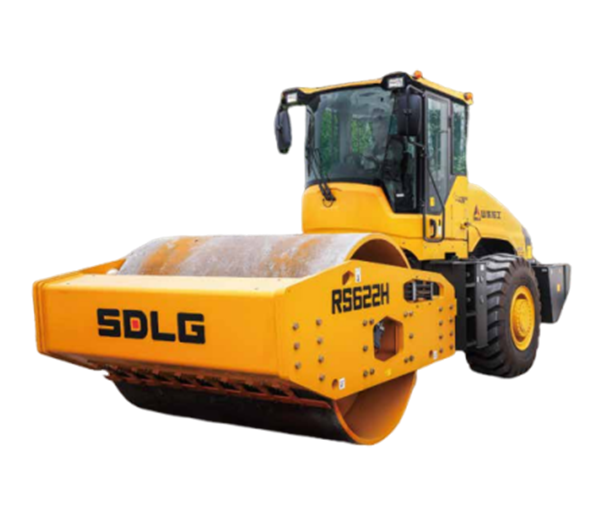
4. Hydraulic Single-Drum Vibratory Roller Performance Comparison
When buyers compare a hydraulic soil compactor, I recommend looking beyond engine horsepower. Compaction force, operating weight, vibration frequency, amplitude, drum width and propulsion method all matter.
The following figures show how specifications can differ between published industry machines. They are included to help buyers understand the range of values used by established manufacturers. They are not HKLOONG specifications.
| Reference Machine | Operating Weight | Drum Width | Vibration Frequency | Maximum Centrifugal Force | Source |
|---|---|---|---|---|---|
| Caterpillar CS5 | 4,570 kg | 1,270 mm | 35.8 Hz / 2,150 vpm | 78 kN | Caterpillar CS5 product page |
| Caterpillar CS12 | Model-dependent | Model-dependent | 23.3–30.5 Hz option | 301 kN maximum | Caterpillar CS12 product page |
| Volvo SD135B | 12,600 kg | 2,134 mm | 30.8 / 33.8 Hz | 249 / 281 kN | Volvo CE SD135B |
External reference data only. Caterpillar and Volvo specifications vary by model, configuration and market. Final HKLOONG specifications must be confirmed from the applicable model datasheet.
One thing this comparison makes clear is that there is no single “correct” roller size. A smaller roller may be easier to transport and more suitable for limited work areas, while a heavier machine can provide a different level of static loading and dynamic force for larger earthwork projects.
I therefore recommend choosing the roller from the job requirements first. If the customer tells me only that they need a “powerful road roller,” I still need more information before suggesting a configuration.
What I Want to Know Before Selecting the Machine
What material needs to be compacted?
How thick is each working layer?
What final density or compaction result is required?
How large is the working area?
Is the job mainly flat ground or does it include slopes?
How many working hours are expected each day?
What climate and site conditions will the machine face?
What engine emission requirements apply in the destination country?
5. Where I Would Use This Road Compaction Machine
The main strength of this hydraulic single-drum vibratory roller is its suitability for soil and aggregate compaction. I would consider it for a wide range of infrastructure and earthwork projects.
Highway Construction
Road construction is one of the most common applications. Before asphalt or other surface materials are placed, the underlying soil and aggregate layers need suitable density. The roller can make repeated passes over the road base to create a more stable foundation.
I pay special attention to overlap between passes. If one section is missed, the final surface may contain areas with different density. A controlled rolling pattern helps the operator cover the working area consistently.
Municipal Engineering
Municipal projects often involve road reconstruction, drainage systems, utility trenches, parking areas and public spaces. After filling or backfilling, the material may need compaction before the surface is restored.
A hydraulic road roller is useful here because the operator can control movement accurately while working around an established construction layout.
Earthwork and Site Preparation
Before construction starts, a site may need filling, grading and compaction. The roller can compact suitable soil and aggregate layers so that later construction work has a more stable base.
Road Base and Aggregate Compaction
Aggregate base materials need to be packed into a stable structure. The vibrating steel drum applies repeated force that helps particles settle and lock together. The correct vibration setting, layer thickness and moisture level still need to be controlled by the construction team.
Backfill Projects
Backfill around roads, drainage systems and other construction areas can settle if it is not compacted correctly. A single-drum roller can be used where there is enough open space for safe operation.
Mine and Industrial Site Construction
Mining and industrial projects often require internal access roads, yards and earthwork areas. A heavy compaction machine can be part of the site preparation process when the ground material and project requirements are suitable.
| Project Type | Typical Compaction Work | What I Would Check |
|---|---|---|
| Highways | Subgrade and road-base compaction | Layer thickness, density target and pass pattern |
| Municipal roads | Road repair and utility backfill | Working space and maneuverability |
| Construction sites | Ground preparation and fill compaction | Soil type and site size |
| Industrial yards | Aggregate and foundation preparation | Required ground strength |
| Mining projects | Access roads and earthwork | Terrain and working environment |
| Water conservancy | Earthwork and selected embankment areas | Material, slope and moisture conditions |
Application reference: major construction-equipment manufacturers position single-drum soil compactors for road construction, earthwork and soil-compaction applications. Actual suitability depends on the material, machine configuration and project requirements.
6. Manufacturing, Inspection and Maintenance: What I Pay Attention To
A vibratory roller spends much of its working life under vibration. That means manufacturing quality is not something I would leave until the final inspection.
The frame is one of the first areas I consider. It supports the engine, hydraulic components, operator station and drum structure. Welded joints need to be produced consistently, and mounting points need to maintain their intended position during assembly.
The drum assembly requires equal attention. The drum shell must be suitable for the working load, while the eccentric vibration components need correct assembly. Bearings and rotating parts should be installed according to the manufacturer's production requirements because poor alignment can create unnecessary vibration and wear.
The hydraulic system also deserves careful testing. Hydraulic hoses, fittings, pumps, motors, valves and tanks need clean assembly and correct connections. Contamination inside a hydraulic system can damage sensitive components, so cleanliness during manufacturing and service is important.
I also check the cooling system and engine installation. A construction machine may work in dust, heat and long operating cycles. Keeping engine and hydraulic temperatures under control is therefore part of reliable operation.
For maintenance, I prefer simple daily checks. The operator should have a clear routine covering engine oil, hydraulic oil, coolant, filters, hoses, leaks, fasteners, drum condition and abnormal vibration or noise.
Modern manufacturer designs show how service access has become an important part of compactor design. Caterpillar's GC-series single-drum compactors, for example, provide access to the hydraulic oil tank, filter and oil-sampling ports without requiring the hood to be lifted. The company also highlights service reminders and machine-health monitoring on equipped models.
Our approach is more basic at the principle level: make the machine understandable, make routine inspection practical, and test the important systems before the machine leaves the factory.
7. Why I Would Choose HKLOONG for a Hydraulic Single-Drum Vibratory Roller
When I buy heavy equipment, I do not judge the supplier only by the machine itself. The manufacturer needs to understand production, customization, quality control and the realities of international delivery.
HKLOONG Heavy Industry Technology (Hefei) Co., Ltd. brings R&D, precision manufacturing, quality testing, customized modification and global distribution into one business. This allows us to look at equipment as a complete product rather than only a collection of components.
Our experience covers several types of heavy equipment, including crawler Excavators, wheel loaders, backhoe loaders and amphibious Wetland excavators. Each machine has a different purpose, but the engineering basics are similar: the structure must support the load, the power system must match the application, controls must be practical, and maintenance should be considered from the beginning.
For a buyer searching for a hydraulic single-drum vibratory roller manufacturer, I would start the conversation with the application. If the roller will work on a highway project, I want to know the road-base material and required working width. If it is for municipal construction, I want to know the available space and transport requirements. If it is for earthwork, I want to understand the soil and layer thickness.
Customization can also be important for international customers. Different countries may have different engine emission requirements, safety expectations, transport rules and working environments. A machine configuration should therefore be confirmed according to the destination market instead of assuming that one configuration fits every country.
I also believe technical information should be clear. If a particular specification has not been confirmed, I would rather state that it is subject to final confirmation than provide a number simply to make the product page look complete. Buyers need reliable information when comparing heavy construction equipment.
That is the approach I would take with this hydraulic soil compactor: understand the work, select the right configuration, manufacture the machine carefully, test the important systems and provide the technical documentation needed for the buyer's project.
8. Hydraulic Single-Drum Vibratory Roller FAQ
What is a hydraulic single-drum vibratory roller used for?
It is mainly used to compact soil, gravel, aggregate and road-base materials. Typical applications include highway construction, municipal engineering, earthwork filling, construction-site preparation, industrial yards, mine access roads and other infrastructure projects.
What is the advantage of full hydraulic drive?
A hydraulic drive system can provide smooth propulsion and controlled travel. This is useful when the operator needs to maintain a steady speed during repeated compaction passes. The exact drive architecture depends on the machine model.
Why is vibration frequency important?
Vibration frequency affects how the compaction force interacts with the material. Different soil and aggregate conditions may respond differently, so adjustable frequency can give the operator more flexibility. Public Caterpillar and Volvo specifications show that frequency ranges vary between roller models and configurations.
Is a single-drum vibratory roller suitable for road construction?
Yes. Single-drum vibratory rollers are widely used for soil, aggregate and road-base compaction. The correct machine size and configuration depend on the material, working area, required density and project conditions.
Can the roller compact gravel and aggregate?
Yes, a smooth-drum vibratory roller can be suitable for many granular materials and aggregate bases. However, the correct vibration setting, layer thickness and number of passes should be determined according to the material and project compaction requirements.
How many passes are needed for proper compaction?
There is no universal number. The required passes depend on soil type, moisture, layer thickness, roller weight, vibration setting and target density. I recommend following the project's compaction testing procedure instead of using a fixed number for every job.
What should I check before purchasing a hydraulic road roller?
I recommend checking operating weight, drum width, vibration frequency, amplitude, centrifugal force, propulsion system, engine configuration, travel speed, maintenance access, safety equipment and destination-market requirements. The manufacturer's official technical datasheet should be used for final specifications.
Can HKLOONG provide customized configurations?
HKLOONG provides customized modification as part of its heavy-equipment business. The available options depend on the machine model, destination market and customer's working requirements. Customized specifications should be confirmed in the final technical documentation before production.
How do I select the right hydraulic single-drum vibratory roller?
I recommend starting with the job instead of the machine name. Tell us what material you need to compact, the required layer thickness, project size, working environment, daily operating hours, terrain and destination country. From there, the machine configuration can be evaluated against the actual project requirements.
Final Thoughts: A Practical Hydraulic Roller for Real Construction Work
I see the Hydraulic Single-Drum Vibratory Roller as a practical solution for projects where stable travel, controlled vibration and strong soil compaction are important. The full hydraulic drive gives the operator smooth control, while the vibrating steel drum combines static weight with dynamic force to compact suitable soil and aggregate materials.
For me, the real value of a road roller is not a single number in a specification sheet. It is how the machine performs over hundreds of passes, how easy it is to operate, how simple it is to maintain and whether the configuration matches the actual working conditions.
That is why I would use operating weight, drum width, vibration frequency, amplitude, centrifugal force, travel speed and serviceability together when evaluating a single drum road roller. These factors give a much clearer picture than engine power alone.
For highway construction, municipal engineering, earthwork filling, aggregate compaction and general site preparation, this type of hydraulic vibratory roller can become an important part of the construction process. The final model should always be selected according to the material, project requirements and verified technical specifications.
At HKLOONG, we approach heavy equipment from a manufacturing perspective. We combine equipment R&D, precision manufacturing, quality testing, customization and global distribution to support customers looking for practical construction machinery. If you are sourcing a hydraulic single-drum vibratory roller, a hydraulic soil compactor or a vibratory road roller for road construction, we can discuss the working conditions first and then work toward a suitable machine configuration.



 WhatsApp
 Phone
Phone E-mail
 Message