
 Español
 Pусский
 Français
 العربية


When I work on photovoltaic construction equipment, I know that the ground is often the real challenge. A solar project may look simple on a drawing, but the actual site can include steep slopes, cliffs, loose sand, hard rock, uneven ground, and large changes in elevation. Moving a standard drilling machine into these areas is not always practical.
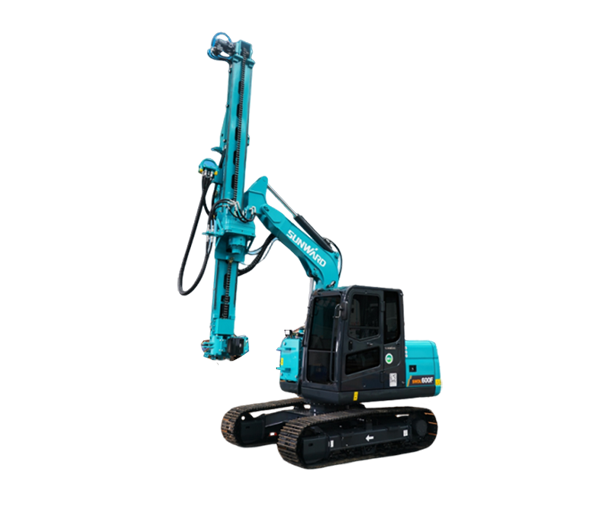
That is why I developed our Photovoltaic drilling rig around the needs of difficult solar installation sites. This machine is designed for photovoltaic engineering in mountainous and uneven areas, where foundation work cannot always be done on flat ground.
Our drilling rig can be used for screw pile drilling, bored pile hole preparation, cutting, submersion, short-screw operations, and impact vibration piling. It is suitable for mountainous terrain, cliffs, sandy areas, rocky areas, and relatively flat ground. The machine is designed for slopes of up to 30°, altitudes of up to 3,000 meters, and environmental temperatures from -25°C to 45°C.
For me, the main purpose is not simply to make a drilling rig that can make holes. The machine needs to reach difficult locations, remain stable during drilling, adapt to different ground conditions, and support the foundation methods used in photovoltaic projects.
1. What Is a Photovoltaic Drilling Rig?
A Photovoltaic drilling rig is specialized equipment used to prepare or install foundations for ground-mounted solar structures. Solar panels are normally supported by steel piles or other foundation systems, so the quality and position of the foundation work directly affect the later installation process.
Ground-mounted solar projects can require thousands of foundation points. On a flat site with soft or uniform soil, drilling and piling may be relatively straightforward. Mountain solar projects are different. The machine may need to work on slopes, rocky ground, sandy areas, or uneven surfaces where access is limited.
This is where I focus the design of our solar pile drilling rig. Instead of treating the drilling process separately from machine mobility, I consider access, terrain, drilling method, foundation type, and working conditions as one complete system.
The rig can support several types of photovoltaic foundation work, including screw pile drilling, bored pile hole preparation, short screw operations, and impact vibration piling. The appropriate method depends on the soil, rock, pile design, project engineering requirements, and local construction conditions.
Industry equipment manufacturers also recognize the special requirements of ground-mounted solar construction. Vermeer, for example, describes its solar pile drivers as machines developed for ground-mount solar projects, where piles are driven into the earth to support solar panels. Its current pile-driver information also emphasizes uneven ground, tough soils, and accurate pile installation. :contentReference[oaicite:0]{index=0}
| Project Condition | Typical Foundation Challenge | Why a Specialized Solar Drilling Rig Helps |
|---|---|---|
| Mountainous terrain | Uneven access and changing working angles | Designed around mobility and drilling on uneven ground |
| Slopes | Machine stability and positioning | Suitable for projects requiring operation on inclined terrain |
| Rocky ground | Hard drilling conditions | Drilling method and tool selection can be matched to ground conditions |
| Sandy areas | Loose and unstable material | Requires suitable drilling tools and controlled operation |
| High-altitude projects | Reduced air density and difficult logistics | Configured for specified high-altitude working conditions |
Source: Application context is based on published solar pile-driving and drilling industry information from Vermeer and Caterpillar. Specific machine suitability must be confirmed against the project conditions and equipment configuration. :contentReference[oaicite:1]{index=1}
2. How My Photovoltaic Drilling Rig Works
The basic drilling process is easy to understand. I position the rig at the planned foundation point, stabilize the machine, align the drilling or piling tool, and then apply the selected drilling or piling method according to the ground condition and foundation design.
For screw pile work, the drilling tool rotates into the ground while applying the required downward force. The rotating action helps the screw pile or drilling tool enter the soil. For bored pile preparation, the drilling system removes soil or broken material from the hole so that the foundation can be installed according to the project design.
For rocky ground, the drilling method may need to change. Cutting tools, impact methods, rotary drilling, or other suitable tools can be selected according to the actual rock and foundation requirements.
Impact vibration piling works differently. Instead of relying only on rotary cutting, the piling system uses repeated impact or vibration to help drive the pile into the ground. The correct method depends on pile type, ground condition, required depth, and engineering requirements.
I consider this flexibility important because photovoltaic sites rarely have exactly the same soil from one location to another. One part of a mountain may contain weathered rock, while another section may have loose soil or sand.
Modern drilling equipment also shows how much attention is placed on drilling position and accuracy. Caterpillar's drilling technology, for example, focuses on placing holes at the planned location and depth and maintaining consistent drilling results. :contentReference[oaicite:2]{index=2}
For solar construction, this principle is especially useful. Foundation positions need to match the engineering layout because the pile pattern affects the later installation of support structures and solar modules.
3. Designed for Mountainous and Difficult Terrain
The biggest difference between ordinary drilling work and mountain photovoltaic construction is often the terrain.
A solar farm may be planned across a large area, but the actual surface can rise and fall continuously. A machine that performs well on a flat construction yard may become difficult to position when the ground becomes steep or uneven.
Our photovoltaic drilling machine is designed for working conditions that can include slopes up to 30°. This gives the machine a defined operating capability for projects where conventional flat-ground drilling equipment may have access limitations.
I also consider altitude during equipment selection. Our stated working condition reaches up to 3,000 m above sea level. At higher elevations, equipment selection needs to consider the local environment, engine performance, cooling conditions, transportation, and operator working conditions.
The specified environmental temperature range is -25°C to 45°C. This gives the machine a broad operating window for different climates, from cold mountain regions to hot summer construction sites.
| Operating Condition | HKLOONG Design Reference | Practical Importance |
|---|---|---|
| Maximum working slope | Up to 30° | Supports photovoltaic drilling projects on inclined terrain |
| Maximum working altitude | Up to 3,000 m | Suitable for specified high-altitude solar sites |
| Environmental temperature | -25°C to 45°C | Supports operation across cold and hot environments |
| Terrain types | Mountainous, cliffs, sandy, rocky and flat terrain | Allows use across different project conditions |
Source: HKLOONG product operating information supplied for this product page.
I do not treat these numbers as a promise that every site can be handled in exactly the same way. Actual operation also depends on ground strength, machine configuration, drilling method, site access, weather, and the project's safety requirements.
4. Drilling and Piling Methods for Solar Foundations
A major advantage of a specialized solar foundation drilling rig is the ability to support different foundation preparation methods.
Screw Pile Drilling
Screw piles are widely used for ground-mounted solar structures because installation can be relatively direct when the soil and pile design are suitable. The drilling tool rotates while applying downward force to help install the pile.
For photovoltaic projects, the key is not simply getting the pile into the ground. The position, angle, depth, and installation quality need to match the engineering plan.
Bored Pile Hole Preparation
Some solar foundation designs require a drilled hole before the pile or foundation element is installed. In this situation, the rig prepares the hole by cutting and removing ground material.
The exact drilling tool should be selected according to the soil and rock. Soft soil, gravel, weathered rock, and hard rock can behave very differently during drilling.
Cutting and Submersion
Different project designs may require cutting, sinking, or related foundation preparation processes. I therefore focus on providing a machine platform that can support different working tools and methods rather than limiting it to one drilling technique.
Short-Screw Operations
Short screw installation can be useful in projects where the foundation design and ground conditions allow shorter screw elements. The actual installation method should always follow the engineering plan and pile manufacturer's requirements.
Impact Vibration Piling
When pile installation relies on impact or vibration, the rig transfers repeated energy into the pile to help it penetrate the ground. This method can be useful for certain ground-mounted solar foundation systems, particularly where the pile and ground conditions are suitable.
Vermeer also offers solar pile-driving equipment using hammer-based pile installation and optional rotary capability. Its published PD25R information describes a 74 hp / 55 kW machine designed for challenging solar sites and uneven terrain. This is an external industry reference rather than an HKLOONG specification. :contentReference[oaicite:3]{index=3}
| Reference Equipment | Published Power | Key Solar Application Information |
|---|---|---|
| Vermeer PD25R | 74 hp / 55 kW | Solar pile driving; standard hammer and optional rotary attachment |
| Vermeer PD5 / PD5R | Cat C2.2 engine platform | Ground-mount solar pile installation |
Source: Vermeer and Caterpillar published product information. These figures and descriptions are external industry references and are not HKLOONG specifications. :contentReference[oaicite:4]{index=4}
5. Why Ground Conditions Matter So Much in Photovoltaic Drilling
When I discuss drilling equipment with a customer, one of my first questions is about the ground.
Two solar projects may have exactly the same number of panels but require very different drilling methods. One may be built on soft soil. Another may be located on a rocky hillside. A third may combine soil, gravel, weathered rock, and hard rock within the same project area.
Soil: Softer ground can normally be drilled using suitable auger or rotary tools. The challenge may be hole stability and material removal.
Sand: Sandy ground can move easily after drilling. The drilling method and hole-support strategy need to match the foundation design.
Rock: Rocky ground can require stronger cutting or impact tools. Hardness, fracture pattern, and rock type all influence drilling performance.
Mountain slopes: The machine needs to reach the drilling point while maintaining controlled positioning. Stability and access become just as important as drilling power.
Cliffs and restricted areas: Access planning becomes critical. The machine must be transported to the work area and positioned safely before drilling begins.
This is why I do not recommend choosing a photovoltaic pile drilling machine based on drilling speed alone. A good match between machine, drilling method, ground condition, pile design, and site access is much more important.
6. How I Approach Photovoltaic Drilling Rig Manufacturing
At HKLOONG Heavy Industry Technology (Hefei) Co., Ltd., I approach equipment manufacturing from both the machine side and the construction side.
The frame and drilling structure need to handle repeated loads. During drilling, the machine experiences vibration, torque, downward force, and resistance from the ground. Structural strength and correct load paths are therefore important.
The drilling mast and working mechanism also need stable movement. Alignment matters because a foundation hole that is placed incorrectly can create problems for the support structure later.
Hydraulic systems are another important area. Drilling and piling equipment can require hydraulic power for rotation, feed, positioning, movement, and auxiliary functions. Hydraulic components, hoses, valves, cylinders, and motors need to work together correctly.
I also pay attention to the undercarriage and mobility system because this equipment is expected to work outside a controlled factory environment. Mountainous solar projects can involve loose soil, rocks, slopes, and uneven surfaces.
Quality testing is not limited to checking whether the machine starts. I focus on operating functions, movement, drilling-system response, structural behavior, hydraulic operation, and other important working conditions before delivery.
Because photovoltaic projects can vary greatly, customization is also part of our approach. The required drilling method, working terrain, altitude, climate, foundation type, and project workflow can all influence the final equipment configuration.
7. Why Choose Our Photovoltaic Drilling Rig?
I understand that a solar contractor does not simply need a drilling machine. The contractor needs equipment that can move into the project area, work on the available terrain, prepare foundations efficiently, and remain serviceable during a long construction period.
That is where I position our Photovoltaic drilling rig.
Designed for solar foundation work: suitable for screw pile drilling, bored pile preparation, cutting, submersion, short-screw work, and impact vibration piling.
Mountain terrain capability: designed for specified slopes up to 30°.
High-altitude operation: suitable for stated working altitudes up to 3,000 m.
Wide temperature range: specified for environmental temperatures from -25°C to 45°C.
Multiple ground conditions: suitable for mountainous, cliff, sandy, rocky, and flat terrain.
Flexible drilling approach: foundation methods can be selected according to project and ground requirements.
Engineering-focused manufacturing: R&D, precision manufacturing, quality testing, and customized modification are integrated within our company.
Global project support: our business model includes global distribution and technical service.
I also believe that a machine should be easy to understand from the buyer's point of view. Before selecting a rig, I recommend confirming the pile type, pile dimensions, required hole diameter, required depth, ground conditions, slope, altitude, transport route, and expected production rate.
Those details allow the machine to be matched to the project rather than selected from a generic equipment list.
Photovoltaic Drilling Rig FAQ
What is a photovoltaic drilling rig used for?
A photovoltaic drilling rig is used to prepare or install foundations for ground-mounted solar structures. Depending on the machine and configuration, applications can include screw pile drilling, bored pile hole preparation, cutting, submersion, short-screw installation, and impact vibration piling.
Can this solar drilling rig work on mountain slopes?
Our stated product capability is suitable for slopes up to 30°. Actual safe operation depends on ground conditions, machine setup, weather, access, and site safety procedures. The project team should verify the working condition before operation.
What types of terrain can the photovoltaic drilling rig handle?
The stated application range includes mountainous terrain, cliffs, sandy areas, rocky areas, and flat terrain. The correct drilling tool and method should be selected according to the actual ground condition.
Can the rig be used for screw pile installation?
Yes. The product is designed to support screw pile drilling and related photovoltaic foundation operations. The actual screw-pile installation process depends on pile dimensions, soil conditions, required depth, and engineering requirements.
Can it prepare bored pile holes?
Yes. The machine can be used for bored pile hole preparation, including cutting and related drilling operations. The required tool and drilling method should be selected based on the soil or rock conditions.
Is the machine suitable for high-altitude photovoltaic projects?
The stated working altitude is up to 3,000 m. At high elevations, the complete machine configuration and operating conditions should be reviewed because altitude can affect engine performance, cooling, transportation, and working efficiency.
What temperature range is supported?
The stated environmental temperature range is from -25°C to 45°C. Actual operation should also consider cold-start requirements, cooling conditions, fluids, weather, and the relevant maintenance procedures.
How do I choose a solar foundation drilling rig?
I recommend starting with the ground and foundation design. Confirm the pile type, diameter, depth, drilling method, soil or rock type, slope, altitude, required production rate, and site access. These factors are more useful for equipment selection than looking at engine power alone.
Final Thoughts
For me, a good Photovoltaic drilling rig is not simply a machine that can drill a hole. It is a piece of construction equipment designed around the actual conditions of a solar project.
Mountain photovoltaic projects can bring together slopes, cliffs, rocks, sand, high altitude, changing weather, and difficult access. The foundation equipment needs to deal with these conditions while maintaining controlled drilling and piling work.
Our rig is designed for photovoltaic engineering applications including screw pile drilling, bored pile hole preparation, cutting, submersion, short-screw operations, and impact vibration piling. With a stated slope capability of up to 30°, working altitude of up to 3,000 m, and temperature range from -25°C to 45°C, it is built around the type of challenging environments where solar foundation work becomes more demanding.
At HKLOONG, I focus on combining equipment R&D, precision manufacturing, quality testing, customized modification, and global distribution. My goal is straightforward: provide a solar pile drilling rig that fits the terrain, foundation method, and working requirements of the project.
Before every project, I recommend looking carefully at the ground conditions and foundation design. When the machine, drilling method, and site conditions are properly matched, photovoltaic foundation construction becomes much easier to plan and manage.



 WhatsApp
 Phone
Phone E-mail
 Message