
 Español
 Pусский
 Français
 العربية


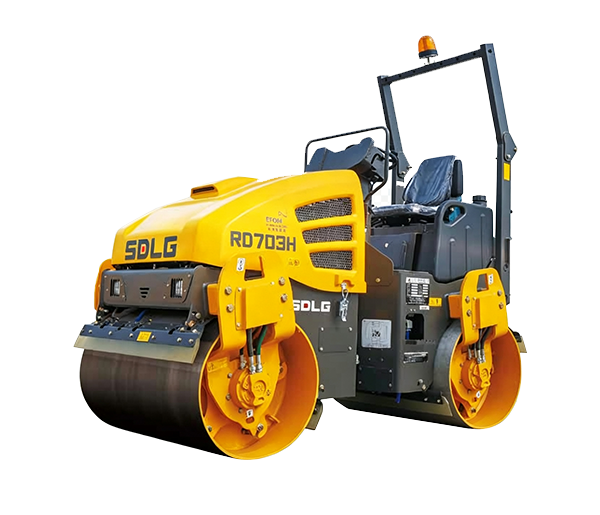
When I look at a road roller for asphalt work, I do not only ask how much weight the machine can put on the road. I also look at how that force is applied, how the machine moves, and what happens to the asphalt after each pass. This is where a Full-hydraulic combined road roller has a clear practical advantage.
Our full-hydraulic combined road roller uses a front steel drum for vibration and compaction, while the rear section uses pneumatic tires to apply pressure and a gentle kneading action. In simple terms, I get two different compaction effects from one machine. The steel drum works on density and vibration, while the pneumatic tires help press, knead, and seal the material.
This design is especially useful for asphalt roads, road maintenance, parking areas, urban streets, access roads, and other projects where both compaction and surface treatment matter. The machine is also designed for good maneuverability and fast travel between working areas.
At HKLOONG Heavy Industry Technology (Hefei) Co., Ltd., we develop and manufacture heavy equipment with a focus on practical field use. Our work covers equipment R&D, precision manufacturing, quality testing, customized modification, and global distribution. With our own HKLOONG brand and experience in heavy-duty machinery, we approach this roller as a working machine rather than simply a collection of components.
1. What Is a Full-hydraulic Combined Road Roller?
A full-hydraulic combined road roller is a compaction machine that combines a vibrating steel drum with pneumatic tires. The front steel drum is the main vibrating compaction unit. The rear pneumatic tires provide additional pressure and kneading action on the compacted surface.
I find this layout useful because asphalt does not always respond to one type of force. Vibration helps the particles move closer together and reduces air voids. Tire pressure then works across the surface and helps create a more even, dense layer.
This is also why a combination roller should not simply be treated as a smaller version of a double-drum roller. A double-drum machine uses steel drums at both ends. A combination roller uses steel and rubber together, so the contact with the road is different.
| Roller Type | Front Contact | Rear Contact | Main Compaction Effect | Typical Use |
|---|---|---|---|---|
| Full-hydraulic combined road roller | Vibrating steel drum | Pneumatic tires | Vibration + pressure + kneading | Asphalt paving, maintenance, parking areas and mixed road work |
| Double-drum vibratory roller | Steel drum | Steel drum | Vibration + static pressure | Asphalt compaction and surface finishing |
| Pneumatic tire roller | Pneumatic tires | Pneumatic tires | Pressure and kneading | Asphalt sealing and intermediate compaction |
| Single-drum soil roller | Vibrating steel drum | Rubber tires | Vibration and static pressure | Soil, gravel and subgrade work |
Source: General machine configuration comparison based on manufacturer product information from Ammann, CASE and other publicly available combination-roller references. :contentReference[oaicite:0]{index=0}
The important point is simple: I choose a combination roller when I want the strong compaction action of a steel drum and the surface kneading effect of pneumatic tires in one machine.
2. How the Full-hydraulic Drive and Compaction System Works
The working process starts with the front steel drum. Hydraulic power drives the machine and controls the main working functions. During compaction, the front drum applies vibration to the asphalt layer. The vibration helps loosen the movement between individual particles for a short moment, allowing them to settle into a denser arrangement.
After the steel drum passes over the material, the rear pneumatic tires follow the same path. Unlike a rigid steel drum, a pneumatic tire can slightly adapt to the surface. The tires apply distributed pressure and create a kneading effect. This is particularly useful when working with asphalt mixtures where surface sealing and uniform density are important.
Several established manufacturers use the same basic combination concept. Ammann describes its combination rollers as machines with a drum at the front and four pneumatic tires at the rear, with the tires providing a kneading effect. CASE also describes the front steel drum and rear pneumatic tires as a way to combine vibratory compaction with pneumatic-tire compaction. :contentReference[oaicite:1]{index=1}
From an operator's point of view, the advantage is easy to understand. Instead of moving one machine for vibration and another machine for tire kneading, the combined road roller performs both actions in sequence during the same pass.
The full-hydraulic drive also supports smooth movement. Hydraulic systems can provide controlled travel without the need for a traditional mechanical transmission with many gear-changing operations. For road construction and maintenance, this gives the operator better control over forward and reverse movement, especially when working around curves, edges, parked vehicles, curbs, or other obstacles.
3. Why I Use Steel Drum Vibration and Pneumatic Tire Kneading Together
The biggest feature of this machine is not simply the steel drum or the tires. It is the way the two working systems cooperate.
Front Steel Drum for Primary Compaction
The steel drum provides a firm contact surface. When vibration is activated, dynamic force is transferred into the paving layer. This helps improve material density and makes the machine useful for asphalt compaction work.
Rear Pneumatic Tires for Kneading
The rear tires provide a different type of action. Their rubber contact allows them to follow small changes in the surface while applying pressure across the road. The kneading movement can help close surface gaps and improve contact between particles.
A More Balanced Compaction Process
I see the combined design as a balance between two methods. Steel gives me vibration and direct drum contact. Rubber gives me pressure and kneading. The result can be useful when the project requires more than simple static rolling.
Ammann specifically notes that the pneumatic tires on its combination rollers provide a kneading effect that can be helpful with certain asphalt mixes and temperatures. Its product range also includes compact combination rollers designed for working around curbs and other obstructions. :contentReference[oaicite:2]{index=2}
| Compaction Element | What It Does | Why It Matters |
|---|---|---|
| Front steel drum | Applies static load and hydraulic vibration | Helps develop density through repeated vibratory passes |
| Rear pneumatic tires | Applies distributed tire pressure and kneading | Supports surface sealing and more even material contact |
| Hydraulic drive | Transfers power for travel and working functions | Supports smooth speed control and maneuverability |
| Steering system | Controls the machine path | Useful when following curves, edges and restricted road sections |
Source: Technical function summary based on combination-roller descriptions from Ammann and CASE. :contentReference[oaicite:3]{index=3}
4. Performance Reference: How Combination Rollers Differ in the Market
Because exact HKLOONG specifications depend on the selected configuration, I do not use another manufacturer's numbers as if they were our own. Instead, I use public models to understand the normal range of combination roller designs in the market.
For example, the CASE DV26CE is listed with an operating weight of 2,350 kg and engine power of 25 kW. CASE describes the machine as using a front steel drum and rear kneading pneumatic tires. :contentReference[oaicite:4]{index=4}
Jiangsu Junma's JM203H is listed at 3,000 kg operating weight, 26 kW engine power, and 1,200 mm compaction width. Its product description identifies hydraulic front drum vibration, hydraulic driving and stepless speed control. The larger JM206H is listed at 6,000 kg operating weight, 62 kW engine power, and 1,520 mm compaction width. :contentReference[oaicite:5]{index=5}
| Reference Model | Operating Weight | Engine Power | Compaction / Drum Width | Source |
|---|---|---|---|---|
| CASE DV26CE | 2,350 kg | 25 kW / 33.5 hp | Not stated in the cited source | CASE construction equipment |
| Jiangsu Junma JM203H | 3,000 kg | 26 kW | 1,200 mm | Jiangsu Junma |
| Jiangsu Junma JM206H | 6,000 kg | 62 kW | 1,520 mm | Jiangsu Junma |
| Ammann ARX 23-2C | 2,100 kg | Not stated in cited page | 1,000 mm | Ammann |
Source: Public manufacturer product pages. These figures are external reference data only and are not HKLOONG specifications. :contentReference[oaicite:6]{index=6}
This comparison also shows why I recommend choosing a roller according to the actual job instead of choosing only by engine power or machine weight. Working width, asphalt layer, available space, required density, transport conditions, and expected daily output all affect the right machine configuration.
5. Where I Would Use a Full-hydraulic Combined Road Roller
I would normally consider this type of roller when asphalt compaction requires both vibration and tire kneading. It is especially practical for projects where one compact machine needs to handle several stages of surface compaction.
Urban road construction: The machine can work on city streets where maneuverability and controlled travel are important.
Road maintenance: It can be used for asphalt repair, resurfacing and local maintenance work.
Parking lots: The combined compaction action is useful when a smooth and dense asphalt surface is required.
Residential and access roads: Its combination layout can provide useful compaction performance without requiring separate steel and pneumatic rollers for every task.
Municipal projects: Side roads, driveways, public facilities and other paved areas can benefit from a compact combination roller.
Asphalt paving: The front drum can provide vibration while the rear tires add kneading and surface pressure.
Road shoulders and repair sections: The machine can be useful where the work area is smaller than a major highway paving project.
Manufacturer examples support this broad application range. Ammann positions combination rollers for asphalt and, depending on the model, soil applications, while Junma lists road bases, asphalt pavement, parking areas, stadiums and other industrial sites for its full-hydraulic combination roller models. :contentReference[oaicite:7]{index=7}
| Project Condition | Why I Would Consider This Roller | Important Selection Point |
|---|---|---|
| Asphalt road construction | Steel drum vibration plus rear tire kneading | Drum width, vibration system and machine weight |
| Urban road maintenance | Good maneuverability and compact working layout | Turning space and overall machine width |
| Parking lots | Combined pressure can support surface density and sealing | Working width and required finish quality |
| Residential access roads | One machine can provide two types of compaction action | Transport weight and road access |
| Repair and resurfacing | Useful for controlled passes over localized asphalt areas | Drum size, tire configuration and operator visibility |
Source: Application references based on Ammann, CASE and Junma product descriptions. :contentReference[oaicite:8]{index=8}
6. What I Check During Manufacturing and Quality Control
A road roller works under vibration, load, heat, dust and repeated movement. For me, this means that manufacturing quality is not only about making the machine look clean when it leaves the factory. The important question is whether the machine can continue to perform after many working cycles.
At HKLOONG, our manufacturing approach covers equipment R&D, precision manufacturing and quality testing. For a full-hydraulic combined road roller, I pay particular attention to the systems that directly affect compaction and movement.
Hydraulic System
The hydraulic system is central to a full-hydraulic machine. I would check hydraulic connections, hoses, pumps, motors, control components and sealing points. Clean hydraulic assembly is important because contamination can create problems inside hydraulic components.
Steel Drum and Vibration System
The front drum needs stable contact with the road. The vibration mechanism must work smoothly without abnormal noise or excessive movement. Drum alignment and surface condition also matter because the drum is directly involved in compaction.
Rear Tire Assembly
The rear tires need consistent contact with the surface. Tire condition, pressure, mounting and alignment all affect the kneading effect. This is one area where a small setup difference can change how the roller behaves on asphalt.
Frame and Steering
The frame carries the main working loads, while the steering system controls the machine's path. I check structural joints, steering response and movement before the machine is released.
Service Access
I also care about what happens after delivery. Daily checks, lubrication, hydraulic inspection and routine maintenance should be practical. A machine that is difficult to inspect can cost more time during its working life.
7. Why I Build the Product Around Real Job Conditions
At HKLOONG Heavy Industry Technology, we do not treat every construction project as the same. A buyer may need a roller for highway work, while another buyer may need one for city maintenance or smaller asphalt projects. The machine configuration should match the working environment.
Our company is based in Hefei, China, and combines R&D, manufacturing, quality testing, customization and global distribution. We operate the HKLOONG brand across several categories of heavy equipment, including crawler excavators, Wheel loaders, Backhoe loaders and amphibious wetland Excavators.
That broader equipment experience is useful when developing a road roller because many of the same engineering principles apply: hydraulic power management, structural strength, operator control, service access, component matching and long-term field use.
When a customer has a special working requirement, I prefer to start with the actual job rather than immediately recommending a machine. I want to understand the road material, paving width, layer thickness, site size, working hours, transport conditions and local environment. From there, the machine configuration can be discussed more realistically.
This approach is also useful for international buyers. Different countries can have different emission rules, road construction practices, tire requirements and transportation limits. A practical specification discussion before production helps reduce misunderstandings later.
8. Full-hydraulic Combined Road Roller FAQ
What is a full-hydraulic combined road roller?
A full-hydraulic combined road roller is a compaction machine that uses a front vibrating steel drum and rear pneumatic tires. The steel drum provides vibration and direct compaction, while the tires provide pressure and a kneading effect. The hydraulic system controls the main travel and working functions.
What is the difference between a combined roller and a double-drum roller?
The main difference is the rear working unit. A double-drum roller has steel drums at both the front and rear. A combined roller has a steel drum at the front and pneumatic tires at the rear. This means a combined roller adds tire kneading to front-drum vibration.
Why are pneumatic tires used on the rear?
Pneumatic tires can adapt to small surface changes and distribute pressure across the asphalt. Their movement creates a kneading action that can help with surface sealing and material contact. Ammann specifically identifies this kneading effect as one of the useful features of its combination roller design. :contentReference[oaicite:9]{index=9}
Is this roller mainly for asphalt?
Asphalt compaction is one of its main applications. Depending on the specific machine configuration and project requirements, combination rollers can also be used on selected soil or mixed compaction tasks. Ammann, for example, describes its combination configuration as suitable for both soil and asphalt on certain models. :contentReference[oaicite:10]{index=10}
Can the machine be used for road maintenance?
Yes. Its combination of front drum vibration and rear tire kneading makes it suitable for many road maintenance and resurfacing tasks. The final machine choice should depend on the repair area, asphalt type, required working width and access conditions.
How do I choose the right combination road roller?
I recommend looking at more than operating weight. Start with the required compaction width, asphalt layer thickness, site size, required travel speed, available turning space, transport conditions and expected working hours. Hydraulic configuration, vibration settings, tire arrangement and service requirements should then be considered.
Can HKLOONG provide a customized configuration?
Our company provides equipment R&D, manufacturing and customized modification. For a specific project, the configuration should be discussed according to the required application, operating environment, market requirements and technical parameters. Final specifications should always be confirmed in the formal technical documentation before production.
Final Thoughts: Choosing a Roller That Matches the Road
For me, the main value of a Full-hydraulic combined road roller is the combination itself. The front steel drum brings controlled vibration and strong direct contact. The rear pneumatic tires add pressure and kneading. The hydraulic drive connects these functions into one practical machine.
This makes the roller a useful option for asphalt construction, road maintenance, parking areas, municipal roads and other paved surfaces where different compaction effects are needed. Instead of looking only at one specification, I prefer to judge the machine by how well its drum, tires, hydraulic system, steering system and working width fit the actual project.
At HKLOONG, that is how we approach heavy equipment development. We focus on engineering, manufacturing, quality inspection and practical field requirements, while keeping customization available for different markets and applications.
If you are comparing a full-hydraulic combined road roller, a combination asphalt roller, a steel drum and pneumatic tire roller, or a full-hydraulic road compactor, the right starting point is the job itself. Once the road conditions and working requirements are clear, the machine specification becomes much easier to define.



 WhatsApp
 Phone
Phone E-mail
 Message