

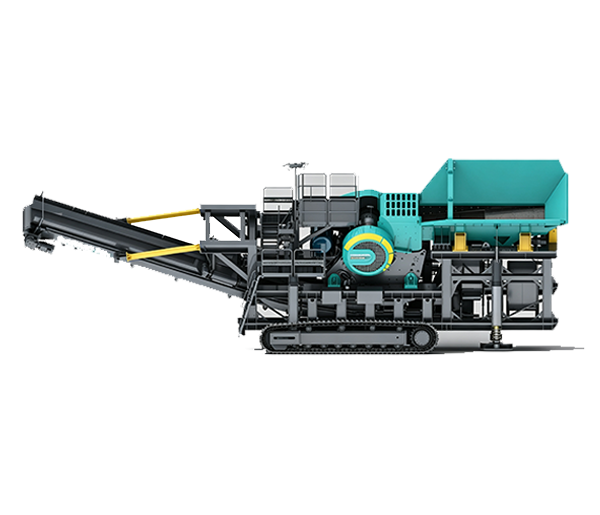
SPB120JE modular jaw crushing plant for Quarrying, Mining and Aggregate Production
When I talk with a customer about a SPB120JE modular jaw crushing plant, I do not start with a long list of technical terms. I normally start with the job itself.
What material are you crushing? How large is the feed? How many tonnes do you need to process every hour? What size do you want after crushing? Is the plant going to stay in one place for years, or will the project move later?
These questions sound simple, but they are important. A Jaw Crusher can be a very strong machine, but the right crushing solution depends on much more than the crusher itself.
At Ganglong Heavy Industry Technology (Hefei) Co., Ltd., we work with construction machinery, mining machinery, agricultural machinery and related equipment. Together with Hefei Ganglong International Trade Co., Ltd., we also provide international equipment sales, leasing and trade services.
For customers looking at the SPB120JE modular jaw crushing plant, I focus on the complete application. A modular plant needs to fit the material, production target, site layout, power arrangement and downstream equipment. If these parts work together, the crushing process becomes much easier to manage.
In this guide, I will explain how a modular jaw crushing plant works, why modular design can make sense for long-term projects, what I look at when selecting equipment, how jaw crushing fits into a complete production line, and what customers should know before placing an international equipment order.
The SPB120JE modular jaw crushing plant is positioned as a modular primary crushing solution. The key word here is “modular.”
Unlike a small mobile crusher that is mainly designed to move from one working area to another, a modular crushing plant is normally planned around a longer-term production site.
Sunward·PSR describes its modular crushing and screening category as being designed for long-term operations requiring higher capacity, faster installation and reduced civil works. The company also describes modular construction as a way to shorten project delivery while maintaining flexibility in plant layout.
That makes a modular jaw crushing plant particularly interesting for customers who have a quarry, mine or aggregate production site where the equipment will remain in operation for a relatively long period.
The basic process is straightforward:
Raw material → Feeding → Jaw crushing → Secondary crushing → Screening → Finished products
The jaw crusher normally handles the first major size reduction. Large rock enters the crushing chamber and is compressed between the fixed and moving jaw. Once the material is reduced enough, it leaves the crusher and continues to the next stage.
In a complete production line, the jaw crusher is therefore not expected to produce every final aggregate size by itself.
Its main job is to take the big stuff and bring it down to a manageable size for the machines that come after it.
That sounds obvious, but it is one of the most important things to understand when buying a modular jaw crusher.
I often see customers comparing mobile, modular and stationary crushing equipment as if one type is always better than another.
In practice, the working environment decides a lot.
If a contractor needs to move the crusher frequently between short-term projects, a crawler mobile crusher may make more sense. If the site is permanent and the production target is very high, a stationary plant may be suitable.
A modular plant sits somewhere between these approaches.
It is designed around a more permanent production arrangement, but its modular structure can make installation and plant layout more flexible than a traditional fully fixed plant.
A modular structure can reduce the amount of complicated site work needed before production begins.
That does not mean the site needs no preparation. Foundations, material flow, electrical connections, access and safety planning still need to be handled correctly.
The difference is that the equipment itself can be arranged as standardized modules instead of building every part of the production line from scratch.
A quarry is not always a perfectly shaped piece of land. The feed point, stockpile area, road access, power supply and finished-product storage can all affect the layout.
With a modular crushing plant, I can look at the whole site and consider how the crushing, screening and conveying sections should be arranged.
This is especially useful when a customer wants to expand production later.
Modular equipment is a natural fit for long-term quarrying, mining and aggregate projects.
Sunward·PSR currently describes its modular crushing and screening solutions as being aimed at long-term operations and higher production requirements.
For a customer planning to operate for several years, the focus is usually not just on how quickly the machine can arrive. We also need to consider maintenance access, spare parts, power consumption, plant flow and future expansion.
The crushing principle itself is not difficult.
Large material enters through the top of the jaw crusher. Inside the chamber, one jaw remains relatively fixed while the other moves back and forth.
When the moving jaw approaches the fixed jaw, the rock is compressed and broken. When the jaw moves away, the crushed material drops lower into the chamber.
This cycle continues until the material is small enough to leave through the discharge opening.
The size of the discharge opening is important because it affects the size of the crushed material.
For example, a quarry producing road base may require a different crushing setting from an aggregate plant producing several controlled stone sizes.
This is why I always ask about the final product before discussing the crusher setting.
A crusher can only work well when the material is fed properly.
If material arrives in large irregular surges, the crusher may experience uneven loading. If the feeder sends too little material, the crusher may not reach its useful production level.
A good feeding system therefore keeps material moving toward the crusher in a controlled way.
For a modular plant, the feeder, hopper, jaw crusher, conveyors and downstream machines should be planned as one system.
The crusher setting determines how small the material can become before it leaves the crushing chamber.
A larger setting generally produces a coarser product, while a smaller setting produces finer material but may increase crushing load and affect capacity.
There is no magic setting that works for every rock.
Granite, basalt, limestone and different ores behave differently. That is why technical selection should always be based on actual material conditions rather than simply copying a setting from another project.
The first feature is obviously the modular concept.
For a long-term production site, modular construction can make the overall plant easier to plan. Instead of treating the crushing plant as one giant structure, the production system can be considered through different functional sections.
That makes it easier to think about installation, maintenance and future changes.
The jaw crusher is responsible for the first major size reduction.
That means I pay close attention to the maximum feed size and the required output from the primary stage.
If the raw rock is very large, the jaw crusher needs a suitable feed opening. If the material entering the next crusher is too large, the secondary stage may become overloaded.
A good crushing plant should have a clear material flow.
Material enters the hopper, moves through the feeder, enters the jaw crusher, and then continues through conveyors to the next processing stage.
When the flow is simple and controlled, operators have an easier time finding problems.
If the crusher stops, for example, the team can work backward through the feeder and conveyor system instead of trying to understand a complicated material route.
A jaw crusher rarely works alone in a modern aggregate plant.
After primary crushing, the material often moves to a secondary crusher and then to a screening plant.
Sunward·PSR's current product range includes jaw, impact and cone crushing equipment as well as several screening solutions, allowing different machine types to be combined into complete crushing and screening systems.
This is important when planning a modular jaw crushing plant for aggregate production.
The jaw crusher should not be selected separately from the screen.
One of the most useful comparisons is not between two individual jaw crushers, but between different plant structures.
Here is how I normally explain the difference to customers.
| Plant Type | Typical Use | Mobility | Site Preparation | Typical Project Character |
|---|---|---|---|---|
| Mobile Crushing Plant | Changing sites, short-term projects, flexible deployment | High | Relatively low | Contracting, temporary or frequently changing jobs |
| Modular Crushing Plant | Long-term quarrying, mining and aggregate production | Limited compared with mobile plants | Moderate | Long-term production with flexible layout |
| Stationary Crushing Plant | Permanent high-volume production | Low | Higher | Permanent quarry or large mining operation |
Source: Plant-category descriptions from Sunward·PSR official product information.
The table is not meant to say that one type is suitable for every project.
For example, Sunward·PSR describes mobile crushing and screening plants as suitable for frequently changing job sites, while modular plants are aimed at long-term operations requiring higher capacity and faster installation. Stationary plants are positioned for permanent, high-volume production.
That gives us a useful starting point when discussing the SPB120JE.
If your quarry will stay in the same location for years, modular construction may deserve serious consideration. If you move every few months, I would first look at a mobile solution.
Capacity is probably the first specification most customers ask about.
“How many tonnes per hour?”
That is a fair question, but it is only part of the answer.
The actual output of a jaw crusher depends on several things, including material hardness, feed size, feed gradation, moisture, crusher setting, feeding method and the machines working before and after it.
For example, Sunward's published SP127JE crawler jaw crushing plant has a processing capacity of 170–520 t/h and a maximum feed size of 700 mm. Its published specifications also list a 1,150 × 760 mm crusher inlet and a 70–200 mm C.S.S. range.
| Published Parameter | SP127JE Reference Data |
|---|---|
| Processing capacity | 170–520 t/h |
| Maximum feeding size | 700 mm |
| Crusher inlet opening | 1,150 × 760 mm |
| C.S.S. range | 70–200 mm |
| Crusher weight | 19.5 t |
| Total weight | 60 t |
| Total working power | 165 kW |
| Generator power | 320 kW |
Source: Sunward·PSR official SP127JE product page. These figures are reference data for a comparable jaw crushing platform, not specifications claimed for SPB120JE.
I have made that distinction very deliberately.
When a model's current official public technical sheet is not available, I would rather show a verified comparable model than invent numbers just to make a product page look complete.
That is also how we approach customer quotations.
We confirm the actual configuration first, then work with the technical data for that configuration.
The real strength of a modular plant appears when we look at the complete production process.
Imagine a quarry with large granite rock.
The material may first pass through a feeder and primary jaw crusher. The jaw crusher reduces the large rock to a smaller size. The material then moves to a cone crusher or impact crusher for further reduction.
After that, the screening stage separates the material into different sizes.
The final products may include several aggregate sizes, depending on what the customer needs.
So the production line could look something like:
Hopper → Feeder → Jaw Crusher → Cone Crusher → Screening → Stockpiles
For some applications, an impact crusher may be used instead of a cone crusher. For manufactured sand, a VSI crusher may be added as a fine crushing and shaping stage.
Sunward·PSR's official product range includes Crawler Jaw Crushers, impact crushers, cone crushers, screening plants, skid-mounted VSI crushing plants and other systems that can be arranged for different process requirements.
One useful official project example is Sunward·PSR's South Africa manganese ore project.
The published project used an SP127JE jaw crusher together with an SP300CE cone crusher and SP2065SE screening plant. The project capacity was reported at 200 t/h, with final products of 0–4 mm, 4–8 mm, 8–32 mm and above 32 mm. The published raw feed size was up to 700 mm.
| Project Example | Material | Feed Size | Equipment Combination | Published Capacity | Final Products |
|---|---|---|---|---|---|
| South Africa | Manganese ore | ≤700 mm | SP127JE + SP300CE + SP2065SE | 200 t/h | 0–4 mm, 4–8 mm, 8–32 mm, >32 mm |
| Indonesia | Basalt | ≤700 mm | SP127JE | 230–280 t/h | 0–130 mm |
Source: Sunward·PSR official project cases.
What I like about these examples is that they show how different a project can be.
The Indonesia project used a jaw crusher for basalt and produced road-base material. The South Africa project used several crushing and screening machines to create multiple product sizes.
There is no reason to force both jobs into exactly the same plant design.
Quarries are a natural application for modular jaw crushing.
When the quarry is expected to operate for a long period, a modular plant can provide a more organized production layout than equipment that is constantly being moved.
The jaw crusher handles the large feed, while secondary crushing and screening create the final aggregate sizes.
Mining applications often involve hard and abrasive materials.
The primary crusher needs to deal with the incoming material while keeping the rest of the process moving.
For a modular jaw crushing plant for mining, I pay particular attention to material hardness, maximum feed size, expected operating hours and downstream processing requirements.
Aggregate producers usually need consistent products rather than simply a large amount of crushed rock.
The screening stage therefore becomes just as important as the primary jaw crusher.
A well-planned modular plant can keep the material flow organized from feeding to final stockpile.
Road projects consume large quantities of crushed stone and base materials.
If suitable rock is available near the project, a crushing and screening plant can process the material close to where it is needed.
This can be particularly useful for large projects where transporting raw rock over long distances would add considerable cost and time.
Infrastructure work often involves excavation and large amounts of mineral material.
Where the material is suitable for crushing, a modular jaw crushing system can become part of the project's material-processing setup.
The exact solution depends on local regulations, material quality, project duration and the required product.
Buying a crushing plant is not just about choosing a machine from a catalogue.
For an overseas customer, the delivery process is just as important.
At Ganglong, production arrangements normally depend on the selected model, configuration, order quantity and customization requirements. The delivery schedule is confirmed before production so the customer can plan the rest of the project.
Before shipment, the machine is inspected according to the order requirements.
We pay attention to appearance, major functions, hydraulic and electrical systems where applicable, and basic operating performance.
Standard documents and accessories are also prepared according to the order.
For a modular plant, I also recommend confirming the installation-related documentation before shipment. The earlier the customer knows what needs to be prepared at the site, the easier installation becomes.
Heavy equipment needs secure transport packing.
Machines are generally protected with film and fixed securely according to the shipping requirements. Loose accessories and spare parts are packed separately in suitable cartons or wooden cases.
The exact packing method depends on the equipment, destination and shipping route.
Complete machines are commonly transported by sea.
Suitable spare parts and accessories may be sent by air or express when that is more practical.
Because modular plants involve multiple components, shipping planning should be done early. Container dimensions, loading arrangements, port requirements and destination conditions all need to be considered.
For international equipment orders, T/T is commonly arranged with a deposit before production and the balance before shipment. Exact payment terms are confirmed between both parties according to the order.
My advice is simple: put the equipment configuration, delivery schedule, inspection requirements, documents, packing and payment terms into the order clearly. It saves everyone unnecessary back-and-forth later.
Ganglong Heavy Industry Technology (Hefei) Co., Ltd. was founded in 2013.
Together with Hefei Ganglong International Trade Co., Ltd., we operate across equipment R&D, manufacturing, testing, customization, sales and international trade through the group structure.
Our own product portfolio includes HKLOONG Excavators, loaders, Backhoe loaders and swamp excavators. We also provide complete machine sales and leasing services involving various domestic and international construction machinery brands.
For crushing equipment, our role is to help customers connect the right machine with the real project.
That means I am not only looking at the product title.
I want to understand the raw material, feed size, production target, final product, power conditions, site layout and downstream machines.
If the customer needs a complete crushing and screening line, we can also discuss how the primary jaw crusher should work with cone crushers, impact crushers, screening plants, conveyors and other equipment.
Our international trade team has served customers across Asia, Africa, America and other regions. This experience is useful when equipment needs to cross borders because the project involves more than machinery.
There are documents, packing, payment, shipping, spare parts and delivery schedules to coordinate as well.
We also understand that customers may have different business models. Some need to purchase equipment for a long-term quarry. Others may need equipment leasing for a specific project period.
We can discuss both sales and leasing requirements according to the project.
A modular jaw crushing plant is a crushing system built from organized equipment modules rather than a simple standalone mobile machine. It is generally suited to longer-term production where faster installation, flexible plant layout and reduced civil work are useful.
The jaw crusher normally performs primary crushing. It takes large raw material and reduces it to a smaller size that can be handled by secondary crushers, screens or other processing equipment.
Modular and mobile are not the same thing. A mobile crusher is designed around frequent movement between working locations. A modular plant is normally planned for longer-term operation at a production site. Sunward·PSR separates mobile, modular and stationary crushing categories in its current product range.
Suitable materials can include different types of rock, stone and mineral-based feed. The actual suitability depends on hardness, abrasiveness, moisture, feed size and the selected crusher configuration.
A modular jaw crushing plant can be designed as part of a multi-stage crushing line. A common arrangement is jaw crushing for primary reduction followed by cone crushing and screening. The exact combination depends on the raw material and required final products.
Start with the required hourly production, but do not stop there. You should also consider maximum feed size, normal feed size, material hardness, desired output size, crushing stages, operating hours and downstream equipment.
The jaw crusher mainly reduces material size. Screening separates the crushed material into different size ranges. If the customer needs several finished aggregate sizes, the screening system becomes an important part of the complete plant.
Potentially, yes. Modular construction can make future equipment additions or layout changes easier to plan than a highly rigid plant. However, expansion should be considered during the initial engineering stage because power supply, foundations, conveyors and material flow all need enough capacity.
Production time depends on the selected model, configuration, order quantity and customization requirements. We confirm the delivery schedule before production rather than giving one fixed period for every order.
Yes. Ganglong and Hefei Ganglong International Trade Co., Ltd. handle international equipment trade. Complete machines can generally be transported by sea, while suitable parts and accessories may be shipped by air or express.
I recommend sending the raw material type, maximum feed size, required capacity, target product size, project location, power conditions and information about any existing crushing or screening equipment.
If you have site drawings, material photos or an existing production-line diagram, those can also make the initial discussion much more useful.
The SPB120JE modular jaw crushing plant should be considered as part of a complete production solution rather than simply a jaw crusher with a different name.
Its modular concept is particularly relevant when a quarry, mine or aggregate site needs long-term production, a flexible layout and a practical installation process.
But the machine itself is only one part of the story.
The feeder needs to match the crusher. The crusher needs to match the feed material. The output needs to match the secondary crushing stage. The screen needs to match the required final products. And the complete plant needs to fit the actual site.
That is how I prefer to approach equipment selection.
Sunward·PSR currently positions its modular crushing and screening category for long-term operations requiring higher capacity, faster installation and reduced civil works. Its wider product range also includes jaw, impact, cone and screening equipment that can be combined for different processing requirements.
For reference, Sunward·PSR's published SP127JE jaw crushing plant demonstrates the type of primary-crushing performance available within its jaw-crushing platform, with a published 170–520 t/h capacity range and maximum feed size of 700 mm. These figures should not be treated as SPB120JE specifications unless confirmed in the actual quotation and technical documentation.
At Ganglong, we focus on matching equipment with real working conditions. We can discuss machine selection, crushing-line configuration, equipment sales or leasing, inspection, documentation, packing, payment and international transportation.
If you are looking for an SPB120JE modular jaw crushing plant for quarrying, mining, aggregate production, road construction or infrastructure work, send us your material type, maximum feed size, target capacity and required final product sizes. Those details give us a solid starting point for discussing the right configuration.
2435092534@qq.com
86 158 5511 9567


©2026 HKLOONG Heavy Industry Technology (Hefei) Co., Ltd. All Rights Reserved.

This website uses cookies to ensure you get the best experience on our website.
 Español
 Pусский
 Français
 العربية
 WhatsApp
 Phone
Phone E-mail
 Message