
 Español
 Pусский
 Français
 العربية

When I look at an SUV, I see more than a larger passenger vehicle. I see a platform that has to handle people, luggage, different road surfaces, changing weather, and sometimes light-duty work. That is what makes an SUV different from a conventional sedan. It gives me a higher seating position, more flexible cargo space, and, depending on the configuration, the traction and ground clearance needed for roads beyond the city.
At HKLOONG Heavy Industry Technology (Hefei) Co., Ltd., our main engineering background comes from heavy equipment. We develop and work with crawler excavators, Wheel loaders, Backhoe loaders, and amphibious wetland Excavators. We also work across equipment R&D, precision manufacturing, quality testing, customized modification, and global distribution. When I approach an SUV or other passenger vehicle project, I bring the same practical mindset: understand where the vehicle will work, identify the actual requirements, and then build the specification around those conditions.
I do not think every SUV needs the same engine, drivetrain, suspension, or body size. A compact SUV used for city commuting has a very different job from a commercial SUV used by a field service team. A family SUV may focus on passenger comfort and luggage space, while an export-market SUV may need a different balance of ground clearance, climate performance, fuel economy, and serviceability.
That is why I prefer to discuss an SUV from an engineering and application point of view rather than simply looking at appearance. The right vehicle is not necessarily the one with the longest feature list. It is the one that matches the work it actually needs to do.
1. What Is an SUV and How Do I Choose the Right Type?
SUV stands for Sport Utility Vehicle. In simple terms, an SUV combines passenger-car functions with a taller body, higher seating position, and more flexible cargo area. Depending on the model, an SUV may use front-wheel drive, rear-wheel drive, or all-wheel drive. Some are designed mainly for paved roads, while others are built with more ground clearance and traction capability for rougher conditions.
When I define an SUV for a project, I start with the operating environment. If the vehicle will spend most of its time in a city, I look closely at body dimensions, turning diameter, fuel consumption, parking convenience, ride comfort, and cabin space. If it will travel through rural roads, construction access roads, snow, mud, gravel, or other uneven surfaces, I pay more attention to ground clearance, tire selection, drivetrain layout, approach and departure angles, and suspension travel.
Passenger capacity is another basic consideration. A compact SUV may be enough for a small family or two-person business team. A midsize SUV can provide more rear-seat room and cargo capacity. Larger SUV platforms may be useful when passenger capacity, towing, or equipment-carrying requirements become more important.
I also separate the idea of size from capability. A bigger SUV is not automatically more capable in every situation. More mass can increase fuel consumption and braking demand. A longer wheelbase can improve highway stability but may reduce maneuverability in tight areas. Larger tires can provide more clearance but can also influence steering feel, ride comfort, and running cost.
For an international SUV project, I would also confirm the destination market before fixing the specification. Fuel standards, emissions rules, safety requirements, road conditions, climate, taxation, spare parts, and service capability can all affect the final configuration.
2. How I Understand the Working Principle of an SUV
The basic operation of an SUV is similar to other road vehicles. The powertrain produces torque, the transmission manages that torque, and the drivetrain sends it to the driven wheels. The suspension controls wheel movement, the steering system changes direction, and the braking system slows or stops the vehicle.
In a conventional gasoline SUV, the engine converts fuel energy into mechanical power. The transmission then selects an appropriate gear ratio for starting, acceleration, cruising, or climbing. Modern transmissions are designed to keep the engine operating within a useful speed range while balancing response and efficiency.
A hybrid SUV adds an electric motor and battery system to the powertrain. Depending on the design, the motor can assist the engine during acceleration, recover energy during braking, or provide propulsion under certain operating conditions. The 2026 Honda CR-V, for example, offers both a 1.5-liter turbocharged gasoline engine configuration and a 2.0-liter hybrid system. Its hybrid versions list 204 hp of total system output.
The drivetrain is particularly important when I evaluate an SUV. Front-wheel drive can be practical for many urban and highway applications. All-wheel drive can provide additional traction when road conditions become difficult. However, I do not treat AWD as a substitute for suitable tires, correct driving behavior, or proper vehicle setup.
The suspension has another important job. It must keep the tires in contact with the road while controlling body movement and absorbing bumps. An SUV usually has a taller body than a sedan, so suspension tuning and body control become especially important.
Braking is equally important. A heavier vehicle carries more kinetic energy at a given speed, so the brake system, tires, electronic controls, and suspension all need to work together. When I review an SUV, I therefore look at the whole chassis rather than focusing only on horsepower.
3. Main SUV Features I Look For
The first feature I look for is a useful body layout. An SUV should give passengers comfortable access while leaving enough room for luggage or equipment. A wide rear opening and folding rear seats can make a major difference when the vehicle is used for work as well as transportation.
The second feature is ground clearance. A higher ride height can help reduce the risk of underbody contact on uneven roads. For example, Toyota's 2026 RAV4 reference data lists 8.1 inches of ground clearance for standard hybrid versions and 8.5 inches for the Woodland configuration.
I also look at the wheelbase and track width. Wheelbase affects cabin space and high-speed stability, while track width can influence handling and body balance. These dimensions should be considered together with overall vehicle height and weight.
Tire selection is another detail that is easy to overlook. A highway-oriented SUV may use tires designed for low rolling resistance and road comfort. A vehicle expected to travel on gravel or light off-road surfaces may need a different tread pattern and sidewall design. The tire must match the vehicle, not simply look rugged.
Inside the cabin, I pay attention to seating position, visibility, legroom, storage areas, climate control, display layout, and the ability to fold or adjust the rear seats. The 2026 Honda CR-V reference configuration provides 41.3 inches of front legroom and 41.0 inches of rear legroom, with up to 76.5 cubic feet of cargo capacity when the rear seats are folded.
Modern safety and driver-assistance functions are also important. Depending on the market and vehicle configuration, these may include collision warning, automatic emergency braking, lane assistance, adaptive cruise control, blind-spot monitoring, parking sensors, and other electronic systems. I treat these as support systems. They should help the driver, not encourage the driver to stop paying attention.
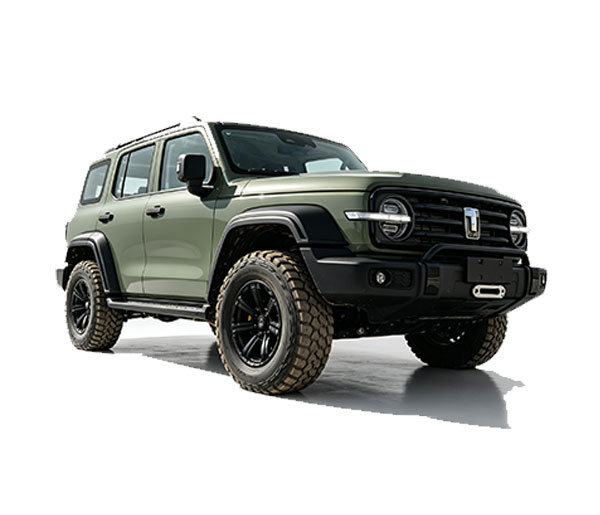
4. SUV Specification Comparison: How I Read the Numbers
When I compare SUVs, I prefer to put several specifications next to each other. Horsepower alone does not tell me how useful an SUV will be. I want to see dimensions, cargo capacity, ground clearance, drivetrain, fuel or energy system, and passenger requirements together.
| Reference SUV | Powertrain | Output | Overall Length | Ground Clearance | Max Cargo |
|---|---|---|---|---|---|
| 2026 Honda CR-V | 1.5L Turbo / 2.0L Hybrid | 190 hp / 204 hp hybrid system | 184.8 in | 7.8–8.2 in | 76.5 cu ft |
| 2026 Toyota RAV4 | Hybrid / Plug-in Hybrid | Varies by configuration | 181.0–182.9 in | 7.5–8.5 in | 70.4 cu ft |
| Typical Compact SUV Project | Gasoline / Hybrid / Regional option | Application dependent | Application dependent | Application dependent | Application dependent |
Source: Honda Information Center 2026 CR-V specifications; Toyota 2026 RAV4 Sales Consultant Guide. The final row is an engineering planning reference, not a production specification. Manufacturer specifications can vary by trim and market.
The comparison shows why I do not use a single number to describe an SUV. The 2026 CR-V has a listed length of 184.8 inches, while the 2026 RAV4 reference guide lists 181.0 inches for most grades, 182.0 inches for Woodland, and 182.9 inches for GR SPORT. Toyota also lists 37.8 cubic feet of cargo capacity behind the second row and 70.4 cubic feet behind the first row with the second row folded.
These numbers are useful because they describe the vehicle in practical terms. If I need a vehicle for city work, overall length and turning diameter may matter more than maximum cargo capacity. If the vehicle is used by a field team, ground clearance and tire configuration may become more important.
I also look at weight. A heavier SUV can feel stable, but it needs more energy to accelerate and more braking force to stop. Weight therefore affects several other systems at the same time.
| Specification | What I Check | Practical Question I Ask |
|---|---|---|
| Powertrain | Engine, motor, battery and transmission | Does the power system match the route and workload? |
| Drivetrain | FWD, RWD or AWD | What road and traction conditions will the SUV face? |
| Ground Clearance | Ride height and underbody clearance | Will the vehicle regularly meet rough or uneven roads? |
| Cargo Capacity | Rear-seat-up and folded-seat volume | How much equipment or luggage needs to be carried? |
| Dimensions | Length, width, height and wheelbase | Can it move easily through the target operating area? |
| Brakes and Tires | Brake layout, tire size and tread type | Do these components match the vehicle's actual use? |
5. Technical Advantages I Consider in an SUV
One of the main advantages of an SUV is the combination of passenger space and flexible cargo capacity. Unlike a traditional sedan, an SUV normally has a larger rear opening and a more upright body. This makes it easier to carry boxes, tools, outdoor equipment, luggage, or other bulky items.
The second advantage is driving position. A higher seating position can give the driver a different view of the surrounding road and traffic. This does not remove blind spots, so I still consider mirrors, cameras, sensors, and driver-assistance systems important.
Ground clearance is another practical advantage. On a rough road, a little extra clearance can make a meaningful difference. It can reduce the chance of the underbody touching the ground when crossing a shallow rut or uneven surface. However, I would not describe every SUV as an Off-road vehicle. Capability depends on the complete design.
For vehicles that need additional traction, AWD can be useful. Modern systems can monitor wheel slip and distribute torque according to the vehicle's operating condition. Honda's 2026 CR-V specification, for example, offers Real-Time AWD with Intelligent Control System on selected configurations, while the TrailSport Hybrid is listed with AWD as standard.
Another advantage is configuration flexibility. A compact SUV can be configured for daily urban transportation, while a more rugged version can be adapted for outdoor work, rural travel, field inspection, or light-duty service applications.
For commercial use, I also consider the cost of operation. A vehicle that is slightly cheaper to purchase but expensive to maintain may not make sense for a fleet. Fuel consumption, tire life, brake wear, scheduled maintenance, spare parts, downtime, and resale conditions all contribute to the real operating cost.
That is why I prefer to evaluate SUV performance over the whole operating cycle rather than focusing only on the showroom specification.
| Application | Important SUV Characteristics | Why I Prioritize Them |
|---|---|---|
| Urban commuting | Compact dimensions, fuel economy, visibility | Daily traffic and parking convenience |
| Family transportation | Rear-seat space, cargo capacity, comfort | Passenger and luggage flexibility |
| Business fleet | Durability, serviceability, operating cost | Frequent daily use |
| Field service | Ground clearance, AWD, tire selection | Mixed road conditions |
| Outdoor applications | Traction, clearance, cargo flexibility | Rural and uneven roads |
6. Where I Would Use an SUV
I see SUVs working across a wide range of applications. The most obvious use is family transportation. An SUV gives me enough passenger room for daily travel while providing a larger and more flexible luggage area than many conventional passenger cars.
Business transportation is another important application. Companies can use SUVs for sales teams, customer visits, management transportation, site inspection, airport transfers, and employee mobility. In these cases, I would pay attention to rear-seat comfort, cabin noise, luggage space, reliability, and the ease of maintaining the vehicle.
For field service teams, the specification changes. Technicians may carry tools, spare parts, testing equipment, protective equipment, and other supplies. A suitable cargo area and folding rear seats can make the SUV more useful than a conventional passenger sedan.
Construction and industrial companies may also use SUVs for site visits. The vehicle does not replace a work truck or construction machine, but it can provide a practical way for engineers, managers, inspectors, and service staff to reach project locations.
In agriculture and rural operations, an SUV can be useful where roads are a mixture of paved and unpaved surfaces. In these cases, I would pay more attention to tires, ground clearance, drivetrain configuration, underbody protection, and climate requirements.
Government, institutional, and utility organizations may have similar needs. A fleet SUV can support inspection teams, maintenance personnel, administrative travel, and field operations. The final configuration should always follow the relevant local regulations and the actual job requirement.
For international customers, I would also consider climate. Hot regions can place higher demands on cooling and air-conditioning systems. Cold regions may require different battery, engine, tire, heating, and traction considerations. Dusty environments can also influence air filtration and maintenance intervals.
7. How I Approach SUV Manufacturing and Customization
When I approach an SUV project through HKLOONG, I start with requirements rather than appearance. I want to know who will use the vehicle, where it will operate, how many people it needs to carry, how much equipment it needs to transport, and what regulations apply in the destination market.
The next step is configuration planning. I would review the body structure, wheelbase, powertrain, transmission, drivetrain, suspension, braking system, tires, electrical system, cabin layout, and optional equipment. These components should be considered as one system.
For example, changing tire size can affect more than appearance. A different tire diameter can influence ground clearance, steering behavior, speedometer calibration, braking characteristics, rolling resistance, and overall ride comfort. This is why I prefer engineering-based customization instead of simply adding parts.
Manufacturing quality is also important. I look for consistent assembly, accurate component installation, controlled fastening, correct electrical connections, proper body alignment, and clear inspection records. For a customized SUV, every modification should be documented so future service personnel can understand the vehicle configuration.
Testing should cover the systems that were changed or could be affected by the modification. Depending on the project, this can include braking, steering, lighting, electrical functions, doors, seats, instrumentation, cameras, sensors, and other vehicle functions.
For export projects, documentation is equally important. The vehicle configuration, component list, inspection information, user documentation, shipping requirements, and regional compliance information should correspond to the actual vehicle being delivered.
At HKLOONG, our broader industrial background includes R&D, precision manufacturing, quality testing, customized modification, and global distribution. I use that background to keep SUV projects organized around practical engineering requirements rather than vague feature lists.
8. Why I Choose HKLOONG for SUV and Vehicle Solutions
My approach at HKLOONG is simple: I want to understand the application before discussing the final configuration. Our company is headquartered in Hefei, China, and operates the HKLOONG brand across a wider industrial equipment portfolio. Our experience includes crawler Excavators, wheel loaders, backhoe loaders, and amphibious Wetland excavators, together with R&D, manufacturing, quality testing, customization, and global distribution.
That background matters because vehicle projects can involve many engineering details at the same time. Dimensions, power systems, mechanical components, electrical systems, operating conditions, and quality checks all need to fit together.
I also understand that an international customer may not want exactly the same SUV configuration used in another country. Fuel availability, road conditions, climate, regulations, taxation, service networks, and customer preferences can change the practical requirements.
For this reason, I prefer to build a clear specification sheet at the beginning of a project. I would normally confirm vehicle type, seating capacity, dimensions, powertrain, drivetrain, ground clearance, tire specification, cargo requirements, safety equipment, interior configuration, optional features, destination market, and documentation requirements.
For fleet customers, I would add service and operating information. This can include expected annual mileage, maintenance arrangements, spare parts requirements, warranty expectations, and vehicle replacement cycles.
For customized projects, I would also separate standard vehicle equipment from project-specific modifications. This makes the final configuration easier to understand and gives the customer a clearer record of what has been changed.
I do not see a useful SUV project as simply a vehicle sale. I see it as a specification and application exercise. If the requirements are clear, the engineering decisions become much easier to explain, compare, inspect, and manage.
9. SUV FAQ
What is an SUV?
SUV means Sport Utility Vehicle. It normally combines passenger transportation with a taller body, higher seating position, and flexible cargo space. Depending on the model, an SUV may use FWD, RWD, or AWD.
What is the difference between an SUV and a sedan?
An SUV generally has a taller body, higher seating position, larger rear cargo opening, and greater ground clearance than a sedan. A sedan normally has a lower body and separate trunk. The right choice depends on passenger needs, cargo requirements, road conditions, and operating costs.
Is AWD necessary for an SUV?
Not always. If the vehicle mainly operates on paved urban roads, two-wheel drive can be practical. AWD becomes more useful when the vehicle regularly faces snow, gravel, wet roads, steep surfaces, or other conditions where additional traction may be useful.
How much cargo can an SUV carry?
Cargo capacity depends heavily on the vehicle size and configuration. As an industry reference, the 2026 Honda CR-V lists 39.3 cubic feet behind the second row in non-hybrid configurations and up to 76.5 cubic feet behind the first row with the rear seats folded.
What should I check when buying an SUV for commercial use?
I would check seating capacity, cargo requirements, annual mileage, fuel or energy consumption, drivetrain, ground clearance, tire specification, braking system, maintenance access, spare parts availability, warranty conditions, and destination-market regulations.
Can an SUV be customized for business use?
Yes. Depending on the vehicle platform and local regulations, customization can involve interior storage, communication equipment, seating arrangements, luggage solutions, lighting, exterior equipment, or other application-specific functions. Any modification should be checked for engineering suitability and regulatory compliance.
Is a hybrid SUV suitable for fleet operation?
A hybrid SUV can be suitable for certain fleet applications, particularly where vehicles spend a significant amount of time in urban traffic. However, I would evaluate fuel prices, driving patterns, maintenance support, battery system requirements, climate, and local service capability before making a fleet decision.
What information should I provide for a custom SUV project?
I would recommend providing the target market, number of seats, expected road conditions, passenger and cargo requirements, preferred powertrain, drivetrain requirements, climate, annual operating distance, desired options, regulatory requirements, and expected delivery quantity. The clearer the starting information, the easier it is to define a practical vehicle specification.
Final Thoughts on Choosing an SUV
When I evaluate an SUV, I try not to get distracted by one impressive number. Horsepower, cargo volume, ground clearance, and technology features all matter, but they only make sense when viewed together.
A city SUV needs to be easy to drive, park, maintain, and operate. A family SUV needs useful passenger and luggage space. A business fleet SUV needs predictable operating costs and serviceability. A field vehicle may need additional ground clearance, suitable tires, and stronger traction capability.
For international projects, the target market adds another layer. The vehicle must match local road conditions, regulations, fuel or energy infrastructure, climate, service resources, and customer expectations.
At HKLOONG, I approach SUV and vehicle projects with the same practical engineering mindset that we use across our industrial business. I start with the application, define the technical requirements, review the configuration, consider customization carefully, and pay attention to quality and documentation.



 WhatsApp
 Phone
Phone E-mail
 Message