
 Español
 Pусский
 Français
 العربية

When I talk about a sedan, I am not only talking about a four-door passenger car. I look at the complete vehicle: body structure, powertrain, suspension, braking, cabin layout, safety systems, operating cost, and the way the vehicle will actually be used. For a private owner, a sedan may be a daily commuter. For a company, it can become a Business vehicle, fleet car, executive transport vehicle, or staff transportation solution.
At HKLOONG Heavy Industry Technology (Hefei) Co., Ltd., our main background is heavy equipment. We work with crawler excavators, Wheel loaders, Backhoe loaders, and amphibious wetland Excavators, while also working across equipment R&D, precision manufacturing, quality testing, customized modification, and global distribution. When I approach a sedan project, I bring the same practical engineering mindset: understand the working conditions first, define the vehicle requirements, and then match the structure and configuration to the real application.
A modern sedan can use a gasoline engine, hybrid powertrain, or another regional power solution. It can be front-wheel drive or all-wheel drive, depending on the platform and market. Some models focus on fuel economy, while others put more attention on passenger comfort, performance, or business use. My job is not to force one configuration into every market. I prefer to look at the application first and build the specification around it.
1. What Is a Sedan and How Do I Define the Right Configuration?
A sedan is a passenger vehicle with a fixed roof, enclosed passenger cabin, four doors in most configurations, and a separate trunk or luggage compartment. Compared with an SUV, a sedan normally has a lower body and a lower center of gravity. This can help create stable road handling and a comfortable driving feel. Compared with a van, a sedan normally provides less cargo volume but a more compact passenger-car layout.
When I define a sedan for a project, I start with a few simple questions. How many people need to travel in the vehicle? What roads will they use? How much luggage do they normally carry? Is the vehicle for private use, company transportation, fleet operation, or executive travel? Will it mainly operate in a city, on highways, or across mixed road conditions?
These questions matter because there is no single specification that fits every sedan application. A compact sedan can make sense for urban mobility and daily commuting. A midsize sedan can offer a useful balance between passenger space, trunk capacity, and road comfort. A higher-output sedan may be more suitable when acceleration and highway performance matter more.
I also pay attention to the local market. Fuel standards, road conditions, charging infrastructure, taxation, import regulations, seating requirements, and customer expectations can vary from country to country. For an international project, I would rather confirm these requirements at the beginning than discover them after the vehicle configuration has already been fixed.
2. How I Understand the Working Principle of a Sedan
The basic working principle of a sedan is straightforward. The powertrain generates torque, the transmission transfers that power to the driven wheels, and the wheels create the force needed to move the vehicle. The suspension keeps the tires connected to the road while absorbing bumps. The steering system changes the vehicle direction, and the braking system converts motion into controlled stopping force.
In a conventional gasoline sedan, the engine burns fuel to produce mechanical power. The transmission then changes the relationship between engine speed and wheel speed. A modern automatic or continuously variable transmission can keep the engine in a useful operating range under different driving conditions.
In a hybrid sedan, an electric motor works together with an internal combustion engine. Depending on the system design, the motor can support acceleration, recover energy during braking, or provide propulsion under certain conditions. The 2026 Honda Accord, for example, offers a two-motor hybrid system with a 2.0-liter Atkinson-cycle four-cylinder engine and a total system output of 204 horsepower on its hybrid trims.
The chassis is just as important as the powertrain. A sedan normally uses independent suspension to manage wheel movement and maintain ride comfort. The steering system gives the driver control over direction, while disc brakes provide controlled stopping. Modern electronic systems can also monitor wheel speed, vehicle movement, steering input, and other conditions to assist braking and stability functions.
When I evaluate a sedan, I therefore avoid looking at engine horsepower alone. A good vehicle specification is a combination of power, weight, wheelbase, suspension tuning, braking capacity, tire selection, passenger load, and intended road conditions.
3. Main Features I Look For in a Sedan
The first feature I look for is a well-balanced body structure. A sedan needs enough stiffness to support stable handling and reduce unwanted body movement. At the same time, the body should be designed with reasonable weight control because vehicle mass affects acceleration, braking, energy consumption, and overall efficiency.
The second area is passenger space. A five-seat layout is common in the midsize sedan segment. The actual experience, however, depends on legroom, headroom, shoulder room, seat design, and the position of the front and rear seats. The 2026 Honda Accord, for example, lists 42.3 inches of front legroom and 40.8 inches of rear legroom, with 16.7 cubic feet of cargo volume.
I also consider trunk access and luggage space. A sedan is not designed to replace a cargo van, but its trunk should be practical for daily luggage, business equipment, shopping, or travel bags. A split-folding rear seat can further increase flexibility when longer items need to be carried.
Powertrain choice is another major point. For some customers, a simple gasoline engine is still practical because fuel infrastructure is widely available. For other markets, a hybrid sedan may be more suitable because of its combination of engine and electric motor operation. Toyota's 2026 Camry, for example, uses a hybrid powertrain and lists up to 232 net combined horsepower and up to an EPA-estimated 51 mpg combined, depending on configuration.
I also pay attention to suspension geometry, steering response, braking performance, tire size, ground clearance, and turning behavior. These details may sound technical, but they affect something very simple: how the sedan feels and behaves on a real road.
For business applications, I add another layer. A commercial sedan may need durable interior materials, easy-clean surfaces, rear-seat comfort, stronger fleet service support, navigation or connectivity functions, and a configuration suitable for frequent daily operation.
4. Sedan Specification Comparison: How I Read the Numbers
When I compare sedan specifications, I prefer to look at several numbers together rather than using one number to judge the whole vehicle. The following table uses selected 2026 models as industry reference data. These figures are published by the vehicle manufacturers and are not HKLOONG specifications.
| Reference Sedan | Powertrain | Output | Length | Cargo Volume | Seats |
|---|---|---|---|---|---|
| 2026 Toyota Camry LE Hybrid | 2.5L hybrid | 225 hp | 193.5 in | 15.1 cu ft | 5 |
| 2026 Honda Accord Hybrid | 2.0L two-motor hybrid | 204 hp system output | 195.7 in | 16.7 cu ft | 5 |
| 2026 Hyundai Sonata N Line | 2.5L turbo | 290 hp | 193.3 in | 16.0 cu ft* | 5 |
*Cargo volume shown as industry reference data for the compared sedan configuration. Specifications can vary by market and trim.
The Toyota Camry reference data shows a 193.5-inch overall length and 15.1 cubic feet of cargo space, while the Honda Accord measures 195.7 inches and offers 16.7 cubic feet. Toyota's published comparison also lists five seats for both vehicles. Hyundai lists the 2026 Sonata N Line with a 290-horsepower 2.5-liter turbocharged four-cylinder engine, while its hybrid version uses a 2.0-liter gas-electric system with 192 horsepower.
For me, the important lesson is that a higher horsepower figure does not automatically mean a better match. If a vehicle is mainly used for city commuting, fuel economy, turning space, comfort, and service cost may matter more. If it is used for highway business travel, high-speed stability and passenger comfort may have greater importance.
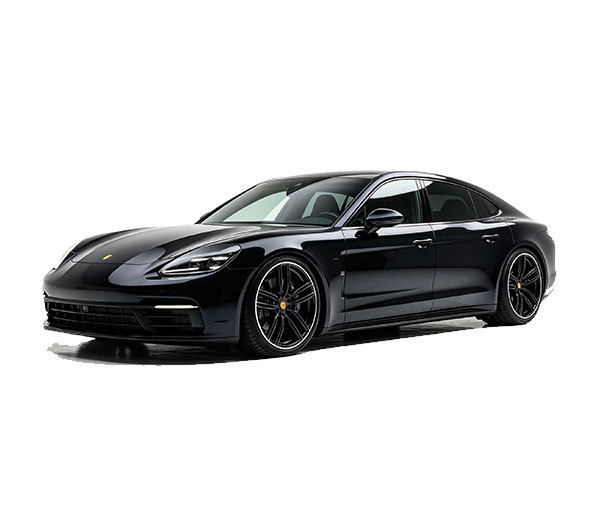
5. Technical Advantages I Consider When Developing a Sedan
One technical advantage of a well-designed sedan is its relatively low center of gravity. The passenger cabin and major components are positioned within a low body package, which can support predictable road behavior. This is one reason sedans remain popular for highway and urban driving.
Another advantage is aerodynamic efficiency. The smooth roofline and relatively low ride height can help reduce air resistance. I look at the complete body shape rather than treating aerodynamics as a styling issue. Hood angle, windshield position, roof transition, rear body shape, underbody airflow, and wheel design can all affect how air moves around the vehicle.
Weight distribution is also important. A vehicle that carries too much mass at one end can have different handling characteristics from one with a more balanced layout. Engine placement, battery position in hybrid vehicles, fuel tank location, suspension geometry, and passenger loading can all influence the final balance.
For a modern sedan, electronic control is another important part of the engineering package. Driver assistance systems can use cameras, radar, ultrasonic sensors, and electronic control units to provide functions such as collision warnings, braking assistance, lane support, or parking assistance. These systems are designed to support the driver, not replace driver attention.
The 2026 Honda Accord, for example, includes Honda Sensing safety functions and uses MacPherson strut front suspension, independent multi-link rear suspension, electric power-assisted steering, and front and rear stabilizer bars. The 2026 Camry also uses a MacPherson suspension layout and standard front and rear stabilizer bars in the comparison configuration.
From an engineering perspective, I prefer a sedan where these systems work together as one vehicle rather than treating every component as a separate selling point.
| Specification Area | What I Check | Why It Matters |
|---|---|---|
| Powertrain | Engine, motor, transmission and output | Acceleration, efficiency and operating characteristics |
| Chassis | Suspension, wheelbase and track | Ride comfort and handling stability |
| Braking | Brake layout, tire size and electronic control | Stopping control under different road conditions |
| Body | Structure, weight and aerodynamic shape | Durability, efficiency and road behavior |
| Cabin | Seat layout, legroom and luggage capacity | Passenger comfort and daily practicality |
| Electronics | Displays, sensors and driver-assistance functions | Vehicle control, information and convenience |
6. Where I Would Use a Sedan
I see the sedan as a flexible passenger vehicle rather than a vehicle for only one type of customer. In private use, a sedan can handle commuting, school transportation, shopping, family travel, and highway driving. Its separate trunk provides a useful luggage area while keeping the passenger cabin organized.
For corporate users, a commercial sedan can be used for employee transportation, customer visits, sales teams, hotel transfers, airport Pickup, and business travel. In these cases, rear-seat comfort and cabin quietness can become just as important as the engine specification.
Fleet operators may also use sedans because the vehicle format is familiar to drivers and passengers. A fleet manager normally looks at more than the purchase price. I would also consider fuel consumption, scheduled maintenance, tire replacement, brake wear, spare parts availability, downtime, and expected service life.
Government and institutional organizations can have similar requirements. A sedan may be configured for administrative transportation, inspection teams, field staff, or other daily mobility tasks. Depending on the region, the vehicle may need specific lighting, communication equipment, interior protection, or other modifications.
For export projects, I would divide applications by market before finalizing the configuration. A vehicle intended for dense urban roads may need a different balance from one designed for long-distance highway use. Climate also matters. Hot environments, cold regions, high humidity, dusty roads, and high-altitude areas can all influence the specification.
This is why I treat a custom sedan project as an engineering matching exercise. The right sedan is the one that fits the real operating conditions.
7. How I Approach Sedan Manufacturing and Customization
Although HKLOONG is strongly associated with heavy machinery, our wider capability includes equipment R&D, precision manufacturing, quality testing, customized modification, and global distribution. When I approach a sedan or passenger vehicle project, I apply the same basic discipline I use for machinery: define the requirement, review the structure, verify components, inspect the finished product, and keep the configuration traceable.
The first stage is requirement confirmation. I would review seating capacity, target market, powertrain preference, dimensions, road conditions, climate, safety requirements, interior functions, and expected annual operating hours or mileage. For fleet applications, I would also discuss maintenance and replacement requirements.
The next stage is engineering configuration. At this point, the body structure, chassis, powertrain, suspension, brakes, wheels, tires, electrical architecture, interior, and optional equipment need to work together. Changing one component can affect another. For example, a larger wheel and tire package can influence ride comfort, steering feel, clearance, and energy consumption.
Manufacturing quality then becomes the practical test. I look for consistent assembly, controlled component installation, accurate body alignment, reliable electrical connections, proper fastening, and inspection of key systems. For customized vehicles, I also want modifications to be documented so that future service teams understand what was changed.
Quality testing should not stop at appearance. I would check vehicle functions, braking behavior, steering operation, electrical systems, lighting, doors, seats, instruments, and other relevant functions before delivery. The exact inspection program should follow the destination market and vehicle specification.
For international distribution, documentation is another important part of the process. Vehicle configuration, component information, inspection records, user manuals, shipping requirements, and regional compliance documents need to match the actual vehicle. Good documentation makes later service work much easier.
8. Why I Choose HKLOONG for Sedan and Vehicle Solutions
When I work on a vehicle project at HKLOONG, I focus on practical engineering rather than simply adding features to a specification sheet. Our company has experience across equipment R&D, precision manufacturing, quality testing, customization, and international distribution. That background gives me a useful way to approach projects where vehicle configuration needs to be matched to a particular market or operating requirement.
I also understand that different customers have different priorities. A private passenger may care about comfort and fuel economy. A business fleet may care about operating cost and serviceability. An export distributor may care about configuration flexibility, documentation, spare parts, and local market requirements. These are different purchasing questions, so I do not treat every sedan project in the same way.
Customization can also be discussed around the actual application. Depending on the project and regulatory requirements, possible areas may include seating configuration, interior materials, multimedia equipment, luggage arrangements, exterior appearance, lighting, communication equipment, and other practical functions. Any modification should be checked against the relevant local regulations and vehicle engineering requirements.
Our broader heavy-equipment background also means I am comfortable working with demanding technical specifications. The same attention to dimensions, load conditions, component selection, testing, and field application that matters in construction machinery can also be useful when managing a commercial vehicle project.
For international customers, I would start with a clear specification sheet. It is much easier to compare and confirm a sedan when every important item is written down, from engine or motor type to passenger capacity, dimensions, safety equipment, interior configuration, and delivery requirements.
| Customer Requirement | Specification I Would Confirm | Typical Decision Point |
|---|---|---|
| Urban commuting | Compact dimensions, fuel economy, easy parking | Vehicle size and powertrain efficiency |
| Business transport | Rear-seat comfort, cabin functions, luggage space | Passenger experience and operating cost |
| Fleet operation | Serviceability, durability, standardization | Total operating requirements |
| Export project | Regional specification and documentation | Market regulations and configuration |
| Custom vehicle | Interior, equipment and functional modifications | Engineering feasibility and compliance |
9. Sedan FAQ
What is a sedan?
A sedan is a passenger vehicle with an enclosed cabin, fixed roof, usually four doors, and a separate trunk or luggage compartment. It is commonly used for commuting, family transportation, business travel, and fleet operation.
How many people can a Sedan carry?
Many modern passenger sedans are designed for five occupants, including the driver. The actual seating arrangement depends on the specific vehicle and market. For example, both the 2026 Toyota Camry and 2026 Honda Accord comparison configurations list seating for five.
What is the difference between a sedan and an SUV?
A sedan normally has a lower body and lower ride height, while an SUV generally offers a taller body and more flexible cargo or passenger arrangements. I would choose between them according to road conditions, passenger needs, cargo requirements, and operating cost rather than body style alone.
Can a sedan be used as a commercial vehicle?
Yes. A sedan can be used for company transportation, business travel, hotel transfers, fleet services, employee transportation, and other commercial applications. The exact configuration should match the intended use and local regulations.
Are hybrid sedans suitable for fleet use?
A hybrid sedan can be considered when fuel consumption and urban operating patterns are important. The suitability depends on local fuel prices, traffic conditions, maintenance support, hybrid system requirements, and the availability of qualified service facilities.
What should I check before buying a sedan for export?
I would check the destination country's vehicle regulations, emissions requirements, lighting and safety rules, fuel or charging conditions, dimensions, seating requirements, documentation, spare parts support, warranty arrangements, and local service capability. These details should be confirmed before final configuration.
Can HKLOONG support a customized sedan project?
HKLOONG has experience in equipment R&D, precision manufacturing, quality testing, customized modification, and global distribution. For a specific sedan project, the exact available configuration and customization scope should be confirmed according to the vehicle platform, target market, technical requirements, and applicable regulations.
Final Thoughts on Choosing a Sedan
When I evaluate a sedan, I try to keep the decision practical. Engine output matters, but it is only one part of the vehicle. Body structure, passenger space, trunk capacity, suspension, braking, safety systems, fuel or energy consumption, service requirements, and local road conditions all have a role.
For private customers, the right sedan should fit everyday driving. For businesses, it should also make sense over the full operating period. For fleet operators and international buyers, serviceability, configuration consistency, documentation, and market compliance can be just as important as the vehicle itself.



 WhatsApp
 Phone
Phone E-mail
 Message