
 Español
 Pусский
 Français
 العربية

When I talk about a Van, I am not simply talking about a vehicle with a large enclosed body. I see a van as a working platform that can be configured around a real transport task. It may carry packages across a city, tools to a construction site, technicians to a service location, employees between facilities, or equipment for a specialized project. The right van gives me a useful combination of cargo space, passenger capacity, road performance, and everyday practicality.
At HKLOONG Heavy Industry Technology (Hefei) Co., Ltd., I approach vehicle and equipment projects from a practical engineering perspective. Our company specializes in equipment R&D, precision manufacturing, quality testing, customized modification, and global distribution. Under the HKLOONG brand, our established product lineup includes crawler excavators, Wheel loaders, Backhoe loaders, and amphibious wetland Excavators. These machines are developed for demanding working environments, and I use the same application-focused thinking when evaluating commercial vehicle solutions.
A modern commercial van can take many forms. A cargo van may focus almost entirely on enclosed loading space. A passenger van can be configured around people rather than goods. A crew van can combine seating and cargo capacity. A chassis-based van platform can also support specialized bodies for mobile workshops, emergency services, delivery operations, utility work, and other professional applications.
That is why I do not believe there is one “perfect” van for every customer. The right configuration depends on payload, cargo volume, body dimensions, drivetrain, wheelbase, roof height, seating, operating distance, road conditions, and local regulations.
In this page, I will explain how I understand van construction, how a commercial van works, which specifications I normally check, where I would use different van configurations, and how I approach manufacturing and customization. The comparison figures are published manufacturer data and are included for industry reference only. They do not represent HKLOONG product specifications.
1. What Is a Van and How Do I Choose the Right Configuration?
I define a Van as a road vehicle with an enclosed body designed mainly for transporting people, goods, equipment, or a combination of these. Compared with a Pickup, the main difference is the enclosed cargo area. This makes a van particularly useful when I need to protect cargo from weather, dust, theft risk, or general road exposure.
For business users, the van can become much more than a transport vehicle. A plumber can turn the rear compartment into a mobile workshop. An electrician can install shelves and storage bins. A delivery company can organize packages by route. A medical service provider can develop a specialized mobile unit. A construction company can use a work van to carry tools and equipment between different sites.
Before I choose a van, I first define the job. I ask how much cargo needs to be carried, how large that cargo is, how often the vehicle will be loaded, how many passengers are required, and what kind of roads it will use.
I also separate two important ideas: payload and cargo volume. Payload tells me how much weight the vehicle can legally and structurally carry. Cargo volume tells me how much physical space is available. A van can have a large cargo compartment but still have a payload limit that prevents me from filling every available cubic foot with heavy material.
For example, the 2026 Mercedes-Benz Sprinter Cargo Van Worker is published with a 4,211 lb payload, 319.0 cubic feet of cargo volume, a maximum available GVWR of 9,050 lb, and a 5,000 lb maximum towing rating for the referenced configuration. These are manufacturer-published figures, and the exact specification changes with vehicle configuration.
I therefore look at weight and volume together. If I carry insulation, clothing, parcels, or other light but bulky products, cargo volume may become the limiting factor. If I transport metal parts, machinery, batteries, or construction materials, payload may become the limiting factor first.
Roof height and wheelbase also matter. A high-roof van can provide more usable interior height, while a longer wheelbase can create more cargo space. But larger dimensions can also affect turning, parking, loading access, and operating costs.
For international projects, I also check local regulations before finalizing the vehicle. GVWR, axle loads, dimensions, emissions, safety equipment, lighting, and driving-license requirements can differ between markets.
2. How I Understand the Working Principle of a Commercial Van
The basic working principle of a van is straightforward. The engine or electric motor generates driving power, the transmission and drivetrain transfer that power to the wheels, and the chassis supports the body, suspension, axles, steering system, braking system, and cargo load.
In a conventional gasoline or diesel van, the engine creates mechanical power through combustion. The transmission then changes the gear ratio to match the operating condition. Lower gears provide more wheel torque when starting or climbing, while higher gears allow efficient cruising at road speed.
Electric vans use a different energy system. A battery stores electrical energy, and an electric motor converts that energy into mechanical movement. Depending on the vehicle design, electric drive can provide strong low-speed torque and simple power delivery. However, range, charging infrastructure, battery weight, temperature, payload, and operating conditions all need to be considered.
Ford's current Transit family provides a useful example of different approaches. Ford states that the 2026 Transit uses rear-wheel drive as standard, with all-wheel drive available, while the E-Transit uses rear-wheel drive. Ford also lists cargo van volume ranging from 246.7 to 487.3 cubic feet and configurable GVWR from 8,670 to 11,000 lb.
The chassis is the structural base of the vehicle. I pay close attention to it because the chassis connects the powertrain, suspension, axles, steering, braking system, and body. A commercial van that works every day with heavy loads needs a chassis and suspension system suited to that duty cycle.
The suspension controls how the wheels move relative to the body. A well-matched suspension helps manage road bumps, cargo loads, steering behavior, and vehicle stability. The exact suspension layout depends on the vehicle class and design.
The braking system is equally important. A loaded van can weigh substantially more than an empty one, so braking performance has to be considered across different loading conditions. I look at brake design together with tires, axle loads, vehicle weight, and electronic control systems.
Finally, the body creates the usable working space. Doors, floor height, roof height, wheel-well intrusion, side-door opening, rear-door opening, interior length, and storage layout can make a major difference to daily productivity.
3. Main Features I Look For in a Van
When I evaluate a commercial van, I normally focus on the complete working package rather than just engine power or exterior size.
Cargo Volume
Cargo volume tells me how much enclosed space is available. It is especially important for delivery businesses and trades that carry bulky tools or materials. I also look at cargo length, interior height, cargo width, and the width of the door openings.
Ram's 2026 ProMaster is a useful reference. The manufacturer publishes up to 524 cubic feet of cargo space and up to 13 feet of maximum cargo area length for the range. Specific configurations vary, and the published maximum payload reaches 4,750 lb.
Payload Capacity
Payload is critical for professional use. I calculate the expected cargo weight and then account for passengers, tools, accessories, shelving, fuel, and other equipment. A van that is constantly operated close to its maximum rating may not be the right choice for a demanding fleet application.
Loading Access
A good cargo van should make loading simple. I look at side-door width, rear-door width, cargo floor height, step height, and interior access. These details can save time every day.
Roof Height
Roof height changes how people use the vehicle. A standard-roof van may be easier to park and may have a lower overall height. A high-roof van can provide enough interior height for workers to stand or for taller shelving systems.
Wheelbase and Overall Length
A longer body generally gives me more cargo space, but it can also require more room to turn and park. I therefore balance cargo requirements against the actual roads and facilities where the van will operate.
Drivetrain
Front-wheel drive, rear-wheel drive, and all-wheel drive each have different characteristics. I select the drivetrain according to traction needs, payload, towing, road conditions, and the intended duty cycle.
Serviceability
A commercial van is usually a working asset. It may operate six or seven days a week, so maintenance access matters. I look at service points, inspection access, spare-parts availability, tire access, brake maintenance, and diagnostic systems.
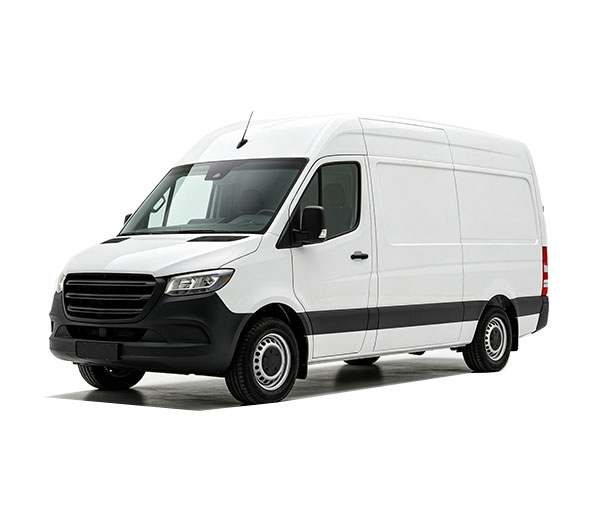
4. Van Specification Comparison: How I Read the Numbers
I always compare commercial vans within a similar class. A compact delivery van, full-size cargo van, passenger van, and chassis-based work van can have completely different specifications and operating targets.
| Reference Van | Published Payload | Maximum Cargo Volume | GVWR / Weight Data | Source |
|---|---|---|---|---|
| 2026 Mercedes-Benz Sprinter Cargo Van | 4,211 lb | 319.0 cu. ft. for referenced configuration | Max available GVWR 9,050 lb | Mercedes-Benz Vans official data |
| 2026 Ford Transit Cargo Van | Up to 5,103 lb | 246.7–487.3 cu. ft. | GVWR 8,670–11,000 lb | Ford official data |
| 2026 Ram ProMaster Cargo Van | Up to 4,750 lb | Up to 524 cu. ft. | GVWR varies by model | Ram official data |
These published figures show why I do not compare vans using one number alone. Ford publishes a broad Transit range with different body configurations and GVWR options. Mercedes-Benz provides different Sprinter wheelbases, roof heights, and body configurations. Ram also offers different ProMaster configurations with different cargo dimensions and payload ratings.
The numbers above are industry reference data only and do not represent HKLOONG specifications.
| Specification | What I Check | Why It Matters |
|---|---|---|
| Payload | Expected cargo and passenger weight | Defines how much useful load I can carry |
| Cargo volume | Total usable interior space | Important for bulky goods and equipment |
| Cargo length | Longest item that must fit | Helps determine wheelbase and body length |
| Cargo height | Required vertical clearance | Important for tall goods and standing work |
| GVWR | Total permitted vehicle weight | Defines the upper weight limit for the vehicle |
| GCWR | Vehicle plus trailer combination limit | Important when towing equipment |
| Turning diameter | Space required to turn | Important for cities, warehouses, and narrow sites |
| Load height | Distance from ground to cargo floor | Affects daily loading effort |
For example, the published 2026 Ram ProMaster 1500 SLT Cargo Van low-roof 136-inch wheelbase specification lists a 4,160 lb payload, 8,550 lb GVWR, 7,130 lb towing capacity, and 259 cubic feet of interior cargo volume. The same source lists a 105.1-inch cargo length and 65.4-inch cargo height for that configuration.
I use this kind of detailed specification when matching a vehicle to a real job. A van may have enough total cargo volume, but if the door opening is too small for the equipment, the volume is not very useful. The same is true for payload: a large cargo compartment does not mean I can fill it with unlimited weight.
5. Where I Would Use a Commercial Van
I see the commercial van as a highly flexible working platform. Its enclosed structure makes it suitable for many industries where cargo protection, organized storage, and regular transportation are important.
Delivery and Logistics
Delivery companies need a vehicle that can move packages efficiently through urban and regional routes. I would focus on cargo volume, payload, rear and side access, loading height, fuel or energy efficiency, and ease of route operation.
Ford itself identifies delivery and logistics as a common Transit application and highlights its configurable cargo space and payload capacity.
Construction and Building Services
A work van for construction can carry power tools, hand tools, pipes, fasteners, electrical equipment, safety equipment, and spare parts. Shelving and storage systems can turn the rear compartment into a mobile workshop.
Electrical and Plumbing Services
Electricians and plumbers often need many small components rather than one large load. In this case, organization is just as important as total volume. Shelves, drawers, bins, and labeled storage can make the van much more useful.
Maintenance and Field Service
Industrial maintenance teams can use vans to transport technicians and equipment between factories, warehouses, energy facilities, and other sites. A crew van configuration may be useful when both people and equipment need to travel together.
Mercedes-Benz's 2026 Sprinter Crew Van, for example, is published with seating for five and up to 240 cubic feet of cargo volume in a referenced configuration, showing how a van can combine passenger and cargo functions.
Mobile Workshops
I consider the van an excellent base for mobile workshop applications. The enclosed body can house tools, spare parts, workbenches, electrical systems, compressors, diagnostic equipment, or other specialized equipment.
Medical and Emergency Applications
Depending on the base vehicle and applicable regulations, vans can also be adapted for mobile clinics, emergency response, medical transport, and other specialized services. Ford lists mobile clinics and emergency response among possible special applications for the Transit platform.
Passenger Transportation
A passenger van changes the design priority from cargo volume to seating, entry access, interior space, climate control, and passenger comfort. Mercedes-Benz, for example, publishes 2026 Sprinter passenger configurations with 12 seats and other configurations with up to 15 seats, depending on the model.
6. How I Approach Van Manufacturing and Customization
When I think about Van manufacturing, I start with the vehicle architecture. The chassis, powertrain, suspension, axles, braking system, body, and electrical systems all need to work as one complete vehicle.
The chassis carries the major loads. Manufacturing accuracy matters because body mounts, suspension components, axles, steering components, and other parts depend on correct positioning. Dimensional inspection is therefore an important part of quality control.
The body itself needs to balance strength and weight. If the body is unnecessarily heavy, useful payload decreases. If it is not strong enough for the intended application, durability can become a problem. I therefore consider material selection, structural design, panel construction, insulation, flooring, and mounting methods together.
For a custom cargo van, the interior is especially important. A delivery operator may need open floor space. An electrician may need shelves and drawers. A mobile workshop may require a workbench, power supply, lighting, and equipment mounting. A medical application may require completely different interior systems.
Electrical integration also becomes more important as the van becomes more specialized. Auxiliary lighting, inverters, refrigeration, communication systems, charging equipment, diagnostic tools, and other accessories can add electrical demand. The auxiliary electrical system must be planned rather than simply connected after the vehicle is finished.
For electric vans, battery protection, charging equipment, high-voltage components, thermal management, and electrical safety require additional attention. For combustion-powered vans, I would focus on engine installation, cooling, fuel delivery, exhaust routing, transmission integration, and emissions requirements.
Quality testing should continue after assembly. I would check steering, brakes, suspension, doors, locks, lighting, electrical functions, cargo-body installation, interior fittings, and other systems relevant to the final configuration.
At HKLOONG, our core capabilities include equipment R&D, precision manufacturing, quality testing, customized modification, and global distribution. Our established HKLOONG portfolio includes crawler Excavators, wheel loaders, backhoe loaders, and amphibious Wetland excavators. These machines are intended for heavy-duty applications, where structural quality and real-world operating conditions matter.
I bring the same practical approach to commercial vehicle projects. First I understand the application. Then I define the required capacity and configuration. After that I consider manufacturing, customization, testing, and long-term service requirements.
7. Why I Take a Practical Approach to HKLOONG Van Solutions
When I evaluate a van manufacturer or van supplier, I do not think the decision should be based only on price or a product photograph. A commercial vehicle becomes part of a company's daily workflow, so I want to understand how well it fits that workflow.
I start with the operating requirement. What will the van carry? How heavy is the normal load? How large are the individual items? How many passengers are needed? Will the vehicle operate in a city, on highways, on construction roads, or across mixed terrain?
I then look at vehicle size. A longer van can provide more cargo capacity, but it may need more parking space and have a larger turning circle. A high-roof configuration can improve interior usability but may increase overall vehicle height. A compact configuration may be easier to operate in cities but provide less useful cargo space.
For international customers, I also consider local requirements. Vehicle dimensions, emissions, lighting, braking, safety equipment, axle loads, GVWR, licensing, and type approval can vary between markets. These requirements need to be confirmed before a final specification is selected.
I also consider the entire working life of the vehicle. A commercial van can accumulate many thousands of operating hours, so maintenance access, spare parts, service procedures, tire costs, fuel or energy use, and downtime can have a large impact on total operating cost.
Customization should have a clear purpose. If a customer needs a mobile workshop, I would focus on interior organization and equipment integration. If the requirement is urban delivery, I would prioritize cargo access and loading efficiency. If the vehicle is for passenger transportation, seating, access, climate control, and interior layout become more important.
HKLOONG brings together R&D, precision manufacturing, quality testing, customized modification, and global distribution. Our experience with heavy equipment gives us a practical understanding of machines that need to work in construction, agriculture, municipal, industrial, and difficult outdoor environments.
For a commercial van project, I use the same basic workflow: understand the job, define the specifications, confirm the target-market requirements, develop the configuration, verify manufacturing quality, and test the finished vehicle.
For me, this is the most useful way to approach a commercial van supplier. The goal is not to make the longest specification sheet. The goal is to build a vehicle that fits the actual job.
8. Van FAQ
What is a Van?
A van is a vehicle with an enclosed body designed mainly for transporting goods, people, equipment, or a combination of these. Vans can be configured as cargo vans, passenger vans, crew vans, service vehicles, or specialized work vehicles.
What is the difference between a cargo van and a passenger van?
A cargo van is designed mainly around enclosed storage and transportation of goods. A passenger van uses more of its interior space for seats and passenger access. Some crew vans combine both functions.
What is the difference between payload and cargo volume?
Payload is the permitted weight of the additional load, while cargo volume is the amount of physical space available for cargo. Both are important. A large cargo area does not mean the van can safely carry unlimited weight.
What should I look for in a commercial van?
I would start with payload, cargo volume, cargo dimensions, door openings, load height, GVWR, wheelbase, drivetrain, towing capacity, serviceability, and local regulations. I would then match those specifications to the actual daily workload.
Is a high-roof van better?
Not automatically. A high-roof van can provide more interior height and may allow easier movement inside the cargo area. However, it can also increase overall vehicle height. I would choose the roof configuration according to the cargo and operating environment.
Is an electric van suitable for commercial work?
It can be suitable for many applications, especially when daily routes are predictable and charging infrastructure is available. I would compare daily distance, payload, climate, charging time, battery capacity, route conditions, and total operating requirements before selecting an electric van.
Can a commercial van be customized?
Yes. Depending on the base vehicle and local regulations, a van can be configured with shelving, tool storage, refrigeration, workbenches, electrical systems, passenger seating, medical equipment, mobile workshop systems, and other application-specific equipment.
Can a van tow a trailer?
Many commercial vans can tow a trailer when properly configured, but the permitted towing capacity varies by model and configuration. I would always check the official towing rating, GVWR, GCWR, hitch rating, tongue weight, and local regulations before towing.
How much cargo can a van carry?
There is no universal answer. For example, published 2026 specifications show maximum payloads of 5,103 lb for selected Ford Transit configurations, 4,750 lb for the Ram ProMaster range, and 4,211 lb for the referenced Mercedes-Benz Sprinter Cargo Van Worker. These are manufacturer-specific maximums, not general van-class values.
Can HKLOONG provide customized van solutions?
HKLOONG specializes in equipment R&D, precision manufacturing, quality testing, customized modification, and global distribution. Our established product portfolio focuses on heavy equipment, including crawler excavators, wheel loaders, backhoe loaders, and amphibious wetland excavators. For a Van or commercial vehicle project, the specific vehicle platform, technical specifications, regulations, customization requirements, and production feasibility would need to be evaluated according to the intended application.
Final Thoughts
For me, a Van is more than an enclosed vehicle. It is a flexible working platform. The same basic vehicle concept can support delivery, construction, field service, logistics, maintenance, passenger transportation, mobile workshops, and specialized applications when the configuration is planned correctly.
The most important step is to start with the real job. I look at payload, cargo volume, body dimensions, loading access, drivetrain, wheelbase, roof height, towing requirements, serviceability, and local regulations together. That gives me a much clearer picture than simply comparing engine power or vehicle price.
At HKLOONG, I use a practical engineering approach based on R&D, precision manufacturing, quality testing, customized modification, and global distribution. Our heavy equipment experience has taught us to focus on real working conditions, structural requirements, serviceability, and long-term use.
Whether the requirement is a cargo van, commercial van, work van, passenger van, or a specialized vehicle platform, I always start with one basic question: what does the vehicle actually need to do? Once that is clear, the right configuration becomes much easier to define.



 WhatsApp
 Phone
Phone E-mail
 Message