
 Español
 Pусский
 Français
 العربية

When I think about a Pickup, I think about a vehicle that has to do more than simply move from one place to another. A good pickup truck needs to carry tools, materials, equipment, and sometimes people, while still being easy enough to drive every day. That balance between transportation and working ability is what makes the pickup such a useful vehicle.
At HKLOONG Heavy Industry Technology (Hefei) Co., Ltd., I take a practical approach to vehicle and equipment engineering. Our company specializes in equipment R&D, precision manufacturing, quality testing, customized modification, and global distribution. Under the HKLOONG brand, our established product range includes crawler excavators, Wheel loaders, Backhoe loaders, and amphibious wetland Excavators. These machines are developed for demanding working environments, and I use the same application-focused thinking when evaluating a pickup or commercial vehicle solution.
A pickup truck sits between a passenger vehicle and a dedicated commercial truck. It gives me a passenger cabin at the front and an open cargo bed at the rear. This simple layout makes the vehicle flexible. I can use it for construction work in the morning, move equipment during the afternoon, and still use it for normal transportation afterward.
Of course, not every pickup is built for the same job. A compact pickup may be easier to operate in cities, while a full-size pickup can provide more payload and towing capability. A 4x4 pickup can be useful on rough roads, farms, construction sites, and other areas where traction matters. A work pickup may also need a different bed arrangement, storage system, suspension setup, or accessory package from a vehicle designed mainly for personal use.
In this page, I will explain how I understand pickup truck design, how the powertrain and chassis work, which specifications I check, where I would use different pickup configurations, and how I approach manufacturing and customization. The comparison figures are based on published manufacturer information and are included as industry reference data only, not as HKLOONG specifications.
1. What Is a Pickup and How Do I Choose the Right Type?
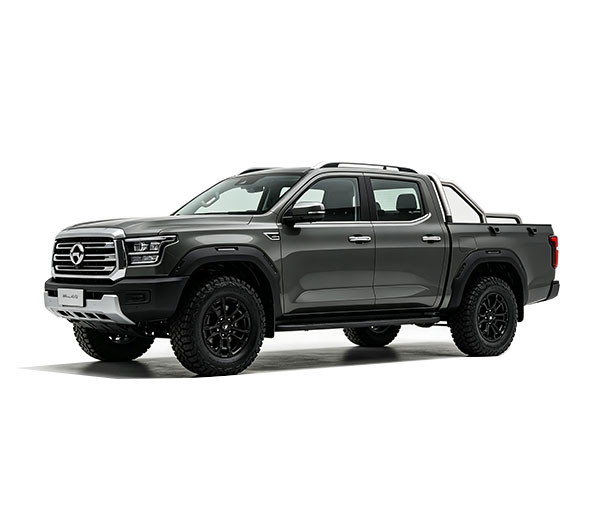
I define a pickup as a vehicle with a passenger cab and a separate open cargo bed. The cargo bed is the key feature because it gives me a flexible loading area without turning the entire vehicle into a closed cargo box.
This makes the pickup especially useful for people who need both transportation and working capability. Contractors can carry power tools, ladders, pipes, building materials, and small machines. Farmers can move feed, fencing materials, tools, and supplies. Utility teams can transport equipment between service locations. Outdoor users can carry bicycles, camping equipment, or recreational gear.
When I select a pickup, I first look at the actual work rather than the appearance of the vehicle. I ask several simple questions: How much weight will it normally carry? Will it tow a trailer? Will it drive on paved roads or rough ground? How many people need to travel in the cab? How large does the cargo bed need to be? How many hours will it operate each day?
These questions help me separate different pickup categories.
A compact pickup can make sense when maneuverability and lower operating size are important. A midsize pickup can provide a useful balance between urban driving, cargo work, and off-road use. A full-size pickup can provide greater towing and payload capability. Heavy-duty Pickup models are designed for customers who regularly need higher trailer ratings or heavier working loads.
I also distinguish between payload and towing capacity. Payload is the weight carried directly by the pickup, including passengers, cargo, and equipment as defined by the manufacturer. Towing capacity concerns the trailer and its load. A truck may have a high maximum tow rating but a different payload limit, so I never treat the two numbers as interchangeable.
Ford's official 2026 F-150 towing guide is a useful example. Depending on engine and configuration, published maximum towing figures range from 8,400 lb to 13,500 lb, while published maximum payload figures range from 1,405 lb to 2,440 lb across the listed configurations. Ford also notes that towing and payload depend on configuration, accessories, passengers, and other conditions.
That is exactly why I recommend choosing a pickup based on the complete operating requirement rather than one headline number.
2. How I Understand the Working Principle of a Pickup Truck
The working principle of a pickup is fairly straightforward. The engine or electric motor produces power, the transmission and drivetrain transfer that power, and the driven wheels convert it into movement. The chassis carries the major systems and the cargo load, while the suspension, steering, and braking systems control the vehicle.
On a conventional gasoline or diesel pickup, the engine produces mechanical power through combustion. The transmission changes the gear ratio according to driving conditions. Lower gears provide more wheel torque when starting or climbing, while higher gears help the vehicle travel efficiently at road speed.
Some modern pickups also use hybrid or fully electric powertrains. A hybrid system combines an internal-combustion engine with electric drive components. An electric pickup uses a battery and electric motor instead of a conventional fuel-burning engine. Each system has different strengths, and I would select one according to the expected operating pattern rather than assuming that one powertrain fits every customer.
The drivetrain is particularly important when I am looking at a 4x4 pickup. Four-wheel drive can send driving force to all four wheels when the system is designed to do so. This can help improve traction on loose surfaces such as gravel, mud, sand, snow, or uneven construction roads. However, four-wheel drive does not remove the need for correct tires, suitable speed, and proper driving technique.
The chassis connects the major systems. On many pickup designs, a separate frame supports the cab, engine, suspension, axles, and cargo bed. This structure gives the vehicle a strong base for carrying and towing work.
The suspension then connects the frame to the wheels. It has to support the vehicle while also controlling wheel movement over uneven surfaces. Suspension design can affect ride comfort, stability, traction, and how the pickup behaves under different loads.
The cargo bed is another important part of the system. I look at its length, width, load floor, side walls, tie-down points, tailgate design, and compatibility with accessories. A good cargo bed should make loading and securing equipment straightforward.
Finally, braking and steering systems control the vehicle. This becomes particularly important when the pickup is heavily loaded or towing a trailer. The complete vehicle must be considered because tires, axle loading, suspension, brakes, and powertrain all interact.
3. Main Pickup Features I Look For
When I evaluate a commercial pickup truck, I normally focus on several practical areas instead of simply comparing exterior styling.
Useful Payload Capacity
Payload is one of the first numbers I check. If a contractor regularly carries 1,000 lb of tools and materials, I want enough certified capacity for that job with an appropriate safety margin. I also account for passengers and accessories because these contribute to vehicle weight.
Towing Capability
For customers who move trailers, Excavators, boats, agricultural equipment, or other machinery, towing capacity becomes important. I also check the hitch system, trailer brake requirements, axle ratings, wheelbase, and combined weight rating rather than looking at the maximum tow number alone.
Cargo Bed Design
The cargo bed is where a pickup becomes a working vehicle. I look for useful bed length, loading height, tie-down points, tailgate access, and compatibility with toolboxes, covers, racks, and other equipment.
Chevrolet's 2026 Silverado 1500, for example, lists a Durabed cargo box with 12 standard tie-downs rated at 500 lb per corner and up to 89.1 cubic feet of standard cargo volume, depending on the configuration and measurement basis. This is a useful example of how bed design can be evaluated beyond simple exterior dimensions.
Drivetrain Selection
For normal road transportation, two-wheel drive may be sufficient for some users. For rough roads, farms, construction areas, or off-road routes, a four-wheel-drive configuration may provide additional traction. I would make this choice based on actual surface conditions and workload.
Cab Configuration
Regular cab, extended cab, and crew cab layouts serve different needs. A work crew may need four full doors and several seats, while a contractor who mainly works alone may value a larger cargo bed instead.
Serviceability
A working pickup needs regular maintenance. I look at access to filters, fluids, brakes, tires, electrical systems, and other service points. Easy maintenance can reduce downtime and make fleet management simpler.
4. Pickup Truck Specification Comparison: How I Read the Numbers
I always recommend comparing pickup specifications within the same vehicle class. A compact or midsize pickup should not be judged against a heavy-duty model using exactly the same requirements.
| Reference Pickup | Published Maximum Towing | Published Maximum Payload | Powertrain Example | Source |
|---|---|---|---|---|
| 2026 Ford F-150 | Up to 13,500 lb | Up to 2,440 lb | 3.5L EcoBoost V6: 382 hp / 500 lb-ft in towing guide | Ford official data |
| 2026 Chevrolet Silverado 1500 | Up to 13,300 lb | Up to 2,260 lb | Available 3.0L Duramax diesel: 305 hp / 495 lb-ft | Chevrolet official data |
| Toyota Tacoma | Up to 6,500 lb in cited fleet guide | Up to 1,709 lb in cited fleet guide | Available i-FORCE MAX hybrid: 326 hp / 465 lb-ft | Toyota published fleet data |
These numbers show why I separate pickup categories before making a comparison. Ford's 2026 F-150 and Chevrolet's 2026 Silverado 1500 are full-size pickups with published maximum towing figures above 13,000 lb in selected configurations, while Toyota's cited Tacoma fleet information lists a lower maximum towing figure and focuses on a midsize pickup configuration.
Again, these are reference figures. They are not simultaneous performance values and do not represent HKLOONG specifications. Actual capacity depends on the exact vehicle configuration, cab, drivetrain, axle ratio, equipment, passengers, cargo, and local regulations.
| Specification | What I Ask | Why It Matters |
|---|---|---|
| Payload | How much weight will I carry? | Defines practical cargo capacity |
| Towing rating | What trailer will I pull? | Determines trailer and equipment suitability |
| GVWR | What is the permitted total vehicle weight? | Helps define loading limits |
| GCWR | What is the permitted combined vehicle and trailer weight? | Important for towing operations |
| Torque | How much turning force is available? | Important for pulling and grade performance |
| Bed length | What equipment must fit inside? | Affects cargo flexibility |
| Wheel formula | Do I need 4x2 or 4x4? | Helps match drivetrain to road conditions |
Ford's official 2026 F-150 information also illustrates the importance of engine selection. Its published figures list different towing and payload capabilities across six engine choices, with the maximum figures tied to specific configurations and packages.
So when I read a pickup specification sheet, I look for the complete configuration instead of copying the largest number from the manufacturer's homepage.
5. Where I Would Use a Pickup Truck
I see the pickup truck as one of the more flexible commercial vehicles because its open cargo bed allows many different types of work.
Construction
Construction teams can use a pickup to transport hand tools, generators, pipes, ladders, fasteners, small equipment, and job-site materials. A pickup truck for construction should have enough payload capacity for the normal load and enough traction for the roads it will actually use.
If the vehicle regularly carries a trailer, I would also check the trailer weight, hitch rating, braking system, and combined weight. A pickup may look capable of towing a piece of construction machinery, but the complete combination must still remain within the manufacturer's permitted limits.
Agriculture and Farming
Farm work often means carrying tools, feed, fencing materials, small machinery, and supplies over a mixture of paved and unpaved roads. A 4x4 pickup can be useful where traction is frequently needed, while bed protection and easy-clean surfaces can also become important.
Utility and Field Service
Electricians, maintenance teams, telecommunications workers, landscaping crews, and utility contractors can use a pickup as a mobile work platform. Toolboxes, racks, storage systems, and canopy structures can turn the cargo bed into an organized service area.
Mining and Industrial Support
Industrial sites often need vehicles to move personnel, tools, inspection equipment, and spare parts. In these environments, I pay attention to ground conditions, durability, visibility, service access, and site-specific safety requirements.
Municipal Services
Municipal teams can use pickups for road inspection, landscaping, maintenance, emergency support, and local service operations. The open bed makes it easy to carry equipment that would not fit comfortably inside a normal passenger vehicle.
Recreation and Personal Transport
Not every pickup is used for commercial work. Outdoor activities, camping, boating, cycling, and other recreational uses can benefit from an open cargo bed and towing capability. The same engineering principles still apply: I look at the actual load and towing requirement before selecting the vehicle.
6. How I Approach Pickup Manufacturing and Customization
When I think about pickup manufacturing, I start with the chassis because it carries the main mechanical systems and the cargo load. Frame strength, dimensional accuracy, mounting points, suspension geometry, axle position, and weight distribution all influence how the final vehicle behaves.
The body then has to fit the chassis correctly. A cargo bed that is too heavy can reduce useful payload. A body that is not properly mounted can create unnecessary stress. For this reason, I consider the bed, frame, suspension, and payload rating as one system.
Welding and structural assembly also deserve close attention. Consistent weld quality, dimensional inspection, correct fastener installation, and proper surface treatment all contribute to long-term durability.
The powertrain is another major area. I look at engine or motor installation, transmission matching, cooling, electrical systems, fuel or battery systems, and control units. The objective is not simply to install a powerful engine. The complete system needs to work together.
For a custom pickup truck, I may also consider different bed lengths, storage systems, racks, protective equipment, utility bodies, lighting, towing equipment, or other application-specific components. Any modification should be checked against the vehicle's structural and legal requirements.
Quality testing should cover the finished vehicle rather than stopping at individual components. I would check steering, braking, suspension movement, electrical functions, lighting, cargo-bed installation, door operation, tires, and other relevant systems.
For a work-oriented pickup, I also care about service access. A vehicle that is difficult to inspect or maintain can become expensive over its working life. Simple access to routine service points can make a meaningful difference for fleet operators.
At HKLOONG, our core capabilities include equipment R&D, precision manufacturing, quality testing, customized modification, and global distribution. Our established HKLOONG portfolio includes crawler excavators, wheel loaders, backhoe loaders, and amphibious Wetland excavators. This background gives us practical experience with machines that have to work in demanding conditions.
I use that same mindset when considering a commercial vehicle project: understand the job first, define the load and operating conditions, select the appropriate structure, verify the technical requirements, and then move toward manufacturing and testing.
7. Why I Take a Practical Approach to HKLOONG Pickup Solutions
When I evaluate a pickup truck supplier, I do not think the decision should be based only on the vehicle's appearance or the largest number printed in a brochure. For a working vehicle, I want to know how the product fits the customer's actual operation.
I start with the basic questions. What will the pickup carry? How often will it tow? Will it drive on highways, construction roads, farms, or mixed terrain? How many passengers are required? Does the customer need a regular cargo bed or a customized working body? What kind of climate will the vehicle face? What service resources are available locally?
These questions are especially important for international projects. A pickup designed for one market may require different specifications or equipment for another market. Local rules can affect dimensions, lighting, emissions, safety systems, towing limits, tires, and vehicle approval.
I also look at total operating needs rather than purchase price alone. Fuel or electricity consumption, tire wear, maintenance access, spare parts, service intervals, downtime, and expected working hours all affect the real cost of a commercial pickup.
Customization should have a clear reason. If a contractor needs a ladder rack, tool storage, reinforced cargo protection, or additional work equipment, the modification should make the truck more useful without creating unnecessary weight or compromising the original vehicle structure.
At HKLOONG, our engineering approach is built around R&D, precision manufacturing, quality testing, customized modification, and global distribution. Our experience covers heavy equipment used for construction, material handling, agriculture, municipal work, and wetland applications.
For a pickup truck manufacturer or customized vehicle project, I would follow the same practical process: understand the application, identify the required performance, confirm the market requirements, select the right configuration, review the manufacturing details, and verify the finished vehicle before delivery.
That approach helps me keep the focus on what matters most: whether the pickup can perform the job it was purchased to do.
8. Pickup Truck FAQ
What is a pickup truck?
A pickup truck is a vehicle with a passenger cabin and an open cargo bed. It is designed to combine passenger transportation with the ability to carry materials, tools, equipment, or other loads.
What is the difference between a pickup and a normal car?
The biggest practical difference is the cargo area. A pickup has an open bed that can carry equipment and materials outside the passenger cabin. Pickups are also commonly designed with higher payload and towing capability than ordinary passenger cars.
Is a 4x4 pickup better than a 4x2 pickup?
It depends on the application. A 4x4 pickup can provide additional traction in certain rough or low-grip conditions, but it can also add weight, complexity, and cost. If most driving is on normal paved roads, a 4x2 configuration may be sufficient for some users.
How much can a pickup truck carry?
There is no universal payload figure. It depends on the specific model, cab, engine, drivetrain, suspension, axle configuration, options, and local certification. I always recommend checking the exact vehicle's official payload rating rather than relying on a general model name.
How much can a pickup tow?
Towing capacity varies widely. For example, Ford publishes a maximum available 13,500 lb towing rating for selected 2026 F-150 configurations, while Chevrolet publishes up to 13,300 lb for selected 2026 Silverado 1500 configurations. These are manufacturer-specific maximums and require the appropriate equipment and configuration.
What should I look for in a work pickup?
I would focus on payload, towing capacity, bed size, drivetrain, suspension, tires, braking, cab configuration, service access, and the availability of suitable accessories. The right combination depends on the actual job.
Can a pickup be customized for construction work?
Yes. Depending on the vehicle and local regulations, a pickup can be equipped with toolboxes, racks, bed protection, towing equipment, storage systems, lighting, and other work accessories. Any modification should remain within the vehicle's structural and legal limits.
Is a diesel pickup better for heavy work?
A diesel powertrain can provide strong torque and may be suitable for certain towing or long-distance applications, but it is not automatically the right choice for every user. I would compare the actual load, mileage, duty cycle, fuel availability, maintenance requirements, emissions rules, and purchase cost.
Can HKLOONG provide customized pickup solutions?
HKLOONG specializes in equipment R&D, precision manufacturing, quality testing, customized modification, and global distribution. Our established product portfolio is focused on heavy equipment such as crawler excavators, wheel loaders, backhoe loaders, and amphibious wetland excavators. For a pickup or commercial vehicle project, the specific vehicle platform, technical requirements, regulations, and production feasibility would need to be evaluated according to the intended application.
Final Thoughts
For me, the real value of a Pickup is flexibility. It can carry tools in the morning, transport materials during the day, tow equipment when properly configured, and still serve as a normal passenger vehicle when the working day is finished.
The important part is selecting the pickup according to the real workload. Payload, towing, engine or motor output, torque, drivetrain, suspension, cargo-bed design, braking, dimensions, and serviceability all need to work together.
At HKLOONG, I use a practical engineering approach built around R&D, precision manufacturing, quality testing, customized modification, and global distribution. Our experience with heavy equipment gives us a strong understanding of machines that have to work in real conditions rather than simply look good in a catalog.
Whether the requirement is a commercial pickup truck, a work pickup truck, a 4x4 pickup, or a customized transport solution, I always start with the same question: what does the vehicle actually need to do? Once that answer is clear, the right technical configuration becomes much easier to define.



 WhatsApp
 Phone
Phone E-mail
 Message