
 Español
 Pусский
 Français
 العربية


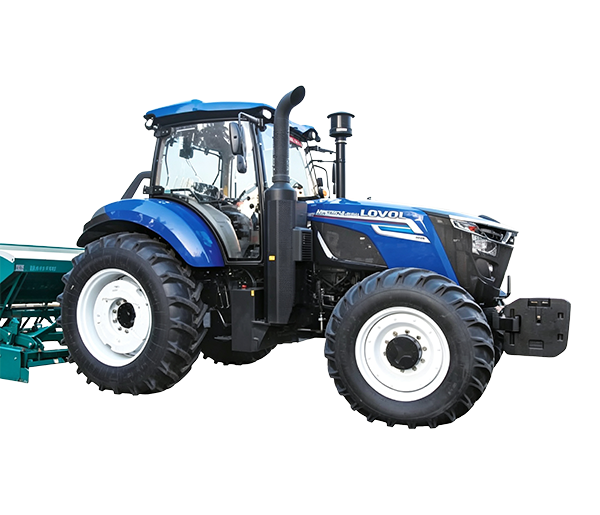
When I talk about a TN SERIES 260-320HP Platform Tractor, I am talking about a machine built for work where a smaller tractor simply does not have enough power, traction, or hydraulic capacity. At this level, the tractor is no longer just a general farm vehicle. It becomes the main power unit for large implements, deep tillage, high-capacity planting, heavy PTO work, and demanding transport operations.
At HKLOONG Heavy Industry Technology (Hefei) Co., Ltd., I look at agricultural machinery from a practical engineering point of view. Our work covers equipment R&D, precision manufacturing, quality testing, customized modification, and global distribution. Along with agricultural machinery, our broader product range includes crawler excavators, Wheel loaders, Backhoe loaders, and amphibious wetland Excavators. That experience gives me a useful understanding of power systems, hydraulic circuits, heavy-duty frames, axles, and machines that have to keep working in difficult conditions.
The TN SERIES 260-320HP Platform Tractor is intended for large-scale agricultural operations where high pulling power and strong implement support matter. I would consider this class for deep plowing, subsoiling, large-scale seeding, heavy rotary cultivation, field preparation, large sprayers, fertilizer equipment, transportation, and agricultural contracting.
My main point is simple: I do not judge a high-horsepower tractor by its engine number alone. I look at how the engine, transmission, 4WD system, hydraulics, PTO, rear linkage, tires, brakes, cooling system, and chassis work together. That is what determines whether the tractor is actually useful in the field.
1. What Is the TN SERIES 260-320HP Platform Tractor?
The TN SERIES 260-320HP Platform Tractor belongs to the heavy-duty end of agricultural machinery. In this power class, the tractor is designed to handle large working widths, strong draft loads, and implements that can place continuous demands on the powertrain.
Publicly available TN Series reference information provides a good picture of this tractor class. The TN2604, for example, is listed with a 260HP six-cylinder engine, 8.82-liter displacement, 18+6 synchronized transmission, four-wheel drive, and a 100 L/min hydraulic output, with some configurations offering 140 L/min. Published product material also lists a structure weight of about 8,406 kg for one TN2604 configuration. These are third-party industry reference specifications, not HKLOONG production specifications.
The same public 2025 LOVOL product range lists the TN3004 at 300HP with a 9.5-liter six-cylinder engine and a 600-liter fuel tank in the referenced configuration. This gives me a useful reference for the upper part of the platform, while the requested 320HP level should be treated as a target power class or configuration range until a specific 320HP HKLOONG model is confirmed.
For me, the key advantage of this class is not simply having more horsepower. It is having enough power reserve to keep a large implement working at a useful speed when soil resistance increases. That matters during deep tillage, heavy clay conditions, steep sections of land, or long working days.
I also consider tractor weight and traction together. A very powerful engine is not useful if the tractor cannot transfer that power efficiently to the ground. This is why large tractors usually combine high engine output with 4WD, large agricultural tires, a strong rear axle, suitable ballast options, and a reinforced chassis.
2. How I Understand the Working Principle
I find it easiest to understand a 260-320HP tractor by following the power from the engine to the implement.
The process starts with the diesel engine. Fuel is burned inside the cylinders to create mechanical power and torque. At this power level, the engine needs to provide enough torque not only for normal travel but also for long periods of heavy draft work. Turbocharging and charge-air cooling are common technologies in this class because they allow the engine to produce strong output from a relatively compact engine package.
The transmission is the next major part. I use the transmission to match engine speed with ground speed. When I am pulling a deep ripper through hard soil, I need low travel speed and high wheel torque. When I am moving a trailer between fields, I may need a higher gear and faster road speed. A wide selection of ratios gives the operator more control over this difference.
Power then reaches the front and rear axles through the 4WD system. I consider this especially important for a 260-320HP agricultural tractor because high engine power can easily exceed the available grip of a two-wheel-drive system during heavy field work. Four-wheel drive allows the tractor to use more of its available torque when soil conditions become difficult.
The hydraulic system handles another part of the job. Hydraulic oil is pressurized by a pump and sent through valves to operate the three-point hitch, remote cylinders, hydraulic motors, and other equipment. When an implement has several hydraulic functions, flow capacity becomes increasingly important.
The PTO transfers mechanical power from the tractor to equipment such as rotary implements, balers, forage machinery, pumps, and other PTO-driven machines. I therefore check the PTO speed required by the implement before selecting a tractor configuration.
Finally, the rear linkage connects mounted equipment to the tractor. The hydraulic lift raises and lowers the implement and helps maintain the required working position. On a large tractor, the hitch must be strong enough for the weight and draft force of the intended equipment.
In other words, I see the tractor as one connected system: engine power creates energy, transmission controls it, 4WD transfers it to the ground, hydraulics control equipment, and the PTO supplies rotary power. If one part is poorly matched, the benefits of the other parts can be reduced.
3. Main Features I Look For in a 260-320HP Tractor
High-output six-cylinder diesel power
For this power class, I normally expect a large six-cylinder diesel engine. Public TN2604 reference data list an 8.82-liter six-cylinder engine with 260HP, while TN3004 reference data list a 9.5-liter six-cylinder engine with 300HP.
I pay close attention to torque as well as horsepower. Horsepower tells me how much power the engine can produce, while torque tells me more about its ability to keep pulling when the load becomes heavy. For field work, both figures matter.
Heavy-duty 4WD drivetrain
A large agricultural tractor needs a drivetrain that can handle high torque. The TN2604 reference configuration uses four-wheel drive and electric control for 4WD engagement and differential lock. This type of system helps the operator manage traction when working conditions change.
Multi-speed transmission
The published TN2604 reference uses an 18+6 synchronized transmission. I like this type of arrangement for applications where the operator needs to select an appropriate field speed instead of simply choosing between slow and fast. More useful ratios can help the operator keep the engine in a productive operating range.
High-capacity hydraulics
Hydraulic performance becomes very important when the tractor operates large planters, sprayers, seed drills, hydraulic rippers, or other equipment with multiple hydraulic functions. Published TN2604 information lists 100 L/min hydraulic output, while other published configurations offer 140 L/min.
Strong rear linkage
A heavy tractor should be able to carry and control heavy mounted implements. One published TN2604 configuration lists a 6,500 kg lift capacity measured at 610 mm behind the hitch point. Again, I treat this as reference information rather than an HKLOONG specification.
Large agricultural tires
Tire selection has a direct effect on traction, soil contact, flotation, and field performance. Published TN2604 specifications include 16.9R30 front tires and 20.8R42 rear tires, with other market configurations using wider radial tires.
4. TN SERIES Technical Reference and Model Comparison
I use the following table to explain how the TN platform develops across the power range. The figures are based on published third-party TN Series materials and are included for industry reference only. They should not be read as confirmed HKLOONG specifications.
| Reference Model | Rated Power | Engine | Transmission | Hydraulic Flow | Drive |
|---|---|---|---|---|---|
| TN2604 | 260 HP | 8.82 L / 6-cylinder | 18+6 synchronized | 100 L/min; 140 L/min option | 4WD |
| TN3004 | 300 HP | 9.5 L / 6-cylinder | 18+9 reference | 200 L/min reference | 4WD |
| TN 320HP Class | 320 HP target class | Configuration dependent | Configuration dependent | Configuration dependent | 4WD platform |
Source: published LOVOL 2025 full-range product material. The TN2604 and TN3004 figures are third-party reference data. The 320HP row is a platform target, not a published HKLOONG specification.
What I notice from this comparison is that increasing horsepower also requires supporting systems to grow with it. The TN2604 uses an 8.82-liter engine and 100/140 L/min hydraulic configuration, while the published TN3004 uses a 9.5-liter engine and a higher hydraulic capacity.
That is an important point when I discuss a 320HP tractor. I would not simply install a larger engine and call the machine a 320HP platform. The transmission, clutch, axles, final drives, hydraulic pump, cooling package, chassis, tires, brakes, and PTO all need to be checked against the increased load.
5. How I Compare the TN Platform With Other High-Power Tractors
When I compare large agricultural tractors, I prefer to look at working systems rather than brand names. Different manufacturers use different engineering approaches, so a simple horsepower comparison does not tell the whole story.
| Reference Tractor | Power Class | Hydraulic System | Rear Lift / Hitch | PTO Reference |
|---|---|---|---|---|
| TN2604 | 260 HP | 100 / 140 L/min options | 6,500 kg reference | 540 / 1000 rpm |
| TN3004 | 300 HP | 200 L/min reference | 6,500 kg reference | 540 / 1000 rpm |
| Fendt 1000 Vario | High-power class | 165 L/min standard; higher options | Up to 12,920 daN rear lift | 1000 / 1000E / 1300 rpm options |
Sources: published LOVOL TN Series materials and official Fendt 1000 Vario technical data. Third-party figures are used only for technical context and are not HKLOONG specifications.
The Fendt reference is useful because it shows how high-power tractor engineering can be designed around very large hydraulic demand and lifting requirements. Its published technical data list a variable-flow pump rated at 165 L/min, with optional higher-flow configurations, and a rear power lift capacity of up to 12,920 daN.
I do not use that comparison to say one tractor is automatically better than another. Instead, I ask what the farm actually needs. A customer using a large seeder with many hydraulic functions may care strongly about hydraulic flow. Another customer doing deep tillage may care more about draft traction, ballast, tires, transmission ratios, and engine torque.
For this reason, I always recommend comparing the tractor with the actual implement. The implement is often the missing part of a tractor specification discussion.
6. Where I Would Use the TN SERIES 260-320HP Platform Tractor
Deep tillage and subsoiling
This is one of the clearest applications for a 260-320HP tractor. Deep rippers and subsoilers can create heavy draft loads, especially in dry or compacted soil. I would use a high-power 4WD tractor when the implement size and soil resistance require strong continuous pulling power.
Large-scale plowing
Large farms often need wide plows to cover more land in less time. The tractor must maintain enough power and traction while keeping the implement at the required working depth. A heavier tractor can also provide useful stability when the implement creates strong draft forces.
Large seeders and combination implements
Modern seeders can combine several operations, including soil preparation, seed placement, fertilizer delivery, and field packing. These machines may be wide, heavy, and hydraulically complex. I would therefore check hitch capacity, hydraulic flow, remote valve requirements, and transport width before choosing the tractor.
Heavy rotary cultivation
Large rotary tillers and other PTO-driven equipment can consume a lot of power. In this situation, I look at the required PTO horsepower and the working speed rather than only the tractor's rated engine power.
Large sprayers and fertilizer equipment
High-capacity sprayers and fertilizer machines can carry large loads. The tractor needs suitable tires, braking, hydraulic connections, and stable handling. The hydraulic system becomes particularly important when the implement has folding wings, pumps, steering functions, or other hydraulic equipment.
Farm transport and agricultural contracting
Large tractors may also spend significant time transporting grain, fertilizer, feed, or machinery. Agricultural contractors can benefit from a flexible tractor platform because the same machine may perform different jobs on different farms. For this type of work, I would pay close attention to road speed, brakes, visibility, tires, towing equipment, and operator comfort.
| Application | Main Demand | Key Tractor Systems I Check |
|---|---|---|
| Deep ripping | High draft force | Torque, 4WD, ballast, tires |
| Heavy plowing | Continuous pulling power | Engine, transmission, chassis |
| Large seeding | Hydraulic and hitch capacity | Hydraulics, rear lift, PTO |
| Rotary cultivation | Continuous PTO power | PTO, engine reserve, cooling |
| Large spraying | Hydraulic functions and stability | Hydraulic flow, tires, brakes |
| Transport | Stable road operation | Transmission, brakes, tires |
7. How I Approach Manufacturing, Testing and Customization
For me, manufacturing a high-horsepower tractor starts with the working application. Before I think about the final configuration, I want to know what the customer plans to pull, where the tractor will operate, how many hours it will work, and what local requirements apply.
At HKLOONG, our manufacturing approach combines equipment R&D, precision manufacturing, quality testing, customized modification, and global distribution. For agricultural machinery, this means I pay attention to the complete mechanical package instead of treating the engine as the only important component.
The chassis is particularly important. A 260-320HP tractor can generate very high drawbar forces, so the frame, axle mounting points, transmission housing, and related structural components need suitable strength. Heavy-duty tires and axles also need to match the tractor's weight and operating environment.
I also pay attention to the cooling system. High-power engines can create substantial heat during long periods of heavy work. The radiator, intercooler, fan system, engine compartment airflow, and cooling maintenance access all have a practical effect on long working cycles.
Hydraulic assembly requires the same attention. Hoses and pipes need correct routing and protection. Connections should be easy to inspect. Hydraulic components must be selected according to the required flow and pressure. These details may look small when the tractor is new, but they become very important after many hours in dust, mud, vibration, and changing temperatures.
Before delivery, I would check engine operation, transmission engagement, steering, braking, 4WD operation, differential lock, hydraulic functions, PTO operation, electrical systems, and basic safety functions. For customized orders, I also confirm that the tractor and implement specifications are compatible.
International projects can require additional configuration work. Tire sizes, emissions requirements, PTO standards, hydraulic outlets, operator controls, cab equipment, lighting, and other details may vary by market. I prefer to confirm these points early because changing a specification after production can be much more difficult than planning it correctly from the beginning.
8. Why I Choose HKLOONG for High-Power Agricultural Machinery
When I work on a high-power agricultural machinery project, I know that the buyer is not simply purchasing an engine with four wheels. The machine has to fit a real farming workflow.
HKLOONG Heavy Industry Technology (Hefei) Co., Ltd. combines equipment R&D, precision manufacturing, quality testing, customized modification, and global distribution. Our wider experience with heavy construction machinery also gives us a strong practical base in hydraulic systems, power transmission, structural engineering, and machines designed for demanding working conditions.
For the TN SERIES 260-320HP Platform Tractor, I focus on matching the machine to the application. I would ask about soil type, working depth, implement width, PTO requirement, hydraulic demand, annual working hours, field conditions, transportation needs, and destination market.
I also understand that international agricultural equipment buyers often need more than a machine specification sheet. They need clear communication about configuration, spare parts, maintenance, shipping, and technical support. That is why I prefer to confirm the machine configuration before presenting a final technical proposal.
Customization is another part of this process. Depending on the project, a tractor platform may need different tire arrangements, hydraulic outlets, PTO configurations, operator stations, front or rear implement systems, lighting packages, emissions configurations, or other market-specific equipment. Final options should always be confirmed according to the actual model and destination.
Most importantly, I keep the selection practical. If a customer only needs a tractor for moderate field preparation, a 300HP machine may not be the right economic choice. If the customer operates large implements for long hours in heavy soil, moving up into the higher power range may make more sense. The correct tractor is the one that matches the job, not simply the one with the biggest number.
FAQ About the TN SERIES 260-320HP Platform Tractor
What is a 260-320HP tractor mainly used for?
I would consider this power class for large-scale farming, deep tillage, heavy plowing, subsoiling, large-scale seeding, heavy PTO applications, high-capacity spraying, fertilizing, transport, and agricultural contracting.
Is the TN SERIES suitable for deep tillage?
Yes, this power class is designed around the type of high-load field work where strong traction and engine torque are important. I would still match the tractor to the actual ripper or subsoiler specifications before final selection.
What engine is used in the TN2604 reference model?
Published TN2604 information lists a six-cylinder 8.82-liter engine with 260HP. Some market versions identify the engine as Shangchai SC9DK. These are third-party reference specifications and should not be treated as confirmed HKLOONG specifications.
How much hydraulic flow does a TN2604 provide?
Published specifications list 100 L/min, while other configurations provide a 140 L/min option. The exact hydraulic configuration should be confirmed according to the final tractor and implement requirements.
What PTO speed should I choose?
I would always start with the implement manufacturer's requirement. Published TN Series materials list 540/1000 rpm rear PTO configurations. Some versions may have additional PTO arrangements, so the final configuration needs to be confirmed before production.
Is 320HP available as a standard TN model?
Public TN Series material I can verify currently identifies models including the 260HP TN2604 and 300HP TN3004. I would therefore treat 320HP as a target platform range or project-specific configuration unless a specific 320HP model has been confirmed. I would not use an unverified 320HP specification as a standard production figure.
How do I choose between 260HP, 300HP and a higher-power configuration?
I start with the implement. I check working width, draft load, PTO requirement, hydraulic flow, field conditions, annual working hours, transport requirements, and local regulations. After that, I select the power range that gives enough working reserve without paying for capacity that the farm will rarely use.
Can the tractor be customized for different countries?
Project-specific customization can be considered for items such as tires, hydraulic outlets, PTO configuration, operator controls, lighting, cab equipment, emissions requirements, and implement connections. The exact options depend on the final model and destination market.
Final Thoughts
For me, the real meaning of the TN SERIES 260-320HP Platform Tractor is heavy-duty agricultural power that has to work as a complete system. Engine horsepower is important, but it is only the beginning. I also look at torque, transmission ratios, 4WD traction, hydraulic flow, hitch capacity, PTO performance, tires, brakes, cooling, and the strength of the chassis.
A 260-320HP tractor makes sense when the farm has large implements and demanding workloads. It can provide the power reserve needed for deep tillage, heavy soil preparation, large-scale planting, high-capacity crop operations, and other jobs where smaller tractors may struggle to maintain useful working speed.
At HKLOONG, I approach each agricultural machinery project from the actual job backward. I first understand the field, implement, working hours, transport conditions, and destination requirements. Then I work through the tractor configuration. That practical approach helps me build a machine specification around real agricultural work rather than simply around a horsepower number.



 WhatsApp
 Phone
Phone E-mail
 Message