
 Español
 Pусский
 Français
 العربية


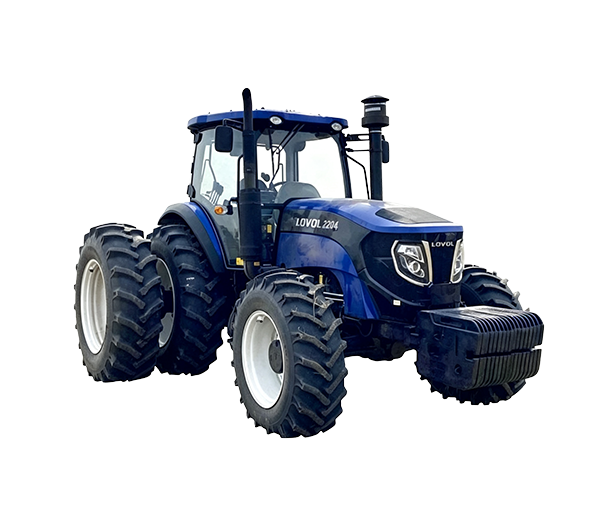
When I look at a high-horsepower tractor for serious field work, I do not focus on engine power alone. A 150-240HP Platform Tractor has to turn engine output into useful traction, stable PTO power, hydraulic performance, and comfortable daily operation. It also needs to work across different soil conditions without becoming difficult to maintain.
That is how I approach the TR SERIES 150-240HP Platform Tractor. I see this tractor class as a practical solution for medium and large farms, contractors, agricultural service companies, and heavy field operations that need more power than a compact or utility tractor can provide. At HKLOONG Heavy Industry Technology (Hefei) Co., Ltd., I focus on equipment R&D, precision manufacturing, quality testing, customized modification, and global distribution. Our broader machinery range covers crawler excavators, Wheel loaders, Backhoe loaders, amphibious wetland Excavators, and agricultural machinery.
For agricultural applications, I pay particular attention to the connection between the tractor and the implement. Plowing, deep tillage, seeding, rotary cultivation, fertilizing, spraying, transport, and heavy PTO work can all place different demands on the machine. A useful tractor therefore needs a balanced mechanical system rather than a large engine fitted into a basic chassis.
1. What Is a TR SERIES 150-240HP Platform Tractor?
I describe the TR SERIES 150-240HP Platform Tractor as a high-power agricultural tractor platform designed around demanding field operations. The 150-240HP class gives operators a wider working range than smaller farm tractors, especially when the implement is large, the soil is heavy, or the working depth is substantial.
In this power class, I normally look at five connected systems first: the diesel engine, transmission, four-wheel-drive system, hydraulic system, and rear PTO. The engine produces power, but the transmission decides how that power reaches the wheels. The 4WD system helps turn engine torque into traction. The hydraulic system operates mounted and remote implements, while the PTO transfers rotary power to compatible equipment.
Published TR Series reference material from Weichai Lovol describes TR1504, TR1804, and TR2204 models with 150HP, 180HP, and 220HP rated power. The same reference range uses six-cylinder 6.44-liter engines, 16+16 synchronized transmissions, mechanical 4WD, wet multi-disc brakes, and independent rear PTO rated at 540/1000 rpm. These figures are useful industry references for understanding the platform, but I do not present them as HKLOONG production specifications unless a specific HKLOONG configuration is confirmed. :contentReference[oaicite:0]{index=0}
The 240HP point in the product name represents the upper end of the platform category I am targeting. Actual engine, transmission, hydraulic, axle, tire, emissions, and implement configurations can vary according to the final machine and destination market.
2. How I Understand the Working Principle
The working principle of a large agricultural tractor is easier to understand if I follow the power path from the engine to the soil.
First, the diesel engine converts fuel energy into mechanical power. At the engine output, torque is available for both vehicle movement and implement operation. The transmission then adjusts speed and torque according to the field task. When I use a lower working gear, more usable torque is available at the wheels for operations such as deep plowing or heavy tillage. Higher gears can be useful when moving between fields or transporting materials.
The 4WD system then distributes driving force between the front and rear axles. This becomes particularly useful when the soil is soft, wet, uneven, or difficult to pull through. A large tractor without suitable traction can waste a surprising amount of engine power through wheel slip. I therefore treat drivetrain design and tire selection as part of the power system rather than separate details.
At the rear, the three-point linkage allows mounted implements to be raised, lowered, and controlled. The hydraulic pump supplies oil flow to the lifting system and hydraulic valves. For implements with their own hydraulic motors or cylinders, available hydraulic flow becomes an important selection factor.
The PTO works differently. Instead of using hydraulic pressure, it transfers mechanical rotary power directly to compatible equipment. Rotary tillers, mowers, balers, pumps, and other PTO-driven machines can therefore operate from the tractor's PTO shaft. A tractor intended for many different implements needs suitable PTO speed choices and a reliable engagement system.
This is why I do not evaluate a 150-240HP tractor by horsepower alone. I look at the whole powertrain and how each part supports the next.
3. Main Features I Look For in the TR SERIES
High-power diesel engine platform
At 150HP and above, the engine needs enough torque to keep the tractor working under load. A six-cylinder diesel architecture is commonly used in this class because it provides a useful balance of displacement, torque, and smooth power delivery. Published TR Series reference data list a 6.44-liter, six-cylinder engine family and rated engine speed of 2,200 rpm for TR1504, TR1804, and TR2204. :contentReference[oaicite:1]{index=1}
4WD traction
I consider four-wheel drive essential for heavy field work. It helps distribute traction across the machine and is especially useful when pulling large implements through soil. Mechanical 4WD is listed for the published TR1504, TR1804, and TR2204 reference configurations. :contentReference[oaicite:2]{index=2}
Multi-speed transmission
A wide selection of gears lets me match travel speed to soil resistance and implement requirements. The published TR Series reference uses a 16+16 synchronized transmission, with a working speed range that reaches roughly 32-33 km/h depending on model. :contentReference[oaicite:3]{index=3}
Independent PTO
The rear PTO is important when one tractor has to operate several types of equipment. The published TR reference configuration provides 540/1000 rpm PTO choices, with additional shaft and speed options depending on configuration. :contentReference[oaicite:4]{index=4}
Hydraulic lifting capacity
Heavy implements need more than engine power. The tractor must also raise and control them safely. Published TR Series data list lift capacities measured at 610 mm behind the hitch point of at least 3,500 kg for TR1504 and at least 4,500 kg for TR1804 and TR2204. :contentReference[oaicite:5]{index=5}
Wet multi-disc braking
I also pay attention to braking because a heavy tractor may be carrying a large implement or towing a loaded trailer. Wet multi-disc brakes are listed in the published TR Series reference configuration and are suited to demanding agricultural operating cycles. :contentReference[oaicite:6]{index=6}
4. TR SERIES Technical Reference and Model Comparison
The following table helps me explain the published TR platform more clearly. These figures are industry reference data from published Weichai Lovol TR Series materials, not confirmed HKLOONG specifications. The exact HKLOONG configuration should always be checked against the final technical drawing and quotation.
| Reference Model | Rated Power | Max. Torque | Engine | Transmission | Hydraulic Flow | Lift Capacity |
|---|---|---|---|---|---|---|
| TR1504 | 150 HP | 677 Nm | 6.44 L / 6 cyl. | 16+16 synchronizer | 75 L/min | ≥3,500 kg |
| TR1804 | 180 HP | 755 Nm | 6.44 L / 6 cyl. | 16+16 synchronizer | 75 L/min | ≥4,500 kg |
| TR2204 | 220 HP | 860 Nm | 6.44 L / 6 cyl. | 16+16 synchronizer | 75 or 140 L/min | ≥4,500 kg |
Source: published Weichai Lovol TR Series technical materials. Values are industry reference data and are not HKLOONG specifications. :contentReference[oaicite:7]{index=7}
What I find useful here is the relationship between power and supporting systems. The TR1504 reference already has 150HP and 677 Nm of maximum torque, while the TR2204 reference reaches 220HP and 860 Nm. Hydraulic flow can also increase with the higher-power configuration. :contentReference[oaicite:8]{index=8}
For a 240HP tractor configuration, I would not simply increase engine output and leave the rest unchanged. The transmission, cooling system, axles, hydraulic system, brakes, tires, and chassis all need to be checked against the intended working load.
5. How the TR Platform Compares With Other High-Power Tractors
When I compare a high-horsepower tractor with another machine, I prefer to compare working systems rather than brand names. Power, hydraulic flow, transmission type, hitch capacity, PTO arrangement, and operating environment tell me much more about whether two tractors are suitable for the same job.
| Reference Tractor | Power Class | Transmission Example | Hydraulic Output | PTO / Hitch Information |
|---|---|---|---|---|
| TR1504 | 150 HP | 16+16 synchronized | 75 L/min reference | 540/1000 PTO; ≥3,500 kg lift reference |
| TR1804 | 180 HP | 16+16 synchronized | 75 L/min reference | 540/1000 PTO; ≥4,500 kg lift reference |
| TR2204 | 220 HP | 16+16 synchronized | 75/140 L/min reference | 540/1000 PTO; ≥4,500 kg lift reference |
| John Deere 8R 230 | 230 HP rated | e23 PowerShift / other options | 227.1 L/min standard reference pump | Category 3/3N or larger hitch options |
Sources: Weichai Lovol TR Series published technical materials and John Deere 8R 230 published specifications. Third-party figures are included only for technical comparison and are not HKLOONG specifications. :contentReference[oaicite:9]{index=9}
The comparison also shows why I would ask a buyer about the implement before recommending a configuration. John Deere's published 8R 230 data, for example, list a 9.0-liter engine, 230HP rated power, 182HP rated PTO power, hydraulic pump options up to 321 L/min, and several transmission choices. :contentReference[oaicite:10]{index=10}
That does not mean one specification is automatically better for every farm. A high hydraulic flow rate matters greatly for certain hydraulic implements, while another operator may place more value on mechanical simplicity, service access, transmission behavior, tire options, or purchase and operating cost. I use the actual job requirement as the starting point.
6. Where I Would Use a 150-240HP Agricultural Tractor
Large-scale field cultivation
For deep plowing, heavy harrowing, subsoiling, and large-scale soil preparation, I would consider the 150-240HP class when the implement width and soil resistance make a smaller tractor inefficient. The additional power gives the operator more room to maintain useful working speed under load.
Seeding and planting
Large farms may use wide seeders and planters that require strong traction and hydraulic capacity. Here I would look at the combined weight of the implement, required hydraulic functions, PTO requirements, and field speed before selecting the tractor.
Heavy PTO applications
Balers, heavy rotary equipment, forage machinery, pumps, and other PTO-driven machines can require substantial continuous power. A high-power tractor provides a stronger working platform when the implement is designed for this class.
Fertilizing and spraying
High-capacity fertilizer spreaders and large sprayers can add significant weight and may require hydraulic functions. I would therefore check both tractor capacity and the implement manufacturer's requirements rather than judging suitability from horsepower alone.
Transport and farm logistics
On large farms, tractors often spend part of the day moving grain, feed, fertilizer, machinery, or harvested crops. A suitable transmission and braking system are important here because road transport has different demands from field work.
Agricultural contractors
Contractors often move between different customers and crop conditions. For them, flexibility matters. I would look for a platform that can accept several implement types and can be configured for different tire, PTO, hydraulic, and operating requirements.
| Application | Typical Requirement | What I Check First |
|---|---|---|
| Deep tillage | High drawbar traction | Engine torque, 4WD, tires, ballast |
| Large seeder | Stable travel and hydraulic functions | Hydraulic flow, hitch capacity, transmission |
| Heavy PTO equipment | Continuous rotary power | PTO rating and engine reserve |
| Spraying | Hydraulic and transport performance | Hydraulic outlets, tires, road configuration |
| Farm transport | Controlled road movement | Transmission, brakes, tires, towing setup |
| Contract work | Multi-purpose configuration | Implement compatibility and customization |
7. How I Approach Manufacturing, Testing and Customization
At HKLOONG, I treat agricultural machinery as a complete mechanical system. The manufacturing process starts with the intended application rather than simply choosing an engine and building around it.
I first consider the working environment, target horsepower, implement size, soil condition, operating hours, transport requirements, and destination market. These factors influence the chassis, axle arrangement, transmission, hydraulic system, tire selection, cooling requirements, operator station, and safety configuration.
During precision manufacturing, I pay attention to component dimensions and assembly accuracy because small alignment problems can become larger problems after hundreds of operating hours. Powertrain components need correct installation. Hydraulic lines need suitable routing and protection. Moving parts require appropriate clearance, lubrication, and inspection access.
Quality testing is another practical step. I would check engine operation, transmission engagement, steering response, braking performance, hydraulic functions, PTO operation, electrical systems, and overall machine behavior before delivery. For customized machines, I also consider the selected implement and local working conditions.
Customization can be especially important in international agricultural machinery projects. A customer may need a particular tire arrangement, hydraulic outlet configuration, PTO setup, cab specification, operating controls, emissions configuration, or implement connection. I prefer to confirm these details before production rather than treating them as afterthoughts.
This approach also makes maintenance easier. When I design or configure a machine, I want routine inspection points to be understandable and accessible. Operators should be able to check fluids, filters, lubrication points, tires, belts, hoses, and other service items as part of a normal maintenance routine.
8. Why I Work With HKLOONG for Agricultural Machinery Solutions
I see agricultural machinery as part of a wider equipment system. HKLOONG Heavy Industry Technology (Hefei) Co., Ltd. combines equipment R&D, precision manufacturing, quality testing, customized modification, and global distribution under one operation. Our product experience also covers heavy construction machinery, giving us a practical understanding of hydraulic systems, structural components, power transmission, undercarriage systems, and equipment used in difficult working environments.
For a TR SERIES 150-240HP Platform Tractor, I focus on the details that matter to the customer's actual operation. I want to understand what implement will be used, how many hours the tractor will work each year, whether the land is dry or wet, what transport conditions exist, and what local service and emissions requirements apply.
I also understand that international buyers need more than a machine. They need clear technical communication, consistent configuration, practical customization, spare-parts planning, and support during the equipment's working life. That is why I prefer to confirm specifications in detail before discussing the final configuration.
The 150-240HP range is broad enough to cover different farm sizes and applications, but it is also a range where configuration becomes increasingly important. A 150HP tractor used for moderate tillage does not have exactly the same requirements as a 220HP or 240HP machine pulling a large deep-ripping implement. I therefore treat horsepower as the starting point, not the final specification.
FAQ About the TR SERIES 150-240HP Platform Tractor
What is a 150-240HP platform tractor used for?
I would use this tractor class for demanding agricultural work such as deep tillage, plowing, harrowing, large-scale seeding, heavy PTO applications, spraying, fertilizing, transportation, and contractor work. The exact suitability depends on the implement and field conditions.
Is 4WD important for a high-horsepower tractor?
Yes. I consider 4WD especially useful when the tractor must transfer high engine torque to the soil. It can help improve traction in heavy, wet, soft, or uneven field conditions. Published TR Series reference models use 4WD. :contentReference[oaicite:11]{index=11}
What transmission does the TR Series use?
Published TR Series reference information lists a 16+16 synchronized transmission for TR1504, TR1804, and TR2204. Other configurations can vary by model, market, and final specification. :contentReference[oaicite:12]{index=12}
What PTO speeds should I consider?
I would first check the implement manufacturer's requirement. Published TR Series reference specifications include independent rear PTO operation at 540/1000 rpm, with additional options depending on configuration. :contentReference[oaicite:13]{index=13}
How do I choose between 150HP, 180HP, 220HP and 240HP?
I start with the implement rather than the tractor. I check implement working width, required PTO power, draft load, hydraulic demand, field condition, annual operating hours, and transport requirements. Then I select enough power and supporting capacity for the application without assuming that a higher horsepower figure automatically solves every requirement.
Can the tractor be customized for different markets?
Configuration can be adapted according to the confirmed project requirements. Possible areas may include tires, PTO arrangement, hydraulic outlets, operator station, implements, emissions configuration, and other equipment details. Final availability depends on the specific project and destination market.
What information should I provide before requesting a quotation?
I recommend providing the target horsepower, main implements, field conditions, required PTO speed, hydraulic requirements, preferred tire configuration, operating environment, destination country, and any local compliance requirements. With these details, I can evaluate the tractor as a complete working system rather than only comparing engine horsepower.
Final Thoughts
For me, the value of a TR SERIES 150-240HP Platform Tractor comes from how well the complete machine works together. Engine power, torque, 4WD traction, transmission ratios, hydraulic output, PTO capability, hitch capacity, braking, tires, and operator control all affect the result in the field.
A high-power tractor should not be selected simply because its horsepower number looks impressive. I prefer to match the machine to the implement, soil, crop, working hours, transport conditions, and service environment. That is the practical way I approach agricultural machinery at HKLOONG.
With its focus on equipment R&D, precision manufacturing, testing, customization, and global distribution, HKLOONG can approach the TR SERIES 150-240HP Platform Tractor as part of a complete agricultural equipment solution. For each project, I would confirm the final technical configuration, implement requirements, and destination-market specifications before production.



 WhatsApp
 Phone
Phone E-mail
 Message