
 Español
 Pусский
 Français
 العربية


When I choose a tractor for serious farm work, I do not start with the biggest horsepower number I can find. I start with the job. What soil will I work in? What implements will I pull? How many hours will the tractor run each season? Will it spend most of its time in the field, on transport work, or doing a mix of both? These questions are what lead me to the TX SERIES 90-120HP Platform Tractor.
This power range gives me a useful middle ground between compact utility tractors and much larger high-horsepower machines. With 90HP, 100HP, 110HP, and 120HP configurations in the published TX Series reference range, I can cover general cultivation, plowing, harrowing, rotary tillage, deep scarification, sowing, intertillage, transport, and other demanding agricultural jobs. Public TX Series information also describes the platform as a dry-field and multi-purpose tractor suitable for medium-sized farms.
At HKLOONG Heavy Industry Technology (Hefei) Co., Ltd., I take a practical approach to agricultural machinery. Our work covers equipment R&D, precision manufacturing, quality testing, customized modification, and global distribution. For me, a tractor is not just an engine with four wheels. The engine, transmission, axles, hydraulic system, PTO, tires, steering, braking system, and operator station all need to make sense as one complete working machine.
1. What Is the TX SERIES 90-120HP Platform Tractor?
The TX SERIES 90-120HP Platform Tractor is a medium-to-high power agricultural tractor designed for farms and agricultural businesses that need more working capacity than a smaller 40-75HP tractor can provide.
The range is broad enough to support several types of farming. At the 90HP level, I can consider general cultivation, sowing, mowing, transport, and medium-duty implement work. Around 100-110HP, I have more power reserve for heavier tillage and larger implements. At 120HP, the tractor becomes a stronger option for demanding soil preparation, deep scarification, heavier transport, and high-load PTO applications.
Public TX Series material identifies the TX904, TX1004, TX1104, and TX1204 models at 90HP, 100HP, 110HP, and 120HP respectively. The same reference describes a four-wheel-drive layout, a 12+12 synchronized transmission, hydraulic output of about 46 L/min, and a rear independent PTO with 540/1000 rpm options. These figures are industry reference data only and should not be treated as HKLOONG-certified specifications.
What I like about this type of platform is its flexibility. I do not need a tractor that performs one task perfectly and then sits idle when that task is finished. On a working farm, the same tractor may plow in the morning, pull a trailer in the afternoon, and operate a rotary tiller the next day.
That multi-purpose role is especially useful for medium-sized farms and agricultural contractors. Instead of building the entire equipment fleet around one narrow application, I can select a tractor platform that works with a broad range of implements.
2. How I Understand the Working Principle of the TX Tractor
The working principle is quite straightforward. The diesel engine generates power and torque. The transmission changes that output into the right combination of travel speed and pulling force. The axles transfer torque to the wheels. The hydraulic system operates the three-point linkage and hydraulic attachments. The PTO provides rotating mechanical power to compatible implements.
When I am pulling a plow, for example, I need strong traction at a controlled speed. The tractor cannot simply run faster because the implement is cutting into the soil. I need the transmission, engine torque, tire grip, and weight distribution to work together.
This is why I look beyond horsepower. Two tractors with the same engine output can behave differently in the field if their transmission ratios, tires, hydraulic systems, weight, or axle designs are different.
The published TX Series reference uses a 12+12 synchronized transmission, with a power-shift option and a 24+12 configuration listed in the broader technical material. This gives the operator a useful range of speeds for field work, reversing, and transport.
The hydraulic system provides another important part of the working cycle. When I attach a cultivator, planter, plow, or other mounted implement, the three-point linkage must raise and lower the equipment smoothly. Hydraulic outlets can also operate cylinders and other functions on compatible attachments.
The PTO works differently. Instead of using engine power only to move the tractor, I can transfer rotary power to an implement. Rotary tillers, mowers, balers, pumps, and some sprayers are typical examples. Public TX Series information lists a rear independent PTO with 540/1000 rpm as a reference configuration, with other PTO speed combinations available in the published range.
Four-wheel drive is another part I pay close attention to. When the soil becomes wet or loose, rear-wheel traction alone may not be enough. A 4WD system can help transfer torque through all four wheels and reduce unnecessary wheel slip. The published TX Series specifications identify 4WD as the drive type.
3. Main Features I Look for in a 90-120HP Farm Tractor
Useful power without going oversized
The biggest reason I consider the TX SERIES 90-120HP Platform Tractor useful is the power range itself. It gives me several choices without jumping immediately into a much larger tractor category.
A 90HP tractor can be a sensible fit for general farm operations where the implement load is moderate. A 100HP or 110HP configuration gives more reserve for heavier cultivation. A 120HP tractor is better suited to farms that regularly work with larger implements or harder soil.
I always prefer matching horsepower to the actual workload. More power is useful only when the farm can make use of it. If the implement is too small for the tractor, the additional capacity may simply add cost and weight without providing much benefit.
Four-cylinder diesel engine platform
Public TX Series reference information identifies four-cylinder diesel engine configurations across the 90-120HP range. The published models use engine options from Huafeng, Shangchai, and Weichai depending on the configuration, with rated engine speed listed at 2,200 rpm.
For me, a diesel engine in this class needs more than peak horsepower. I want useful torque across the working range because agricultural loads change constantly. Soil resistance can suddenly increase, a trailer can start climbing a slope, or a PTO implement can encounter heavier material.
Published TX Series reference figures show maximum torque increasing from approximately 420 Nm on the 90HP model to 563 Nm on the 120HP model. These figures are useful for understanding the platform but are not HKLOONG specifications.
12+12 synchronized transmission
Transmission choice affects the whole working experience. I need low gears for heavy field work and suitable higher gears for transport. I also want reverse speeds that make turning and implement positioning practical.
The published TX Series uses a 12+12 synchronized transmission, with power-shift and 24+12 options identified in broader reference material.
For a farm tractor, I see the value in having enough ratios without making operation unnecessarily difficult. The operator should be able to select a useful working speed and keep the tractor moving steadily.
Four-wheel drive and ground traction
When I work on heavy soil, wet farmland, slopes, or uneven terrain, traction becomes one of the first things I check. Engine power has little value if the wheels cannot transfer it to the ground.
The TX Series reference specifies 4WD, with front and rear tire combinations designed for agricultural work. The published material lists 12.4-24 front tires and 18.4-30 rear tires for the reference range.
I also consider ballast and tire pressure. These details may sound small, but they can change how the tractor behaves in the field.
Hydraulic system for implement work
A tractor in the 90-120HP class is normally expected to work with substantial implements. That makes hydraulic capacity important.
The published TX Series reference lists hydraulic output around 46 L/min and a minimum lift capacity of 20 kN measured at 610 mm behind the hitching point. These are reference figures from the published TX Series documentation, not HKLOONG specifications.
Before I connect any implement, I check its weight, hitch category, hydraulic requirement, PTO requirement, and manufacturer's recommended tractor power.
High ground clearance
Ground clearance matters when the tractor works over crop rows, uneven farmland, ridges, or rough ground. It can also be useful when moving between different field conditions.
Public TX Series information lists approximately 4400 × 2150 × 2900 mm dimensions for the referenced configuration and a wheelbase of around 2,340 mm. The exact dimensions can change with tires, cab, and equipment.
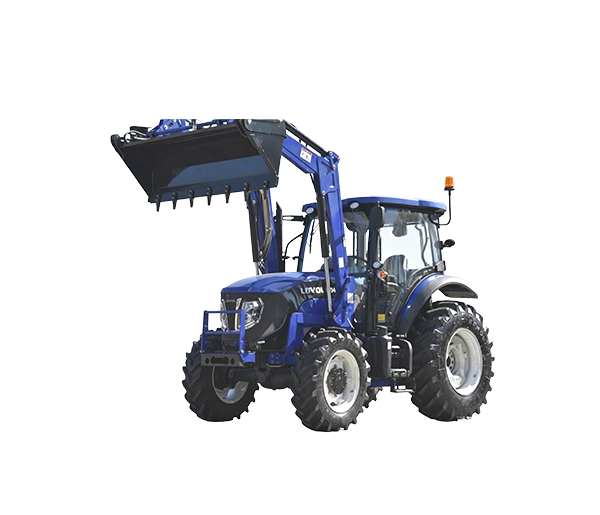
4. TX SERIES 90-120HP Model Comparison
When I compare the different TX power levels, I prefer to look at engine output, torque, drivetrain, and implement capability together. The following table uses publicly available TX Series reference data. It is intended for technical comparison only and does not define HKLOONG production specifications.
| Reference Model | Rated Power | Maximum Torque | Drive | Transmission Reference |
|---|---|---|---|---|
| TX904 | 90 HP / 66.2 kW | 420 Nm | 4WD | 12+12 synchronized |
| TX1004 | 100 HP / 73.5 kW | 460 Nm | 4WD | 12+12 synchronized |
| TX1104 | 110 HP / 81 kW | 495 Nm | 4WD | 12+12 synchronized |
| TX1204 | 120 HP / 88.2 kW | 563 Nm | 4WD | 12+12 synchronized |
Source: Published TX Series tractor specifications from LOVOL technical literature. Values are industry reference data and are not presented as HKLOONG specifications.
I would generally look at the 90HP model when the farm needs a versatile tractor for medium-duty cultivation and transport. Around 100-110HP, I have more room for heavier implements. At 120HP, I would consider the tractor for demanding soil preparation, deep scarification, larger tillage equipment, and higher daily workloads.
That does not mean the 120HP model is automatically the right choice. If the farm mainly uses a 90HP-rated implement, buying a 120HP tractor may not bring enough extra value to justify the additional size and cost. I prefer to match the machine to the job.
5. How I Compare the TX Platform with Other 90-120HP Tractors
I also compare the TX platform with tractors from established global manufacturers. This helps me understand the equipment expectations in the 90-120HP agricultural tractor market.
| Reference Tractor | Rated Power | Transmission Reference | Hydraulic Reference | PTO Reference |
|---|---|---|---|---|
| TX Series | 90-120 HP | 12F+12R; options reported | Approx. 46 L/min reference | 540/1000 rpm reference |
| John Deere 6M 120 | 118 hp / 120 PS | 16F/16R; optional 32F/16R | 97 L/min rated output | 540/540E; optional 1000 rpm |
| New Holland T5.120 | 117 hp | Model-dependent | Model-dependent | Model-dependent |
| New Holland T5.130 | 120 hp | Model-dependent | Model-dependent | Model-dependent |
Sources: Public TX Series technical literature, John Deere 6M 120 official specifications, and New Holland T5 Series official product information. The comparison is for industry reference only and does not represent HKLOONG specifications.
The John Deere 6M 120, for example, has 118 rated horsepower and 120 PS, with 130 maximum horsepower. Its published specifications include a 16F/16R PowrReverser transmission, Category 2 rear hitch, 97 L/min rated pump output, and 540/540E PTO with an optional 1000 rpm arrangement.
New Holland's current T5 range provides another useful reference. The T5.120 is listed at 117 rated engine horsepower and 100 PTO horsepower in the North American range, while the T5.130 is listed at 120 rated engine horsepower and 102 PTO horsepower.
These comparisons tell me something important: when a buyer searches for a 90-120HP agricultural tractor, horsepower is only the starting point. The buyer should also compare transmission choices, PTO output, hydraulic flow, hitch capacity, tire configuration, service access, cab design, and compatibility with existing implements.
6. Where I Would Use the TX SERIES 90-120HP Platform Tractor
Plowing and soil preparation
Plowing is one of the natural applications for this tractor class. When I pull a plow through resistant soil, I need steady traction and enough torque reserve to avoid constantly pushing the engine to its limit.
For deeper soil preparation, the tractor's 4WD system, tire selection, ballast, and transmission ratios become particularly important. I would always match the plow size to actual soil conditions instead of choosing it only from a horsepower chart.
Rotary tillage
Rotary tillage places both pulling and PTO demands on the tractor. The tractor needs to move forward at a controlled speed while maintaining the PTO speed required by the rotary tiller.
This is an area where the combination of engine torque and transmission control matters. A tractor that can maintain a stable working speed can make the operator's job much easier.
Deep scarification
Deep scarification or subsoiling can place a heavy load on the tractor because the implement works deeper into the soil. For this application, I pay close attention to traction, implement depth, soil resistance, ballast, and available torque.
The published TX Series product description specifically identifies deep scarification among its intended dry-field applications.
Sowing and planting
Planting equipment needs controlled travel speed and suitable hydraulic and hitch capacity. The 90-120HP tractor class can be useful when the planter is larger or when the farm wants one tractor to handle several stages of crop production.
Intertillage and crop maintenance
Intertillage requires careful speed control and suitable ground clearance. Depending on crop spacing and tractor width, the correct tire and wheel configuration becomes important.
Transport and logistics
A farm tractor spends more time on transport than many people expect. Fertilizer, feed, harvested crops, water tanks, tools, and machinery all need to move around a working farm.
A 90-120HP tractor provides enough power for many internal farm transport tasks, but I always check trailer weight, braking requirements, road regulations, and hitch arrangements before using it for transport.
Municipal and engineering support work
Published TX Series information also describes the platform as applicable to engineering construction and municipal working conditions. That makes the tractor relevant beyond crop production when suitable attachments are available.
| Application | Power Direction I Would Consider | Main Factor I Check |
|---|---|---|
| General cultivation | 90-110 HP | Traction and implement width |
| Plowing | 100-120 HP | Soil resistance and drawbar pull |
| Rotary tillage | 90-120 HP | PTO speed and implement width |
| Deep scarification | 110-120 HP | Torque, ballast and traction |
| Sowing | 90-110 HP | Ground-speed control and hitch capacity |
| Farm transport | 90-120 HP | Braking and trailer requirements |
| Municipal support | 90-120 HP | Attachment and hydraulic compatibility |
Application note: This is general equipment-selection guidance, not a certified implement-capacity chart. The actual working combination should be confirmed against the final tractor specification, implement manufacturer's requirements, terrain, soil conditions, and local regulations.
7. How I Approach Manufacturing, Testing and Customization
When I manufacture or configure agricultural machinery, I treat the tractor as a complete system. The engine may provide the power, but the rest of the machine determines how effectively that power can be used.
I start with the main structural components. The chassis, axle mounting areas, transmission housing, three-point linkage, and other load-bearing parts need suitable materials and controlled manufacturing processes. Welding quality and dimensional accuracy matter because agricultural machines experience repeated vibration and shock.
I also pay close attention to the drivetrain. The transmission needs reliable gear engagement, while the front and rear axles need to transfer torque under changing loads. For a 4WD tractor, I also check steering movement, axle alignment, sealing, lubrication, and protection from mud and water.
The hydraulic system needs similar attention. I look at hydraulic cleanliness, hose routing, fittings, valves, cylinder movement, pressure, flow, and leakage. A hydraulic issue can stop an entire field operation, so serviceability is not something I treat as an afterthought.
PTO performance is also verified according to the final configuration. Before using a PTO implement, I confirm the PTO speed, direction, shaft type, implement power requirement, and safety guarding.
The operator station matters too. A tractor can spend many hours in the field, so I pay attention to visibility, control position, seat adjustment, pedal layout, access, vibration, and operator protection. A comfortable machine is easier to operate consistently over a long working day.
Electrical systems need protection from agricultural conditions. Dust, moisture, mud, fertilizer residue, temperature changes, and vibration can all affect wiring and connectors. Proper routing and protection help reduce avoidable service problems.
At HKLOONG, my broader manufacturing capabilities include equipment R&D, precision manufacturing, quality testing, customized modification, and global distribution. I use this engineering background when evaluating agricultural machinery projects that require specific tires, operator protection, hydraulic arrangements, implement interfaces, or regional requirements.
For overseas projects, I also consider the destination market before the final machine is defined. Engine emission requirements, road rules, safety requirements, PTO standards, tire specifications, climate, and local service conditions can all influence the final configuration.
8. Why I Consider the TX SERIES 90-120HP Tractor for Professional Farming
When I select a tractor, I start with the hardest regular job. If a farm mainly performs light cultivation and transport, a 90HP configuration may already provide enough capacity. If the farm performs heavier plowing and deep soil work, I would look more closely at the 110-120HP range.
I also consider how many hours the tractor will work each year. A machine that runs every day during planting and harvest has different requirements from a tractor used only a few hundred hours per year. Fuel use, maintenance access, spare parts, operator comfort, tire life, and service planning become increasingly important as annual operating hours increase.
Implement compatibility is another major consideration. I would rather have a properly matched 100HP tractor and implement than a 120HP tractor pulling equipment that is too small. The goal is to use the tractor's available power effectively.
For farms with changing workloads, I like the multi-purpose nature of the platform. The same TX SERIES 90-120HP Platform Tractor can potentially move from soil preparation to planting, transport, PTO work, and general farm maintenance when the appropriate implements are available.
At HKLOONG, I approach customization in the same way. I first understand the application and then consider the required power, drivetrain, hydraulic system, tires, operator station, implement interface, and target-market requirements.
FAQ About the TX SERIES 90-120HP Platform Tractor
What is the TX SERIES 90-120HP Platform Tractor used for?
I would use this tractor class for plowing, raking, rotary tillage, deep scarification, sowing, intertillage, transport, mowing, and other medium-to-heavy agricultural operations. Published TX Series information also identifies engineering and municipal work as potential applications.
What is the difference between a 90HP and 120HP tractor?
The main difference is available engine power and torque reserve. A 90HP tractor can handle many general agricultural tasks, while a 120HP configuration gives me more capacity for heavier implements, tougher soil, and demanding field operations.
Is 4WD important for this tractor class?
I consider 4WD useful when the tractor works on wet soil, slopes, soft ground, or heavy tillage applications. It can improve traction and reduce wheel slip. However, I still match the drivetrain to the actual working environment.
What implements can I use with a 90-120HP tractor?
Depending on the final tractor configuration, this power class can work with plows, cultivators, disc harrows, rotary tillers, seeders, planters, fertilizer spreaders, sprayers, mowers, trailers, pumps, and other compatible agricultural implements.
How do I choose between TX904, TX1004, TX1104 and TX1204?
I start with the largest regular implement and the most difficult soil condition. For general farm work, 90-100HP may be sufficient. For heavier cultivation, 110HP can provide more reserve. For deep tillage and larger implements, 120HP may be more suitable. The final choice should always follow the certified tractor and implement specifications.
What PTO speed should I use?
I check the implement first. The published TX Series reference lists 540/1000 rpm PTO configurations, but the correct PTO speed depends on the specific implement and tractor configuration. I would confirm the PTO requirements before operation.
Can this tractor be used for road transport?
It can support agricultural transport applications, but public-road operation depends on local laws. I would confirm registration, lighting, brakes, trailer requirements, speed limits, axle loads, and total combination weight before road use.
Can HKLOONG customize the tractor configuration?
Project-specific customization can be evaluated according to the target market and working conditions. I would normally review power requirements, drivetrain, tires, hydraulic functions, PTO, operator protection, implement compatibility, emissions, and other technical requirements before confirming the final configuration.
Final Thoughts
For me, the TX SERIES 90-120HP Platform Tractor is about finding a practical balance between power, flexibility, and everyday usability. It sits in a useful part of the agricultural machinery market for farms that have moved beyond light utility work but do not necessarily need a much larger high-horsepower tractor.
The real working value comes from the complete machine. Engine torque, transmission ratios, 4WD traction, hydraulic performance, PTO output, tire selection, hitch capacity, braking, steering, and operator control all contribute to how the tractor performs in the field.
When I select a tractor for a real agricultural project, I always start with the work. I look at the soil, crop, implement, terrain, operating hours, climate, transport needs, and service environment. Only after those factors are clear do I decide which power level and configuration make sense.
At HKLOONG, I use the same practical engineering approach across our agricultural and heavy-equipment projects. Our capabilities in equipment R&D, precision manufacturing, quality testing, customized modification, and global distribution allow me to focus on the complete working solution rather than a single specification.



 WhatsApp
 Phone
Phone E-mail
 Message