
 Español
 Pусский
 Français
 العربية

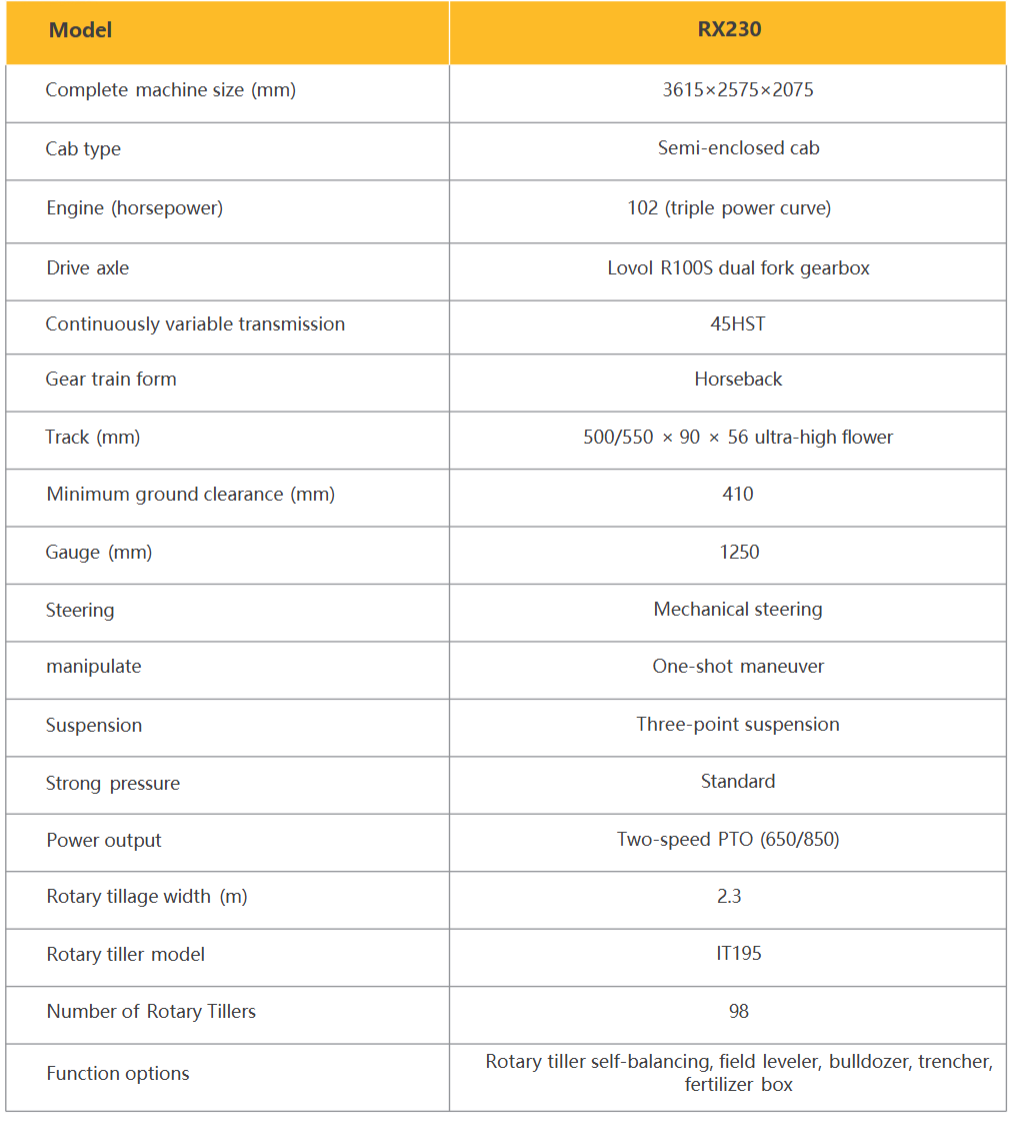
When I talk about soil preparation with farmers or agricultural machinery buyers, one thing comes up again and again: not every field is easy to work in.
Some fields are dry and hard. Some are wet and soft. Some have heavy soil, while others have been worked many times and need a different approach. In paddy fields, the situation can be even more complicated because normal wheeled machines may lose traction when the ground becomes soft.
That is where I see the value of a Track Rotary Tiller.
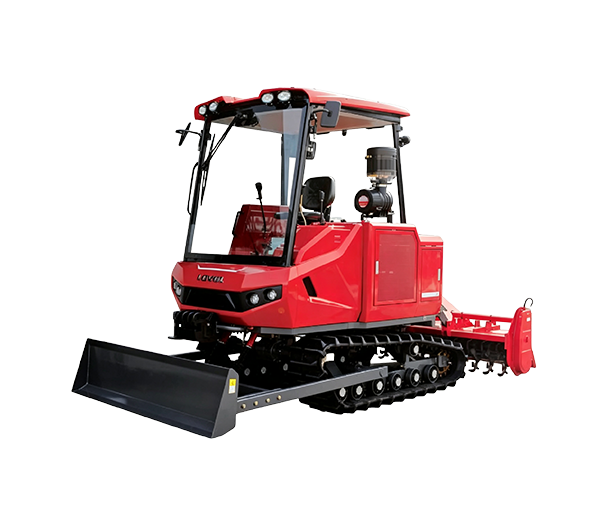
A track rotary tiller combines a crawler-type chassis with rotary tilling and other agricultural implements. Instead of being limited to one operation, the machine can be configured for different field jobs. LOVOL describes its Crawler Rotary Tiller as a versatile agricultural machine built on a proven crawler chassis. It can be paired with rotary tillers, ditchers, ridgers, fertilizer spreaders and an optional front-mounted bulldozer blade for land leveling and other work. Source: LOVOL official agricultural machinery information.
That multi-purpose design is important to me because modern farms rarely need a machine for only one job.
A farmer may need to prepare soil today, open a ditch tomorrow, make ridges later, and level part of the field after that. If the same crawler machine can handle several of these jobs with suitable attachments, the equipment becomes much more useful throughout the farming season.
At Ganglong Heavy Industry Technology (Hefei) Co., Ltd., we supply agricultural machinery for customers in different markets. Together with Hefei Ganglong International Trade Co., Ltd., we handle international machinery supply and related trade services. Our business covers construction machinery, mining machinery, agricultural machinery and matching attachments.
For LOVOL equipment, our role is to supply and arrange suitable machines for customers rather than describe ourselves as the manufacturer of the LOVOL brand. This distinction matters when customers are buying agricultural equipment internationally.
1. What Is a Track Rotary Tiller?
A Track Rotary Tiller is a crawler-based agricultural machine designed for soil preparation and other field operations.
The easiest way to understand it is to separate the machine into two parts.
The first part is the crawler chassis.
The second part is the working implement.
The crawler chassis provides movement and traction. The implement performs the actual field operation.
For rotary tilling, the machine works with a rotary tiller. The rotating blades break and mix the soil as the machine moves forward. Depending on the attachment, the same base machine can also perform ditching, ridging, fertilizer spreading or land leveling.
LOVOL specifically describes its Crawler Rotary Tiller as being able to work with a variety of implements, including rotary tillers, ditchers, ridgers and fertilizer spreaders. An optional front bulldozer blade can further expand the machine's use for land leveling and multi-purpose field work.
This is quite different from a simple tractor-mounted rotary tiller.
A conventional rotary tiller is usually an attachment powered by a tractor PTO. The tractor provides the engine power, traction and hydraulic functions, while the tiller performs the soil work.
A track rotary tiller puts the traction system and working platform together into a dedicated crawler machine.
That design becomes particularly interesting when ground conditions are difficult.
On soft or wet farmland, a crawler system can spread the machine's weight over a larger contact area. This can provide more stable movement than a conventional wheeled machine in certain field conditions.
Of course, I would never say that a crawler machine can work anywhere. Soil moisture, terrain, crop residue, slope, field depth and machine setup all matter. But when a customer tells me that the field is soft, muddy or difficult for ordinary wheels, I immediately start looking at crawler-based agricultural equipment.
What Does Rotary Tilling Actually Do?
The rotary tiller uses rotating blades to cut into the soil and break it into smaller pieces.
As the blades rotate, they disturb the soil, mix crop residue and help create a more workable soil layer.
For many farming operations, this is part of seedbed preparation.
The objective is not simply to make the soil look loose.
The soil needs to be suitable for the next operation.
That could be planting, transplanting, irrigation preparation, ridging or another agricultural process.
LOVOL's conventional rotary tiller range includes both dryland and wetland models, showing that rotary tilling equipment can be configured for different field environments.
2. How a Track Rotary Tiller Works in the Field
When I explain a crawler rotary tiller to a new buyer, I usually describe the working process in a simple sequence.
Step One: The Crawler Chassis Moves Through the Field
The crawler system provides the machine with its basic mobility.
Instead of relying on conventional tires, the machine moves on tracks. The larger contact area can help the machine maintain traction when the soil is soft.
This can be useful in paddy fields, wet farmland and other areas where a wheeled machine may experience more wheel slip.
It also helps explain why a Track Rotary Tiller is not simply a larger version of a normal rotary tiller.
The chassis itself is designed around difficult field movement.
Step Two: Power Is Transferred to the Working Implement
Once the machine is moving, power is supplied to the selected agricultural implement.
For rotary tilling, the rotary shaft turns the blades.
The blades enter the soil and break it as they rotate.
The depth and working effect depend on the machine configuration, soil condition, blade arrangement, forward speed and other operating factors.
I always tell customers not to judge soil preparation only by working speed.
If the machine moves too quickly in hard soil, the tilling effect may not be what the farmer wants. If the machine moves too slowly in soft soil, it may disturb the field more than necessary.
The right operating setting is a balance.
Step Three: Soil Is Broken and Mixed
The rotating blades cut through the soil and help break larger clods into smaller particles.
At the same time, plant residue can be mixed into the working layer.
This is one reason rotary tillers are widely used for seedbed preparation.
But again, the exact result depends on soil type and operating conditions.
Step Four: The Machine Moves to the Next Pass
After completing one pass, the operator turns the machine and begins the next pass.
This sounds simple, but turning performance becomes important on large farms.
A machine that can maintain stable movement and predictable steering makes field work easier for the operator.
For a crawler machine, the track system is therefore not just about traction. It is also part of the overall field handling system.
Step Five: Change the Implement for Another Job
This is where the Track Rotary Tiller becomes more interesting.
According to LOVOL's public product description, the crawler platform can work with rotary tillers, ditchers, ridgers and fertilizer spreaders. A front-mounted bulldozer blade is also available as an option for land leveling and other work.
So the machine can become a small agricultural work platform rather than a single-purpose tiller.
3. Main Features I Look For in a Track Rotary Tiller
Crawler-Based Mobility
The most obvious feature is the track system.
When the soil becomes soft, tire-based agricultural machines can sometimes experience wheel slip. A crawler system distributes the machine's weight over the track contact area and can provide useful traction in these conditions.
This is one reason crawler agricultural machinery is often considered for paddy fields and other challenging farmland.
However, the exact performance depends on the track design, machine weight, soil condition and operating method.
Multi-Implement Compatibility
I consider this one of the strongest points of the LOVOL Crawler Rotary Tiller.
LOVOL states that the machine can be paired with rotary tillers, ditchers, ridgers and fertilizer spreaders. The optional front bulldozer blade further expands the working range.
That means the customer does not necessarily buy a machine that sits idle after the tilling season.
It can potentially be used for several agricultural operations throughout the year.
Soil Preparation Capability
The rotary tiller itself is designed to break and mix soil.
LOVOL's conventional rotary tiller range uses 65Mn blade material and offers different models for dryland and wetland applications. The published working widths range from 1,250 mm to 2,500 mm across the listed dryland and wetland models.
This gives me a useful reference when discussing rotary tilling with customers.
The required working width should always match the tractor or crawler machine, field size and required working capacity.
Potential for Wet and Soft Fields
Not every farm has dry, hard soil.
In rice-growing regions, water and mud are part of normal field work.
A crawler platform can be useful in these environments because its tracks are designed to provide stable contact with the ground.
This does not mean every wet field is suitable. Very deep mud, extreme slopes or unsuitable soil conditions can still limit machine operation.
Land Leveling Capability
LOVOL also identifies an optional front-mounted bulldozer blade for the Crawler Rotary Tiller.
This adds another useful operation: land leveling.
For agricultural fields, leveling can be important for irrigation and water distribution, particularly in paddy farming.
A machine that can prepare soil and perform basic land work can therefore reduce the need to move another machine into the field for every small task.
| LOVOL Rotary Tiller Reference | Published Range | Application Note |
|---|---|---|
| Working width | 1,250–2,500 mm | Different models are available for different tractor sizes and field needs |
| Tractor power requirement | 28–120 HP | Depends on the selected rotary tiller model |
| Blade number | 28–78 | Varies by model and working width |
| PTO speed | 540 r/min | Published LOVOL rotary tiller reference |
| Working depth | 15–20 cm | Varies by model and application |
| Blade material | 65Mn | Published blade material |
Source: LOVOL official Rotary Tiller product page. These figures refer to LOVOL's conventional rotary tiller range and should not be treated as specifications for every Track Rotary Tiller configuration.
4. Track Rotary Tiller vs. Conventional Rotary Tiller
This is one of the questions I hear most often.
Why use a crawler rotary tiller when a normal tractor and rotary tiller can do the job?
My answer is simple: it depends on the field.
A conventional tractor-mounted rotary tiller can be an excellent solution for many farms. LOVOL itself offers a wide range of rotary tillers designed for different tractor power levels and dryland or wetland applications.
But a crawler-based platform brings a different set of advantages.
| Feature | Conventional Tractor + Rotary Tiller | Track Rotary Tiller |
|---|---|---|
| Power source | Separate tractor | Dedicated crawler machine platform |
| Traction | Wheel-based | Crawler-based |
| Soft-field operation | Depends strongly on tires and soil | Crawler platform is designed for challenging ground conditions |
| Rotary tilling | Yes | Yes, with suitable rotary tiller |
| Ditching | Requires suitable attachment | LOVOL lists ditcher compatibility |
| Ridging | Requires suitable attachment | LOVOL lists ridger compatibility |
| Fertilizer spreading | Requires suitable attachment | LOVOL lists fertilizer spreader compatibility |
| Land leveling | Requires suitable implement | Optional front bulldozer blade |
| Machine flexibility | Depends on tractor attachments | Designed as a multi-purpose crawler platform |
Source: LOVOL official Crawler Rotary Tiller product description and LOVOL official Rotary Tiller product information.
The key point is that I would not tell every farmer to replace a tractor with a crawler machine.
If the farm already has suitable tractors, good field access and mostly dry soil, a conventional rotary tiller may be perfectly practical.
If the farm frequently works in soft fields and wants one crawler platform for several different operations, the calculation changes.
Why Tracks Can Matter
Imagine two fields.
The first field is dry and firm.
The second field is wet after irrigation or rain.
In the first field, both wheel and crawler machines may have no major problem.
In the second field, traction becomes much more important.
The track system gives the crawler machine a different contact pattern with the ground. This can help reduce the pressure concentrated at individual contact points and improve mobility in soft soil.
Still, I always recommend checking the actual soil before choosing equipment. No machine can ignore basic ground conditions.
5. Applications of a Crawler Rotary Tiller
Paddy Field Preparation
Rice farming is one of the most obvious applications to consider.
Paddy fields can be wet and soft, especially during certain stages of cultivation.
A crawler-based machine can provide useful traction in these conditions.
With a rotary tiller, the machine can help prepare the soil. With other attachments, it may also perform ditching, ridging, fertilizer spreading or land leveling.
This makes the platform suitable for farms looking for more than one operation.
Wetland Farming
LOVOL's standard rotary tiller range includes wetland models such as RTH150, RTH175, RTY180A, RTH200, RTH230 and RTH254.
The published wetland models cover working widths from 1,500 mm to 2,500 mm and tractor requirements from 30 to 100 HP, depending on the model.
These specifications show how LOVOL separates rotary tilling equipment according to field environment and machine power.
Dryland Soil Preparation
Although the crawler platform is especially interesting in difficult ground conditions, rotary tilling itself is not limited to wet fields.
Dryland farming can also require soil crushing and mixing before planting.
For these operations, the correct rotary tiller and machine configuration need to be selected according to soil hardness and required working depth.
Ridging
Some crops are planted on ridges rather than flat ground.
Ridging can improve field organization and support crop management depending on the farming system.
LOVOL identifies a ridger as one of the implements that can be used with its crawler rotary tiller platform.
Ditching
Drainage and irrigation are important parts of farming.
A ditcher attachment can help create field channels for water management.
For farms dealing with seasonal rain, irrigation systems or paddy production, this can make the crawler platform more useful beyond normal tilling.
Fertilizer Application
LOVOL also lists fertilizer spreaders among the compatible implements.
This means the crawler platform can potentially be integrated into more stages of the crop cycle.
The exact fertilizer implement and mounting arrangement should be confirmed according to the required application.
Land Leveling
The optional front-mounted bulldozer blade is another useful addition.
When preparing a field, farmers may need to move small amounts of soil, level uneven areas or perform basic land shaping.
A dedicated earthmoving machine may still be needed for heavy work, but having a blade on the agricultural platform can be useful for routine field preparation.
6. Technical Advantages I Consider Before Buying
When customers ask me about technical advantages, I try not to throw a long list of engineering terms at them.
Most buyers want to know one thing:
Will the machine actually make my daily work easier?
That is the right question.
Traction Comes First
For a crawler agricultural machine, traction is fundamental.
If the machine cannot move properly, a powerful rotary tiller will not solve the problem.
The crawler chassis is therefore an important part of the entire machine concept.
Attachment Flexibility
A machine that accepts several implements can be used during more parts of the agricultural season.
LOVOL's public description specifically identifies rotary tillers, ditchers, ridgers, fertilizer spreaders and an optional bulldozer blade.
This gives the buyer several possible working configurations.
Strong Soil Crushing Capability
LOVOL describes its rotary tiller as having strong soil crushing capability. Its published conventional rotary tiller design uses a large gearbox and 65Mn rotary blades.
The manufacturer also describes a gearbox design with good sealing performance and self-aligning bearings on the knife shaft.
These are technical details, but they have a simple purpose: keep the rotary working system stable while the blades are working inside the soil.
Different Working Widths
LOVOL's conventional rotary tiller range covers several working widths.
This is useful because field size and tractor power are not the same everywhere.
A small farm may need a narrower implement, while a larger operation may want a wider one.
| LOVOL Rotary Tiller Model | Working Width | Recommended Tractor Power | Working Depth |
|---|---|---|---|
| 1GQN-125 | 1250 mm | 28–35 HP | 15 cm |
| 1GQN-160 | 1600 mm | 45–50 HP | 15 cm |
| 1GQN-200 | 2000 mm | 70–80 HP | 20 cm |
| 1GQN-250 | 2500 mm | 100–120 HP | 20 cm |
| RTH150 | 1500 mm | 30–40 HP | 20 cm |
| RTH200 | 2000 mm | 50–80 HP | 20 cm |
| RTH254 | 2500 mm | 90–100 HP | 20 cm |
Source: LOVOL official Rotary Tiller product page. These are conventional rotary tiller reference models, not claimed specifications for the crawler chassis itself.
I include this comparison because it shows an important buying principle: working width cannot be considered separately from available power.
A wider implement is not automatically better.
The machine needs enough power to work properly under the actual soil conditions.
7. Manufacturing, Inspection and International Supply
For agricultural machinery, I believe the manufacturing process matters just as much as the final specification.
A rotary tiller may look simple from the outside. Inside, however, there are many parts that need to work together.
The frame must maintain its shape under working loads.
The gearbox needs proper sealing and reliable power transmission.
The blade shaft needs stable rotation.
The blades need suitable material and correct installation.
The attachment points need to match the machine.
And the crawler chassis needs to handle the working environment.
Frame and Structural Parts
The frame is the basic structure that holds the working components together.
For field machinery, rigidity matters because the machine is constantly exposed to vibration, impact and changing soil resistance.
LOVOL describes its conventional rotary tiller frame as an integrated structure with good force balance, rigidity and strength.
Gearbox
The gearbox transfers power to the rotary working system.
LOVOL's official rotary tiller information highlights a large gearbox, good sealing performance and a flange connection design.
The company also describes self-aligning bearings on both ends of the knife shaft, allowing the shaft to compensate for certain alignment differences during operation.
Rotary Blades
Blade quality is one of those things that operators notice quickly.
LOVOL lists 65Mn as the blade material for its rotary tiller range.
The blades are the components directly working against the soil, so wear is normal over time.
That is why I always recommend checking blade condition as part of regular maintenance.
Pre-Shipment Inspection
For international customers, we can arrange inspection before delivery according to the order requirements.
For a Track Rotary Tiller, I would normally pay attention to the crawler system, engine and transmission systems, hydraulic components, electrical system, working attachment, rotary shaft, blades, fasteners, controls and supporting documents.
If the customer has a third-party inspection requirement, that should be discussed before shipment.
International Transportation
Complete agricultural machinery is generally transported by sea for international orders.
Smaller spare parts and accessories can be shipped by air or express when appropriate.
Before loading, the machine needs to be properly prepared and secured.
Loose parts can be packed separately in cartons or wooden cases depending on their size, material and shipping requirements.
The final packing and shipping method depends on the destination and the customer's order.
8. Why I Work with Ganglong for Track Rotary Tiller Supply
Ganglong Heavy Industry Technology (Hefei) Co., Ltd. was founded in 2013.
Our business has developed around construction machinery, mining machinery, agricultural machinery and related equipment.
Together with Hefei Ganglong International Trade Co., Ltd., we provide international machinery supply and trade services for customers in Asia, Africa, America and other markets.
We also have our own HKLOONG brand covering Excavators, loaders, Backhoe loaders and swamp excavators.
At the same time, we provide complete machine sales and leasing services for several domestic and international brands, including LOVOL.
For an overseas buyer, I believe this combination is useful because purchasing a machine is only the beginning of the process.
The buyer may need help choosing a configuration.
They may need supporting implements.
They may need a pre-shipment inspection.
They may need export documents.
They may need spare parts.
They may need sea transportation.
And they may need someone to coordinate these steps in one order.
That is where our international trade team comes in.
We Start with the Working Condition
I prefer not to recommend a machine simply because a customer searches for “Track Rotary Tiller”.
First, I want to understand the actual job.
What type of soil?
Dryland or paddy field?
How many hectares?
How wet is the field?
What operation comes after tilling?
Does the customer also need ditching?
Is ridging required?
Does the farm need fertilizer spreading?
Would a front blade be useful?
These questions help us discuss the right machine and attachment combination.
We Check the Complete Order
Our work does not stop at the machine name.
We check the selected configuration, attachments, documents, inspection requirements, payment terms, packing and transportation.
For international orders, payment is commonly arranged by T/T, with a deposit before order processing and the balance before shipment. The exact terms are agreed between both parties.
We Keep the Shipping Process Practical
Large agricultural machinery is not a small parcel.
It needs careful loading, securing and transportation planning.
That is why we confirm the destination, shipping method and packing requirements before the machine leaves.
The final delivery schedule depends on the selected LOVOL model, configuration, order quantity and machine availability.
Frequently Asked Questions About Track Rotary Tiller
What is a Track Rotary Tiller used for?
A Track Rotary Tiller is mainly used for soil preparation and can be configured for several agricultural operations. LOVOL describes its crawler platform as compatible with rotary tillers, ditchers, ridgers and fertilizer spreaders. An optional front bulldozer blade can also be used for land leveling.
Is a Track Rotary Tiller suitable for paddy fields?
A crawler-based machine can be useful in wet and soft farmland because the track system is designed for stable ground contact. However, actual suitability depends on soil depth, moisture, terrain and the selected machine configuration.
What is the difference between a Track Rotary Tiller and a normal rotary tiller?
A conventional rotary tiller is normally an agricultural implement powered by a tractor. A Track Rotary Tiller uses a crawler-based machine platform and can be configured with several implements. The crawler design is particularly useful when traction and field mobility are important.
Can the crawler machine do more than rotary tilling?
Yes. LOVOL's public information identifies rotary tillers, ditchers, ridgers and fertilizer spreaders as compatible implements. An optional front-mounted bulldozer blade can also extend the machine's use to land leveling and related work.
What soil depth can a LOVOL rotary tiller reach?
LOVOL's conventional rotary tiller range lists working depths of approximately 15–20 cm depending on the model. This should not be treated as the specification of every Track Rotary Tiller configuration.
What blade material is used in LOVOL rotary tillers?
LOVOL's official rotary tiller product information lists 65Mn blade material for its dryland and wetland rotary tiller range.
What working widths are available?
The conventional LOVOL rotary tiller range published on its official product page includes working widths from 1,250 mm to 2,500 mm. The correct attachment should be selected according to the available power, field conditions and required working capacity.
Can I buy the Track Rotary Tiller for an overseas farm?
Yes. Ganglong can discuss international supply of suitable LOVOL agricultural machinery and help coordinate configuration, inspection, documents, packing and shipping.
Can you supply matching implements?
Yes. The LOVOL Crawler Rotary Tiller platform is described as compatible with different agricultural implements, including rotary tillers, ditchers, ridgers and fertilizer spreaders. We can discuss the required combination according to the customer's field operations.
How is the machine shipped internationally?
Complete agricultural machines are generally shipped by sea. Smaller spare parts and accessories may be shipped by air or express depending on the destination and order requirements.
Can you arrange a pre-shipment inspection?
Yes. We can arrange checks according to the order requirements, including the engine, hydraulic system, electrical system, crawler system, working attachment, blades, working functions and required documents.
Final Thoughts: Choosing a Track Rotary Tiller for Real Farm Work
After working with agricultural machinery customers, I have learned that the most important machine specification is not always the biggest number on a brochure.
It is whether the machine matches the actual field.
If the land is dry and easy to access, a conventional tractor and rotary tiller may already be enough.
If the farm has soft soil, wet fields or paddy land, traction becomes more important.
If the farm needs several operations throughout the year, attachment compatibility becomes important.
That is why I find the Track Rotary Tiller concept useful.
It combines a crawler chassis with a rotary tilling function and can be configured for other agricultural operations. LOVOL's published product information specifically mentions rotary tillers, ditchers, ridgers, fertilizer spreaders and an optional bulldozer blade.
At the same time, LOVOL's conventional rotary tiller range shows that different working widths, tractor power requirements, blade counts and working depths are available. That tells me something important: agricultural machinery should be selected according to the job, not simply by product name.
For customers looking for a Track Rotary Tiller, Crawler Rotary Tiller, Rotary Tiller Machine or multi-purpose crawler agricultural machine, I recommend starting with the working conditions.
Tell us about the soil.
Tell us about the crops.
Tell us about the field size.
Tell us whether the land is dry or wet.
Tell us which operations you want to complete.
From there, we can discuss the suitable LOVOL equipment, matching attachments, inspection requirements and international delivery arrangement.
For me, that is the practical way to buy agricultural machinery: not choosing a machine because it sounds impressive, but choosing a machine because it makes sense for the work waiting in the field.



 WhatsApp
 Phone
Phone E-mail
 Message