
 Español
 Pусский
 Français
 العربية

When I choose a drilling rig for a mining or blasting project, I do not look at one number and make a decision. I want to know how the machine performs in real rock, how easily it can move between drilling points, how well the drilling system handles changing ground conditions, and how much it costs to keep the machine working.
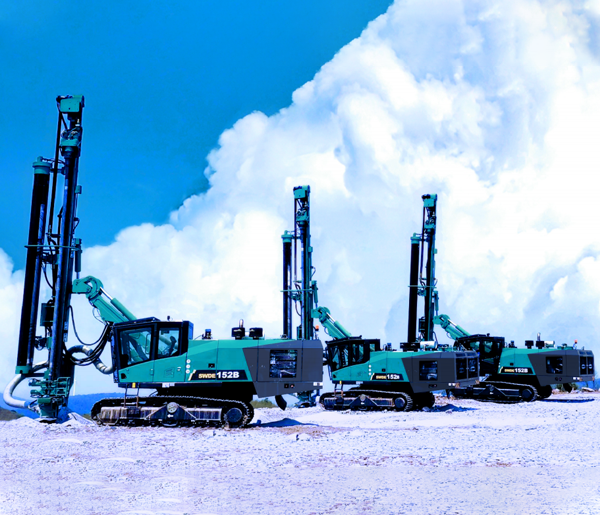
The SWDE152B Integrated DTH Drill Rig is designed around these practical needs. It is a new-generation surface drilling machine developed for high-productivity drilling and blasting work. The machine is built to support efficient rock drilling while keeping construction energy consumption under control. Its design combines drilling, power, air supply, feed, rotation, and mobile carrier functions into one integrated unit.
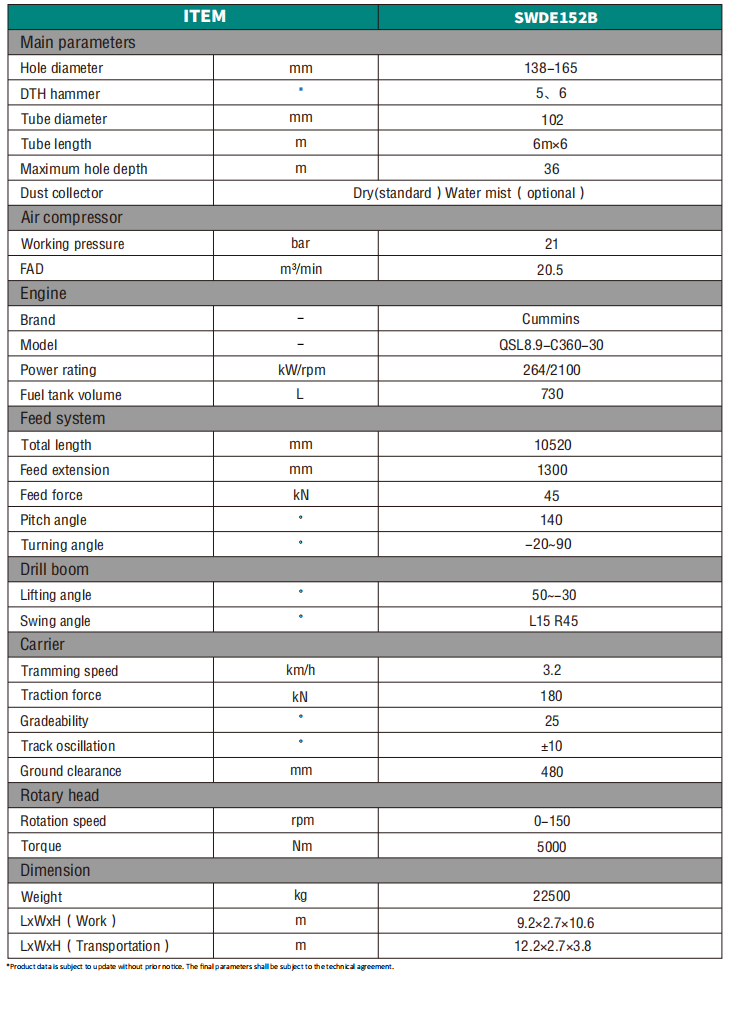
For projects that need medium-to-large diameter blast holes, the product information specifies a 138–180 mm drilling diameter and a maximum drilling depth of 36 m with automatic rod pick-up and unloading. It is intended to handle different rock conditions through cutting in softer rock and DTH drilling in harder rock. That flexibility is useful because real job sites rarely give us exactly the same rock from one hole to the next.
My goal with this type of equipment is simple: keep the drilling process stable, reduce unnecessary downtime, and help contractors get more useful meters drilled during each working shift.
1. What Is the SWDE152B Integrated DTH Drill Rig?
The SWDE152B is an integrated down-the-hole drilling rig designed for surface rock drilling and blasting applications. Unlike a basic rotary drilling machine, a DTH rig places the impact hammer close to the bottom of the borehole. Compressed air travels through the drill rods to operate the hammer, while the rotary head turns the drill string and the feed system pushes the drill bit into the rock.
This basic idea is one reason DTH drilling works well in hard rock. The impact energy is generated close to the drilling face instead of being transferred from a surface hammer through the entire drill string.
Liebherr explains that DTH drilling uses a hammer mounted at the lower end of the drill rod. Compressed air operates the hammer, while the flushing process removes loosened material from the borehole. The method is mainly used for hard and very hard rock.
For me, an integrated design has another advantage. The drilling system and carrier are developed as one working machine. I do not have to treat the compressor, feed system, rotary head, crawler carrier, controls, and drilling structure as completely separate pieces of equipment. Their interaction becomes part of the overall machine design.
| Parameter | SWDE152B Product Reference | Practical Meaning |
|---|---|---|
| Drilling method | Integrated DTH drilling | Suitable for surface rock drilling and blasting work |
| Drilling diameter | 138–180 mm | Provides a useful range for medium-to-large blast holes |
| Maximum drilling depth | 36 m | Supports deeper drilling requirements |
| Rod handling | Automatic pick-up and unloading | Helps simplify rod handling during deeper drilling |
| Rock adaptability | Cutting and DTH drilling | Allows the drilling method to match different rock conditions |
Source: product information supplied for the SWDE152B configuration. Final specifications should be confirmed against the exact machine configuration before purchase.
2. How My DTH Drilling System Breaks Rock
I usually explain DTH drilling in very simple terms. The drill bit needs two types of movement: rotation and impact. Rotation moves the bit across a new section of rock, while repeated impact breaks the rock into smaller pieces.
The DTH hammer sits behind the drill bit at the bottom of the hole. Compressed air travels down through the hollow drill pipe and powers the hammer. A piston inside the hammer repeatedly strikes the bit. At the same time, the rotary head turns the drill string.
After the rock is broken, the compressed air also helps carry the drilling cuttings back out of the hole. This flushing action is important because a hole filled with broken rock cannot be drilled efficiently.
USGS technical guidance describes air-hammer drilling as a process where a pneumatic hammer rapidly strikes the rock while the bit rotates, breaking the formation and using air to return cuttings to the surface.
So, during a normal drilling cycle, I look at four basic actions:
Positioning: I place the crawler-mounted rig at the planned drilling location.
Alignment: I set the drilling boom and feed system to the required drilling angle.
Drilling: The rotary head turns the drill string while the DTH hammer delivers repeated impact.
Flushing: Compressed air removes broken rock and helps keep the hole bottom clear.
The important point is that these actions must work together. More feed force does not automatically mean faster drilling. Too much pressure can increase tool wear, while poor air flushing can allow cuttings to remain in the hole. Good drilling comes from balancing rotation, feed, impact, and flushing according to the rock.
3. Designed for Different Rock Conditions
One of the things I pay close attention to is geological variation. A quarry may contain weathered rock near the surface and harder rock only a few meters below. A construction site can also have soft layers mixed with hard formations.
That is why the SWDE152B is designed to cover both cutting and DTH drilling applications. Cutting is useful when the rock is relatively soft, while DTH drilling provides a strong percussion method for harder formations.
This does not mean the machine can drill every type of rock at the same speed. Rock strength, abrasiveness, fractures, moisture, bedding, hole depth, and tool selection all affect drilling performance. I prefer to make this clear because realistic drilling expectations are much more useful than a simple claim about maximum penetration.
| Ground Condition | Suitable Method | What I Pay Attention To |
|---|---|---|
| Soft rock | Rotary cutting | Cutting efficiency and tool wear |
| Weathered rock | Cutting or DTH | Changes in hardness and hole stability |
| Medium-hard rock | DTH or cutting according to conditions | Feed force, rotation and flushing |
| Hard rock | DTH drilling | Impact energy, air pressure and bit selection |
| Highly fractured rock | DTH with suitable drilling settings | Air loss, hole stability and cuttings removal |
Source: drilling-method comparison based on the operating principles of rotary cutting and DTH drilling. Actual results depend on geological conditions and final drilling-tool configuration.
For a contractor, this flexibility can reduce the need to bring different drilling machines to the same project simply because the rock changes. The operator can select the appropriate drilling approach according to the working face and drilling plan.
4. Main Features That Matter on a Real Jobsite
138–180 mm Drilling Diameter
The specified 138–180 mm drilling diameter gives the SWDE152B a useful operating range for surface blasting and rock-drilling work. Hole diameter affects the amount of explosive that can be loaded and therefore needs to match the blast design. I would always select the final bit and hole size together with the project's blasting engineer or drilling plan.
Up to 36 m Maximum Drilling Depth
The machine is specified with a maximum drilling depth of 36 m, including automatic pick-up and unloading rod functions. This gives the rig enough depth capability for projects that require relatively deep blast holes.
Maximum depth should not be confused with guaranteed production depth. Actual drilling speed and achievable depth depend on the rock, hole diameter, drill tools, rod arrangement, air system, drilling angle, and site conditions.
Automatic Rod Handling
Deep-hole drilling means handling multiple drill rods. Manual rod handling takes time and can increase operator workload. Automatic pick-up and unloading functions can make the drilling cycle easier to manage, especially when the machine is working through deeper holes.
Integrated Mobile Design
The integrated structure brings the drilling equipment and carrier together as one machine. For projects where drilling points change frequently, this makes the work process easier to organize. The crawler platform also gives the machine a practical way to travel around uneven construction areas, subject to the actual site conditions and machine configuration.
Energy-Conscious Operation
The SWDE152B product concept focuses on lower construction energy consumption, energy saving, and lower-carbon operation. I treat this as an important design direction rather than a fixed fuel-consumption promise. Actual energy use changes with drilling depth, rock hardness, air demand, idle time, drilling settings, and operator habits.
High-Productivity Drilling
Productivity is not only penetration speed. I measure it more broadly by looking at completed meters per working shift. If the machine drills quickly but spends too much time changing rods, moving between holes, clearing blockages, or waiting for maintenance, the final production number may still be low.
5. SWDE152B Applications in Mining, Quarrying and Construction
I see the SWDE152B Integrated DTH Drill Rig as a practical machine for projects where drilling is part of a larger rock-breaking or excavation process.
Mining: In open-pit mining, drilling is often the first major step before blasting, loading, hauling, and crushing. A stable drilling process helps keep the following operations moving.
Quarrying: Quarry benches require planned blast holes with controlled diameter, depth, spacing, and angle. The SWDE152B's drilling range and depth capability make this type of work a natural application.
Road construction: When a new road passes through hard rock, drilling may be needed before controlled blasting or excavation. Multi-angle drilling can be useful when the terrain or excavation plan does not allow simple vertical holes.
Construction blasting: Large civil projects may need drilling for controlled rock removal, especially when natural rock formations are difficult to excavate directly.
General surface rock drilling: The machine can also be considered for other surface drilling jobs where the required hole size and depth fall within the working range.
| Industry | Typical Requirement | SWDE152B Value |
|---|---|---|
| Mining | Production or blasting-hole drilling | DTH drilling for hard-rock conditions |
| Quarrying | Bench blasting preparation | 138–180 mm drilling range and deep-hole capability |
| Road construction | Rock excavation and blasting | Integrated mobile drilling platform |
| Civil construction | Controlled rock removal | Flexible drilling method and drilling angles |
| Site development | Surface rock drilling | Combination of cutting and DTH methods |
Source: application categories are based on the supplied SWDE152B product description and common DTH surface-drilling applications. Final suitability should be evaluated against the actual project conditions.
6. Technical Reference: Why DTH Drilling Is Useful for Hard Rock
When I compare drilling methods, I focus on where the impact energy is delivered. This is one of the main differences between DTH drilling and some other drilling systems.
In DTH drilling, the hammer operates close to the bit. This can help maintain useful impact performance at greater hole depths because the hammer does not depend on transferring all impact energy from the surface through the full length of the drill string.
Liebherr identifies DTH drilling as a method particularly suited to hard and very hard rock and notes its use in applications such as blast holes and drilling in difficult ground.
| Factor | DTH Drilling | Why It Matters |
|---|---|---|
| Impact location | Near the bottom of the hole | Directly applies impact to the rock being drilled |
| Rock suitability | Strong fit for hard rock | Useful for mining and quarry drilling |
| Cuttings removal | Compressed-air flushing | Helps remove broken rock from the borehole |
| Hole depth | Suitable for deeper surface holes | Useful where shallow drilling is not enough |
| Drilling control | Rotation + feed + percussion | Requires balanced operating parameters |
Source: DTH operating principles summarized from Liebherr and USGS technical references.
For the operator, this means the machine should not simply be run at maximum power all the time. Good drilling is about finding the right balance. The correct feed pressure, rotary speed, air supply, bit type, and hammer settings can improve drilling efficiency while helping control wear.
7. How I Manufacture and Support the SWDE152B
At HKLOONG Heavy Industry Technology (Hefei) Co., Ltd., I look at heavy equipment from the complete machine level. Our work covers equipment R&D, precision manufacturing, quality testing, customized modification, and global distribution.
For an integrated DTH drill rig, structural quality is especially important. The main frame and drilling structure must handle repeated vibration, feed forces, rotary torque, and machine movement. This is why I pay attention to material selection, welding quality, dimensional accuracy, and inspection during manufacturing.
The drilling system also needs careful matching. The rotary head, feed mechanism, drill rods, DTH hammer, drill bit, and air system all influence one another. A mismatch between these parts can reduce drilling performance even when each individual component looks acceptable.
Hydraulic systems are another important area. Stable hydraulic control helps the operator manage travel, boom movement, feed, rotation, and other machine functions. For equipment working in dusty and demanding environments, access to service points is also important.
Before a machine leaves the factory, I want the major functions checked as a complete system. That includes machine movement, drilling-system operation, hydraulic functions, controls, structural condition, and other relevant inspection points.
For overseas customers, I also consider the actual working environment. A mining contractor in a dry quarry may have different requirements from a construction company working in a colder or wetter area. Configuration, maintenance planning, transportation, spare parts, and operator training all deserve attention before delivery.
8. Why Choose HKLOONG for an Integrated DTH Drill Rig?
I believe a drilling rig should be evaluated by its total working value rather than by one impressive specification. A machine can have a large drilling diameter, but if maintenance is difficult or the drilling system is poorly matched to the rock, the actual project result may not be good.
With HKLOONG, I focus on several practical points:
Complete equipment development: We combine R&D, manufacturing, quality testing, and technical service.
Project-based configuration: I consider drilling diameter, depth, rock type, drilling angle, working environment, and production target when discussing equipment requirements.
Heavy-duty application focus: Our product range is developed for demanding construction and industrial working conditions.
Quality inspection: Machine functions and major systems need to be checked before delivery.
Customization capability: Different projects may require different configurations, and modification can be discussed according to actual requirements.
Global support: We work with customers in different markets and consider transportation, operating environment, service, and spare-parts requirements.
Most importantly, I prefer to ask questions before recommending a configuration. What rock are you drilling? What hole diameter do you need? How deep are the holes? Are the holes vertical or inclined? How many meters do you need to drill per day? What is the local climate? What drilling tools are already available?
The answers to these questions are more useful than simply choosing a machine from a catalog.
SWDE152B Integrated DTH Drill Rig FAQ
What is the SWDE152B used for?
The SWDE152B is designed for surface rock drilling and blasting applications. Typical applications include mining, quarrying, road construction, civil construction, and other projects requiring medium-to-large diameter rock holes.
What is the drilling diameter of the SWDE152B?
The specified drilling diameter is 138–180 mm. The final drill bit and tooling configuration should be selected according to the required hole size and geological conditions.
What is the maximum drilling depth?
The product information specifies a maximum drilling depth of 36 m with automatic pick-up and unloading rod capability. Actual drilling depth and production speed depend on the site and drilling configuration.
Is this machine suitable for hard rock?
Yes. The DTH drilling method is well suited to hard and very hard rock because the pneumatic hammer delivers impact close to the bottom of the borehole.
Can it work in softer rock?
Yes. The product is designed to support cutting in softer rock as well as DTH drilling in harder rock. The suitable method should be selected according to actual ground conditions.
What affects DTH drilling speed?
Rock strength, rock abrasiveness, drill diameter, hammer performance, air supply, feed pressure, rotary speed, bit condition, hole depth, and operator settings can all affect drilling speed. There is no single penetration rate that applies to every project.
Can the SWDE152B drill inclined holes?
The product is designed for different drilling orientations used in surface blasting work. The exact drilling angle and working range should be confirmed according to the final machine configuration and project requirements.
How do I select the right DTH drill rig?
I recommend starting with the drilling job rather than the machine name. Give us the required hole diameter, depth, rock type, drilling angle, expected daily production, and working environment. We can then evaluate the appropriate configuration.
Final Thoughts
The SWDE152B Integrated DTH Drill Rig is designed for contractors who need practical drilling performance in demanding rock conditions. Its 138–180 mm drilling range, maximum 36 m drilling depth, automatic rod handling, and combination of cutting and DTH drilling make it suitable for a range of surface drilling and blasting projects.
For me, the biggest advantage is not just the maximum depth. It is the way the machine is designed around the complete drilling process. Rock needs to be broken, cuttings need to be removed, the drill string needs controlled rotation and feed, and the machine needs to move efficiently between drilling points. When these systems work together, productivity becomes much easier to manage.
At HKLOONG Heavy Industry Technology, I take the same practical approach to manufacturing. We combine R&D, precision manufacturing, quality testing, customized modification, and global distribution to develop equipment for demanding heavy-duty applications.
If you are planning a mining, quarrying, road construction, or blasting project, I recommend evaluating the SWDE152B according to your actual geology and drilling plan. The right combination of hole diameter, depth, drilling method, tooling, air supply, and operating settings can make a much bigger difference to project cost than any single specification on a product sheet.



 WhatsApp
 Phone
Phone E-mail
 Message