

Hydraulic retractable chassis with bulldozerwidening device
The hydraulically retractable chassis has a maximum externalalwidth of 860 mm for good stability.It can be retracted to awidth of 700 mm in an instant.With the included foldabledozer widening device,the specific width can be adjustedaccording to the location of use.Elements for widening arealways connected to the device and therefore not lost.
One-way auxiliary hydraulics are supplied as standard
The standard one-way auxiliary hydraulic system providesgreater flexibility of use and allows the machine to performimpact crushing operations at any time.It can also beconverted into a two-way auxiliary hydraulic system for usesuch as tilting buckets.As a result,the Excavator is ideal forperforming demolition and refurbishment operations inconfined spaces.
Foldable ROPS anti-roll bar
Rollover Protection Devices(ROPS)are used toprevent rollovers.If the passage height is very low,or if it is easy to transport,simply fold the anti-tiltbar downwards,and the tail will not protrude at thistime.
Compact size
Greater safety during transportation,cost and time savings,andincreased flexibility.Thanks to the intelligent arrangement offcomponents,the excavator's low pedal height and small externaldimensions,while the low center of gravity ensures better stability.
Whether in transport or in confined spaces:the compact designallows the excavator to be easily transferred to the next place ofuse.In the confined spaces of construction sites,the machine canstill reach any location quickly and easily,with high efficiencyevery time it is used.

Wacker neuson ET80 Excavator for Construction, Earthmoving and Utility Work
When I talk about the Wacker Neuson ET80, I usually start with one simple point: this is a machine for people who need more than a small excavator but do not always want to move up to a much larger machine. The ET80 sits in a practical working class for excavation, utility construction, landscaping, road work and general earthmoving.
From my experience in construction machinery supply, customers normally care about three things before they ask for a machine like the Wacker Neuson ET80. They want enough digging power, they want a machine that is still manageable on normal jobsites, and they want the machine to make sense for transport, maintenance and daily operation. These points are more important than simply looking at a horsepower number.
The Wacker Neuson ET80 is associated with an approximately 8-ton class crawler excavator configuration. Public market references for ET80 machines show configurations around 8,400 kg operating weight, approximately 45 kW engine output, around 2.30 m machine width and approximately 2.71 m machine height. Exact specifications can vary with production year, boom, stick, tracks, attachments and market configuration, so I always recommend confirming the serial number and configuration before placing an order.
For customers looking for a Wacker Neuson ET80 excavator, my role through Ganglong is to help check the machine configuration, condition, attachments, documents, transport requirements and delivery arrangement rather than simply quoting a model name.
The first thing I like about an excavator in this class is balance. A machine around the 8-ton level is large enough for real excavation work, trenching and material handling, but it is not as difficult to move as a much heavier crawler excavator.
That balance matters on projects where the excavator may need to move between several work areas. A contractor may use the machine for drainage one week, foundation preparation the next week, and landscaping or road maintenance after that. A machine that can cover several jobs is often more useful than one designed only for a single heavy-duty task.
The ET80 uses a crawler undercarriage, which gives the excavator a stable base while working. This is particularly useful when the machine is digging, lifting or working with an attachment. The tracks spread the machine's weight over the ground and help the operator work on soil, gravel and other uneven surfaces.
I also pay attention to the machine's overall dimensions. A machine that is too wide can create transport problems and make it harder to work beside buildings or roads. At the same time, a machine that is too small may not have enough reach, digging force or stability for the job.
This is where the Wacker Neuson ET80 becomes interesting. It belongs to a useful middle ground. It can handle work that would be too demanding for a compact Mini Excavator while remaining more manageable than a large Construction Excavator.
| ET80 Reference Item | Publicly Referenced Value | What I Check Before Supply |
|---|---|---|
| Machine class | Approx. 8-ton crawler excavator | Exact operating weight and configuration |
| Operating weight | Approx. 8,400 kg in a 2022 market reference | Serial number, attachments and equipment |
| Engine output | Approx. 45 kW in the same market reference | Engine model, emission standard and condition |
| Machine width | Approx. 2,300 mm in the market reference | Track configuration and actual transport width |
| Machine height | Approx. 2,710 mm in the market reference | Cab and transport configuration |
Source note: ET80 figures above are based on a publicly available 2022 Wacker Neuson ET80 market listing and should be treated as reference values rather than universal factory specifications. Wacker Neuson documentation and parts references also confirm ET80 as a machine model. Final specifications should be checked against the individual machine identification and configuration.
If someone is new to Excavators, the basic working idea is actually quite simple. The engine provides power. The hydraulic system turns that power into controlled movement. Hydraulic oil is pushed through pumps and valves, and that pressure moves the cylinders, boom, arm and bucket.
When I operate or inspect a Hydraulic Excavator, I do not look at the engine alone. The hydraulic system is just as important. An excavator can have a good engine but still perform poorly if the hydraulic system is weak, leaking or badly adjusted.
On the ET80, the operator controls the boom, arm, bucket, swing and travel through the machine's control system. The boom raises and lowers. The arm moves the bucket toward or away from the machine. The bucket cuts into the material and carries it. The upper structure can rotate so the operator can place the material beside the machine.
The crawler system handles movement. Instead of using wheels, the ET80 uses tracks, which are useful on construction sites where ground conditions change during the day.
For excavation, the working cycle is normally straightforward. I position the machine, lower the bucket, crowd the arm, fill the bucket, raise the boom, swing toward the dumping area and release the material. The operator then returns the attachment to the digging position and repeats the cycle.
The important point is smooth control. Good hydraulic control helps the operator make smaller corrections instead of constantly fighting the machine. This becomes especially important when digging close to pipes, foundations, cables or existing structures.
For ordinary earthmoving, the operator may not notice every small difference between hydraulic systems. But during utility construction or fine grading, the difference becomes much easier to feel.
A well-controlled hydraulic excavator should allow the operator to move the boom and arm without excessive delay or sudden movement. When several functions are used together, the machine should remain predictable.
That is why I recommend checking hydraulic performance during machine inspection. I look at cylinder movement, hose condition, hydraulic oil condition, leakage, abnormal noise and the response of the working equipment. These checks can tell me much more about the actual condition of a Used Excavator than paint condition alone.
When a customer asks me about a Wacker Neuson ET80 excavator, I do not simply say that it is an 8-ton machine. I normally break the machine down into several practical areas.
The crawler undercarriage is one of the main reasons to choose this type of excavator. Tracks provide a stable contact area and help the machine work on uneven construction ground.
For trenching and excavation, stability is important because the machine frequently works with the bucket extended away from the center of the machine. When the bucket is loaded, the machine needs a stable base so the operator can work with confidence.
The ET80 size is practical for projects that need meaningful digging performance without moving into the footprint of a much larger excavator.
I see this as a useful choice for contractors working on roads, drainage systems, foundations, utility lines and landscaping projects. The actual suitability still depends on digging depth, reach, lifting requirements and the selected attachment.
An excavator becomes much more useful when it can accept the right attachments. A standard digging bucket is only the beginning.
Depending on machine configuration and attachment compatibility, an excavator in this class may be used with buckets of different widths, Hydraulic Breakers, grapples, Quick Couplers, Grading Buckets or other tools.
I always recommend checking hydraulic flow and pressure before ordering a hydraulic attachment. A tool may physically connect to the machine but still not perform correctly if the hydraulic requirements do not match.
For long working days, operator comfort is not a luxury. It affects how accurately and safely the machine is operated.
The operator needs a clear view of the digging area, the attachment and nearby workers. Controls should be easy to understand, and the working area should allow the operator to make repeated movements without unnecessary effort.
This is one of the areas I always check. A machine can have excellent working performance, but if routine maintenance is difficult, ownership becomes more complicated.
I prefer a layout that gives technicians reasonable access to the engine area, filters, hydraulic components, cooling system and inspection points. Daily checks should not become a major job by themselves.
Technical advantages only matter when they solve a real jobsite problem. That is the way I look at the Wacker Neuson ET80.
For example, crawler stability is not just a specification. It matters when digging a trench on uneven ground. Hydraulic power is not just a number. It matters when breaking hard material or lifting a loaded bucket. Machine width is not just a dimension. It matters when the excavator has to enter a restricted work area.
This is also why I avoid comparing excavators only by engine power. Two machines with similar engine output can behave very differently because of hydraulic design, machine weight, boom geometry, pump performance, attachment setup and operator control.
| Model / Class Reference | Operating Weight | Maximum Digging Depth | Engine Output | Hydraulic Flow |
|---|---|---|---|---|
| ET65 | 6,078–7,358 kg | 4,184 mm | 42 kW | 144 l/min |
| EZ80 | 7,918–9,544 kg | 4,169 mm | 42 kW | 160 l/min |
| ET90 | 8,710–10,506 kg | 4,679 mm | 55.4 kW | 175–180 l/min depending on published configuration |
Source: Wacker Neuson published technical data and Compact Excavator documentation for ET65, EZ80 and ET90. The figures show the surrounding machine classes and are included for technical comparison only. They should not be treated as specifications for the ET80.
Looking at this table, I can see why model identification matters. The ET80 name may appear in older equipment records and used-machine listings, while current Wacker Neuson public product information commonly presents EZ80 and ET90 in the same general size range.
For a buyer, that means the model plate, serial number, production year and actual equipment configuration are worth checking before discussing price.
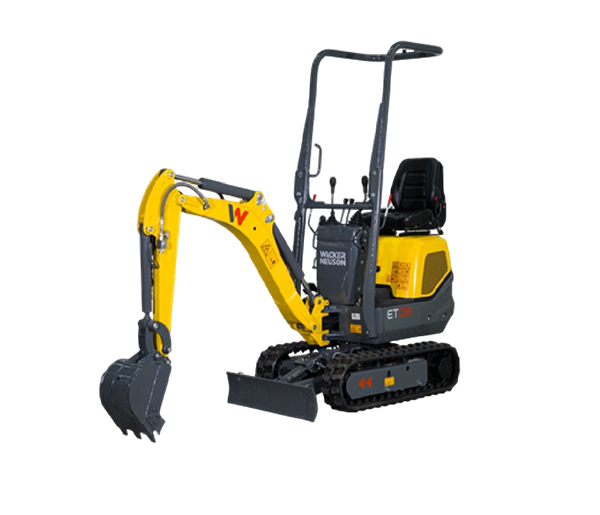
I would consider the Wacker Neuson ET80 for a wide range of jobs where an 8-ton class excavator makes practical sense.
General construction work is one of the most obvious applications. The machine can be used for soil removal, foundation preparation, trench excavation, backfilling and material handling.
For a building project, I would normally match the bucket size and working reach to the site conditions. There is no benefit in choosing a large bucket simply because it looks productive. The attachment needs to match the material and the machine's hydraulic and lifting capability.
Road work often requires a machine that can move soil, prepare drainage channels and work around existing road structures.
An excavator in this size class can also be useful for shoulder preparation, ditch cleaning, culvert work and general site maintenance. With a suitable attachment, the machine can take on tasks beyond basic digging.
Utility construction is another area where I see strong value in this machine class. Water pipes, drainage lines, electrical cables and communication infrastructure often require controlled trench excavation.
The operator needs to work carefully because underground conditions are not always obvious. Smooth hydraulic control and good visibility become particularly important when working near existing utilities.
Landscaping companies may use an excavator for tree removal, soil preparation, drainage, pond construction and site shaping.
The ET80 is larger than the small excavators commonly used for garden work, but that extra size can be useful when the project includes heavier soil movement or larger quantities of material.
I would not describe an 8-ton excavator as a replacement for a large Mining Excavator. That would not be realistic.
However, smaller excavators can still support mining and quarry operations for drainage, maintenance, material handling, service work and smaller excavation tasks. The correct attachment and operating conditions are important here.
| Application | Typical ET80 Task | Attachment Consideration |
|---|---|---|
| Building construction | Foundation and soil excavation | General digging bucket |
| Road projects | Ditching, drainage and earthmoving | Bucket or grading attachment |
| Utility construction | Trenching and backfilling | Narrow bucket and suitable coupler |
| Landscaping | Soil shaping and site preparation | Grading bucket or general bucket |
| Demolition support | Light structural breaking and cleanup | Hydraulic breaker where approved |
| Material handling | Moving loose materials around a site | Grapple or suitable attachment |
Source: Application categories are based on the general operating range of crawler excavators in this class and the Wacker Neuson product/application information. Attachment suitability must be confirmed for the individual ET80 configuration.
This is the part of the process that is often overlooked. Finding a machine is one thing. Buying the correct machine and getting it to the destination in the expected condition is another.
At Ganglong Heavy Industry Technology (Hefei) Co., Ltd., I approach the process from the buyer's side. I first confirm what the customer actually needs: model, year, working hours if applicable, machine condition, attachments, destination, quantity and budget range.
For a used Wacker Neuson ET80, I pay particular attention to the machine identification. I want to confirm the model and serial information before relying on a specification sheet. This is especially important for older equipment because configurations can change between production years and markets.
Before shipment, we can arrange checks covering the machine appearance, engine operation, hydraulic functions, travel system, swing function, working equipment and electrical system according to the confirmed order requirements.
I also look for visible hydraulic leaks, damaged hoses, unusual engine noise, abnormal smoke, track condition, sprocket wear, roller condition, bucket wear and signs of previous repair.
For a machine with attachments, I check whether the attachment matches the machine and whether the hydraulic connections are suitable.
The exact document package depends on the machine and transaction. Normally, I confirm the available machine documents, identification information, inspection records and accessory list before shipment.
This avoids a common problem in international machinery trading: the customer receives the machine but discovers later that an expected accessory or document was not included.
For international orders, payment is commonly arranged by T/T. A typical structure may involve a deposit before order processing and the balance before shipment, but the exact payment terms are agreed between both parties according to the transaction.
Complete excavators are generally transported by sea for international orders. Depending on the destination, machine size and shipping method, we can coordinate the loading and securing arrangement.
Loose parts, spare parts and suitable accessories can normally be sent separately by air or express when practical.
Before loading, the machine is protected and secured according to shipping requirements. Loose components are packed separately when necessary, using cartons, wooden cases or other suitable packaging.
My main concern is simple: the machine should arrive at the destination in a condition that matches the agreed order and inspection result.
Ganglong Heavy Industry Technology (Hefei) Co., Ltd. was founded in 2013. Together with Hefei Ganglong International Trade Co., Ltd., the company is affiliated with China Construction Machinery (Group) Co., Ltd.
Our business covers construction machinery, mining machinery, agricultural machinery and related attachments. We also operate our own HKLOONG range, including excavators, loaders, Backhoe loaders and swamp excavators.
At the same time, we provide machine sales and leasing services for a range of domestic and international brands. For third-party brands such as Wacker Neuson, my job is to act as a supplier and international trade partner. I do not describe ourselves as the manufacturer of Wacker Neuson machines.
This distinction matters to me because customers deserve clear information about who made the machine, who is supplying it and what service is actually being provided.
Our international trade team has experience serving customers in Asia, Africa, America and other markets. Construction machinery is not a small parcel business. The machine has to be matched with the destination, shipping method, documents, loading requirements and local working conditions.
When a customer asks me for a Wacker Neuson ET80, I therefore look beyond the model name. I want to understand what the customer plans to do with the machine, whether the machine configuration fits the job, and what needs to be prepared before shipment.
That approach is especially useful for used or older machines, where the exact specification can differ from a newer brochure. Model name alone is not enough.
The ET80 appears in older Wacker Neuson equipment records, operator manual references, parts listings and used-machine markets. Current Wacker Neuson public product information in the same general size range focuses more heavily on models such as the EZ80 and ET90. For an ET80 purchase, I recommend confirming the exact machine year and serial number.
ET80 machines in the market can be around the 8-ton class. One publicly available 2022 market reference lists an operating weight of approximately 8,400 kg. This should not be treated as a universal factory specification because machine configuration, attachments and equipment can change the actual operating weight.
The exact engine depends on the production version and market. A publicly available 2022 ET80 market reference lists approximately 45 kW engine output. Before purchasing, I recommend checking the actual engine plate and machine documents instead of relying only on a general online specification.
The machine can be considered for construction, earthmoving, trenching, drainage, road maintenance, landscaping, utility installation and other general excavation work. The final application depends on the machine condition, attachment and working environment.
Yes, attachment availability can be discussed according to the machine configuration and customer requirements. Common attachment types for excavators in this class include digging buckets, grading buckets, hydraulic breakers and other tools. Hydraulic flow, pressure and coupler compatibility should be checked before ordering.
I can arrange checks covering the engine, hydraulic system, electrical system, travel system, swing function, working equipment, tracks, attachments and general appearance according to the confirmed order requirements.
Complete machines are generally shipped by sea. The machine is secured and protected according to the transport arrangement. Smaller spare parts and suitable accessories may be shipped by air or express.
International orders are commonly arranged by T/T, with a deposit before order processing and the balance before shipment. Exact payment terms are confirmed with the customer before the order is executed.
Yes. Ganglong supplies construction machinery, mining machinery, agricultural machinery and matching attachments. Depending on the customer's requirements, we can also discuss equipment from brands such as Hitachi, SANY, Lonking, Hyundai, XCMG, SHANMON and LOVOL, as well as our HKLOONG machines.
When I evaluate an excavator, I do not start with the question, “Is this the most powerful machine?” I start with, “Does this machine fit the job?”
The Wacker Neuson ET80 is interesting because it belongs to a practical excavator size for customers who need more working capacity than a small compact excavator but do not necessarily need a large heavy excavator.
Its crawler layout, approximately 8-ton class, useful working size and broad attachment possibilities make it suitable for many construction, utility, road, landscaping and earthmoving applications.
At the same time, I would not recommend buying an ET80 based on a generic specification sheet alone. This is particularly true for an older or used ET80. Production year, machine serial number, engine version, hydraulic configuration, track type, boom and attachments can all change the final machine specification.
That is why I prefer to confirm the actual machine first, inspect the important working systems, check the documents and then discuss transport and delivery.
If you are sourcing a Wacker Neuson ET80 for an international project, Ganglong Heavy Industry can help coordinate the machine supply, configuration confirmation, inspection, accessories, documentation, packing and international transportation according to the agreed order requirements.
info@hkloong.com
86 158 5511 9567


©2026 HKLOONG Heavy Industry Technology (Hefei) Co., Ltd. All Rights Reserved.

This website uses cookies to ensure you get the best experience on our website.
 Español
 Pусский
 Français
 العربية


 WhatsApp
 Phone
Phone E-mail
 Message