
 Español
 Pусский
 Français
 العربية

When I talk with contractors about a wheeled Excavator, the first thing I usually ask is simple: where will the machine work, and how often does it need to move from one jobsite to another?
That question matters because a Wheeled Excavator is not simply a crawler Excavator With Wheels underneath. Its biggest advantage is mobility. For urban construction, road maintenance, municipal engineering, utility installation, landscaping and material handling, the ability to travel between suitable work areas can save a lot of time and reduce the need for repeated transport.
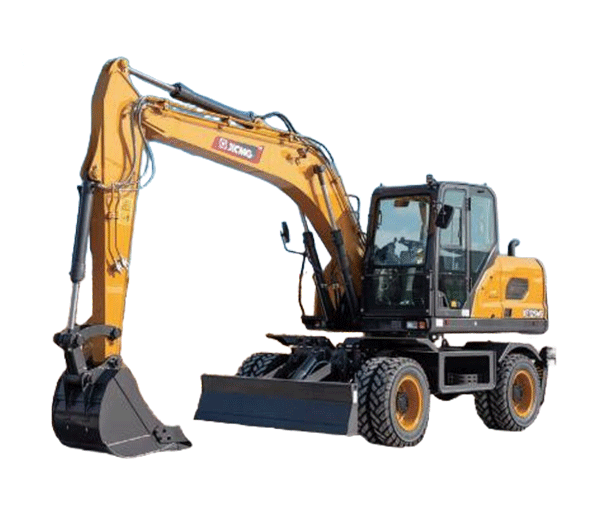
The XE125WG Wheeled Hydraulic Excavator is positioned for this type of working environment. It combines hydraulic digging capability with wheeled mobility, giving contractors a practical machine for projects where excavation performance and convenient site transfer are both important.
At Ganglong Heavy Industry Technology (Hefei) Co., Ltd., I look at construction equipment from the point of view of actual use. A machine may look good in a specification sheet, but what matters to a buyer is how it fits the job: how it moves, how the hydraulic system responds, how easy it is to maintain, how it can be transported, and whether the supplier can support the machine after the order.
Our group was founded in 2013 and integrates equipment R&D, manufacturing, testing, customization and global sales. Through Hefei Ganglong International Trade Co., Ltd., we also serve overseas customers looking for construction machinery, mining machinery, agricultural machinery and matching attachments.
For customers searching for an XE125WG Wheeled Excavator, XE125WG Hydraulic Excavator or XCMG Wheeled Excavator, this page explains how I would evaluate the machine before placing an order.
1. What Is the XE125WG Wheeled Hydraulic Excavator?
The basic idea behind the XE125WG is easy to understand. It is a hydraulic excavator built on a wheeled platform rather than a crawler undercarriage. The working equipment still performs the familiar jobs of digging, loading, lifting and material handling, but the wheeled chassis gives the machine a different way of working.
For many urban projects, this difference is important.
A crawler excavator is very useful when the machine needs maximum traction on soft or uneven ground. A wheeled excavator, on the other hand, can be more convenient when the project involves roads, paved areas, municipal sites, industrial yards or several nearby work locations.
I normally describe this type of machine as a bridge between excavation equipment and mobile construction equipment. It is still an excavator first, but mobility becomes a much bigger part of its daily job.
The XE125WG can be considered for applications such as road construction, road maintenance, municipal engineering, landscaping, drainage, utility installation, agriculture, general earthmoving and material handling. The exact working range depends on the final machine configuration, attachment and site conditions.
This is also why I recommend that buyers look beyond the model name. A good purchasing decision should consider the bucket, hydraulic attachments, tires, working equipment, transport arrangement, operating environment and local service requirements together.
XCMG's published wheeled excavator range shows the same basic product philosophy. For example, the official XE60WD is listed for municipal management, pipeline maintenance and road construction, while the larger XE160WE is equipped for wider earthwork and material-handling applications.
| Reference Model | Operating Weight | Rated Power | Bucket Capacity | Typical Position |
|---|---|---|---|---|
| XCMG XE60WD | 5,900 kg | 42.5 kW | 0.21 m³ | Compact municipal and road work |
| XE125WG | Configuration dependent | Configuration dependent | Configuration dependent | Medium-class wheeled excavation applications |
| XCMG XE160WE | 15,800 kg | 115 kW | 0.60 m³ | Larger earthwork and material handling |
Source: XCMG Global published product information for XE60WD and XE160WE; XE125WG configuration should be confirmed against the actual quotation and production specification before purchase.
For international buyers, this point is worth remembering. Construction machinery configurations can change according to emission rules, destination market, attachment requirements and production batch. I prefer to confirm the final specification before treating any number as a contractual machine parameter.
2. How the XE125WG Wheeled Excavator Works
The working principle is not complicated. The engine provides power, the hydraulic system transfers that power to the working functions, and the operator controls the machine through the hydraulic controls and travel system.
During excavation, the hydraulic pump sends hydraulic oil under pressure to the main control valve. The operator's joystick commands determine which actuator receives the flow. The boom, arm and bucket cylinders then work together to produce the digging movement.
At the same time, the hydraulic system also supports other machine functions, including swing and auxiliary hydraulic equipment where the configuration allows it.
This arrangement gives the operator independent control over several movements. When digging a trench, for example, I may need to lower the boom, extend the arm, curl the bucket and then swing the upper structure. Smooth coordination between these actions is more important in daily work than simply having a large engine rating.
The wheeled travel system is another key part of the machine. Instead of relying on crawler tracks, the machine uses a road-oriented wheel and axle arrangement designed for mobile operation. This makes it useful for projects where the excavator needs to travel between work areas.
However, I would not treat a wheeled excavator as a road vehicle. Travel speed, road regulations, tire selection, braking requirements and local transportation rules all need to be considered. For longer-distance movement or difficult terrain, transport equipment may still be necessary.
The hydraulic system is equally important. In real work, hydraulic response affects how naturally the machine feels to the operator. Poor control can make digging tiring and reduce productivity. A properly matched hydraulic system should provide predictable movement, useful digging force and stable control when several functions are used together.
That is why I pay close attention to hydraulic inspection before delivery. We check the hydraulic system together with the engine, travel system, working equipment, electrical system, brakes, tires and overall operating performance.
3. Main Features I Look For in the XE125WG
Wheeled Mobility
The first feature is obvious but important: the machine has wheels.
For urban contractors, municipal teams and utility companies, this can make a real difference. A project may start on one side of a road and continue several hundred meters away. If the machine can move between suitable work areas without being loaded onto a trailer every time, daily operation can become more convenient.
This is particularly useful for road maintenance, drainage, landscaping and utility installation.
Hydraulic Excavation Performance
The second point is digging performance. Mobility has little value if the machine cannot perform its main job properly.
The XE125WG is intended to provide hydraulic excavation capability for general construction work. With the appropriate bucket, the machine can be used for digging soil, trenching, site preparation, loading and other common earthmoving tasks.
For harder material, the attachment should be selected according to the actual ground condition. I would not recommend using a standard bucket for every material simply because it fits the machine.
Flexible Attachment Options
A wheeled excavator becomes much more useful when it can work with suitable attachments.
Depending on the final configuration, customers may consider buckets, breakers, grapples, hydraulic thumbs, compactors, augers or other hydraulic tools for different jobs. The important thing is to confirm hydraulic flow, pressure, mounting dimensions and machine stability before ordering an attachment.
Operator Control
Operator control is another practical issue. An excavator can have plenty of power and still be difficult to use if its controls are not well matched.
For repeated municipal and road work, smooth movement is especially useful. Operators often need to make small corrections rather than simply dig as fast as possible. Accurate boom, arm and bucket control can help reduce unnecessary movement and make repetitive work more comfortable.
Service Access
I also look at maintenance access before recommending a machine. Filters, hydraulic components, engine service points, electrical components and daily inspection areas should be reasonably accessible.
Construction machinery works in dust, mud, rain and sometimes very hot or cold conditions. Easy maintenance is not a luxury. It is part of keeping the machine available for work.
4. XE125WG Compared with Other Wheeled Excavators
When a buyer asks me which wheeled excavator to choose, I do not start by saying that one model is automatically better than another. I start with the workload.
A small machine may be easier to transport and operate in narrow areas. A larger machine can provide greater working capacity but may require more space and more attention to transport. The right size depends on the project.
| Item | XE60WD | XE125WG | XE160WE |
|---|---|---|---|
| Machine Type | wheel excavator | Wheeled Hydraulic Excavator | Wheel Excavator |
| Operating Weight | 5,900 kg | To be confirmed | 15,800 kg |
| Rated Power | 42.5 kW | To be confirmed | 115 kW |
| Bucket Capacity | 0.21 m³ | To be confirmed | 0.60 m³ |
| Travel Application | Municipal and road work | Construction and multi-site work | Wider earthwork and handling |
Source: XCMG Global published specifications for XE60WD and XE160WE. XE125WG values should be confirmed according to the ordered configuration.
From a buyer's perspective, I would use this comparison as a size-positioning reference rather than a substitute for the official XE125WG quotation. The purpose is to show why model selection matters.
If the work mainly involves narrow municipal roads, light excavation and utility maintenance, a compact wheeled excavator may be enough. If the machine will spend most of its time on large earthmoving projects, a heavier excavator may make more sense.
The XE125WG sits in the type of working range that can be attractive to contractors who need more capability than a compact machine while still wanting the mobility benefits of a wheeled excavator. The final configuration should always be checked before purchase.
5. Where I Would Use the XE125WG
Road Construction and Maintenance
Road work is one of the most natural applications for a wheeled excavator.
There are many jobs that do not require a crawler excavator to remain in one position for hours. Roadside drainage, shoulder work, trench excavation, pipe installation and general maintenance can require the machine to move frequently.
A wheeled configuration can make these jobs more convenient when the road and local regulations allow machine travel.
Municipal Engineering
Municipal projects often involve water pipes, drainage, cables, sidewalks, landscaping and road repairs. The work area can be spread across a city rather than concentrated on one large construction site.
For this kind of work, machine mobility is a practical advantage. XCMG's own published wheeled excavator information identifies municipal management and road-related work as application areas for its wheel excavator range.
Utility Installation
Utility contractors frequently need to excavate narrow trenches, prepare pipe routes and restore working areas. The machine must be able to dig accurately without taking up unnecessary space.
Depending on the attachment and site conditions, the XE125WG can be considered for utility installation, drainage and related excavation work.
Landscaping
Landscaping involves more than digging holes. Operators may need to remove soil, prepare ground, move materials and work around existing structures.
The combination of hydraulic working equipment and wheeled mobility can be useful when the machine has to move around developed areas.
Agricultural Construction
In agriculture, excavators can be used for drainage channels, land preparation, farm roads, pond work and other earthmoving tasks.
Actual suitability depends heavily on ground conditions. Wet or very soft fields can require different machine choices, so I always recommend checking the soil and access conditions before selecting a wheeled excavator.
Material Handling
With the right attachment, a wheeled excavator can also support material handling work. This may include moving soil, construction materials, debris or other suitable loads.
Here, stability is especially important. The lifting capacity of an excavator changes with working radius, attachment, load position and ground conditions. I would never judge lifting ability only from the machine's nominal size.
6. XE125WG Manufacturing, Inspection and Export Process
Buying an excavator from overseas is different from buying a machine locally. The machine has to be suitable not only for the job but also for export, transportation, customs clearance and final delivery.
At Ganglong Heavy Industry Technology, I treat the process as a series of checks rather than one simple shipment.
Order and Configuration Confirmation
First, we confirm the customer's application. I want to know the working environment, required attachment, destination country, expected workload and preferred transport method.
This is where we also confirm the actual XE125WG configuration. Engine specification, emission requirements, bucket, tires, attachments and other equipment should be agreed before production or final shipment preparation.
Production and Preparation
For wheel excavator orders, the typical production cycle is around 15–30 days after order confirmation, depending on the model, configuration and order quantity.
I always recommend customers treat this as a planning reference rather than a fixed promise. Production schedules can be affected by configuration, component availability, inspection requirements and shipping arrangements.
Pre-Delivery Inspection
Before delivery, we inspect the major systems. This includes the engine, hydraulic system, travel system, working equipment, electrical system, brakes and tires.
We also check overall operating performance. The purpose is straightforward: identify issues before the machine leaves the supplier, rather than discovering them after the machine arrives at the customer's site.
| Inspection Area | What We Check | Why It Matters |
|---|---|---|
| Engine | Starting, running condition and basic operation | Reliable power delivery |
| Hydraulic System | Hydraulic functions and control response | Digging and working movement |
| Travel System | Travel operation and steering-related functions | Site mobility |
| Working Equipment | Boom, arm, bucket and related functions | Excavation performance |
| Electrical System | Controls, instruments and electrical functions | Machine operation and monitoring |
| Brakes and Tires | Basic operating condition | Travel and site safety |
Source: Ganglong Heavy Industry product and export inspection process supplied for this product page.
Export Packing
Once the machine passes inspection, we prepare it for transportation. The excavator is cleaned, protected against moisture and rust, securely fixed and covered where necessary.
Tools and spare parts can be packed separately in wooden cases or strong export cartons. The exact packing method depends on the shipment arrangement and destination.
7. Why I Work with Ganglong for XE125WG Supply
For an overseas buyer, the machine itself is only one part of the transaction. The other part is communication.
Ganglong Heavy Industry Technology (Hefei) Co., Ltd. was founded in 2013. Together with Hefei Ganglong International Trade Co., Ltd., our business covers equipment R&D, manufacturing, testing, customization, sales and international trade.
We work with a range of construction machinery brands and also offer our own HKLOONG excavators, loaders, Backhoe loaders and swamp excavators. Our product scope also includes mining machinery, agricultural machinery and matching attachments.
Our international trade team has experience serving customers across Asia, Africa, America and other markets. That experience is useful because international machinery orders involve more than price. Buyers also need clear specifications, shipping information, documentation and practical communication.
When a customer asks me for an XE125WG Wheeled Hydraulic Excavator, I prefer to understand the project before giving a final recommendation.
For example, I may ask:
What material will the excavator mainly dig?
Will the machine work mainly on roads, construction sites or soft ground?
How often does it need to travel between work areas?
Which bucket or attachment is required?
What emission standard is required in the destination country?
Does the customer need spare parts together with the machine?
Will the machine be shipped by Ro-Ro, bulk vessel, container or flat-rack?
These questions may sound basic, but they can prevent expensive mistakes later.
For payment, international orders can commonly be arranged by T/T, such as 30% deposit with the balance before shipment. L/C may also be available for qualified orders. The exact commercial terms should be confirmed in the quotation and sales contract.
For transportation, wheel excavators can be arranged through Ro-Ro vessels, bulk vessels, containers or flat-rack containers depending on machine dimensions, configuration and destination port.
Our job is not simply to send a machine and stop communicating. We want the buyer to know what has been ordered, how it has been inspected, how it will be packed and how it will be shipped.
8. XE125WG Wheeled Hydraulic Excavator FAQ
1. What is the XE125WG Wheeled Hydraulic Excavator used for?
The XE125WG can be considered for road construction, road maintenance, municipal engineering, utility installation, landscaping, drainage, agriculture, material handling and general earthmoving. The best application depends on the final configuration, attachment and ground conditions.
2. What is the main advantage of a wheeled excavator?
The main advantage is mobility. Compared with a crawler excavator, a wheeled excavator can be more convenient for suitable roads, urban projects and jobsites where the machine frequently needs to move between work areas. It still provides the hydraulic digging functions expected from an excavator.
3. Is the XE125WG suitable for road construction?
Yes, wheeled excavators are commonly used for road-related work such as excavation, drainage, roadside maintenance and utility installation. XCMG's published wheel excavator models also list road construction and road maintenance among their applications.
4. Can the XE125WG work with hydraulic attachments?
Attachment availability depends on the final machine configuration. Possible tools for this type of machine can include buckets, breakers, grapples and other hydraulic attachments. Before ordering, I recommend confirming hydraulic flow, pressure, mounting dimensions and attachment weight with us.
5. How long does it take to produce an XE125WG?
As a general planning reference, the production cycle is around 15–30 days after order confirmation, depending on configuration and order quantity. The actual delivery schedule should be confirmed with the final quotation because production and shipping conditions can change.
6. How do you inspect the excavator before shipment?
We inspect the engine, hydraulic system, travel system, working equipment, electrical system, brakes, tires and overall operating performance before delivery. The goal is to identify problems before shipment and make sure the machine is prepared for export.
7. How is the XE125WG shipped overseas?
Depending on the machine dimensions, destination and shipping plan, we can consider Ro-Ro vessel, bulk vessel, container or flat-rack container transportation. The final method is confirmed after checking the actual machine configuration and destination.
8. What is included in standard delivery?
Standard delivery normally includes the complete wheel excavator, standard bucket, basic tools, operation and maintenance manuals and necessary technical documents. Spare parts and additional attachments can be discussed according to the customer's requirements.
9. Can I order an XE125WG with a different configuration?
Configuration depends on the available machine specification and destination requirements. Before confirming an order, we can discuss the working equipment, bucket, attachments, tires, emission requirements and other relevant options.
10. How can I get the exact XE125WG specification?
The safest way is to request the current quotation and technical specification for the exact machine intended for your market. Model configurations can differ by production version, destination and order requirements. We can confirm the actual operating weight, engine, bucket, hydraulic system, dimensions and other parameters before the contract is finalized.
Final Thoughts from Our Side
I see the XE125WG Wheeled Hydraulic Excavator as a practical choice for contractors who do not want to separate excavation and site mobility into two different problems.
For urban construction, municipal work, road maintenance, utility installation, landscaping and general earthmoving, the ability to move between suitable work areas can be just as important as digging force.
But I would not choose a wheeled excavator simply because the model looks attractive on paper. Start with the job. Look at the ground, travel requirements, attachment, working radius, transport conditions and local regulations. Then confirm the machine configuration.
That is how I approach construction machinery at Ganglong.
We can support customers with machine selection, configuration confirmation, inspection, export preparation, transportation coordination and related construction machinery requirements. Whether you are looking for an XE125WG Wheeled Hydraulic Excavator, an XE125WG Wheeled Excavator for road maintenance, or a wider XCMG Wheeled Excavator solution, we focus on matching the machine to the actual project rather than simply quoting a model number.
For international buyers, that practical approach can make the purchasing process much easier: confirm the application, confirm the specification, inspect the machine, prepare the shipment and keep the communication clear from order to delivery.



 WhatsApp
 Phone
Phone E-mail
 Message