
 Español
 Pусский
 Français
 العربية

When I talk about a wheeled Excavator with a contractor, I usually start with one simple question: how often does the machine need to move?
That question sounds basic, but it can change the whole equipment choice. On a large earthmoving site, a crawler excavator may stay in one area for most of the day. On municipal projects, road maintenance jobs, utility installation and landscaping work, things are different. The machine may need to move from one work area to another several times a day.
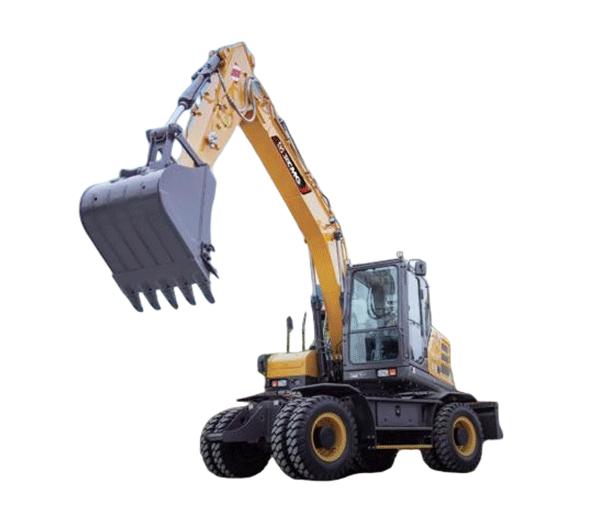
This is where I see the practical value of the XE155WGA Wheeled Hydraulic Excavator.
The XE155WGA combines hydraulic excavation capability with a wheeled travel system. According to XCMG's official product information, the machine has an operating weight of 14,200 kg, a bucket capacity range of 0.26–0.7 m³, rated power of 108 kW and bucket digging force of 100 kN. XCMG also describes it as suitable for road and bridge infrastructure, municipal maintenance and rural and urban construction.
From my point of view, those numbers only tell part of the story. A machine is not useful because a specification sheet looks impressive. It has to make sense when it is actually working. It needs stable hydraulic control, convenient travel, suitable attachments, a comfortable operator environment and maintenance points that people can reach without turning routine service into a big project.
At Ganglong Heavy Industry Technology (Hefei) Co., Ltd., I approach construction machinery from that practical side. Our company was founded in 2013 and integrates equipment R&D, manufacturing, testing, customization and global sales. Together with Hefei Ganglong International Trade Co., Ltd., we supply construction machinery, mining machinery, agricultural machinery and matching attachments to customers in Asia, Africa, America and other markets.
For a buyer searching for an XE155WGA Wheeled Excavator, XE155WGA Hydraulic Excavator or XCMG Wheeled Excavator, I would not look only at the model name. I would look at what the machine can do, where it can work, how it is configured and how the supplier handles the order from specification confirmation to delivery.
1. What the XE155WGA Wheeled Hydraulic Excavator Is Built to Do
The easiest way for me to explain the XE155WGA is this: it is an excavator designed for people who need digging performance but also need the machine to move around efficiently.
The wheeled design changes the way the machine fits into a project. Instead of depending on a crawler undercarriage, the excavator uses a wheeled travel system that is more suitable for jobs involving roads, developed areas and frequent movement between suitable work locations.
That makes the machine particularly interesting for municipal contractors, road maintenance companies, utility contractors, landscaping teams and general construction businesses.
XCMG's official information lists the XE155WGA with a 14,200 kg operating weight, 0.26–0.7 m³ bucket capacity, 108 kW rated power and 100 kN bucket digging force. The same source highlights a low-speed, high-torque engine, a flow-compensation hydraulic system, an upgraded axle and gearbox system, wear-resistant tires and a faster transfer capability.
| Specification | XE155WGA | Why I Pay Attention to It |
|---|---|---|
| Operating Weight | 14,200 kg | Provides a useful balance between working capacity and mobility |
| Bucket Capacity | 0.26–0.7 m³ | Allows configuration according to different excavation and handling tasks |
| Rated Power | 108 kW | Supports the machine's working and travel functions |
| Bucket Digging Force | 100 kN | Important when digging and loading material |
Source: XCMG official XE155WGA product page.
I would not treat the bucket range as meaning that every bucket should be used for every job. Bucket selection should follow the material, digging conditions and required productivity. A larger bucket can move more material per cycle, but the machine still needs to remain properly balanced and within the working limits of the selected configuration.
That is one reason I prefer to discuss the customer's application before confirming a machine order.
A machine for work that keeps moving
Imagine a municipal contractor working along a long urban road. One morning, the machine may be opening a drainage trench. Later, it may move to another section for utility work. The following day, it may be used for landscaping or general earthmoving.
In that situation, mobility becomes part of productivity.
It is not only about moving faster. It is also about reducing unnecessary loading and unloading when the working environment allows the machine to travel between suitable locations.
XCMG has also documented XE155WGA use in real projects. In a 2023 field story from Xinjiang, XCMG reported an XE155WGA being used for landscaping, road construction and pipeline renovation, with the operator specifically highlighting the convenience of transferring the machine between jobs.
2. How I Understand the XE155WGA Hydraulic System and Working Principle
At first glance, hydraulic Excavators can look complicated. In actual operation, the basic idea is quite simple.
The engine produces mechanical power. The hydraulic pump converts that power into hydraulic flow and pressure. The main control system directs hydraulic oil to the cylinders and motors that operate the boom, arm, bucket, swing and other machine functions.
When I operate the joystick to lower the boom, hydraulic oil is directed to the relevant cylinder. When I curl the bucket, another hydraulic function moves the bucket cylinder. The same basic principle applies to the arm, swing and other working functions.
The important part is not just having hydraulic power. The machine needs to control that power smoothly.
According to XCMG, the XE155WGA uses flow-compensation technology in its hydraulic system to make combined movements smoother. XCMG also describes the engine and hydraulic system as being matched to improve performance in the low-speed operating range.
That matters in real work because an operator rarely performs only one movement. Digging a trench may require lowering the boom, moving the arm, curling the bucket and swinging the upper structure in a coordinated sequence.
If those movements are smooth, the operator can work with greater control. If the hydraulic response is poor, the operator has to keep correcting the controls, which can make repetitive work tiring.
Flow compensation in daily work
Flow compensation is not something most machine operators will discuss over lunch, but they notice the result.
The idea is to help the hydraulic system distribute flow more appropriately when several functions are working together. In practice, that can contribute to smoother compound movements and more predictable control.
XCMG specifically identifies smoother compound action and more comfortable control as features of the XE155WGA hydraulic system.
For me, this is especially relevant to utility work, grading, loading and jobs where the operator needs to make small adjustments rather than simply digging as aggressively as possible.
Low-speed, high-torque operation
XCMG describes the XE155WGA as using a low-speed, high-torque engine and matching the engine characteristics with the hydraulic system. The purpose is to balance power and fuel use in the normal working range.
I think this is a useful approach for an excavator because construction work is not a race where the engine should stay at maximum speed all day. Many tasks involve changing loads, repeated digging cycles and partial loads.
The better approach is to match engine output and hydraulic demand to the actual work.
3. Main Features That Matter in Real Jobsites
1. Wheeled mobility
The biggest difference between the XE155WGA and a crawler excavator is right under the machine.
The wheeled configuration is designed around mobility. For suitable roads and jobsites, this can make moving between work areas more convenient.
XCMG's product information specifically notes an upgraded axle and gearbox system, wear-resistant tires and faster transfer capability.
I still recommend checking local road regulations before using any wheeled excavator on public roads. Machine travel is not the same thing as unrestricted road driving. Local weight limits, speed rules, permits, lighting requirements and other regulations may apply.
2. Flexible bucket range
The official XE155WGA specification gives a bucket capacity range of 0.26–0.7 m³.
That range gives buyers room to configure the machine around different jobs. A smaller bucket can be useful when precision matters or when the material is heavier. A larger bucket can make sense when handling suitable loose material and higher volume is more important.
I always recommend selecting the bucket together with the material density and working conditions rather than choosing the biggest bucket simply because it is available.
3. Multi-function attachment capability
One of the features I particularly like about the XE155WGA is its attachment flexibility.
XCMG states that the machine is equipped with a breaker pipeline and can support different attachment modes, including a Hydraulic Breaker, hydraulic shear and grab. Optional equipment can include a multi-function attachment system, Quick Coupler and front outriggers.
That changes the machine from a basic digging tool into a more flexible work platform.
For one contractor, the machine may spend most of its time digging trenches. For another, it may be used for breaking concrete, handling materials or grabbing suitable loads. The actual attachment package should be confirmed before ordering because hydraulic flow, pressure, weight and mounting requirements all matter.
4. Operator visibility and comfort
Construction work can last for many hours. A machine that is powerful but uncomfortable can become a problem over time.
XCMG states that the XE155WGA cab uses a ROPS-certified structure and includes a rear camera, working lights and mirrors intended to reduce blind spots. The machine also has an air-conditioning system and a large wrapped seat with an integrated armrest design.
These are practical details rather than flashy features. A clear view and comfortable seat can make a long workday easier for the operator.
5. Ground-accessible maintenance
Another point worth mentioning is maintenance access.
XCMG says the XE155WGA is designed with extended maintenance intervals and ground-accessible maintenance points.
I like this approach because routine maintenance should be part of normal machine ownership. Operators need to inspect fluids, filters, hoses, tires and other service items regularly. If simple maintenance requires too much effort, it is easier for important checks to be skipped.
4. XE155WGA Compared with Other XCMG Wheeled Excavators
When I compare excavators, I prefer to compare machines that have a clear working relationship rather than throwing random models into one table.
The XE105WG is smaller than the XE155WGA, while the XE210WGA belongs to a larger class. This makes them useful reference points when a customer is deciding how much machine they actually need.
| Model | Operating Weight | Bucket Capacity | Rated Power | Bucket Digging Force |
|---|---|---|---|---|
| XE105WG | 10,100 kg | 0.45 m³ | 74 kW | 53 kN |
| XE155WGA | 14,200 kg | 0.26–0.7 m³ | 108 kW | 100 kN |
| XE210WGA | Configuration dependent | Configuration dependent | Configuration dependent | Configuration dependent |
Source: XCMG official product information. The XE105WG specifications are published by XCMG; the XE155WGA specifications are from XCMG's official product page. The final XE210WGA configuration should be confirmed against the applicable XCMG specification before quotation.
From my perspective, the table shows why choosing a machine only by its name can be misleading.
The XE105WG, for example, has an official operating weight of 10,100 kg, rated power of 74 kW, 0.45 m³ bucket capacity and 53 kN bucket digging force.
The XE155WGA moves into a heavier working class, with 14,200 kg operating weight, 108 kW rated power and 100 kN bucket digging force.
That does not mean one model is automatically right for every customer. If the work involves narrow areas and lighter excavation, a smaller machine may be easier to handle. If the contractor needs more digging capacity, lifting capability and attachment flexibility, the larger machine may be more appropriate.
XE155WGA compared with a crawler excavator
I also get asked whether a wheeled excavator can replace a crawler excavator.
My answer is: sometimes, but not always.
| Working Factor | Wheeled Excavator | Crawler Excavator |
|---|---|---|
| Road Mobility | Strong advantage for suitable road travel | Usually requires transport for longer moves |
| Urban Construction | Well suited to many urban applications | Well suited where ground access and stability are priorities |
| Soft Ground | Requires careful site assessment | Generally provides stronger ground contact |
| Frequent Site Transfer | Convenient when road and regulations allow | Often needs a trailer for road transfer |
| Road Maintenance | Highly practical for many jobs | Useful where transport access is available |
Source: Application comparison based on the operating characteristics of wheeled and crawler excavators; XCMG's official XE155WGA information identifies road and bridge infrastructure, municipal maintenance and rural/urban construction as suitable applications.
The choice should come from the ground and travel conditions. If the machine spends most of its life on soft ground, steep terrain or a fixed excavation area, a crawler excavator may be more suitable. If it spends a lot of time around roads and developed sites, the mobility of a wheeled excavator becomes more valuable.
5. Applications: Where I Would Put the XE155WGA to Work
Road Construction and Maintenance
Road work is one of the clearest applications for the XE155WGA.
The machine can support excavation, drainage work, roadside construction, material handling and other earthmoving tasks. When a contractor has several sections of road to maintain, the wheeled design can make movement between suitable work areas easier.
XCMG officially lists road and bridge infrastructure among the XE155WGA's application areas.
Municipal Engineering
Municipal projects often involve many small jobs rather than one giant excavation. Drainage, pipelines, road repairs, landscaping and utility work can happen in different parts of a city.
This is where I see a strong case for a wheeled excavator.
XCMG also has a documented field application in Xinjiang where an XE155WGA was used for landscaping, road construction and pipeline renovation.
Utility and Pipeline Installation
Water lines, drainage systems, communication cables and other utilities often require trenching and backfilling.
The operator needs controlled excavation, good visibility and the ability to move along the working corridor. With the right bucket and attachment, the XE155WGA can be considered for these tasks.
Landscaping and Urban Construction
Landscaping is another area where a wheeled excavator can be useful. The machine may need to remove soil, prepare planting areas, move materials and work around existing roads or buildings.
Its wheeled configuration is useful when the project contains multiple work areas and suitable access routes.
Material Handling
The XE155WGA can also be configured for material handling tasks with suitable attachments.
However, I always make one point very clear: lifting capacity is not a single number that applies everywhere. Working radius, load position, attachment weight, ground condition and machine configuration all affect safe lifting performance.
For customers planning regular lifting work, I recommend confirming the actual lifting chart and configuration rather than estimating from operating weight alone.
Rural and Agricultural Construction
Rural construction can include drainage channels, farm roads, irrigation projects, land preparation and general earthmoving.
XCMG specifically lists rural and urban construction among the XE155WGA's intended working conditions.
For agricultural sites with very soft or wet ground, however, I would check ground conditions carefully before choosing a wheeled excavator. The machine needs suitable access and ground bearing conditions to work safely and efficiently.
6. Real-World Performance: What the 2026 XCMG Case Tells Me
Specifications are useful, but I always like to see what happens when a machine enters a difficult jobsite.
In July 2026, XCMG published a case involving an XE155WGA working at a large stone plant in Zibo, Shandong. The site was described as having soft ground, scattered stone and heavy dust, with the machine handling piling and lifting work.
The published case reports that the machine used a Cummins F4.5 engine and a 0.6 m³ bucket. It also reports lifting 5-ton loads at low travel speed and describes the machine operating on rough and muddy ground. The case additionally reports measured fuel consumption below 6.5 L/h under the stated heavy-load working conditions. These are field-case claims from XCMG, not figures I would treat as universal fuel-consumption specifications.
That distinction is important.
Fuel consumption can change significantly with operator habits, material, attachment, engine load, working cycle, ambient temperature, terrain and maintenance condition. I would never promise a fixed hourly fuel number to every buyer.
The same 2026 case also highlights the XE155WGA's hydraulic control and travel components. XCMG reports the use of a Linde travel motor and ZF axle and gearbox in that machine, along with smooth low-speed control on rough terrain.
From my point of view, the most useful lesson from this case is not one individual number. It is that the machine is being used beyond clean, flat demonstration conditions.
Real construction sites are dusty. Roads are uneven. Loads change. Operators need to make small movements. Equipment gets used for hours rather than minutes.
That is where hydraulic response, travel control, operator comfort and machine stability start to matter.
Another XCMG field story from Xinjiang provides a different example. The company reported an XE155WGA being used for landscaping, road construction and pipeline renovation, with the operator noting the convenience of transferring the wheeled excavator between jobs.
These two cases are useful because they represent different working environments: one focuses on demanding material handling and rough conditions, while the other highlights mobility across infrastructure-related work.
7. Manufacturing, Inspection and Export: How We Handle an XE155WGA Order
When I sell construction machinery to an overseas customer, I do not consider the job finished when the machine leaves the factory.
For an international order, the machine has to be correctly configured, inspected, documented, packed and shipped.
Step 1: Confirm the application
First, I ask what the machine will actually do.
Will it mainly dig trenches? Will it work on roads? Will it handle stone? Does the customer need a breaker? Is lifting part of the job? How far will it travel between sites?
These questions help us avoid selling the wrong configuration.
Step 2: Confirm the machine configuration
For the XE155WGA, I confirm the required bucket, attachment system, hydraulic attachment requirements, tires, destination-market requirements and other relevant specifications before the order is finalized.
XCMG's official product information shows that the machine can be equipped with a breaker pipeline and optional multi-function attachment system, quick coupler and front outriggers.
Step 3: Production planning
For our normal export planning, the typical production cycle is around 15–30 days after order confirmation, depending on model, configuration and order quantity.
I treat this as a planning window rather than an unconditional delivery promise. The actual schedule needs to be confirmed for every order because machine configuration, component availability and shipping arrangements can affect timing.
Step 4: Pre-delivery inspection
Before shipment, I want the major machine systems checked.
| Inspection Area | Main Checks | Purpose |
|---|---|---|
| Engine | Starting, running and operating condition | Confirm normal power operation |
| Hydraulic System | Working functions and response | Confirm digging and attachment operation |
| Travel System | Travel, steering and related functions | Confirm mobility |
| Working Equipment | Boom, arm, bucket and attachment functions | Confirm working performance |
| Electrical System | Controls, instruments and electrical functions | Confirm machine monitoring and operation |
| Brakes and Tires | Condition and operation | Support safe travel and site operation |
Source: Ganglong Heavy Industry's supplied export inspection process for wheel excavators.
After inspection, the machine is prepared for export. We clean the excavator, protect exposed areas against moisture and rust where required, secure the machine for transportation and use suitable covers when necessary.
Tools and spare parts can be packed separately in wooden cases or strong export cartons.
Shipping options
Depending on the final dimensions and destination, wheel excavators can be arranged for Ro-Ro shipping, bulk vessel transport, container shipment or flat-rack container transportation.
I do not choose the shipping method based only on habit. The actual machine dimensions, destination port, vessel availability and freight quotation all need to be considered.
Payment terms
For international orders, T/T is commonly arranged with a 30% deposit and the balance before shipment. L/C may also be available for qualified international orders. The exact payment terms should always be confirmed in the commercial quotation and sales contract.
8. Why I Recommend Working with an Experienced Machinery Supplier
There is a big difference between buying a machine and buying a machine correctly.
Anyone can send a product name and a price. The harder part is making sure the product specification matches the customer's working conditions.
At Ganglong Heavy Industry Technology (Hefei) Co., Ltd., we work across construction machinery, mining machinery, agricultural machinery and matching attachments. Our group was established in 2013, and our international trade arm, Hefei Ganglong International Trade Co., Ltd., has experience serving customers in Asia, Africa, America and other regions.
We also work with several major construction machinery brands, including Hitachi, SANY, Lonking, Hyundai, XCMG, SHANMON and LOVOL, while offering our own HKLOONG excavators, loaders, Backhoe loaders and swamp excavators.
That wider product experience helps when a customer is not sure whether a wheeled excavator is the correct machine.
Sometimes the answer is a wheeled excavator.
Sometimes the job really needs a crawler excavator.
Sometimes the machine needs a breaker, grapple or quick coupler.
And sometimes the customer needs a completely different machine class.
I would rather identify that at the quotation stage than have the customer discover it after the machine arrives.
For the XE155WGA, my normal checklist includes:
Actual working application
Ground and road conditions
Required bucket size
Hydraulic attachment requirements
Expected daily working hours
Destination-country regulations
Emission requirements
Shipping method
Spare parts requirements
Pre-delivery inspection requirements
This is also why I prefer a clear technical quotation. The customer should know exactly what machine is being purchased instead of relying on a product name alone.
9. XE155WGA Wheeled Hydraulic Excavator FAQ
What is the operating weight of the XE155WGA?
XCMG's official product page lists the XE155WGA operating weight as 14,200 kg.
What is the bucket capacity of the XE155WGA?
XCMG lists a bucket capacity range of 0.26–0.7 m³ for the XE155WGA. The appropriate bucket should be selected according to material, application and machine configuration.
What is the rated power of the XE155WGA?
The official XCMG specification lists rated power at 108 kW.
What is the bucket digging force?
XCMG lists a bucket digging force of 100 kN for the XE155WGA.
What jobs is the XE155WGA suitable for?
The machine is listed for road and bridge infrastructure, municipal maintenance and rural and urban construction. In practical terms, I would also consider it for road maintenance, drainage, utility installation, landscaping, general earthmoving and suitable material handling work.
Can the XE155WGA use a hydraulic breaker?
Yes. XCMG states that the XE155WGA is equipped with a breaker pipeline and can support breaker, hydraulic shear, grab and other attachment modes depending on the configuration.
Can I use the XE155WGA for lifting work?
The XE155WGA can support suitable lifting and material-handling work when correctly configured. However, lifting capacity depends on load radius, attachment, ground conditions, machine configuration and the applicable lifting chart. I recommend confirming the exact lifting requirements before using the machine for regular lifting operations.
Is the XE155WGA suitable for road travel?
The wheeled design is intended to make machine transfer more convenient, and XCMG specifically highlights easier transfer. However, whether the machine can travel on a particular public road depends on local laws, road conditions, machine configuration and required permits.
How long does production normally take?
For our export planning, the typical production cycle is around 15–30 days after order confirmation, depending on the machine configuration and order quantity. The actual schedule should be confirmed before the order is finalized.
How is the XE155WGA shipped overseas?
Depending on machine dimensions and destination, we can consider Ro-Ro vessel, bulk vessel, container or flat-rack container transportation. The final method is selected after checking the actual machine configuration and shipping conditions.
What is included in standard delivery?
Standard delivery normally includes the complete wheel excavator, standard bucket, basic tools, operation and maintenance manuals and necessary technical documents. Additional attachments and spare parts can be arranged according to the customer's requirements.
Can you supply spare parts and attachments?
Yes. We can discuss spare parts and matching attachments according to the machine configuration and customer's working requirements. For hydraulic attachments, I recommend confirming flow, pressure, mounting dimensions and machine compatibility before purchase.
My Final View on the XE155WGA
After looking at the machine from the point of view of daily work, I see the XE155WGA Wheeled Hydraulic Excavator as a practical machine for contractors who need a useful combination of excavation capability and mobility.
The official specification gives it a 14,200 kg operating weight, 108 kW rated power, 0.26–0.7 m³ bucket capacity and 100 kN bucket digging force. XCMG also highlights its flow-compensation hydraulic system, low-speed high-torque engine, upgraded travel system, attachment flexibility and operator-oriented cab design.
More importantly, the machine has documented field applications. XCMG has reported XE155WGA use in road construction, landscaping and pipeline renovation in Xinjiang, as well as a 2026 stone-plant case in Shandong involving demanding material handling and rough ground conditions.
For me, that is the right way to look at construction machinery.
Do not start with the question, “Is this excavator powerful enough?”
Start with, “What exactly will I ask this excavator to do every day?”
If the answer includes road maintenance, municipal construction, utility installation, landscaping, drainage, rural construction and frequent movement between suitable work areas, a wheeled excavator deserves serious consideration.
And if the project also requires breaking, grabbing, cutting or other attachment work, the XE155WGA's attachment options can make the machine more flexible.
At Ganglong Heavy Industry Technology, our role is to help customers make that match properly. We can support machine selection, configuration confirmation, inspection, export preparation, transportation coordination and related construction machinery requirements.
If you are looking for an XE155WGA Wheeled Hydraulic Excavator for an overseas project, I recommend confirming the working application, final technical configuration, attachments, destination requirements and shipping plan before placing the order. Once those points are clear, the purchase process becomes much more straightforward.



 WhatsApp
 Phone
Phone E-mail
 Message