
 Español
 Pусский
 Français
 العربية

When I talk about a Large Wheeled Excavator with our customers, I usually start with one simple question: do you need digging power only, or do you also need the machine to move between work areas without depending on a transport truck every time?
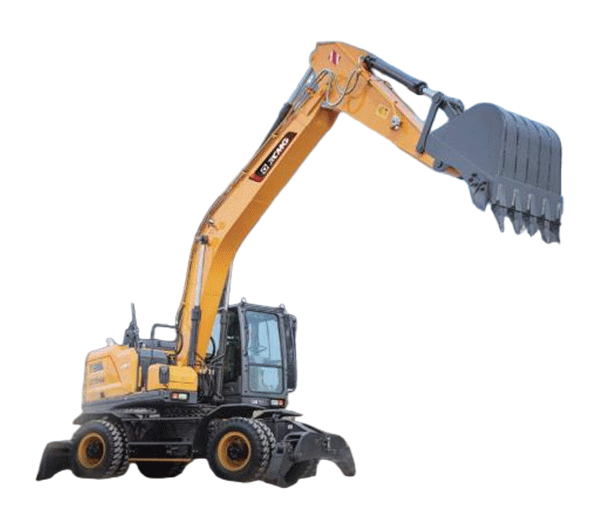
For customers who need both, the XE210WGA Wheeled Hydraulic Excavator is a practical machine to consider. It combines the working ability of a Large Excavator with the road mobility of a wheeled machine. With an operating weight of 21,000 kg, a standard bucket capacity of 0.86 m³ and a rated power of 129 kW, the XE210WGA is positioned for road and bridge construction, municipal maintenance, urban and rural construction, earthmoving and related material-handling work.
From my experience working with construction machinery buyers, this type of Excavator is especially useful when a contractor has several jobs close to each other. Instead of treating every site transfer as a separate transport job, a Wheeled Excavator can travel between suitable work areas under the right local road and safety conditions.
The machine also needs to do its main job well. That means stable hydraulic control, useful digging force, predictable travel, good operator visibility and equipment that can handle repeated daily work. XCMG lists the XE210WGA with a 137 kN bucket digging force, along with a high-quality axle and transmission system, electronically controlled positive-flow hydraulic control and a large-displacement electronically controlled pump.
At Ganglong Heavy Industry Technology (Hefei) Co., Ltd., we understand that an excavator purchase is not only about the machine itself. Buyers also care about configuration, inspection, transportation, payment, spare parts and after-sales communication. That is why we look at the complete supply process rather than treating the machine as a single product.
1. What I Look for in an XE210WGA Wheeled Hydraulic Excavator
I see the XE210WGA as a machine for customers who need a serious working platform but still value road mobility. A crawler excavator can be extremely capable on a jobsite, but moving it from one location to another normally means arranging a suitable trailer. A wheeled excavator approaches the problem differently.
The XE210WGA has four major figures that give me a quick understanding of its working class: 21,000 kg operating weight, 0.86 m³ bucket capacity, 129 kW rated power and 137 kN bucket digging force. These numbers do not tell the whole story, but they are useful when comparing machines before looking at the details.
| Item | XE210WGA | Why It Matters |
|---|---|---|
| Operating weight | 21,000 kg | Provides a stable base for excavation and lifting-related work |
| Bucket capacity | 0.86 m³ | Suitable for regular earthmoving and material handling |
| Rated power | 129 kW | Supports the engine and hydraulic system during demanding work |
| Bucket digging force | 137 kN | Important when working with compact soil and demanding excavation tasks |
Source: XCMG official XE210WGA product information. Actual configuration may vary by market and order specification.
What I like about this configuration is that it is not built around one narrow application. A contractor may use the machine for road maintenance in one project, drainage work in another and general earthmoving somewhere else. That flexibility can be useful for companies that do not want a machine sitting idle when one particular type of project ends.
The machine is also designed around operator comfort. XCMG describes the XE210WGA as having a new-generation pressurized cab with a wide field of view, an 8-inch touch display and vehicle imaging equipment. The cab uses a larger seat and updated control layout, while the air-conditioning system is designed to provide stronger airflow.
For me, these details matter because a machine can have good specifications on paper but still be difficult to use for a full working day. A practical excavator should make basic operations clear to the operator rather than adding unnecessary complexity.
2. How the XE210WGA Hydraulic System Works in Daily Operation
The hydraulic system is where I pay close attention when evaluating an excavator. Digging, boom movement, arm movement, bucket control and other attachments all depend on hydraulic power. If hydraulic output is not well matched to the machine, the operator can feel it immediately through slow or uneven movements.
The XE210WGA uses an electronically controlled positive-flow hydraulic system. XCMG also lists a large-displacement electronically controlled pump and an imported hydraulic travel motor as part of the machine configuration. The purpose is straightforward: the system should provide the oil flow needed by the machine while allowing the operator to control movements accurately.
In simple terms, when I move a control, the hydraulic system sends pressurized oil to the related actuator. The actuator then moves the boom, arm, bucket or another working component. At the same time, the control system manages the hydraulic flow so that different actions can work together more smoothly.
This becomes particularly useful when the operator performs combined movements. Excavation is rarely just one action. The operator may lower the boom, pull the arm, close the bucket and then swing the upper structure in a short period. A well-matched hydraulic system helps these movements feel more natural.
The XE210WGA also uses a high-quality axle and transmission system. XCMG states that the machine can reach a maximum travel speed of up to 7 km/h and comes with cruise control as standard. For a wheeled excavator, travel performance is not a small detail. It directly affects how the machine behaves when moving between work areas.
I would still make one point clear to buyers: road travel must always follow the laws, road conditions, machine configuration and local safety requirements of the destination country. A machine being road-capable does not mean every road or transport condition is automatically suitable.
3. Main Features That Make the XE210WGA Practical
When I explain the XE210WGA to a customer, I normally divide its main advantages into four areas: power, hydraulics, mobility and operator environment.
Strong Power for Regular Heavy Work
The 129 kW rated power gives the machine enough output for its 21-ton operating class. XCMG describes the engine as having strong low-speed torque and good power reserve. The machine also uses an after-treatment system designed for its engine configuration. XCMG states that the system can reduce urea consumption by 20% compared with an EGR system and reports fuel-saving results under its stated comparison conditions. These figures should be understood as manufacturer-published information rather than a guaranteed fuel consumption result for every jobsite.
137 kN Bucket Digging Force
For excavation work, I pay more attention to digging force than to engine power alone. The XE210WGA has a listed bucket digging force of 137 kN. This gives the operator useful force when breaking into soil and handling common earthmoving jobs.
Stable Road Mobility
The machine uses a wheeled chassis rather than crawler tracks. Its axle and transmission system are designed around road movement, while the steering system is intended to provide precise control. For contractors working on municipal roads, urban construction and projects spread across several locations, this mobility can save time between jobs.
A More Comfortable Working Environment
The operator spends most of the working day inside the cab, so I do not treat the cab as a cosmetic feature. XCMG lists a new-generation pressurized cab, wide visibility, an 8-inch touch display, vehicle imaging equipment, a larger seat and a multifunction steering column. The cab design also uses a narrower frame around the windows to improve the operator's view while meeting safety requirements.
These details are useful during repetitive work. When controls, displays and visibility are easy to understand, the operator can focus more on the actual work instead of fighting the machine.
4. XE210WGA Compared with Other XCMG Wheeled Excavators
Not every customer needs a 21-ton wheeled excavator. This is why I always recommend comparing operating weight, bucket size, power and digging force before making a decision. A smaller machine can be more practical for light municipal work, while a larger machine can make more sense when the workload involves heavier excavation and material handling.
| Model | Operating Weight | Bucket Capacity | Rated Power | Bucket Digging Force |
|---|---|---|---|---|
| XE60WGA | 5,900 kg | 0.21 m³ | 35.9 kW | 45 kN |
| XE105WG | 10,100 kg | 0.45 m³ | 74 kW | 53 kN |
| XE155WGA | 14,200 kg | 0.26–0.70 m³ | 108 kW | Not listed in the same official summary |
| XE210WGA | 21,000 kg | 0.86 m³ | 129 kW | 137 kN |
Source: XCMG official product pages for XE60WGA, XE105WG, XE155WGA and XE210WGA. Specifications can vary by configuration and market.
Looking at the numbers, the difference is quite clear. The XE60WGA is a compact wheeled excavator at 5,900 kg, while the XE105WG moves into the 10-ton class. The XE155WGA reaches 14,200 kg, and the XE210WGA moves into the 21-ton class.
I would not say that the largest machine is automatically the right choice. That is not how equipment selection works. If a contractor mainly handles narrow urban jobs, landscaping or light road maintenance, a smaller model may be easier to manage. If the work involves deeper excavation, larger material volumes and more demanding earthmoving, the XE210WGA becomes more relevant.
| Typical Requirement | More Suitable Direction | Reason |
|---|---|---|
| Light municipal maintenance | Smaller wheeled excavator | Lower machine size can fit lighter workloads |
| General road and utility work | Mid-size wheeled excavator | Balances mobility, digging and operating cost |
| Heavy earthmoving and infrastructure | XE210WGA class | Higher operating weight, power and digging force |
| Frequent movement between suitable work areas | Wheeled excavator | Road mobility can reduce dependence on transport equipment |
This is the kind of comparison I prefer because it starts with the actual job instead of starting with the machine name.
5. Where I Would Use the XE210WGA
The official XCMG application information points to road and bridge infrastructure, municipal maintenance, rural and urban construction. In real purchasing discussions, I also see several related applications where the same basic machine configuration can make sense.
Road Construction and Maintenance
Road work is one of the natural applications for a wheeled excavator. The machine can support excavation, roadside work, drainage preparation, material handling and other earthmoving tasks. Its ability to travel between suitable roadwork locations is especially useful for contractors working on several sections of a project.
Municipal Engineering
Municipal work often means changing locations frequently. One day the excavator may be working near a drainage system; the next day it may be used for utility construction or road repair. A wheeled configuration can be useful when the work areas are connected by suitable roads.
Urban and Rural Construction
Urban construction requires a balance between machine size, working performance and movement. Rural construction can have a different set of requirements, including drainage, road improvement, land preparation and general earthmoving. The XE210WGA provides a larger working platform for customers whose workload is beyond the smaller wheeled excavator class.
Drainage and Utility Installation
Drainage and utility projects often involve digging, moving soil and handling materials. The excavator's hydraulic system can also support selected attachments when the correct auxiliary hydraulic configuration is available.
Material Handling and General Earthmoving
Although digging is the primary function, a wheeled excavator can also be used for moving loose material, loading and general site preparation when the attachment and working conditions are appropriate. I always recommend confirming the lifting capacity, attachment configuration and operating radius for any lifting-related job before work begins.
6. Manufacturing, Inspection and Export Process I Follow
When I supply construction equipment internationally, I do not treat manufacturing and delivery as two unrelated steps. The customer needs to know what happens between order confirmation and the machine arriving at the destination.
For the XE210WGA and similar construction machinery, the typical production cycle we work with is around 15–30 days after order confirmation, depending on the model, configuration, order quantity and current production arrangement. A special configuration or additional attachment package can affect the final schedule.
Before delivery, I expect the machine to go through a practical inspection. We check the engine condition, hydraulic system, travel system, working equipment, electrical system, brakes, tires and overall operating performance. I believe this step is important because a customer should receive a machine that has been checked before it leaves the supply point.
For a standard export order, the delivery package normally includes the complete wheeled excavator, standard bucket, basic tools, operation and maintenance manuals and relevant technical documents. Additional attachments, spare parts or special tools can be discussed according to the order.
For payment, international orders are commonly arranged by T/T, such as 30% deposit with the balance paid before shipment. L/C may also be available for qualified orders, subject to the agreed commercial terms and banking conditions.
Transportation depends on the machine dimensions, destination and shipping arrangement. We can discuss Ro-Ro vessel, bulk vessel, container or flat-rack container solutions where suitable. I do not recommend choosing the shipping method only by price. The final decision should consider machine dimensions, port facilities, destination requirements and total logistics cost.
For export preparation, the machine is cleaned and protected against moisture and rust. It is securely fixed for transportation and covered where necessary. Spare parts and tools are normally packed separately in wooden cases or strong export cartons.
Our group, Ganglong Heavy Industry Technology (Hefei) Co., Ltd., was founded in 2013. Together with Hefei Ganglong International Trade Co., Ltd., we work across equipment R&D, manufacturing, testing, customization and international sales. Our product range covers construction machinery, mining machinery, agricultural machinery and matching attachments.
Our international trade team has experience serving customers across Asia, Africa, America and other markets. We also work with well-known machinery brands including XCMG, Hitachi, SANY, Lonking, Hyundai, SHANMON and LOVOL, while supplying our own HKLOONG range of excavators, loaders, Backhoe loaders and swamp excavators.
7. Why I Recommend a Complete Supply Discussion Before Ordering
Buying a XE210WGA Wheeled Hydraulic Excavator is not simply a matter of asking for a machine price. In my experience, many later problems come from details that were not discussed at the beginning.
The first point is configuration. The standard machine may not be the exact machine required for every market. Bucket size, auxiliary hydraulic lines, attachments, tires, electrical specifications and other options should be confirmed before the order is finalized.
The second point is application. I prefer to know what the customer actually plans to do with the excavator. Road maintenance, municipal construction, utility installation, material handling and heavy earthmoving can place different demands on the machine.
The third point is delivery. A quotation should make clear what is included in the machine package, what is optional, how the machine will be shipped and what documents are provided.
The fourth point is service support. Construction machinery is working equipment, not a showroom product. Customers need access to maintenance information, spare parts and technical communication when necessary. We therefore pay attention to the complete customer relationship instead of stopping at shipment.
For international buyers, I also recommend confirming the destination country's import rules, emissions requirements, road regulations, customs documentation and local operating requirements before payment. These details can affect the final configuration and delivery arrangement.
8. XE210WGA Wheeled Hydraulic Excavator FAQ
What is the operating weight of the XE210WGA?
The XCMG official product page lists the XE210WGA operating weight as 21,000 kg. The actual shipping and working configuration should be confirmed against the final machine specification and optional equipment included in the order.
What is the bucket capacity of the XE210WGA?
XCMG lists a bucket capacity of 0.86 m³ for the XE210WGA. Bucket configuration can depend on the machine specification and application, so I recommend confirming the exact bucket before placing an order.
How much power does the XE210WGA have?
The official XCMG specification lists a rated power of 129 kW. This power level is matched with the machine's hydraulic and travel systems for its 21-ton operating class.
What is the bucket digging force?
The XE210WGA is listed with a bucket digging force of 137 kN. Digging force is one of the important specifications to consider when the machine will regularly work with soil and other excavation materials.
What industries can use the XE210WGA Wheeled Hydraulic Excavator?
The machine is suitable for applications including road and bridge infrastructure, municipal maintenance, urban construction and rural construction. Depending on the attachment and working conditions, it can also support drainage, utility installation, general earthmoving and material handling work.
Why choose a wheeled excavator instead of a crawler excavator?
The main difference is mobility. A wheeled excavator is designed to travel on suitable roads and work areas, while a crawler excavator uses tracks and normally needs transport equipment for longer transfers. For contractors who frequently move between nearby projects, wheeled equipment can reduce transfer work. The best choice still depends on terrain, ground conditions and the actual job.
How long does it take to prepare an XE210WGA for delivery?
Our typical production cycle is around 15–30 days after order confirmation. The actual schedule depends on configuration, order quantity, production status and whether additional attachments or special requirements are included.
How is the XE210WGA shipped internationally?
Depending on machine dimensions and destination, we can discuss Ro-Ro vessel, bulk vessel, container or flat-rack container transportation. Before confirming the shipping plan, I normally check the destination port, machine dimensions, shipping route and local unloading conditions.
What payment terms are available?
International orders are commonly arranged by T/T, such as a 30% deposit with the balance paid before shipment. L/C may be available for qualified international orders, subject to the agreed commercial terms.
Can I order spare parts or attachments with the excavator?
Yes. Spare parts, tools and suitable attachments can be discussed as part of the order. I recommend confirming the intended application first because the correct attachment depends on the material, working method, hydraulic configuration and operating conditions.
Final Thoughts from My Side
For me, the XE210WGA Wheeled Hydraulic Excavator makes sense when a contractor needs more than simple digging performance. Its 21,000 kg operating weight, 0.86 m³ bucket capacity, 129 kW rated power and 137 kN bucket digging force place it in a heavy wheeled excavator class, while its road-oriented design provides the mobility that makes wheeled equipment attractive for infrastructure and municipal work.
I would not choose this machine simply because the specifications look large. I would choose it when the project actually needs this level of working capacity. If the job involves road construction, municipal maintenance, utility work, urban or rural construction, drainage, material handling or regular movement between suitable work areas, the XE210WGA is worth putting on the comparison list.
At Ganglong Heavy Industry Technology, my approach is to discuss the machine from the customer's actual working conditions first. We can then confirm the configuration, attachments, inspection requirements, delivery schedule, payment terms and shipping method together. That makes the purchasing process much clearer and helps avoid surprises after the order is placed.
If you are looking for an XE210WGA Wheeled Hydraulic Excavator for an international construction machinery project, I recommend sending us your target application, destination country, required attachments and estimated quantity. We can then work from the actual job requirements and provide a suitable machine and export solution.



 WhatsApp
 Phone
Phone E-mail
 Message