
 Español
 Pусский
 Français
 العربية

When I look at a dumper for a demanding construction site, I do not judge it only by the size of the skip. I want to know how well the complete machine works when the ground is rough, the load is heavy, and the transport cycle is repeated all day. A good dumper needs enough carrying ability, a strong chassis, reliable hydraulic tipping, stable traction, and controls that the operator can understand without spending too much time thinking about them.
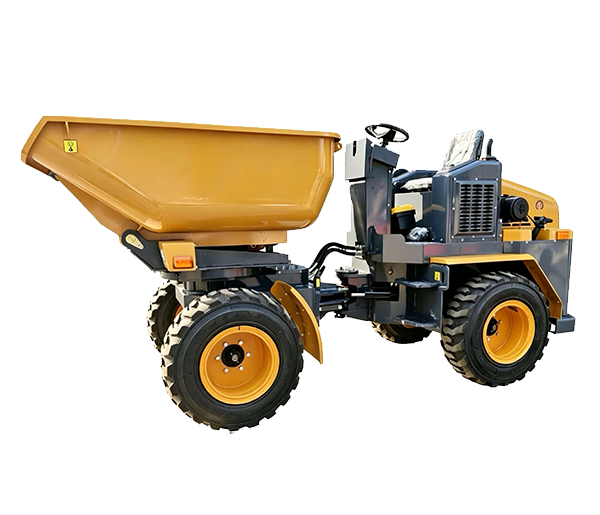
Our 3000L Dumper is designed for this kind of working environment. It is a heavy-duty off-road material transport machine for moving sand, soil, gravel, crushed stone, construction waste, fill material, and other bulk materials around demanding jobsites. The strong chassis supports the loaded skip, while the hydraulic tipping system allows the material to be unloaded without manual handling.
I see the 3000L class as a useful size for earthmoving, road construction, mining support, landscaping, site preparation, utility work, and general construction. It offers considerably more material volume than a small site dumper, while remaining more compact and flexible than a large road-going dump truck in many off-road applications.
At HKLOONG Heavy Industry Technology (Hefei) Co., Ltd., we focus on equipment R&D, precision manufacturing, quality testing, customized modification, and global distribution. Our HKLOONG product range includes crawler excavators, Wheel loaders, Backhoe loaders, and amphibious wetland Excavators. With the 3000L dumper, I apply the same practical approach: match the machine to the material, terrain, workload, and actual jobsite.
1. What Is a 3000L Dumper?
A 3000L dumper is a compact or medium-size off-road transport vehicle designed to carry bulk materials over relatively short distances. The machine uses a tipping skip instead of a fixed cargo bed. When the operator reaches the unloading point, a hydraulic cylinder raises the skip and allows the material to slide out.
The 3000L name describes the target skip-volume class, but I would not treat 3,000 liters as automatically equal to a 3,000 kg payload. Volume and weight are two different things. The density of soil, sand, gravel, wet material, and crushed stone can vary significantly. The final rated payload must therefore be based on the actual machine design and the material being transported.
For this reason, I normally look at several numbers together:
Skip volume
Rated payload
Operating weight
Engine output
Hydraulic lifting capacity
Ground clearance
Turning radius
Gradeability
Overall width and length
A good balance between these factors determines whether the dumper is actually useful on a jobsite.
| Main System | Function | What I Look For |
|---|---|---|
| Diesel engine | Provides power for travel and hydraulic work | Power matched to payload and terrain |
| Heavy-duty chassis | Carries machine and material loads | Structural strength and good load distribution |
| Dumping skip | Holds bulk material | Suitable volume and wear resistance |
| Hydraulic cylinder | Raises and lowers the skip | Smooth and reliable tipping action |
| Drivetrain | Transfers engine power to the wheels | Traction and control on rough ground |
| Braking system | Controls loaded and unloaded machine movement | Stable braking response |
2. How the 3000L Dumper Works
The working process is straightforward. I load the material, transport it, position the dumper, raise the skip, discharge the material, lower the skip, and return for the next load. The simplicity is actually one of the strengths of this type of equipment.
Loading the Skip
Most jobs begin with an Excavator, wheel loader, backhoe loader, or another machine loading the dumper. Depending on the project, the material may be excavated soil, sand, aggregate, gravel, construction debris, or another bulk material.
I pay attention to how the material is distributed inside the skip. A load that is concentrated heavily on one side can change machine balance. The operator should also follow the rated payload instead of filling the skip simply because there is still empty space.
Moving Through the Jobsite
Once loaded, the dumper moves the material to the required location. This may be a short trip from an excavation area to a fill area, from a stockpile to a road section, or from a building site to a temporary waste area.
This is where an off-road dumper differs from a normal road truck. The dumper is intended to work within the construction environment. It may travel over loose soil, gravel, mud, uneven ground, temporary access roads, or slopes within its rated operating limits.
Positioning for Discharge
After reaching the unloading area, the operator positions the machine. The exact unloading method depends on the skip design. Some configurations dump straight ahead, while swivel or side-tipping systems can place material more precisely in restricted areas.
Published Wacker Neuson DW30 data is a useful example of this design approach. Its standard configuration uses a swivel tip skip, while different skip options can change the dumping geometry and dimensions.
Hydraulic Tipping
The operator activates the hydraulic system and the cylinder raises the skip. As the skip angle increases, gravity pulls the material out of the container. After the material is discharged, the hydraulic cylinder lowers the skip and the dumper is ready for another transport cycle.
For me, the tipping system needs to be more than powerful. It should also be predictable. Repeated construction work is easier when the operator can raise and lower the skip smoothly.
3. Key Technical Features I Consider Important
When I evaluate a 3000L construction dumper, I look at the machine as a complete working system. The skip may be the most visible part, but several less obvious features have a direct effect on productivity.
Strong Chassis
The chassis carries the engine, hydraulic components, operator station, skip, and payload. It also receives shock loads when the machine travels across uneven ground.
For a heavy-duty dumper, I want the frame to have a sensible load path. The weight should be distributed through strong structural areas rather than concentrated around a few weak points. Welding quality and accurate assembly are also important because misalignment can create unnecessary stress over time.
Hydraulic Tipping System
The hydraulic system provides the lifting force required to raise the loaded skip. Hydraulic pressure and cylinder size must be matched to the skip geometry and expected payload.
A larger skip does not automatically mean a better machine. If the hydraulic system is poorly matched to the load, the tipping cycle may become slow or place excessive stress on the system.
Off-Road Traction
Traction is critical when the dumper is loaded. The machine needs enough grip to move across the expected working surface without unnecessary wheel slip.
For articulated wheel dumpers, articulation can also improve maneuverability on uneven ground. Wacker Neuson describes its wheel dumpers as using an articulated pendulum joint to improve maneuverability, off-road capability, and traction.
Ground Clearance
Ground clearance becomes important when the dumper travels over stones, ruts, uneven soil, or construction debris. If the lowest components are too close to the ground, obstacles can damage the machine or reduce mobility.
Simple Maintenance Access
I also care about what happens after the machine has worked for several months. Filters, engine components, hydraulic connections, lubrication points, and other service items should be accessible enough for routine inspection.
A machine that is easy to maintain is easier to keep working. This sounds obvious, but it is often overlooked when people compare equipment only by initial purchase price.
4. 3000L Dumper Specifications: Industry Reference Comparison
Because the supplied HKLOONG product information does not provide exact engine power, payload, dimensions, operating weight, or hydraulic specifications, I do not present outside data as HKLOONG specifications. Instead, I use published manufacturer information to show what buyers may see in the 3,000 kg-class off-road dumper market.
| Reference Model | Payload | Heaped Skip Capacity | Operating Weight | Source |
|---|---|---|---|---|
| Wacker Neuson DW20 | 2,000 kg | 1,280 L | 2,034 kg shipping weight | Wacker Neuson official data |
| Wacker Neuson DW30 | 3,000 kg | 1,750 L | 2,048–2,506 kg operating weight | Wacker Neuson official data |
| Wacker Neuson DW40 | 4,000 kg | 2,300 L | 2,575 kg shipping weight | Wacker Neuson official data |
| Wacker Neuson DW50 | 5,000 kg | 2,650 L | 3,106 kg shipping weight | Wacker Neuson official data |
Source: Wacker Neuson official wheel dumper product range and technical data. These are external industry reference figures and are not HKLOONG specifications.
This comparison also explains why I do not equate skip volume directly with payload. The published DW30, for example, has a 3,000 kg payload but a published heaped skip capacity of 1,750 liters.
In other words, a customer searching for a “3000L dumper” should still ask about the actual rated payload. If the material is heavy, the maximum safe load may be reached before the skip is physically full.
5. Where I Would Use a 3000L Dumper
I would normally recommend a 3000L-class dumper when the project has regular material movement and the site needs more carrying ability than a small compact dumper can provide.
| Application | Typical Material | How I Would Use the Dumper |
|---|---|---|
| Earthmoving | Excavated soil and fill | Move material from excavation to fill areas |
| Road construction | Aggregate, gravel and crushed stone | Transport material between work sections |
| Mining support | Rock, soil and loose material | Short-distance internal site transport |
| Building construction | Sand, soil and construction waste | Keep materials moving around the active site |
| Landscaping | Topsoil, gravel, mulch and stones | Move bulk materials across large properties |
| Utility projects | Backfill, soil and aggregate | Support trenching and site restoration |
Earthmoving Projects
Earthmoving is one of the most natural applications. An excavator can remove soil while the dumper carries it to a stockpile or fill location. This creates a simple working chain where each machine has a clear job.
For larger excavation projects, I would check the dumper cycle time against the excavator's loading cycle. There is little value in having a Large Excavator waiting for transport equipment, or several dumpers waiting because the excavator cannot load them quickly enough.
Road Construction
Road construction often requires the movement of aggregate, soil, gravel, and crushed stone. A dumper can transport these materials around the active construction area without requiring a large road truck to travel through every part of the site.
Mining and Quarry Support
For mining-related work, the exact machine choice depends heavily on the material, haul distance, ground condition, slope, and safety requirements. A 3000L dumper can be useful for selected short-distance support tasks, but I would not use a compact site dumper as a substitute for a large mining haul truck where the working conditions demand much greater capacity.
Landscaping and Site Preparation
Large landscaping projects often involve moving significant quantities of topsoil, gravel, mulch, stones, and other material. A 3000L dumper can reduce the number of transport cycles compared with a very small site carrier.
6. Engineering and Manufacturing: What I Check Before Delivery
A dumper has a fairly simple operating concept, but that does not mean the manufacturing process can be careless. It works under vibration, load changes, dust, water, mud, and repeated hydraulic cycles. I therefore focus on several areas during equipment development and inspection.
Frame Fabrication
The chassis is the foundation of the machine. I pay attention to steel selection, structural dimensions, welding, mounting points, and alignment.
The goal is not simply to make the frame heavy. Excessive weight can reduce useful payload and increase transport costs. I prefer a structure that provides appropriate strength for the intended working conditions.
Skip Manufacturing
The skip needs to handle repeated loading from excavators and loaders. The bottom and side areas may also experience impact from stones and other hard materials.
For abrasive materials such as crushed stone, wear protection can become an important consideration. The correct plate and reinforcement strategy depends on the actual material and operating cycle.
Hydraulic System
The hydraulic cylinder and related components need to provide consistent lifting performance. Hoses, fittings, valves, seals, and hydraulic connections should be checked for correct assembly and leakage.
As an external example, the Wacker Neuson DW30 publishes hydraulic operating pressure of 150 bar and hydraulic flow of 23 L/min for one configuration, while the manufacturer also lists a separate hydraulic drive system for traction. This shows why hydraulic specifications should be separated by function rather than treating all hydraulic numbers as one figure.
Powertrain and Tires
The engine and drivetrain should be matched to the expected payload and terrain. Tires should also be selected according to the ground surface. Construction sites may include loose soil, gravel, mud, hard-packed ground, and mixed surfaces.
Wacker Neuson's DW30 reference data, for example, lists 11.5/80-15.3 tires with a traction-oriented tread in one configuration.
Final Functional Testing
Before delivery, I want the dumper to be checked as a complete machine. Typical checks can include engine operation, steering, braking, hydraulic tipping, skip movement, hydraulic leakage, electrical functions, safety devices, tire condition, and overall machine response.
For a working vehicle, final testing is not just paperwork. It is a practical opportunity to catch problems before the machine reaches the customer's jobsite.
7. Why I Would Choose HKLOONG for a 3000L Dumper
When I choose an industrial equipment manufacturer, I look at more than the catalog. I want to know whether the manufacturer can understand the application and make reasonable adjustments when the standard configuration does not perfectly fit the job.
HKLOONG Heavy Industry Technology (Hefei) Co., Ltd. integrates R&D, precision manufacturing, quality testing, customized modification, and global distribution. Our experience covers several types of construction machinery, including crawler excavators, wheel loaders, backhoe loaders, and amphibious Wetland excavators.
This matters because a dumper rarely works alone. On an earthmoving project, an excavator may load it. On a road project, a wheel loader may fill it. After discharge, another machine may spread or compact the material. The dumper needs to fit into that complete work process.
For a customer looking for a 3000L off-road dumper, 3000L construction dumper, 3000L tipper truck, or heavy-duty site dumper, I would first confirm the operating environment.
I would want to know:
What material will be transported?
What is the expected material density?
What payload is required?
How far does each transport cycle travel?
Is the ground hard, muddy, rocky, or mixed?
What slopes must the machine climb?
How much space is available for turning?
What machine will load the dumper?
Where will the material be discharged?
How many working hours are expected each day?
These questions may seem basic, but they help prevent an expensive mistake: buying a machine that looks suitable on paper but does not fit the actual jobsite.
8. FAQ About the 3000L Dumper
What is a 3000L dumper used for?
A 3000L dumper is designed for transporting bulk materials around construction and off-road work areas. Typical materials include soil, sand, gravel, crushed stone, fill material, and construction waste.
Does 3000L mean the dumper can carry 3,000 kg?
No. Liters describe volume, while kilograms describe weight. The actual payload depends on machine design and material density. A 3000L skip does not automatically have a 3,000 kg rated payload.
Can the 3000L dumper work on rough ground?
It is intended for off-road construction environments, but actual performance depends on the final drivetrain, tires, ground clearance, machine weight, load, and terrain. The machine should always be operated within its rated limits.
Can it carry gravel and crushed stone?
Yes, these are common dumper materials. However, gravel and crushed stone can be heavy and abrasive, so the actual payload and skip design should be selected according to the material density and operating conditions.
Can the dumper be used for mining?
It can be used for selected mining or quarry support tasks, especially short-distance internal material movement. For large-scale mining haulage, a purpose-built mining truck may be more appropriate because the payload, haul distance, terrain, and duty cycle are much higher.
How does the hydraulic tipping system work?
A hydraulic cylinder raises the skip when the operator activates the tipping control. The skip angle increases until the material leaves the container. The cylinder then lowers the skip back into the transport position.
What is the difference between a dumper and a road dump truck?
A site dumper is mainly designed for off-road material transport and short-distance construction work. A road dump truck is designed for road travel and usually has different dimensions, suspension, legal requirements, and transport characteristics. I would select between them based on the jobsite rather than simply comparing payload.
Can HKLOONG customize the 3000L dumper?
Customization can be discussed according to the intended application. Depending on the project, this may include the skip configuration, hydraulic system, engine, drivetrain, tires, operator protection, dimensions, safety equipment, and other working requirements.
What information should I provide before ordering?
I recommend providing the required payload, material type, approximate material density, transport distance, terrain, slope, working hours, loading equipment, unloading method, and any local engine or safety requirements. These details help determine whether a 3000L-class dumper is suitable for the job.
Conclusion: Build the Dumper Around the Job
I believe the right dumper is not simply the machine with the biggest skip. It is the machine that moves the required material safely and efficiently through the actual work environment.
The 3000L Dumper is designed for users who need more carrying capacity for construction, earthmoving, road building, mining support, landscaping, and other demanding off-road applications. Its strong chassis supports bulk loads, while the hydraulic tipping system makes unloading fast and practical.
For me, the most important part of equipment selection is balance. The payload needs to match the material. The engine needs to match the load and terrain. The tires need to match the ground. The hydraulic system needs to match the tipping mechanism. The overall dimensions need to match the site.
When those factors are considered together, a 3000L construction dumper can become an important part of the material-handling chain. It can work with excavators and loaders, reduce manual transport, shorten repeated hauling cycles, and keep bulk materials moving around the jobsite.
At HKLOONG, I approach the 3000L dumper from this practical perspective. Our focus on R&D, precision manufacturing, quality testing, customized modification, and global distribution allows us to consider the machine as part of a complete working solution.
If you are searching for a 3000L dumper for construction, 3000L off-road tipper truck, 3000L site dumper, heavy-duty dumper for earthmoving, or a 3000L dumper for mining support, I recommend starting with the working conditions and required payload. Once those are clear, the right machine configuration becomes much easier to define.
Technical Reference Sources
Wacker Neuson – DW30 Wheel Dumper official technical data.
Wacker Neuson – DW30 Wheel Dumper official product information.
Wacker Neuson – Official Wheel Dumper product range and capacity comparison.
Wacker Neuson – DW30 official dimensions and configuration data.
Specification note: The 3000L capacity in this page is based on the requested HKLOONG product name. Exact HKLOONG specifications, including rated payload, engine power, operating weight, overall dimensions, hydraulic pressure and flow, travel speed, gradeability, tipping angle, ground clearance, tire size, and drivetrain configuration should be confirmed against the final HKLOONG technical datasheet.



 WhatsApp
 Phone
Phone E-mail
 Message