
 Español
 Pусский
 Français
 العربية

When I choose a compact loader for a construction job, I usually start with the working space rather than the engine. A machine may have plenty of power, but if it cannot turn easily, fit through the access point, or work comfortably around buildings and landscaping areas, that power is not very useful.
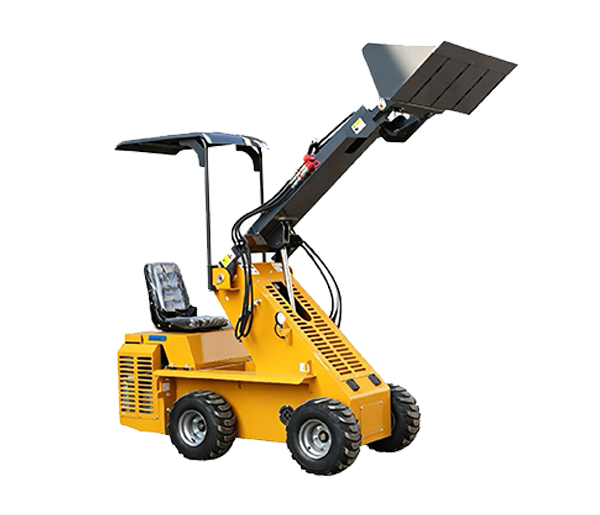
That is where our 800-series skid-steer loader fits in. I designed my understanding of this machine around practical site work: compact dimensions, zero-turn maneuverability, hydraulic attachment power, simple controls, and easy daily maintenance. It is a versatile compact construction machine that can move material, clean a site, prepare ground, carry pallets, drill holes, and handle many other jobs simply by changing the attachment.
The 800-series skid-steer loader uses a diesel engine and hydraulic drive system to provide the power needed for everyday construction work. Instead of using a traditional steering system like a road vehicle, a skid steer controls the wheels on each side independently. I can move one side faster than the other, or even drive the two sides in opposite directions, allowing the machine to turn within a very small space.
For contractors, landscapers, renovation teams, agricultural users, and property maintenance crews, this flexibility can make a real difference. I can use a bucket for loading and cleanup, forks for pallet handling, an auger for drilling, or other hydraulic attachments for specialized work. The machine itself stays the same while its working function changes.
At HKLOONG Heavy Industry Technology (Hefei) Co., Ltd., we focus on equipment R&D, precision manufacturing, quality testing, customized modification, and global distribution. Our experience covers crawler excavators, Wheel loaders, Backhoe loaders, amphibious wetland Excavators, and other heavy-duty equipment under the HKLOONG brand. For the 800-series skid-steer loader, I take the same practical approach: build a machine around the work it needs to do.
1. What Is an 800-Series Skid-Steer Loader?
A skid-steer loader is a compact loader designed to work in areas where a larger machine may have difficulty. The name comes from its steering method. Instead of turning the front wheels, the machine changes the speed and direction of the wheels or drive units on each side.
If I drive both sides forward at the same speed, the loader moves straight. If I slow one side down, the machine turns. If I drive one side forward and the other side backward, the machine can rotate around its own footprint. This is what people often call zero-turn maneuverability.
That simple idea gives the 800-series skid-steer loader a useful advantage on tight jobsites. I can work between buildings, along walls, inside renovation areas, around landscaping projects, or on construction sites with limited turning space.
The second important feature is the attachment system. A skid steer is not limited to one job. The loader arms and hydraulic system can power different attachments depending on the application.
| Attachment | Typical Job | Why I Use It |
|---|---|---|
| General-purpose bucket | Soil, gravel, sand, debris | Basic loading, digging, carrying and cleanup |
| Pallet forks | Moving pallets and packaged goods | Turns the loader into a compact material handler |
| Auger | Post holes and foundation preparation | Provides powered drilling without a separate machine |
| Grapple | Branches, logs and bulky debris | Improves control of irregular loads |
| Breaker | Concrete and hard material | Provides hydraulic impact power for demolition work |
| Brush cutter | Vegetation and land maintenance | Useful for landscaping and site clearing |
This attachment flexibility is one of the main reasons I see the 800-series skid-steer loader as a multi-purpose machine rather than simply a small loader.
2. How the 800-Series Skid-Steer Loader Works
The basic working principle is straightforward. The diesel engine creates power, the hydraulic and drive systems transfer that power to the machine, and the operator uses the controls to manage movement and attachment functions.
Independent Side Drive
The left and right sides of the machine can be controlled independently. This is the key to skid steering.
For example, if I want to make a tight left turn, I can reduce the speed of the left side while keeping the right side moving. For an even tighter turn, the drive direction of one side can be reversed while the other side continues forward.
This is very different from a standard wheel loader. A traditional wheel loader needs space for the machine to steer around a turning radius. A skid steer can rotate much more tightly, which is especially useful on restricted jobsites.
Hydraulic Loader Arms
The loader arms provide the lifting function. When I use a bucket, the arms raise the bucket to carry and place material. When I use pallet forks, the same lifting system moves the load to the required height.
The lift path also matters. A machine designed for loading trucks may need more reach at maximum height, while a landscaping contractor may care more about low-level visibility and compact dimensions.
Auxiliary Hydraulics
The auxiliary hydraulic circuit is what allows me to use powered attachments. Hydraulic oil is supplied to the attachment through Quick Couplers and hoses. The attachment then converts hydraulic power into useful movement, rotation, cutting, drilling, or impact.
This is why I do not look at engine power alone when comparing skid-steer loaders. If the customer plans to use Hydraulic Breakers, augers, sweepers, brush cutters, or other powered tools, auxiliary hydraulic flow and pressure become important selection points.
Engine and Cooling System
The diesel engine provides the main power source. It needs to support both machine travel and hydraulic work while maintaining stable operation under changing loads.
Cooling is also important because construction sites can be dusty. Radiators, air intakes, filters, and engine compartments should be designed so that routine inspection and cleaning are practical.
3. The Technical Features I Consider Most Important
When I compare a compact skid-steer loader, I usually look at several numbers together rather than focusing on one headline specification. Rated operating capacity, tipping load, operating weight, hydraulic flow, engine power, dimensions, and travel speed all tell part of the story.
Rated Operating Capacity
Rated operating capacity, or ROC, gives an indication of how much load the machine can safely handle under a defined test condition. It is not the same as simply asking how much the bucket can physically hold.
This number becomes especially important when the machine is used with pallet forks, buckets, or other attachments. I always recommend checking the manufacturer's rating for the exact configuration.
Operating Weight
Operating weight affects transport, ground pressure, stability, and machine behavior. A heavier machine may provide more stability for certain tasks, while a lighter compact loader may be easier to transport and maneuver.
Hydraulic Flow
Hydraulic flow determines how much oil the auxiliary circuit can deliver. Some attachments need only standard flow. Others require higher flow to operate effectively.
For example, Bobcat's S450 specifications list a standard auxiliary flow of 16.7 gpm and an auxiliary system pressure of about 3,300 psi. Caterpillar's 232D3 is another compact skid steer in a higher operating-capacity class, with a published ROC of 1,900 lb and gross engine power of 67.1 hp. These figures are useful industry references, but they are not specifications for our 800-series machine.
Machine Width
For renovation and landscaping work, width can be surprisingly important. If the machine cannot pass through the gate, all the other specifications become irrelevant.
Bobcat's published S450 data, for example, lists an overall width of 58.6 inches and an operating weight of 5,370 lb. The same machine is rated at 1,370 lb ROC.
4. 800-Series Skid-Steer Loader: Industry Reference Comparison
I use published specifications from established manufacturers as a reference when explaining how compact skid-steer loaders are normally positioned. The following figures are not HKLOONG specifications. They simply show how power, operating weight, and lifting capacity can vary between machines.
| Reference Model | Engine Power | Rated Operating Capacity | Operating Weight | Source |
|---|---|---|---|---|
| Bobcat S450 | 49 hp | 1,370 lb | 5,370 lb | Bobcat official specifications |
| Cat 232D3 | 67.1 hp | 1,900 lb | 6,514 lb | Caterpillar official specifications |
| Cat 236D3 | 67.2 hp | 1,800 lb | 6,567 lb | Caterpillar official product range |
| Cat 242D3 | 74.3 hp | 2,200 lb | 7,138 lb | Caterpillar official product range |
Source: Bobcat S450 official specifications and Caterpillar D3 Series specifications. Caterpillar's published range shows the relationship between engine power, ROC, and operating weight across several compact skid-steer models.
What I take from this comparison is simple: there is no single “correct” skid-steer specification. A 49 hp compact loader may be a better choice for a tight landscaping project, while a machine with more power and higher ROC may make more sense for heavier material handling.
That is also why I would not describe the 800-series only by its engine. The real value comes from the balance between size, hydraulic performance, lifting ability, attachment compatibility, operating cost, and the actual work environment.
5. Where I Would Use the 800-Series Skid-Steer Loader
I see the 800-series as a machine for jobs where flexibility matters. It can work as a small loader in one hour and become a drilling, sweeping, grading, or cleanup machine after changing the attachment.
| Application | Recommended Attachment | Typical Work |
|---|---|---|
| Construction | Bucket, forks, grapple | Material handling, loading, cleanup |
| Landscaping | Bucket, auger, brush cutter | Soil preparation, planting, clearing |
| Renovation | Bucket, breaker, sweeper | Demolition, debris removal, surface cleanup |
| Site preparation | Grading attachment, bucket | Leveling and material movement |
| Agriculture | Bucket, forks, grapple | Feed, soil, bale and material handling |
| Property maintenance | Sweeper, bucket, brush cutter | Cleaning, vegetation control and general work |
Construction Sites
On a building site, I can use the loader for moving soil, gravel, blocks, debris, and other materials. The tight turning ability is useful when buildings or temporary structures reduce available space.
Landscaping
Landscaping is a natural application for a compact skid steer. I can move topsoil, prepare planting areas, carry stones, remove roots, and clear vegetation. An auger can also make post or planting holes without bringing another large machine to the site.
Renovation and Demolition
For renovation projects, machine size matters. Indoor or semi-indoor work can involve narrow entrances, walls, columns, and limited turning areas. With the right attachment, a compact skid steer can help remove debris, sweep surfaces, or break selected materials.
Agricultural Work
Farm operators can use a skid steer for handling feed, pallets, soil, manure, bales, and other materials. The attachment system makes the machine useful across different seasons instead of limiting it to one task.
6. Attachment Selection: The Part I Would Not Ignore
One of the easiest mistakes when buying a skid-steer loader is to focus on the machine and think about attachments later. I prefer to do the opposite. I ask what the machine will actually do, then check whether the hydraulic system, quick coupler, ROC, and control system are suitable for those attachments.
Bucket
The general-purpose bucket is the starting point for most users. It handles soil, sand, gravel, debris, mulch, and many other materials. Bucket width and volume should match the machine's rated capacity and the material being handled.
Pallet Forks
Forks turn the loader into a compact material-handling machine. They are useful for moving pallets, construction supplies, packaged materials, and agricultural products.
Auger
An auger uses hydraulic power to rotate a drilling bit. It can be useful for fence posts, landscaping, planting, and selected foundation preparation jobs.
Hydraulic Breaker
A breaker uses hydraulic pressure and flow to produce repeated impact. Before selecting one, I check the required hydraulic flow, pressure, attachment weight, and carrier capacity. A breaker that is too large for the loader can create unnecessary stress.
Grapple
A grapple is useful when the material is irregular. Branches, logs, demolition debris, and bulky waste are easier to control with a gripping attachment than with a normal bucket.
Caterpillar's 232D3 specifications show how modern skid-steer loaders can be configured around attachment compatibility, including optional equipment and hydraulic-related features. Caterpillar also describes attachment compatibility and integrated attachment technology as part of its skid-steer loader offering.
7. How I Approach 800-Series Manufacturing and Quality Testing
A skid-steer loader may look compact, but it works under demanding loads. The frame receives vibration, the hydraulic system cycles repeatedly, and the tires experience constant changes in traction. I therefore treat manufacturing quality as a system rather than a single inspection item.
Frame and Loader Arm
The frame provides the foundation for the entire machine. I pay attention to welding quality, structural alignment, mounting points, and the areas around high-load connections.
The loader arms also need to remain properly aligned. If the arms, pins, cylinders, or mounting points are not correctly assembled, wear can develop faster and lifting behavior may become less predictable.
Hydraulic System
The hydraulic system controls lifting, tilting, and powered attachments. Hoses, fittings, cylinders, valves, seals, and quick couplers all need to be checked carefully.
I also consider contamination control important. Dirt inside a hydraulic system can damage pumps, valves, and cylinders. Clean assembly and suitable filtration are therefore basic but important parts of machine reliability.
Engine and Cooling
The diesel engine needs clean air, stable cooling, proper lubrication, and regular maintenance. A skid steer often works in dusty environments, so easy access to filters and cooling components is useful for the operator.
Drive System
Because a skid steer turns by controlling the two sides independently, the drive system is one of its defining components. I check the drive response, steering control, braking function, and general operating behavior during final testing.
Final Functional Inspection
Before delivery, I want the machine checked as a complete unit. Depending on the final configuration, inspection can include engine operation, hydraulic functions, attachment connections, loader arm movement, controls, braking, steering, electrical functions, safety devices, fluid leakage, and overall machine operation.
That final test is important because a machine can have good individual components and still perform poorly if those components are not working together correctly.
8. Why I Would Choose HKLOONG for an 800-Series Skid-Steer Loader
When I compare equipment suppliers, I look beyond the machine catalog. I want to know whether the manufacturer can understand the application, adjust the configuration, test the equipment, and support international delivery.
HKLOONG Heavy Industry Technology (Hefei) Co., Ltd. brings together equipment R&D, precision manufacturing, quality testing, customized modification, and global distribution. Our HKLOONG product range includes crawler Excavators, wheel loaders, backhoe loaders, and amphibious Wetland excavators.
For the 800-series skid-steer loader, this engineering background matters because the machine often works alongside other construction equipment. I may use an excavator to load material, a skid steer to move it, and another attachment to grade or clean the area. The machines need to make sense as part of the same workflow.
I also understand that buyers can have very different priorities. A landscaping contractor may care most about compact dimensions and attachment flexibility. A construction contractor may care more about ROC and hydraulic power. A farm may prioritize reliability, service access, and material handling.
That is why customization can be considered around the actual application. Depending on the project, configuration discussions may include engine selection, hydraulic system, attachment interface, tires, operator station, safety equipment, dimensions, working tools, and other requirements.
I prefer to confirm these points before final production rather than trying to solve them after the machine reaches the jobsite.
FAQ About the 800-Series Skid-Steer Loader
What is an 800-series skid-steer loader used for?
It is designed for compact construction and material-handling work. Typical applications include landscaping, renovation, construction, site cleanup, agriculture, property maintenance, and general ground work.
Why is skid-steer maneuverability useful?
A skid steer controls the drive on each side independently. This allows it to make very tight turns and, depending on the drive configuration, rotate within a very small footprint. This is useful in narrow construction and landscaping areas.
What attachments can I use?
Common options include buckets, pallet forks, augers, grapples, hydraulic breakers, sweepers, brush cutters, and other compatible hydraulic tools. The exact attachment list depends on the machine's hydraulic capacity and attachment interface.
Is the 800-series suitable for landscaping?
Yes. Its compact form and attachment flexibility make it suitable for soil movement, grading, brush clearing, planting preparation, material handling, and site cleanup.
Can it work with an auger?
It can be configured for powered hydraulic attachments such as augers when the hydraulic flow, pressure, mounting interface, and attachment weight are suitable.
Is it suitable for renovation projects?
Yes. Compact skid-steer loaders are useful for renovation and cleanup because they can work in relatively restricted areas. The final suitability depends on doorway width, ceiling height, ventilation, floor capacity, and the specific attachment being used.
How do I choose the correct attachment?
I start with the job. Then I check the attachment's required hydraulic flow and pressure, weight, mounting method, and working load against the loader's actual specifications. Matching the attachment to the machine is important for safe and reliable operation.
Does HKLOONG offer customized configurations?
Customization can be discussed according to the intended application. Possible areas include the hydraulic system, attachment configuration, engine, tires, operator protection, dimensions, controls, and other machine requirements.
What information should I provide before ordering?
I recommend providing the main applications, required attachments, working environment, expected load, ground conditions, site dimensions, operating hours, and any local engine or safety requirements. If you already know the attachment models you want to use, that information is especially useful.
Conclusion: A Compact Loader Built Around the Work
I see the 800-series skid-steer loader as a practical machine for users who need more than a basic compact loader. Its value comes from the combination of tight maneuverability, hydraulic attachment capability, diesel power, and a simple operating concept.
For a contractor, the same machine can move soil in the morning, carry pallets in the afternoon, and clean the jobsite before the day ends. For a landscaper, it can prepare soil, drill holes, move stones, and clear vegetation. For a renovation team, it can support material handling, demolition, and cleanup.
When I choose a skid-steer loader, I do not look only at horsepower. I look at the complete working package: machine size, rated operating capacity, hydraulic performance, attachment compatibility, service access, operator control, and the conditions of the jobsite.
That is the approach behind the 800-series skid-steer loader from HKLOONG. We focus on practical equipment development, manufacturing quality, testing, customization, and international delivery so the machine can fit the work instead of forcing the work to fit the machine.
For buyers searching for an 800-series skid-steer loader, compact skid-steer loader for construction, small skid-steer loader with attachments, skid-steer loader for landscaping, or a diesel skid-steer loader for site cleanup, I recommend starting with the actual jobs the machine will perform. Once those jobs are clear, the right machine and attachment combination becomes much easier to define.
Technical Reference Sources
Caterpillar – Cat 232D3 skid steer loader official specifications.
Caterpillar – Cat Skid Steer and Compact Track Loader product range.
Caterpillar – D3 Series Skid Steer and Compact Track Loader specifications.
Bobcat – S450 Skid-Steer Loader official specifications.
Specification note: The information supplied for the HKLOONG 800-series skid-steer loader does not include exact horsepower, rated operating capacity, operating weight, hydraulic flow, dimensions, travel speed, or tipping load. I have therefore not presented external manufacturer specifications as HKLOONG specifications. Final machine data should be confirmed against the official HKLOONG technical datasheet and selected configuration.



 WhatsApp
 Phone
Phone E-mail
 Message