
 Español
 Pусский
 Français
 العربية

When I think about a Business Vehicle, I do not simply think about a vehicle that gets from one place to another. I think about a working tool. A business vehicle may carry people, deliver goods, transport tools, support field technicians, move equipment, or serve as a mobile workspace. Because of that, I need to look at the vehicle from a practical point of view: payload, passenger capacity, cargo space, road performance, operating cost, service access, and the daily work it is expected to perform.
At HKLOONG, I take a straightforward approach to commercial transportation. I focus on how the vehicle will be used in the real world rather than building a specification list that looks complicated but does not answer the buyer's questions. A contractor may need a vehicle for tools and materials. A logistics company may need cargo volume. A hotel may need passenger transportation. A field-service company may need both seats and equipment space.
These are all business vehicle applications, but they are not the same job.
HKLOONG Heavy Industry Technology (Hefei) Co., Ltd. is headquartered in Hefei, China. We specialize in equipment R&D, precision manufacturing, quality testing, customized modification, and global distribution. Our wider product range includes heavy machinery and commercial equipment, and I use the same practical engineering mindset when evaluating business transportation solutions.
For me, the right commercial vehicle is the one that fits the business operation. It should have enough capacity without unnecessary size, enough power for the intended route, a layout that supports the job, and a maintenance plan that makes sense for the fleet.
1. What Is a Business Vehicle and How Do I Define the Right Type?
A business vehicle is a vehicle designed or configured to support commercial activities. It can be a van, passenger vehicle, Pickup, shuttle vehicle, light commercial vehicle, or another road-going platform adapted to a specific business task.
I normally divide business vehicles into several practical groups.
Business Van
A business van is useful when I need enclosed cargo space, passenger seating, or a combination of both. It can support electricians, plumbers, delivery companies, maintenance teams, construction contractors, catering businesses, and mobile service companies.
Commercial Cargo Vehicle
A cargo-focused vehicle is designed around goods rather than passengers. I pay close attention to payload, cargo volume, loading height, door opening dimensions, floor length, and tie-down options.
Passenger Business Vehicle
A passenger-oriented vehicle can be used for employee transportation, hotel shuttles, airport services, tourism, corporate transportation, and other fleet operations. Here, passenger capacity, seating layout, entry and exit, climate control, and comfort become more important.
Crew Vehicle
A crew vehicle sits somewhere between a passenger van and a cargo vehicle. I can carry several workers while still keeping useful cargo space for tools or equipment. This configuration can be practical for construction, maintenance, utilities, and field service.
Special-Purpose Business Vehicle
Some businesses need a vehicle that does more than carry people or boxes. It may become a mobile workshop, service unit, emergency support vehicle, refrigerated transport vehicle, mobile clinic, or other application-specific platform.
Ford's current Transit information, for example, lists common commercial applications including delivery and logistics, trades and services, mobile clinics, emergency response, and camper conversions. Its 2026 Transit range also offers different roof, length, drivetrain, payload, and cargo-volume configurations. :contentReference[oaicite:0]{index=0}
That is why I always start with the work itself. Once I understand the work, I can start defining the vehicle.
2. How I Understand the Working Structure of a Commercial Vehicle
A commercial vehicle may look simple from the outside, but several systems need to work together. I normally examine the vehicle through five basic areas: powertrain, chassis, body, load system, and operator environment.
Powertrain
The powertrain provides the force needed to move the vehicle and its load. Depending on the platform, this may involve a gasoline engine, diesel engine, hybrid system, or battery-electric drive.
I do not choose the powertrain simply because one type is popular. I consider the route, annual mileage, payload, climate, fuel or charging infrastructure, operating schedule, and local regulations.
For example, the current Mercedes-Benz Sprinter Cargo Van is offered with a four-cylinder diesel engine, while the published 2026 Ford Transit range includes gasoline-powered Transit models and the electric E-Transit. :contentReference[oaicite:1]{index=1}
That gives me a useful reminder: the right powertrain depends on the fleet rather than on one universal formula.
Chassis
The chassis supports the vehicle body, powertrain, passengers, cargo, axles, suspension, and other components. For a business vehicle, the chassis must handle repeated loading and unloading as well as daily road operation.
I pay attention to wheelbase, axle ratings, suspension type, gross vehicle weight rating, tire load rating, and ground clearance. These details directly affect how the vehicle behaves when loaded.
Body and Cargo Area
The body defines how much useful working space I have. A delivery company may need maximum volume, while a technician may need shelving and easy access to tools.
I therefore look at cargo length, width, height, door opening size, floor height, and available conversion space rather than looking only at the outside dimensions.
Load Distribution
Payload is not simply a number printed in a brochure. I also need to think about where the load is placed.
If heavy equipment is placed too far toward one end, it can affect axle loading and vehicle handling. Proper load distribution helps the vehicle operate as intended.
Driver Environment
A business vehicle may be driven for many hours each day, so the driver area matters. I look at seat adjustment, visibility, steering, controls, mirrors, displays, climate control, storage, and driver-assistance features.
Ford's current Transit information, for example, lists standard driver-assistance functions including pre-collision assist with automatic emergency braking, lane-keeping technology, and forward collision warning, with additional systems available depending on configuration. :contentReference[oaicite:2]{index=2}
3. Main Features I Look For in a Business Vehicle
When I evaluate a business vehicle for sale, I do not start with the paint color or the biggest engine. I start with the features that affect daily business operations.
Useful Payload
Payload tells me how much additional weight the vehicle can carry within its rated limits. For a cargo business, this can be more important than raw engine power.
Mercedes-Benz currently publishes a payload of up to 4,211 lb for selected 2026 Sprinter Cargo Van configurations, with a maximum available GVWR of 9,050 lb. :contentReference[oaicite:3]{index=3}
Ford's current Transit information lists configurable GVWR from 8,670 to 11,000 lb and maximum payload figures that vary by configuration. :contentReference[oaicite:4]{index=4}
These figures show why I always check the exact configuration rather than assuming every vehicle in the same model family has identical capacity.
Cargo Volume
Cargo volume is another important number. A vehicle can have a high payload rating but still be difficult to use if the cargo area is poorly shaped.
For a delivery business, I may need enough volume for boxes. For a technician, I may need a shorter cargo area with organized shelving. For a construction crew, floor strength and access may matter more than maximum volume.
Flexible Interior Layout
I like business vehicles that can be adapted to the actual job. Depending on the platform, this may include shelving, partitions, racks, tool storage, passenger seating, refrigeration equipment, or other conversion systems.
Ford's current Transit range specifically lists factory packages for trades, builders, general contractors, and upfitters, showing how commercial vans can be configured around different professional uses. :contentReference[oaicite:5]{index=5}
Loading Access
Every delivery involves loading and unloading. A low cargo floor can reduce lifting effort, while wide rear and side doors can make bulky items easier to handle.
The 2026 Mercedes-Benz Sprinter Cargo Van, for example, publishes a 61-inch rear door width and a 28-inch unloaded cargo-floor height for the referenced 144-inch wheelbase configuration. :contentReference[oaicite:6]{index=6}
Drivetrain Choice
Rear-wheel drive can be suitable for many commercial applications, while all-wheel drive can provide additional traction in certain road and weather conditions. Ford currently lists rear-wheel drive as standard on Transit and available all-wheel drive on the gasoline Transit, while E-Transit is listed with rear-wheel drive. :contentReference[oaicite:7]{index=7}
I would still choose drivetrain according to the job. Extra traction is useful only when the operating environment actually requires it.
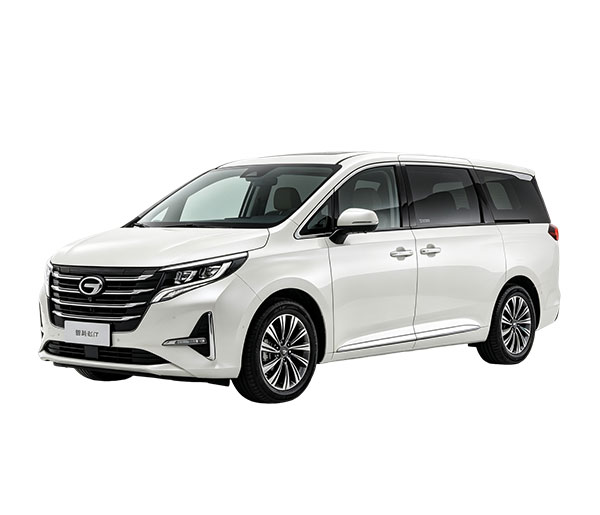
4. Business Vehicle Specification Comparison: How I Read the Numbers
When I compare commercial vehicles, I prefer published manufacturer data. The following figures are current industry reference data from Mercedes-Benz and Ford. They are not HKLOONG specifications.
| Reference Vehicle | Powertrain | Payload | GVWR | Cargo / Passenger Capacity | Source |
|---|---|---|---|---|---|
| Mercedes-Benz Sprinter Cargo Van 2500 | 4-cylinder diesel | 4,211 lb | Up to 9,050 lb | 319 cu. ft. cargo volume | Mercedes-Benz Vans official data |
| Mercedes-Benz Sprinter Passenger Van 2500 | 4-cylinder diesel | 3,307 lb | Up to 9,050 lb | 12 passengers | Mercedes-Benz Vans official data |
| Ford Transit Cargo Van | Gasoline / E-Transit electric options | Up to 5,103 lb for Transit | 8,670–11,000 lb | 246.7–487.3 cu. ft. depending on configuration | Ford official data |
Mercedes-Benz's current Sprinter data shows how the same basic vehicle platform can be configured for cargo or passenger transportation. The cargo version provides up to 319 cubic feet of cargo volume in the referenced configuration, while the passenger version provides seating for 12 and published cargo volume behind the seats. :contentReference[oaicite:8]{index=8}
Ford's current Transit information also demonstrates how vehicle dimensions and payload can change with wheelbase, roof height, engine, and drivetrain. Its published maximum cargo volume ranges from 246.7 to 487.3 cubic feet depending on configuration. :contentReference[oaicite:9]{index=9}
I use this type of comparison because it prevents a common buying mistake: comparing two commercial vehicles using only one number.
| Business Requirement | Specification I Check | Why It Matters |
|---|---|---|
| Daily goods delivery | Payload + cargo volume | Determines how much product can be carried efficiently |
| Field service | Cargo layout + payload + access | Supports tools, parts, shelving, and technician access |
| Employee transport | Seating + GVWR + comfort | Supports passenger capacity within rated limits |
| Construction support | Payload + drivetrain + ground clearance | Helps the vehicle handle tools and rougher work areas |
| Long-distance business travel | Powertrain + seating + range/fuel capacity | Supports longer daily operating cycles |
This table is not a manufacturer specification sheet. It is the way I organize a buying decision. The actual limits must always come from the final vehicle configuration and its official technical documentation.
5. Where I Would Use a Commercial Business Vehicle
The biggest strength of a commercial business vehicle is flexibility. Different industries can use similar vehicle platforms in very different ways.
Delivery and Logistics
For delivery work, I focus on cargo volume, payload, door access, loading height, route efficiency, and serviceability.
A delivery vehicle may spend the entire day stopping, loading, unloading, and starting again. That means easy access and practical cargo organization can be just as important as engine power.
Construction and Contracting
Construction companies often need to move workers, hand tools, spare parts, electrical equipment, pipes, small machines, and consumables between jobsites.
A business van for contractors can be configured with shelves, drawers, partitions, roof racks, or other equipment depending on the work.
Electrical and Plumbing Services
Field technicians rarely need a completely empty cargo area. They need organized storage. I would look at interior height, shelving options, access doors, payload, and the ability to keep tools secure during daily travel.
Hotel and Airport Transportation
A passenger-oriented commercial vehicle can support hotel shuttle services, airport transfers, corporate travel, and tourism operations.
In this application, passenger comfort, luggage space, entry and exit, climate control, interior noise, and seating layout become important.
Mobile Service Businesses
A business vehicle can also become a mobile workspace. Medical services, repair teams, emergency response, telecommunications, inspection services, and other industries may need vehicles fitted with specialized equipment.
The current Ford Transit platform, for example, is officially presented for applications including trades, delivery, mobile clinics, emergency response, and other special-purpose conversions. :contentReference[oaicite:10]{index=10}
Employee Transportation
Factories, warehouses, construction companies, industrial parks, hotels, and large campuses may use passenger vans or crew vehicles to move employees between locations.
In this case, I pay more attention to seating capacity, passenger access, climate control, safety systems, and daily route length.
6. How I Approach Business Vehicle Manufacturing and Customization
When I look at manufacturing a business vehicle, I start with the complete operating system rather than a single component.
The chassis needs to support the expected load. The powertrain needs to provide suitable performance. The suspension needs to handle the vehicle at different load levels. The body needs to provide useful space. The electrical system needs to support both vehicle functions and possible business equipment.
Chassis and Structural Assembly
The chassis is the foundation of the vehicle. I pay attention to structural strength, material selection, welding, alignment, axle installation, suspension mounting, and load distribution.
For a commercial vehicle, repeated loading matters. A delivery van may be loaded and unloaded several times a day. A service vehicle may carry heavy tools for years. The structure therefore needs to be designed around repeated use rather than occasional operation.
Body Manufacturing
The body should make the vehicle useful. I look at door positions, cargo floor design, interior height, panel structure, insulation, lighting, windows, seating, and conversion possibilities.
If the vehicle is intended for a special application, I also consider how additional equipment will be mounted and how that equipment affects payload and weight distribution.
Powertrain Integration
Engine or electric-drive installation needs to be matched with the chassis, cooling system, transmission or reduction system, electrical architecture, and service access.
For electric commercial vehicles, the design also needs to consider battery placement, charging equipment, high-voltage components, thermal management, and the effect of battery weight on payload.
Interior and Upfit Work
This is where a standard vehicle can become a real business tool. Depending on the platform, I may consider shelving, passenger seats, partitions, workbenches, refrigeration, storage systems, roof equipment, or other professional equipment.
I always calculate the effect of modifications on total vehicle weight and payload. Adding equipment without considering the rated limits can create operational problems.
Testing and Quality Control
Before a commercial vehicle is delivered, I want the important systems checked. Depending on the vehicle, that can include braking, steering, suspension, electrical systems, doors, lighting, HVAC, powertrain performance, safety equipment, and road behavior.
HKLOONG's core capabilities include equipment R&D, precision manufacturing, quality testing, customized modification, and global distribution. I use these capabilities to approach commercial vehicle projects as engineering projects rather than simply as sales transactions.
7. Why I Choose HKLOONG for Business Vehicle Solutions
When I choose a Business Vehicle Manufacturer, I want more than a vehicle catalog. I want a supplier that understands how the vehicle will actually be used.
At HKLOONG Heavy Industry Technology (Hefei) Co., Ltd., our headquarters is in Hefei, China. We work across R&D, precision manufacturing, quality testing, customized modification, and global distribution under the HKLOONG brand.
Our wider product experience covers crawler excavators, Wheel loaders, Backhoe loaders, amphibious wetland Excavators, and compact equipment. This gives me a practical understanding of commercial equipment that must work under real operating conditions.
For a business vehicle project, I would first ask about the application rather than immediately recommend a model.
What goods or passengers will the vehicle carry?
What is the typical payload?
How many passengers are required?
What is the average daily distance?
Will the vehicle operate mainly in cities or on highways?
What are the road and weather conditions?
Is cargo volume or payload more important?
Does the vehicle need special equipment or interior conversion?
What fuel, charging, and service infrastructure is available?
What local vehicle regulations apply?
Once these questions are answered, the vehicle configuration becomes much easier to define.
I also understand that B2B customers can have very different purchasing models. A fleet operator may need dozens of similar vehicles. A dealer may need a configuration that fits a local market. A contractor may need a smaller batch with specific equipment. A special-purpose operator may need a customized body layout.
That is why I see customization as part of the engineering process. Where the selected platform allows it, I can work around the actual business requirement rather than forcing every customer into the same configuration.
My objective is simple: build or configure a vehicle around the work it needs to perform.
8. Business Vehicle FAQ
What is a business vehicle?
A business vehicle is a vehicle used to support commercial activities such as transporting people, delivering goods, carrying tools, providing field services, or supporting specialized operations. It can include vans, passenger vehicles, crew vehicles, cargo vehicles, and other commercial platforms.
What is the difference between a business vehicle and a commercial vehicle?
The terms can overlap. I generally use “commercial vehicle” as the broader industry term for vehicles used in business or commercial transportation. “Business vehicle” is often used more broadly to describe vehicles that support a company's daily work.
What is a business van used for?
A business van can transport goods, tools, workers, equipment, or passengers. Common applications include delivery, construction, electrical work, plumbing, maintenance, catering, mobile services, hotel transportation, and field operations.
How much can a commercial van carry?
Payload depends on the exact vehicle configuration. For example, Mercedes-Benz currently lists up to 4,211 lb payload for selected 2026 Sprinter Cargo Van configurations, while Ford publishes different maximum payload values across Transit configurations. :contentReference[oaicite:11]{index=11}
Should I choose a diesel or electric business vehicle?
I would base the decision on the operating route and infrastructure. Diesel may fit businesses that require long operating ranges and established fuel infrastructure. Electric vehicles can be attractive when daily routes, charging availability, operating schedules, and energy requirements are well matched. The actual total operating conditions should be evaluated before choosing.
What is GVWR?
GVWR means Gross Vehicle Weight Rating. It is the maximum allowed total vehicle weight under the manufacturer's specified rating, including the vehicle itself, occupants, cargo, and other applicable loads. I always check GVWR together with axle ratings and payload rather than looking at payload alone.
What should I consider when buying a commercial vehicle?
I recommend checking payload, cargo volume, passenger capacity, GVWR, drivetrain, engine or motor, fuel or battery capacity, dimensions, loading access, turning radius, suspension, braking, driver-assistance systems, service access, local regulations, spare parts, and expected daily workload.
Can a business vehicle be customized?
Yes, many commercial platforms are designed for professional upfitting. Depending on the vehicle, businesses can add shelving, partitions, passenger seating, refrigeration, racks, workbenches, storage systems, and other equipment. Any modification should be checked against vehicle weight, payload, mounting requirements, and applicable regulations.
Who can use a business vehicle?
Business vehicles can serve logistics companies, contractors, technicians, manufacturers, hotels, airports, construction companies, service providers, rental fleets, municipalities, schools, tourism companies, and many other commercial users.
Final Thoughts
A Business Vehicle is valuable because it connects transportation directly with daily business work. It may carry products, tools, workers, passengers, or specialized equipment, and its value depends on how well the vehicle matches that task.
When I select a commercial vehicle, I look at payload, cargo volume, passenger capacity, drivetrain, powertrain, dimensions, loading access, maintenance, and local operating conditions together. I do not want to choose a vehicle simply because one specification looks impressive.
At HKLOONG, I take a practical engineering approach based on R&D, precision manufacturing, quality testing, customized modification, and global distribution. Our broader experience with heavy machinery and commercial equipment helps us understand that different businesses need different configurations.
If I were selecting a business vehicle for commercial use, I would start with the actual work: what needs to be carried, how much it weighs, how far the vehicle travels, where it operates, how often it is loaded, and what special equipment is required. Once those details are clear, I can work toward a vehicle configuration that makes sense for the fleet and the people using it every day.



 WhatsApp
 Phone
Phone E-mail
 Message