
 Español
 Pусский
 Français
 العربية

When I talk about a truck, I do not simply mean a vehicle with a large engine and a cargo bed. For me, a truck is a working machine designed around a specific transport job. It needs to carry materials, move equipment, tow loads, handle rough roads, and keep working through long operating days. That is why I look at the complete vehicle rather than focusing on horsepower alone.
At HKLOONG Heavy Industry Technology (Hefei) Co., Ltd., I approach commercial vehicles with the same practical mindset I use for heavy equipment. Our company focuses on equipment R&D, precision manufacturing, quality testing, customized modification, and global distribution. Under the HKLOONG brand, our product range includes crawler excavators, Wheel loaders, Backhoe loaders, and amphibious wetland Excavators. These products are developed for demanding working environments, and this engineering experience gives me a useful foundation when evaluating truck structures and transport applications.
A modern commercial truck can serve very different purposes. A Pickup may support a small construction crew, while a rigid cargo truck can move building materials between warehouses and job sites. A heavy-duty tractor can pull a trailer over long distances, while a specialized truck may be built for municipal work, agriculture, mining support, or industrial transport. The right choice depends on the load, road conditions, distance, operating frequency, and body configuration.
In this page, I will explain how I understand truck construction, power transmission, load capacity, chassis design, applications, manufacturing, and configuration selection. I will also use published specifications from established truck manufacturers as industry reference data. These figures are included to show how I read truck specifications; they are not HKLOONG product specifications.
1. What Is a Truck and How Do I Define the Right Type?
I define a truck as a road vehicle designed mainly to transport goods, equipment, materials, or other heavy loads. Unlike a normal passenger vehicle, a truck is built around useful carrying capacity. The frame, axles, suspension, tires, powertrain, brakes, and body all have to work together to support that purpose.
There is no single truck configuration that fits every business. Before I choose a vehicle, I first ask what needs to be transported and where the truck will work. A logistics company may care most about cargo volume and highway efficiency. A construction contractor may need strong payload capacity, durable suspension, and easy loading. A municipal operator may need a special body, hydraulic equipment, or frequent stop-and-go performance.
For lighter work, a pickup truck or light-duty work truck can be practical. These vehicles usually combine passenger seating with a separate cargo area. For medium-duty transportation, a box truck, flatbed truck, or rigid cargo truck can provide more useful load space. Heavy-duty trucks are designed for much larger loads and may operate with trailers or specialized bodies.
I also separate the idea of payload from towing capacity. Payload is the weight the truck can carry on the vehicle itself, including passengers and cargo. Towing capacity relates to the weight of a trailer and its load. These are different measurements, and a truck's maximum value depends on its exact configuration.
For example, Ford's published 2026 F-150 information lists maximum available towing of 13,500 lb and maximum available payload of 2,440 lb, while noting that actual capability varies with configuration, equipment, passengers, and accessories. This is a useful reminder that I should never judge a truck from one number alone.
2. How I Understand Truck Construction and Working Principles
The basic working process of a truck is simple: the power source creates torque, the drivetrain transfers that power to the driven wheels, and the wheels turn that energy into forward motion. However, the engineering behind this simple process involves many systems working together.
The engine or electric drive system is the main power source. In a conventional diesel or gasoline truck, combustion produces mechanical power. The transmission then selects a suitable gear ratio so the vehicle can start from a stop, climb a slope, cruise efficiently, or pull a heavy load. In an electric truck, electric motors can deliver torque directly through an electric drive system, depending on the vehicle design.
The chassis is the structural foundation. I pay close attention to the frame because it connects the cab, engine or motor system, suspension, axles, steering system, and cargo body. A truck working on uneven construction roads needs a structure that can deal with repeated impacts and changing loads.
The suspension system helps control movement between the wheels and the chassis. Depending on the truck type, manufacturers may use leaf springs, air suspension, or other suspension layouts. The choice affects ride comfort, load handling, stability, and application suitability.
Braking is equally important. A loaded truck has much more moving mass than a passenger car, so controlling that mass requires a properly designed braking system. Heavy commercial trucks may also use additional braking technologies to reduce the workload on the service brakes during long downhill operation.
Finally, the body turns the basic truck chassis into a working vehicle. I can think of the body as the truck's job-specific tool. A flatbed is useful for long or oversized materials. A box body protects packaged cargo. A tipper body supports loose materials such as sand and aggregate. Specialized bodies can be developed for waste collection, municipal maintenance, agriculture, emergency response, or industrial service.
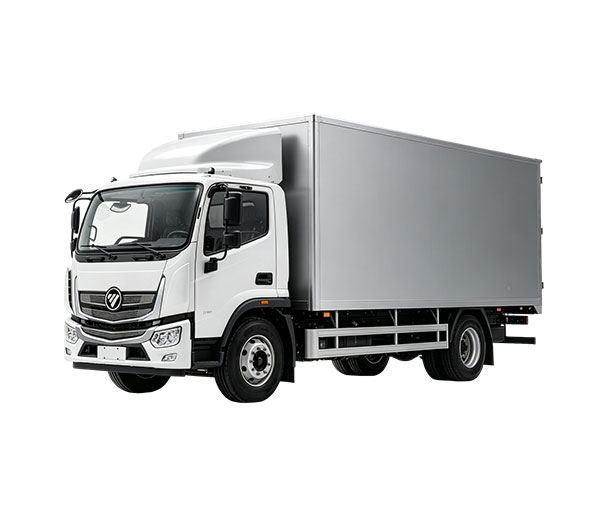
3. Main Truck Features I Look For
When I evaluate a commercial truck, I normally start with six areas: load capacity, powertrain, chassis, braking, body configuration, and serviceability. These factors tell me much more than appearance.
Load Capacity
Payload must match the real job. Carrying too little capacity can limit productivity, while selecting a vehicle far larger than necessary can increase purchase and operating costs. I therefore look at the expected cargo weight, cargo dimensions, loading method, and frequency of use.
Powertrain
The engine or motor should match the operating environment. A truck that spends most of its time on highways has different requirements from one that frequently climbs construction roads. Torque delivery, transmission ratios, cooling, fuel or energy storage, and service conditions all matter.
Chassis and Axles
The chassis carries the main structural load. Axle arrangement also affects how weight is distributed. Common layouts include 4x2, 6x2, 6x4, and 8x4, although the correct arrangement depends on the application and local regulations.
Braking and Stability
A work truck needs predictable braking under different load conditions. Tire selection, axle load, suspension design, brake systems, electronic controls, and driver visibility all contribute to safe operation.
Body Configuration
The cargo body should make loading and unloading easier rather than creating extra work. I consider tailgate height, side access, floor design, tie-down points, cargo protection, and compatibility with loading equipment.
Serviceability
For a working vehicle, service access is a practical issue. Filters, fluids, electrical components, brakes, tires, and other service points should be accessible. A truck that is easy to inspect and maintain can spend more time doing its actual job.
4. Truck Specification Comparison: How I Read the Numbers
I always recommend reading truck specifications as a group instead of choosing one impressive number. The following published examples show how different truck categories can have very different engineering targets.
| Reference Truck | Configuration / Type | Published Weight Data | Published Capability | Source |
|---|---|---|---|---|
| Ford F-150 2026 | Light-duty pickup | Varies by configuration | Up to 13,500 lb towing; up to 2,440 lb payload | Ford official 2026 F-150 data |
| Mercedes-Benz eActros | 4x2 electric tractor | 22 t technical GVW; 44 t GCW | Approx. 22 t payload in one published configuration | Mercedes-Benz Trucks official data |
| Mercedes-Benz Arocs / Actros heavy-haulage range | 6x4 / 8x4 heavy-duty | Published permissible GVW varies by configuration | Designed for heavy-haulage applications | Mercedes-Benz Trucks official product leaflet |
The difference between these vehicles is not simply size. Their chassis, power systems, axle layouts, bodies, and intended jobs are different. This is why I would not compare a pickup and a heavy-haulage truck using the same buying criteria.
| Specification | What It Tells Me | Why It Matters |
|---|---|---|
| Payload | How much weight the vehicle can carry | Important for cargo and material transport |
| GVWR / GVW | Permitted total vehicle weight | Helps define legal and structural loading limits |
| GCWR / GCM | Combined vehicle and trailer weight limit | Important for towing and tractor-trailer work |
| Engine or motor output | Available power | Affects acceleration, grade performance, and working capability |
| Torque | Turning force produced by the powertrain | Important when moving heavy loads or climbing grades |
| Wheel formula | Number and arrangement of driven and non-driven wheels | Influences traction, load distribution, and application suitability |
Ford's official 2026 F-150 guide also shows why configuration matters. Depending on the engine, the published maximum towing figures range from 8,400 lb to 13,500 lb, while maximum available payload figures vary as well. Mercedes-Benz publishes heavy commercial truck configurations with much higher gross vehicle and combination weights. These examples are industry references only, not HKLOONG specifications.
5. Where I Would Use a Truck
I see trucks as flexible working platforms because the same basic vehicle concept can support many industries when the chassis and body are configured correctly.
Construction and Building Materials
Construction sites need frequent movement of tools, pipes, steel products, concrete-related materials, aggregates, and equipment. A truck for construction should be selected according to load weight, road conditions, loading method, and travel distance. A flatbed body can be useful for long materials, while a tipper configuration can be suitable for loose materials.
Logistics and Distribution
For logistics, I focus on useful cargo volume, payload, loading access, fuel or energy efficiency, and route distance. Urban delivery may require a compact truck with easy maneuverability, while regional distribution may justify a larger cargo body.
Agriculture
Agricultural transport often involves changing loads and uneven roads. Trucks may be used to move crops, fertilizer, machinery, feed, tools, and other materials. Body design and traction become particularly important when the vehicle operates away from paved roads.
Municipal Services
Municipal applications can include waste collection, road maintenance, landscaping, utility support, and public works. In these cases, the truck body may carry specialized equipment rather than simple cargo.
Industrial Transportation
Factories and industrial facilities often need trucks to move components, raw materials, machinery, and finished products. Here, I pay attention to loading equipment, cargo dimensions, axle loads, and repeated daily operation.
Heavy-Duty and Special Transport
Heavy-duty applications require a different level of planning. The truck may work with a trailer, carry oversized equipment, or operate on demanding routes. In such cases, I look at the complete combination rather than the truck alone.
6. Truck Manufacturing, Customization, and Quality Control
When I approach truck manufacturing, I start with the intended application. A truck should not be designed first and assigned a job later. The operating requirement should influence the chassis, axle layout, body, powertrain, suspension, and control systems from the beginning.
The frame is one of the most important structural areas. Manufacturing accuracy matters because mounting points need to remain correctly aligned. Welding quality, dimensional inspection, surface treatment, and assembly accuracy all influence long-term performance.
The powertrain also needs systematic inspection. Depending on the configuration, this can include checking the engine or motor system, transmission, cooling system, fuel system, electrical system, and control components. I consider both initial assembly quality and future maintenance access.
For a customized work truck, the body installation deserves the same attention as the chassis. The body should match the intended payload and loading method. Hydraulic systems, auxiliary equipment, electrical connections, lighting, storage areas, and safety components should be integrated rather than added without considering the whole vehicle.
Quality testing should cover more than a visual inspection. I would look at steering response, braking performance, suspension behavior, electrical functions, load distribution, body mounting, and operating conditions relevant to the final application. For specialized vehicles, functional testing under representative conditions can reveal problems that are difficult to see during static inspection.
This engineering approach is also where my experience with heavy equipment becomes useful. At HKLOONG, our background covers R&D, precision manufacturing, quality testing, customized modification, and global distribution. We understand that machinery used in real working environments has to be practical, serviceable, and matched to the conditions in which it will operate.
7. Why I Take a Practical Approach to HKLOONG Truck Solutions
When I evaluate a truck project, I do not begin with the question, “How many horsepower does it have?” I begin with the working requirement. What will the vehicle carry? How heavy is the typical load? What roads will it use? How many hours will it operate each day? Does it need a trailer? Does the body require hydraulic equipment? What type of service support is available in the target market?
This way of thinking helps me avoid an expensive mistake: choosing a truck that looks powerful on paper but does not fit the real job.
HKLOONG is built around equipment engineering, precision manufacturing, quality testing, customized modification, and global distribution. Our established product range includes crawler Excavators, wheel loaders, backhoe loaders, and amphibious Wetland excavators under the HKLOONG brand. These machines are developed for heavy-duty working conditions and are supported by our experience in adapting equipment to different applications.
For a truck or commercial vehicle project, I use the same practical logic. I consider the operating environment first, then the required capacity, configuration, body type, power system, and service requirements. This is especially important for international customers because road conditions, regulations, payload limits, fuel availability, and maintenance resources can vary considerably from one market to another.
I also believe customization should have a clear purpose. Changing the body, dimensions, storage layout, auxiliary system, or working equipment only makes sense when the change improves the vehicle's ability to perform its intended task. A customized truck should solve a real operational problem rather than simply add features.
For buyers comparing a truck supplier or truck manufacturer, I recommend checking more than the product photos. Look at technical documentation, configuration details, inspection procedures, customization capability, spare-parts planning, communication quality, and after-sales support. A reliable industrial vehicle is a long-term working asset, so these details matter.
8. Truck FAQ
What is the difference between a truck and a commercial vehicle?
A truck is one type of commercial vehicle. Commercial vehicles include trucks, vans, buses, and other vehicles designed mainly for business transportation or professional work. A truck normally focuses on cargo, materials, equipment, towing, or specialized work.
How do I choose the right truck?
I would start with payload, cargo dimensions, road conditions, travel distance, towing needs, operating frequency, and body type. After that, I would compare powertrain, axle layout, suspension, braking system, and service requirements.
Is a higher horsepower truck always better?
No. Horsepower is only one part of Truck performance. Torque, transmission ratios, axle configuration, vehicle weight, payload, tires, gearing, and operating conditions also affect how a truck performs.
What does GVWR mean?
GVWR means Gross Vehicle Weight Rating. It is the maximum permitted total weight of the vehicle, including the vehicle itself, passengers, cargo, and other applicable loads. The exact definition and legal limits depend on the market and vehicle certification.
What is the difference between payload and towing capacity?
Payload is the weight carried directly by the truck. Towing capacity refers to the permitted trailer weight under specified conditions. These values should not be treated as interchangeable.
Can a truck be customized for a specific industry?
Yes. Depending on the base vehicle and local regulations, trucks can be configured with different cargo bodies, flatbeds, tipper bodies, storage systems, hydraulic equipment, utility equipment, and other application-specific features. The modification should always be checked against chassis capacity and legal requirements.
What should I check before buying a truck for construction?
I would check payload, axle capacity, drivetrain, ground clearance, suspension, tire selection, braking, body construction, service access, and the actual road conditions. If the truck will tow equipment, I would also check the complete combination weight and trailer requirements.
Can HKLOONG support customized heavy equipment solutions?
HKLOONG specializes in equipment R&D, precision manufacturing, quality testing, customized modification, and global distribution. Our established product range includes crawler excavators, wheel loaders, backhoe loaders, and amphibious wetland excavators. For vehicle-related projects, the appropriate configuration should be evaluated according to the customer's actual application, technical requirements, and target-market conditions.
Final Thoughts
For me, a truck is not simply a road vehicle. It is a working platform built around a transport task. The right combination of payload, chassis strength, powertrain, axle layout, suspension, braking, body design, and serviceability determines whether the vehicle can perform its job efficiently over time.
Whether the requirement is a light work truck, cargo truck, commercial truck, construction truck, or heavy-duty transport platform, I always recommend starting with the actual application. Once the job is clear, the technical specifications become much easier to understand.
At HKLOONG, I bring the same practical engineering mindset used across our heavy equipment business to customized equipment and industrial vehicle discussions. The goal is straightforward: understand the working condition, define the required configuration, verify the technical details, and build a solution around the real job.
Reference note: Truck specifications shown in this article are published reference data from Ford and Mercedes-Benz Trucks and are provided for industry comparison only. They do not represent HKLOONG product specifications. Actual truck specifications, payload, GVWR, towing capacity, dimensions, and configuration should be confirmed for the specific model and target market before purchase.



 WhatsApp
 Phone
Phone E-mail
 Message