

Electric tamping rammer for Clean, Controlled Soil Compaction
When I look at a soil compaction job, I first think about the working space. A trench may be narrow. A building project may have poor ventilation. A landscaping site may be surrounded by finished surfaces. In these conditions, bringing a large roller into the area simply does not make much sense.
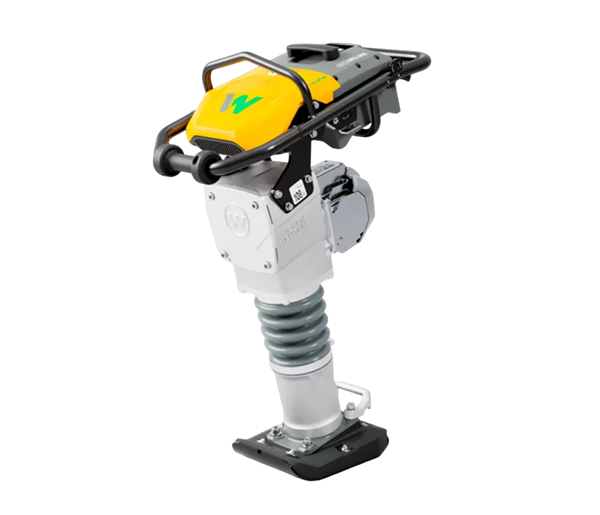
This is where I see a practical role for an Electric Tamping Rammer. It is a compact walk-behind machine designed to deliver repeated impact into the ground, helping compact suitable soil and backfill in areas where a larger machine cannot work comfortably.
The electric version adds another useful feature: there is no combustion engine producing exhaust at the point of operation. For indoor work, poorly ventilated areas, trenches, and projects with tighter local emission requirements, that can make an electric rammer an interesting alternative to a gasoline or diesel machine.
At HKLOONG Heavy Industry Technology (Hefei) Co., Ltd., I approach compact equipment from a simple point of view. The machine should match the actual job. Our wider product range includes crawler excavators, Wheel loaders, Backhoe loaders, and amphibious wetland Excavators. We also provide smaller equipment designed for construction, landscaping, agriculture, municipal maintenance, and material handling in areas where large machinery is difficult to use.
For me, an electric tamping rammer is not simply a gasoline rammer with the engine replaced by a motor. The power source changes the machine's operating experience, maintenance needs, noise characteristics, charging requirements, and possible applications. Those factors need to be considered together.
I describe an Electric Tamping Rammer as a compact compaction machine that uses an electric motor and mechanical impact system to repeatedly strike the ground through a narrow tamping shoe.
Unlike a Vibratory Plate Compactor, which mainly uses a vibrating base plate to spread compaction energy over a relatively wide surface, a tamping rammer delivers a more concentrated up-and-down impact. This makes the equipment particularly useful for narrow trenches and suitable cohesive soils.
That difference is important when I choose equipment.
A vibratory plate can be useful for granular materials such as sand and aggregate. A tamping rammer is often selected when I need focused impact and good control in narrow areas or when working with cohesive soil. Husqvarna describes its LT tamping rammer range as intended for cohesive soils such as clay and silt, noting that these materials call for machines with high impact and lower frequency. :contentReference[oaicite:0]{index=0}
An Electric Soil Compactor uses an electric motor as its power source. The electricity may come from a removable battery pack rather than a power cable. Modern battery-powered rammers can therefore operate without being connected to an external electrical outlet during the compaction work.
For example, Wacker Neuson's AS30e is a battery-powered rammer with a published 10 kN impact force, 99 m²/h area capacity, 11 m/min forward speed, and 41.7 kg operating weight. Its published battery runtimes are 45 minutes with the BOB10 battery and 70 minutes with the BOB14 battery under the manufacturer's test conditions. :contentReference[oaicite:1]{index=1}
I use these numbers as industry reference data, not as HKLOONG specifications. They simply show how an electric rammer can combine a relatively compact machine package with useful impact performance.
The working principle of an electric tamping rammer is fairly simple once I break it into a few parts: battery, motor, mechanical drive, spring system, tamping shoe, and operator control.
In a battery-powered rammer, the battery stores electrical energy and supplies it to the motor. A removable battery can make the machine easier to manage on different work sites because a charged battery can be installed when another one is empty.
Wacker Neuson's current electric rammer range uses removable batteries, and the company states that its battery-powered rammers can be used in trenches and indoor or poorly ventilated areas because they produce no exhaust emissions during operation. :contentReference[oaicite:2]{index=2}
For a contractor, this can change the way a job is planned. There is no fuel can to carry for the machine itself, and there is no engine pull-start process. Depending on the battery system, the operator can install the battery and start the machine with a button.
The electric motor converts electrical energy into mechanical rotation. The rammer's internal mechanism then converts this rotation into repeated vertical movement.
This conversion is the heart of the machine. The motor needs to deliver enough power to maintain the required impact behavior while the mechanical system has to handle repeated cycles without unnecessary vibration reaching the wrong components.
The mechanical system transfers movement through the rammer body and spring arrangement to the lower working section. The shoe then moves rapidly against the ground.
Every impact pushes energy into the soil. As the rammer moves forward, repeated impacts cover the required area.
This is why I do not judge a rammer only by motor power. Impact force, stroke, percussion rate, shoe dimensions, operating weight, and travel speed all influence how the machine performs.
The narrow shoe is one of the defining features of a rammer. Instead of spreading the working force across a broad plate, it concentrates the action into a smaller footprint.
This design is especially useful in narrow trenches and around pipe installations. The machine can enter spaces that would be difficult for a plate compactor or roller.
The operator controls the rammer from behind. The machine naturally moves forward as the tamping mechanism works, and the operator guides its direction and pace.
Good balance matters here. A rammer should not feel unnecessarily difficult to control. The handle, frame, damping system, center of gravity, and lower mechanism all influence how the operator experiences the machine.
When I evaluate a battery tamping rammer, I look beyond the word “electric.” The power source is important, but it is only one part of the equipment.
The biggest difference is the power system. A battery-powered machine eliminates the need to carry gasoline for the rammer and removes combustion exhaust at the machine during operation.
This can be particularly useful in indoor construction, enclosed areas, tunnels, trenches, and projects where local air quality is a concern. It does not mean that every electric rammer is suitable for every enclosed space; ventilation, battery safety, electrical requirements, and the manufacturer's operating instructions still need to be followed.
Impact force is one of the main numbers I check. A rammer needs enough impact energy for the intended soil and working depth.
Wacker Neuson's published AS50e and AS60e data list 16 kN and 17 kN impact force respectively, with both models using 51 V electrical systems and asynchronous motors. :contentReference[oaicite:3]{index=3}
A narrow shoe allows the machine to enter restricted working areas. This is one of the reasons I would consider an electric rammer for trench work instead of using a wider compaction machine.
Construction sites are often full of obstacles. Pipes, walls, posts, foundations, landscaping features, and temporary structures can all limit access. A compact rammer gives the operator more flexibility.
During operation, a battery-powered rammer does not produce engine exhaust at the machine. This is one of its most practical advantages for indoor or poorly ventilated areas.
Wacker Neuson specifically positions its electric rammers for trenches and indoor or poorly ventilated applications and describes them as emission-free during operation. :contentReference[oaicite:4]{index=4}
Electric machines can avoid the pull-start process associated with many small gasoline engines. Wacker Neuson states that its battery-powered rammers use push-button starting. :contentReference[oaicite:5]{index=5}
A removable battery can be useful when several machines share a battery platform or when a contractor wants to carry spare batteries between work areas.
For fleet operators, I would also check battery charging time, battery availability, storage requirements, replacement cost, and compatibility before making a purchasing decision.
I always recommend looking at several specifications together. The following table uses published Wacker Neuson electric rammer data as an industry reference. These figures belong to the listed third-party models and are not HKLOONG specifications.
| Reference Model | Operating Weight | Impact Force | Area Capacity | Forward Speed |
|---|---|---|---|---|
| Wacker Neuson AS30e | 41.7 kg | 10 kN | 99 m²/h | 11 m/min |
| Wacker Neuson AS50e | 71 kg | 16 kN | 147 m²/h | 8.8 m/min |
| Wacker Neuson AS60e | 71 kg | 17 kN | 174 m²/h | 10.4 m/min |
Source: Wacker Neuson published technical data for AS30e and AS50e/AS60e. These are third-party reference figures only. :contentReference[oaicite:6]{index=6}
There is an important lesson in these numbers. The heavier AS50e and AS60e models have substantially higher published impact force and area capacity than the smaller AS30e. But that does not automatically make them more suitable for every job.
If I need to enter a very narrow pipe trench, machine width and shoe width may matter more than maximum impact force. If I need higher production over a larger work area, area capacity and machine performance become more important.
Battery runtime is another number I never ignore. Published runtime is normally measured under defined conditions. Actual working time changes with soil conditions, operator technique, temperature, battery age, load, and other factors. Wacker Neuson specifically notes that actual runtime can differ from its reference values. :contentReference[oaicite:7]{index=7}
When I compare an electric rammer with a conventional gasoline rammer, I focus on how each power system fits the job rather than saying one is automatically better.
| Factor | Electric Tamping Rammer | Gasoline Tamping Rammer |
|---|---|---|
| Power source | Battery and electric motor | Gasoline engine |
| Local exhaust emissions | None during machine operation | Combustion exhaust is produced |
| Starting | Typically push-button or electronic start | May use recoil or another engine-start system |
| Fuel storage | No gasoline tank for machine operation | Requires gasoline supply |
| Engine oil maintenance | No combustion-engine oil system | Engine oil service is required |
| Indoor applications | Potentially useful where site rules permit | Exhaust and ventilation must be considered |
| Runtime planning | Depends on battery capacity and charging/swapping | Depends on fuel availability |
| Noise profile | Can avoid combustion-engine noise, but impact noise remains | Engine and impact noise are both present |
The comparison above is functional rather than a product ranking. Both power systems have valid applications.
For example, Husqvarna's current LT tamping rammer range includes gasoline-powered models designed for cohesive soils, with LT 6005 models listed at 68–69 kg and LT 8005 models at 91–92 kg depending on configuration. :contentReference[oaicite:8]{index=8}
For me, the biggest reason to consider electric power is the working environment. If I am compacting soil in an open outdoor area where fuel handling is easy, a conventional engine can still be practical. If I am working inside a building, in a tunnel, or in a poorly ventilated trench, an electric rammer can remove the local combustion exhaust from the machine.
The strongest application for an electric compaction rammer is usually a location where I need concentrated impact, narrow access, and no local engine exhaust.
Pipe and cable trenches are a natural application. The narrow shoe can work around backfill areas where a wide plate or roller may not fit.
Wacker Neuson specifically describes its AS30e as suitable for pipe gussets and very narrow trench applications. :contentReference[oaicite:9]{index=9}
When construction work moves inside a building, exhaust management becomes an important consideration. A battery-powered rammer does not produce combustion exhaust during operation, which can make it suitable for certain indoor applications when all other site requirements are met.
Foundation areas can contain narrow gaps between structures and excavated ground. A compact rammer can work in suitable backfill zones where the machine dimensions allow safe operation.
Small road repairs, utility restoration, drainage work, and municipal maintenance often require equipment that can move between different sites. A compact battery-powered rammer can be easier to transport than larger equipment.
Landscaping projects often involve soil preparation, pathways, edging, retaining wall work, and small construction areas. The compact shape of a rammer makes it practical where larger equipment would be awkward.
Some pipe-related work requires compaction in small gaps around the pipe or along narrow trench sections. The exact compaction method must follow the project engineering requirements, but the narrow working shoe of a rammer can make it useful in these situations.
| Application | Main Challenge | Why I Would Consider an Electric Rammer |
|---|---|---|
| Pipe trench | Limited width | Narrow working shoe and compact body |
| Indoor construction | Ventilation and exhaust concerns | No combustion exhaust during operation |
| Foundation backfill | Restricted working gaps | Focused impact in compact spaces |
| Landscaping | Small work zones and access limits | Compact and relatively easy to transport |
| Municipal maintenance | Many small work areas | Portable battery-powered operation |
| Pipeline work | Backfill around infrastructure | Useful for narrow compaction areas when specifications match |
At HKLOONG, I do not treat electric compact equipment as a simple motor-and-battery product. A rammer has repeated impact cycles, and every part around the impact system needs to work together.
Our company integrates equipment R&D, precision manufacturing, quality testing, customized modification, and global distribution. These capabilities are important when developing compact machinery because a smaller machine still needs to handle repeated mechanical loads.
I start with the working condition. What soil will the machine compact? How narrow is the working area? Is the machine intended for indoor construction, outdoor work, utility trenches, landscaping, or municipal maintenance? What battery system is practical for the target market?
These questions influence the complete machine design.
The electric motor needs to provide stable power to the mechanical impact system. I pay attention to motor selection, mounting, alignment, heat management, electrical connections, and protection.
The lower mechanical system experiences repeated movement. Components must be assembled accurately so the rammer can deliver consistent impact without unnecessary mechanical stress.
The shoe is constantly exposed to contact with the ground. Its material, shape, dimensions, and attachment method therefore deserve close attention.
The frame supports the main equipment while the handle gives the operator control. Vibration isolation is also important because excessive vibration at the handle can make long working periods uncomfortable.
For battery-powered equipment, the battery mounting structure and electrical connections need to be reliable. Protection against dust, moisture, impact, and accidental movement should be considered according to the final product design and intended operating environment.
Before delivery, I want more than a machine that simply turns on. Functional testing should cover starting, motor operation, impact behavior, travel movement, controls, abnormal noise, fasteners, and general assembly condition.
For export equipment, I also consider packaging, transport protection, documentation, labeling, and destination-market requirements. These details may not appear in a product photo, but they matter once the machine leaves the factory.
HKLOONG's main product portfolio includes heavy-duty construction machinery, but I also see strong practical value in compact equipment. Large machines handle large-scale earthmoving jobs. Small machines solve a different problem: access.
A Mini Excavator can enter a narrow site. A compact loader can move material where a full-size loader cannot. An electric tamping rammer can compact suitable soil inside spaces where a larger roller would be difficult to operate.
That is why I do not view small equipment simply as a smaller version of heavy machinery. The design priorities are different. Compact dimensions, operator control, transport, power source, maintenance, and application flexibility become much more important.
For an electric rammer, the battery system adds another layer. Buyers need to consider runtime, charging, spare batteries, storage, charging infrastructure, battery replacement, and local electrical requirements.
Wacker Neuson notes that actual battery runtime varies according to operating conditions, ground conditions, task, operating method, temperature, and battery condition. I think this is an important point for every buyer: published runtime should be treated as a reference, not a guarantee of identical field performance. :contentReference[oaicite:10]{index=10}
For fleet customers, I would also look at whether the battery platform can be shared across several machines. A common battery system can simplify fleet management, although compatibility must always be confirmed between the exact equipment and battery platform.
An electric tamping rammer is a walk-behind soil compaction machine powered by an electric motor. It uses repeated impact through a narrow tamping shoe to compact suitable soil, backfill, and other compatible materials.
A plate compactor mainly uses vibration through a wider base plate, while a tamping rammer uses concentrated repeated impact through a narrower shoe. Rammers are commonly associated with cohesive soils and narrow trenches, while plates are widely used for granular materials and broader surfaces.
Yes, trench compaction is one of the important applications for battery-powered rammers. Their narrow working shoe allows them to enter restricted spaces. However, trench conditions, access, soil type, battery specifications, and site safety requirements must be checked before operation.
A battery-powered electric rammer does not produce combustion exhaust at the machine during operation. This can make it useful for certain indoor and poorly ventilated applications. Wacker Neuson specifically positions its electric rammer range for trenches and indoor or poorly ventilated areas. :contentReference[oaicite:11]{index=11}
Runtime depends on the battery, machine model, soil, working load, operator technique, temperature, battery condition, and other factors. As an industry reference, Wacker Neuson publishes 45–70 minute reference runtimes for the AS30e depending on battery configuration and shorter reference runtimes for its higher-impact AS62e/AS68e models. :contentReference[oaicite:12]{index=12}
It can be, depending on the exact machine design and soil condition. Tamping rammers are commonly used for cohesive soils such as clay and silt because their impact-based working principle suits these materials. Husqvarna specifically describes its LT rammer range for cohesive soils. :contentReference[oaicite:13]{index=13}
No. An electric rammer does not have the same combustion-engine maintenance requirements as a gasoline or diesel rammer, but the machine still has mechanical parts, an impact system, bearings, fasteners, a working shoe, electrical components, and a battery system that require inspection and maintenance according to the manufacturer's instructions.
I would start with soil type and working space. Then I would compare impact force, operating weight, shoe width, stroke, percussion rate, travel speed, battery capacity, runtime, charging method, dimensions, maintenance requirements, and service support.
HKLOONG specializes in equipment R&D, precision manufacturing, quality testing, customized modification, and global distribution. For a specific electric rammer project, the final configuration should be confirmed according to the required application, battery system, technical specification, destination market, and actual production model.
For me, the main attraction of an Electric Tamping Rammer is the combination of concentrated compaction and battery-powered operation.
The machine is compact. The tamping shoe can enter narrow spaces. The impact mechanism is designed for suitable soil and backfill. And because the power source is electric, there is no combustion exhaust coming directly from the machine during operation.
That combination can be useful in trenches, indoor construction, foundation backfill, landscaping, municipal maintenance, pipeline work, and other applications where access and working environment matter.
At the same time, I would never choose an electric rammer based on the word “electric” alone. I would first check the soil type, required compaction level, working width, impact force, machine weight, battery runtime, charging plan, and site conditions.
At HKLOONG, that is how I approach compact construction equipment. I want the machine to fit the actual job rather than forcing the job to fit the machine. Our experience in equipment R&D, manufacturing, quality testing, customization, and global distribution supports this practical approach across both large and small equipment categories.
For contractors working in narrow areas, distributors building compact-equipment fleets, rental companies, and project buyers looking for an alternative to fuel-powered compactors, a well-configured battery-powered rammer can be a useful addition to the equipment lineup.
2435092534@qq.com
86 158 5511 9567


©2026 HKLOONG Heavy Industry Technology (Hefei) Co., Ltd. All Rights Reserved.

This website uses cookies to ensure you get the best experience on our website.
 Español
 Pусский
 Français
 العربية
 WhatsApp
 Phone
Phone E-mail
 Message