
 Español
 Pусский
 Français
 العربية

When I design or evaluate a skid-steer loader, I do not look at it as just a small loader with four wheels. What makes a skid-steer loader useful is its ability to turn quickly, work in tight spaces and change from one job to another by changing the attachment. One machine can load material in the morning, clear a site in the afternoon and handle landscaping work the next day.
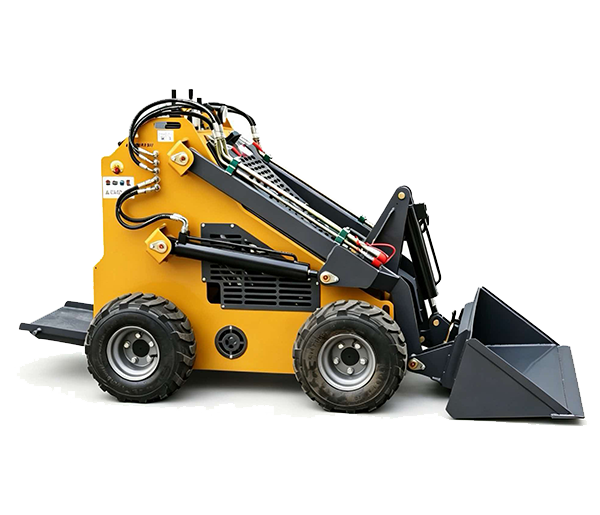
That is the thinking behind the Model 380 Skid-Steer Loader. I see this machine as a practical tool for contractors, rental companies, farms, landscaping teams, road maintenance crews and general construction users who need compact equipment with more flexibility than a conventional loader.
HKLOONG Heavy Industry Technology (Hefei) Co., Ltd. is based in Hefei, China. We specialize in equipment R&D, precision manufacturing, quality testing, customized modification and global distribution. Under the HKLOONG brand, our equipment range includes crawler excavators, Wheel loaders, Backhoe loaders and amphibious wetland Excavators. This broader equipment experience gives us a useful perspective when developing compact machines: the machine has to be easy to operate, strong enough for daily work and practical to maintain.
The Model 380 is intended for customers looking for a skid-steer loader for construction, a compact skid steer loader, a small wheel loader alternative or a versatile machine for multiple attachments. Because the exact Model 380 configuration can vary according to customer requirements and market conditions, I do not list unverified engine horsepower, rated operating capacity or dimensions as fixed specifications on this page.
Instead, I will explain what I consider important when choosing this type of machine: how skid steering works, why hydraulic power matters, where the Model 380 can be used, what affects lifting and loading performance, how we approach manufacturing and testing, and what buyers should ask before placing an order.
1. What Is a Model 380 Skid-Steer Loader?
A skid-steer loader is a compact construction machine built around a simple but clever idea: the left and right wheels can be controlled independently. Instead of using a traditional steering axle to turn the machine, the operator changes the speed or direction of the wheels on each side.
If I want the machine to move forward in a straight line, the wheels on both sides move forward at similar speeds. If I slow one side while keeping the other side moving, the machine turns. If I drive one side forward and the other side backward, the machine can rotate within a very small area.
This is where the word “skid” comes from. During a tight turn, the tires may slide slightly across the ground instead of following a large steering arc.
For a contractor, this small turning area can be a big advantage. Construction sites are rarely perfectly open. There may be walls, fences, trucks, piles of material, trenches, buildings and other machines nearby. A compact skid-steer loader can work between these obstacles more easily than many conventional machines.
The Model 380 also becomes more useful when it is treated as a carrier for different attachments. A standard bucket can handle soil, sand, gravel and other loose materials. A pallet fork can move pallets. A grapple can handle irregular materials. A broom can clean paved areas. Other hydraulic attachments can support drilling, cutting, grading, snow removal and landscaping work, depending on the machine's hydraulic configuration.
This attachment-based approach is one of the reasons I consider a Model 380 skid-steer loader more than a simple loading machine. It can become a small working platform for many different tasks.
| Machine Function | Typical Attachment | Common Job |
|---|---|---|
| Loading | General-purpose bucket | Moving soil, sand and aggregate |
| Material handling | Pallet forks | Moving palletized goods |
| Site cleaning | Angle or rotary broom | Cleaning roads, yards and work areas |
| Landscaping | Grading or landscape attachment | Leveling and surface preparation |
| Ground work | Auger or related hydraulic tool | Hole drilling and installation work |
Source: Attachment and application categories are based on published skid-steer loader product information from major equipment manufacturers. Exact attachment compatibility depends on hydraulic flow, coupling system, machine capacity and the specific attachment.
2. How the Model 380 Skid-Steer Loader Works
I like to explain the working system of a skid-steer loader in four simple parts: power, travel, hydraulics and attachment control.
Power Starts With the Engine
The engine provides the energy needed to move the machine and operate its hydraulic system. But engine horsepower is only one part of the story. What matters to the operator is how efficiently that engine power reaches the wheels and hydraulic attachment.
A good power system should provide enough torque for starting, pushing, climbing and loading while also supporting hydraulic work without making the machine feel weak or slow.
Independent Wheel Drive Creates Skid Steering
The left and right sides of the machine have separate drive paths. By controlling these sides independently, the operator can make very tight turns.
This is one of the biggest differences between a skid-steer loader and a traditional wheel loader. A conventional loader needs room for its steering articulation or front axle movement. A skid steer can rotate around a much smaller footprint.
Hydraulics Power the Attachment
The hydraulic system is what makes a skid-steer loader truly versatile. Hydraulic oil is pressurized by a pump and sent to hydraulic motors and cylinders. Cylinders raise and lower the loader arms and tilt the bucket. Auxiliary hydraulic circuits can power compatible attachments.
For example, a bucket may only need the loader's basic hydraulic functions. A Hydraulic Breaker, cold planer or high-powered brush cutter may need a different flow and pressure range.
That is why I always tell buyers not to choose a skid-steer loader based only on the machine's lifting capacity. If you plan to use hydraulic attachments, you should also check auxiliary hydraulic flow, pressure, coupler type and the attachment manufacturer's requirements.
Loader Arms Transfer Force to the Bucket
The loader arms connect the machine body to the attachment. Their geometry affects lift height, reach, breakout force and visibility.
The Model 380 should therefore be considered as a complete working system. The engine, drive system, hydraulic circuit, loader arms and attachment interface all need to work together. A strong engine cannot compensate for a poorly matched hydraulic system, and a powerful hydraulic system is not useful if the loader arms cannot safely handle the intended load.
| System | Main Function | What I Check |
|---|---|---|
| Engine | Provides primary power | Power delivery, cooling and fuel efficiency |
| Drive system | Moves the machine | Traction, response and smooth direction changes |
| Hydraulic system | Runs loader arms and attachments | Flow, pressure, heat control and leakage |
| Loader arms | Lifts and positions attachments | Strength, alignment and movement range |
| Attachment coupler | Connects tools to the machine | Fit, locking and hydraulic connections |
Source: System descriptions reflect standard skid-steer loader architecture used across the construction equipment industry. Individual Model 380 specifications should be confirmed against the final machine configuration.
```3. The Technical Points I Consider Most Important
When customers compare skid-steer loaders, they often look first at horsepower. I understand why, but horsepower alone does not tell me whether a machine is right for a job.
I normally start with rated operating capacity, tipping load, operating weight, hydraulic performance, dimensions and attachment compatibility.
Rated Operating Capacity
Rated operating capacity tells the buyer how much load the machine is designed to carry under a defined rating method. It is important because a bucket full of material does not behave the same way as an empty bucket.
Buyers should also understand the difference between rated operating capacity and tipping load. Tipping load is a stability reference, not a recommended everyday payload. I never recommend treating the tipping load as the machine's normal working load.
Operating Weight
Operating weight affects transportation, ground pressure, stability and traction. A heavier machine can provide useful stability, but it may also require more transport capacity.
Hydraulic Flow
Standard-flow auxiliary hydraulics are suitable for many common attachments. High-flow hydraulics can support tools that need more hydraulic power.
If your plan is to run only a bucket and pallet forks, standard hydraulic performance may be enough. If you want to operate a hydraulic breaker, trencher, cold planer or high-flow brush cutter, I would check the attachment specifications before selecting the machine.
Lift Path
Skid-steer loaders commonly use different lift-arm designs, such as radial-lift or vertical-lift arrangements. The choice affects how the attachment moves as it rises.
Radial lift can be useful for digging and work at lower or mid-range heights. Vertical lift is often useful when the machine needs more forward reach at maximum lift for loading trucks or placing material.
Machine Width and Height
A compact machine should fit through the spaces where you actually intend to work. Before purchasing, I recommend measuring gates, entrances, low overhead structures and transport ramps rather than assuming the machine will fit.
| Reference Model | Horsepower | Rated Operating Capacity | Operating Weight | Auxiliary Hydraulic Flow |
|---|---|---|---|---|
| Bobcat S450 | 49 hp | 1,370 lb | 5,370 lb | 16.7 gpm standard flow |
| Cat 232D3 | 67.1 hp gross | 1,900 lb | Configuration dependent | Standard flow system |
| Cat 260 | 74 hp gross | 3,160 lb | 8,523 lb | Configuration dependent |
| Cat 270 | 100 hp gross | 3,557 lb | 10,441 lb | Configuration dependent |
Source: Official published specifications from Bobcat and Caterpillar. These are external reference models only and are not specifications for the HKLOONG Model 380. Bobcat S450 specifications are published by Bobcat; Cat 232D3, 260 and 270 specifications are published by Caterpillar. Specifications can vary with configuration and options.
```
4. Where I Would Use the Model 380
```The real strength of a skid-steer loader is versatility. Instead of buying a separate machine for every small task, I can use one carrier with different attachments.
Construction Sites
On general construction sites, the Model 380 can be used for loading loose material, moving debris, preparing work areas and handling materials with suitable attachments.
Its compact footprint is useful when the site contains buildings or other equipment. A skid steer can often work in spaces where a larger wheel loader would need too much turning room.
Road Maintenance
Road maintenance teams can use skid-steer loaders for material handling, surface cleaning and other support work. With the correct attachment, the same carrier can sweep roads, move aggregate or perform certain maintenance tasks.
Landscaping
Landscaping is one of the areas where I see skid-steer loaders used most effectively. Operators can move soil, mulch and stone, prepare ground and handle grading attachments.
Agriculture
Farm users can use compatible attachments for material handling, cleaning, feeding operations and other general tasks. The compact dimensions are useful around barns, storage buildings and narrow working areas.
Snow Removal
In regions with snow, a skid-steer loader can become a useful seasonal machine. Depending on hydraulic capacity and attachment compatibility, it can work with snow blades, snow blowers or other snow-handling tools.
Waste and Material Handling
Grapples, buckets and forks can make the machine useful for handling different materials. However, attachment selection should always consider the material weight and the machine's rated capacity.
Rental Fleets
Rental companies often value equipment that can serve different customers. A compact skid steer with a practical attachment range can be rented for construction, landscaping, farm work and maintenance.
| Industry | Typical Job | Potential Attachment | Why a Skid Steer Helps |
|---|---|---|---|
| Construction | Loading and site preparation | Bucket, forks | Compact size and fast maneuvering |
| Landscaping | Soil and material movement | Bucket, grapple, grading tools | One carrier can handle several jobs |
| Agriculture | Material handling | Bucket, forks, grapple | Useful around buildings and storage areas |
| Road maintenance | Cleaning and support work | Broom, bucket | Good maneuverability in restricted areas |
| Snow removal | Clearing roads and yards | Snow blade or blower | Attachment flexibility |
Source: Application categories are consistent with published skid-steer loader applications from Caterpillar and Bobcat. Actual attachment use depends on machine capacity, hydraulic flow, attachment requirements and local operating conditions.
```5. Why Attachment Compatibility Matters More Than Many Buyers Expect
```One thing I want buyers to think about before purchasing a Model 380 skid-steer loader is the machine's future work.
Maybe today you only need a bucket. But what happens six months later? You may want a pallet fork, auger, sweeper or hydraulic breaker. If the machine's hydraulic and attachment interface were not selected with those future jobs in mind, you may find that the machine cannot run the tool efficiently.
That is why I recommend making an attachment list before finalizing the loader configuration.
Bucket
The bucket is the basic attachment for moving loose material. Bucket size should be matched to the material density and the loader's rated capacity. A larger bucket is not automatically better because filling it with heavy material can exceed the practical working capacity of the machine.
Pallet Forks
Forks turn the skid steer into a compact material-handling machine. They can be useful on construction sites, farms, warehouses and landscaping projects.
Grapples
Grapples are useful when the material is irregular, such as branches, logs, demolition debris or bulky waste. The attachment's weight and load center should be included when checking the machine's capacity.
Hydraulic Breakers
Breakers need hydraulic flow and pressure. They also create shock loads, so the machine and attachment need to be correctly matched.
Augers and Trenchers
These attachments use hydraulic power to perform ground work. They can make a skid steer useful for fence installation, landscaping, utility preparation and other projects.
For me, this attachment flexibility is one of the strongest reasons to choose a skid-steer loader instead of buying a machine that can perform only one task.
```6. How We Approach Model 380 Manufacturing and Quality Testing
```At HKLOONG, I believe construction equipment should be designed around real working conditions. A machine can have a good-looking exterior, but that is not enough. The frame, hydraulic system, powertrain, electrical system and operator controls all need to work together.
Structural Frame
The frame carries the engine, drive system, hydraulic components, loader arms and operator area. It also receives repeated loads during loading, pushing and turning.
For that reason, structural design, material selection, welding quality and dimensional accuracy are important manufacturing steps.
Loader Arm Assembly
The loader arms are repeatedly raised, lowered and tilted during daily work. Their pivot points and cylinder connections need accurate alignment. Poor alignment can increase wear and create unnecessary stress.
Hydraulic System
Hydraulic cleanliness and connection quality are critical. Contaminated oil can damage sensitive hydraulic components. Leaks can reduce machine performance and create maintenance problems.
During manufacturing and inspection, I pay attention to hose routing, connection points, cylinder movement and hydraulic response.
Drive System
The skid-steer drive system needs to handle frequent direction changes. Operators may move forward, reverse and rotate repeatedly throughout the working day. This makes drive-system durability particularly important.
Electrical and Control Systems
Modern construction equipment depends on sensors, switches, wiring and control devices. Electrical connections should be protected against vibration, dust and moisture as appropriate for the machine design.
Final Functional Inspection
Before delivery, I prefer to evaluate the complete machine rather than checking only individual parts. Functional inspection can include engine starting, travel operation, steering response, loader-arm movement, bucket tilt, auxiliary hydraulic operation, braking, instrument function and abnormal noise.
The exact inspection procedure depends on the final Model 380 configuration and customer requirements.
For export customers, manufacturing is only one part of the job. Documentation, spare-parts identification, service information and communication also matter because the machine may spend years working far away from our factory.
```7. Why I Would Choose HKLOONG for a Model 380 Skid-Steer Loader
```When I talk with equipment buyers, I try not to reduce the purchase decision to price. The initial machine cost matters, but downtime, maintenance, spare parts and attachment compatibility can have an even bigger effect over the machine's working life.
HKLOONG Heavy Industry Technology (Hefei) Co., Ltd. combines equipment R&D, precision manufacturing, quality testing, customized modification and global distribution. This gives us the ability to work with customers from the early equipment-selection stage rather than treating the machine as a standard box that simply needs to be shipped.
Experience With Multiple Construction Machines
Our product range includes crawler Excavators, wheel loaders, backhoe loaders and amphibious Wetland excavators. Each machine has different working requirements, but they all need reliable power, strong structures, practical controls and serviceable components.
That experience influences how I approach the Model 380. I want to understand what the machine will actually do before deciding which configuration makes sense.
Customization for Different Markets
Export markets can have different requirements for engines, emissions, electrical systems, safety equipment and attachments. Working environments can also be very different.
A machine used on a dry construction site does not necessarily need the same configuration as one working on a farm, in a snowy region or in a humid environment.
Practical Equipment Matching
I would rather recommend a suitable machine configuration than simply provide the highest possible specification. If the customer needs only standard bucket work, there is no reason to make the purchase unnecessarily complicated. If the customer needs high-flow hydraulic attachments, that requirement should be considered from the beginning.
Global Distribution
Because HKLOONG serves international customers, we understand that equipment needs to be prepared for transportation, installation, operation and maintenance outside China.
Our goal is to make the buying process clear: understand the job, confirm the configuration, inspect the machine and then arrange delivery.
```8. Model 380 Skid-Steer Loader FAQ
```What is the Model 380 Skid-Steer Loader used for?
The Model 380 is intended as a versatile compact loader platform for tasks such as material handling, construction support, landscaping, agriculture, road maintenance and other jobs where compatible attachments can be used.
Why choose a skid-steer loader instead of a wheel loader?
A skid-steer loader usually offers a much tighter turning capability and can use a wide range of attachments. A wheel loader may be better when the main job is high-volume material loading and longer travel. I choose between them according to the working area, material, production target and attachment requirements.
Can the Model 380 use different attachments?
The purpose of the skid-steer design is attachment versatility. However, every attachment must match the machine's rated capacity, hydraulic flow, hydraulic pressure, coupler and physical dimensions. The final compatible attachment list should be confirmed for the specific Model 380 configuration.
What is rated operating capacity?
Rated operating capacity is a defined load rating used to describe how much weight a skid-steer loader can safely handle under a specified rating method. It should not be confused with tipping load. Actual working conditions, attachment weight and load center must also be considered.
Is a skid-steer loader good for landscaping?
Yes. Landscaping is one of the most common applications for compact loaders. A bucket, grapple, grading attachment or other suitable tool can allow one machine to handle several different tasks.
Can the Model 380 work with hydraulic breakers?
Potentially, provided the final machine configuration has the required hydraulic flow, pressure, mounting interface and structural compatibility. The breaker manufacturer requirements should always be compared with the loader specifications before operation.
What should I tell HKLOONG before ordering?
I recommend providing the intended application, preferred attachment, working environment, expected daily operating hours, material type, required lifting or loading capacity, transport limitations and destination market. This information helps us recommend a more suitable configuration.
Does HKLOONG provide customized configurations?
Yes. HKLOONG specializes in equipment R&D, precision manufacturing, quality testing and customized modification. The available customization depends on the machine configuration, component availability, customer requirements and destination-market regulations.
Why should I not judge a skid-steer loader only by horsepower?
Horsepower tells you about engine output, but it does not describe the complete working ability of the machine. Rated operating capacity, hydraulic flow, hydraulic pressure, breakout force, operating weight, lift geometry, attachment compatibility and machine dimensions can all affect real job performance.
How do I know whether Model 380 is the right size?
Start with your actual work. If you need a compact machine for material handling, landscaping, construction support and attachment-based work, a skid steer may be a good fit. We can then compare your required load, attachment and working space with the final Model 380 specifications before confirming the order.
```Choose the Model 380 Around the Job, Not Just the Machine
```After working with construction equipment, I have learned that the best machine is not always the biggest one. It is the one that fits the work.
The Model 380 Skid-Steer Loader is built around a useful idea: one compact machine can perform many jobs when the carrier and attachment are correctly matched. Its tight steering behavior makes it suitable for restricted work areas, while the attachment system can turn it into a material handler, cleaner, grader, drilling machine or other specialized tool.
For contractors searching for a compact skid steer loader, skid steer loader for construction, small skid steer with attachments, skid steer loader for landscaping, compact loader for agriculture or Model 380 skid steer, I recommend starting with the application rather than the specification sheet.
Tell us what you need to lift, move, dig, clean or process. Tell us which attachments you expect to use. Tell us about your working environment and destination market. From there, we can work backward to the machine configuration.
At HKLOONG Heavy Industry Technology (Hefei) Co., Ltd., our approach is straightforward. We combine R&D, precision manufacturing, quality testing, customized modification and global distribution to provide practical heavy equipment for customers in different markets.
I do not believe a construction machine should be complicated for the sake of being complicated. It should have enough power for the job, enough strength for repeated work, controls that make sense to the operator and service access that helps keep the machine working.
That is the standard I would use when selecting the Model 380 Skid-Steer Loader for a real construction site.
Technical Comparison Sources
Bobcat official S450 specifications, including horsepower, rated operating capacity, operating weight, travel speed and hydraulic information.
Caterpillar official 232D3 specifications, including engine output, rated operating capacity, tipping load and breakout force.
Caterpillar official 260 and 270 skid-steer loader specifications, used as external reference points for operating capacity and machine weight.
Specification note: The comparison figures in this article come from publicly available manufacturer specifications and are included only to help buyers understand the market range. They are not specifications for HKLOONG Model 380. The exact Model 380 engine, rated operating capacity, operating weight, hydraulic flow, dimensions, lift geometry and attachment compatibility should be confirmed from the final configuration and technical datasheet supplied by HKLOONG.
```



 WhatsApp
 Phone
Phone E-mail
 Message