
 Español
 Pусский
 Français
 العربية


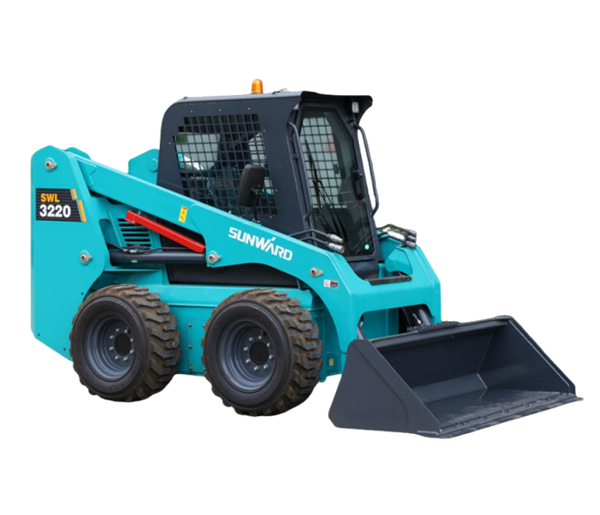
When I design a skid steer loader, I do not look at the machine as a simple bucket carrier. I look at it as a working platform. The loader itself provides the power, hydraulic control, lifting ability, and movement. The attachment decides what kind of job the machine can actually do.
That is why skid steer loader attachments are such an important part of our equipment design at HKLOONG Heavy Industry Technology (Hefei) Co., Ltd. A contractor may need to move soil in the morning, level a site in the afternoon, clear snow the next day, and use a different tool for vegetation or surface work later in the week. I want one skid steer loader to support these changing jobs through a practical attachment system.
Our skid steer loader is developed with strong power, reliable structure, low operating noise, energy-conscious performance, and a flexible hydraulic system. I also use an independently developed arc lifting mechanism, ISO pilot operating mode, universal quick-change device, bucket floating, and automatic leveling functions. These features are intended to make the loader easier to use with different compatible attachments.
For landscaping contractors, construction companies, farms, property maintenance teams, municipalities, and snow-removal operators, the right attachment can make a compact skid steer much more useful. In my view, choosing the attachment and choosing the loader should be treated as one decision.
1. What Are Skid Steer Loader Attachments?
A skid steer loader attachment is a tool mounted on the front of a skid steer loader to perform a specific task. The basic loader provides the lifting movement and machine power, while the attachment changes the function of the machine.
A bucket is the most familiar example. It can load soil, sand, gravel, mulch, waste, and other loose materials. But a modern skid steer can do much more than loading. Depending on the loader configuration and hydraulic capacity, it can work with pallet forks, grapples, augers, trenchers, sweepers, grading blades, snow blowers, brush cutters, stump grinders, hydraulic hammers, and other tools.
Caterpillar's current skid steer attachment range, for example, includes augers, backhoes, bale grabs, bale spears, blades, buckets, pallet forks, rakes, trenchers, mulchers, brushcutters, grading tools, and snow-removal equipment. This shows how the attachment system has become a major part of skid steer versatility. :contentReference[oaicite:0]{index=0}
I therefore treat the attachment interface, hydraulic connections, control system, and lifting mechanism as important parts of the complete machine rather than small accessories added at the end.
| Attachment Type | Typical Job | Common Application |
|---|---|---|
| General-purpose bucket | Loading and carrying loose material | Construction, landscaping, agriculture |
| Pallet forks | Moving palletized goods | Warehouses, construction sites, nurseries |
| Grapple | Handling irregular materials | Land clearing, forestry, recycling |
| Auger | Drilling holes | Fencing, landscaping, construction |
| Trencher | Cutting narrow trenches | Irrigation, cables, drainage |
| Grading blade or rake | Surface preparation and leveling | Landscaping and site preparation |
| Snow blower or blade | Snow clearing | Roads, driveways, commercial sites |
| Brush cutter or mulcher | Vegetation management | Landscaping and land clearing |
Source: Attachment categories and application examples are based on Caterpillar's published skid steer loader attachment range. Compatibility depends on the specific loader, attachment, hydraulic system, and operating requirements. :contentReference[oaicite:1]{index=1}
2. How My Skid Steer Attachment System Works
The basic idea is simple. The loader carries the attachment through its lift arms and quick-change mounting interface. Hydraulic power can then operate the attachment when the tool requires hydraulic flow.
For a normal bucket, the loader's lift and tilt functions are the main working systems. For hydraulic attachments, the auxiliary hydraulic circuit sends pressurized hydraulic oil through hoses and couplers to the attachment. The attachment converts that hydraulic power into movement, rotation, cutting, drilling, sweeping, or another working action.
This is why I pay close attention to hydraulic performance when designing a skid steer loader attachment system. A bucket and a hydraulic brush cutter do not have the same requirements. A simple attachment may work well with standard auxiliary flow, while a high-demand rotating attachment may require a higher-flow hydraulic circuit.
CASE construction equipment explains the same basic principle in its skid steer hydraulic guidance: standard-flow auxiliary systems are commonly used for tools such as buckets, hammers, augers, trenchers, and grapples, while higher-flow systems can be needed for equipment such as snow throwers and wood chippers. :contentReference[oaicite:2]{index=2}
I therefore recommend starting with the attachment requirements rather than buying a loader first and trying to make every tool fit afterward.
3. Quick Attach Design and Hydraulic Power
One of the features I focus on is the international universal quick-change device. The reason is practical: attachment changes are part of normal working life for many skid steer operators.
With the correct mounting system, an operator can remove one compatible tool and install another without sending the machine to a workshop. This can reduce idle time and make a single loader useful for more tasks.
Caterpillar also describes its hydraulic quick-attach system as a way to change work tools more easily. Its published guidance emphasizes cleaning hydraulic couplings, relieving hydraulic pressure before connection or removal, correctly routing hoses, and checking that couplings are securely locked. :contentReference[oaicite:3]{index=3}
I consider these details important because a quick attachment system is only useful when the connection is mechanically secure and the hydraulic connection is properly managed.
Hydraulic flow is equally important. As an external industry reference, the current Bobcat S650 lists 23 gpm (87.1 L/min) standard auxiliary flow and 30.5 gpm (115.5 L/min) high-flow auxiliary output. Bobcat also lists a 3,500 psi auxiliary system pressure for this model. These are Bobcat specifications, not HKLOONG specifications. :contentReference[oaicite:4]{index=4}
| Reference Model | Rated Operating Capacity | Operating Weight | Standard Auxiliary Flow | High Auxiliary Flow |
|---|---|---|---|---|
| Bobcat S650 | 1,282 kg | 3,777 kg | 87.1 L/min | 115.5 L/min |
Source: Bobcat published S650 specifications. The figures above are external reference data only and are not specifications for the HKLOONG skid steer loader. :contentReference[oaicite:5]{index=5}
4. The Main Skid Steer Loader Attachments I Consider
Bucket Attachments
The bucket remains the basic tool for material handling. I use it for soil, sand, gravel, mulch, stones, construction waste, and other bulk materials. Different bucket designs can be selected according to the material and working condition.
Pallet Fork Attachments
Pallet forks turn the skid steer into a compact material-handling machine. They are useful for moving bagged materials, pallets of paving products, nursery supplies, building materials, and other loads that need to remain supported rather than scooped.
Grapple Attachments
A grapple is useful when the material is irregular. Branches, logs, brush, demolition debris, and other loose materials can be difficult to handle with a standard bucket. A grapple provides a mechanical way to hold the load during movement.
Auger and Trencher Attachments
For landscaping and construction, drilling and trenching are common tasks. An auger can prepare holes for posts, trees, signs, and similar work. A trencher can create narrow cuts for irrigation pipes, cables, or drainage systems.
Grading and Rake Attachments
When the goal is to prepare a clean surface rather than simply move material, grading tools become more useful. Landscape rakes, grading blades, and related tools can help distribute material and prepare the surface for later work.
Snow Removal Attachments
For customers in cold regions, skid steer attachments for snow removal can extend machine use into winter. Snow blades, snow pushers, and snow blowers can turn the same loader into a seasonal maintenance machine.
Brush Cutters, Mulchers and Stump Grinders
These hydraulic attachments are useful for vegetation control and land preparation. However, I always recommend checking hydraulic flow, pressure, attachment weight, mounting requirements, and the loader's rated operating limits before selecting a high-demand tool.
| Attachment Group | Hydraulic Demand Consideration | Selection Priority |
|---|---|---|
| Bucket / pallet forks | Main loader functions are often the key consideration | Load capacity and attachment weight |
| Grapple | May require auxiliary hydraulic control | Material type and jaw configuration |
| Auger / trencher | Hydraulic flow affects working performance | Ground type and tool size |
| Brush cutter / mulcher | Often requires suitable continuous hydraulic flow | Flow, pressure, and attachment demand |
| Snow blower | Hydraulic power and continuous flow can be important | Snow depth, width, and climate |
| Stump grinder | May require higher hydraulic output | Stump size and hydraulic requirements |
Source: Hydraulic requirements vary by attachment. Caterpillar and CASE both explain the importance of matching auxiliary hydraulic flow to the work tool. :contentReference[oaicite:6]{index=6}
5. Technical Features I Build Into the Loader
The attachment is only one part of the system. If the base loader is difficult to control, even a good attachment will not perform well. That is why I focus on the complete working process.
Independently Developed Arc Lifting Mechanism
Our arc lifting mechanism is independently researched and developed. I keep the structure straightforward while giving it good load-bearing ability and reliable working characteristics. This is important for repeated lifting and lowering during material handling.
ISO Pilot Operating Mode
The ISO pilot operating mode is designed around easy operation and flexible control. Good inching performance is especially useful when the operator needs to move slowly around buildings, trees, fences, parked vehicles, or other obstacles.
Bucket Floating Function
The standard bucket floating function allows the bucket to follow the working surface in suitable applications. This can be useful during light grading, cleanup, and surface work.
Automatic Leveling
Automatic leveling helps maintain a more controlled bucket position during selected lifting operations. It can reduce repeated manual corrections and help the operator focus on the overall job.
Accessible Maintenance Space
I also leave all-around maintenance space so technicians can reach service points and components more easily. For a working machine, easy maintenance access is not a cosmetic feature. It affects how quickly routine inspection and servicing can be completed.
Low Noise and Energy-Conscious Operation
Landscaping, property maintenance, and municipal work may happen close to people and buildings. Lower operating noise can be helpful in these environments. At the same time, I pay attention to energy use because operating cost is part of the machine's real value.
6. Choosing Attachments for Different Industries
I see skid steer loader attachments as a way to match one machine with many different industries.
Landscaping: Buckets, landscape rakes, augers, trenchers, stump grinders, brush cutters, and grading tools can support different stages of landscape construction and maintenance.
Construction: Buckets, pallet forks, augers, trenchers, grading blades, grapples, and Hydraulic Breakers can support material handling and site preparation.
Agriculture: Bale spears, bale grabs, buckets, grapples, pallet forks, sweepers, and other tools can help with material handling and farm maintenance.
Snow removal: Snow blades, snow pushers, and snow blowers allow the loader to work during the winter season.
Property maintenance: Sweepers, buckets, forks, and landscaping tools can support cleaning, repair, and general site maintenance.
Forestry and land clearing: Grapples, brush cutters, mulchers, and related tools can help move or process vegetation and debris, subject to proper machine and attachment matching.
The important point is that I do not recommend treating every attachment as interchangeable. Attachment weight, hydraulic flow, hydraulic pressure, mounting dimensions, electrical connections, operating load, and the intended working environment all need to be checked before use.
7. How I Manufacture and Support the Complete System
At HKLOONG Heavy Industry Technology (Hefei) Co., Ltd., I work across equipment R&D, precision manufacturing, quality testing, customized modification, and global distribution. This allows me to approach the skid steer and its attachment system as one engineering project.
During development, I pay attention to the structural relationship between the lift arms, quick-change device, hydraulic lines, auxiliary controls, and attachments. The goal is not simply to make the attachment fit. The machine needs to deliver the required movement and hydraulic power in a controlled way.
Manufacturing also requires attention to structural parts. The lift arm and mounting structure experience repeated loading, so material selection, welding quality, machining accuracy, and assembly control all matter.
Hydraulic components require another level of attention. Hydraulic hoses and couplers need to be correctly routed and securely connected. Contamination inside a hydraulic system can cause unnecessary wear, so clean connection and maintenance practices are important.
After assembly, I focus on quality testing and operating checks. The loader should be checked for lifting movement, control response, hydraulic operation, attachment connection, and general machine condition before shipment.
Because customers work in different environments, I can also discuss customized configurations based on attachment requirements, working conditions, climate, material type, and project needs. This is particularly useful when a customer plans to use the loader with specialized hydraulic tools.
8. Why Choose HKLOONG Skid Steer Loader Attachments?
I believe the value of an attachment system comes from the complete package. A quick-change device alone does not make a loader versatile. The base machine needs enough power, the hydraulic system needs to match the tool, the operator needs practical controls, and maintenance needs to be manageable.
With HKLOONG, my focus is on building that complete working relationship between the loader and attachment.
Flexible attachment platform: supports different compatible tools for changing jobs.
Universal quick-change device: makes attachment switching more practical.
Arc lifting mechanism: independently developed with a simple structure and good load-bearing ability.
ISO pilot control: supports easy operation, flexible movement, and good inching performance.
Bucket floating: helps the bucket follow the working surface in suitable applications.
Automatic leveling: can reduce repeated manual bucket corrections.
Maintenance-friendly layout: provides easier access to components and service points.
Customization support: configurations can be discussed according to project and attachment requirements.
Most importantly, I do not treat skid steer loader attachments as an afterthought. I see them as part of the machine's working purpose from the beginning.
Frequently Asked Questions About Skid Steer Loader Attachments
What attachments can be used with a skid steer loader?
Common options include buckets, pallet forks, grapples, augers, trenchers, landscape rakes, grading blades, sweepers, snow blades, snow blowers, brush cutters, mulchers, stump grinders, and hydraulic hammers. The correct choice depends on the loader's mounting system and hydraulic specifications.
What is the most useful skid steer attachment?
There is no single attachment that is right for every job. A bucket is usually a practical general-purpose tool, while contractors who do landscaping may get more value from a combination of buckets, grading tools, augers, trenchers, and vegetation-control attachments.
How do I choose hydraulic skid steer attachments?
I recommend checking the attachment's required hydraulic flow and pressure first. Then compare those requirements with the loader's actual auxiliary hydraulic output. Attachment weight, mounting dimensions, electrical requirements, and rated operating capacity should also be checked.
What is a quick attach system?
A quick attach system is the mounting interface used to connect compatible attachments to the loader. It is designed to make tool changes faster and more convenient than manually removing and installing a fixed attachment.
Do all skid steer attachments fit every skid steer loader?
No. Even when two machines use a similar attachment style, hydraulic flow, pressure, electrical connections, attachment weight, lifting capacity, and mounting dimensions may differ. Always confirm compatibility before purchase and operation.
Why is hydraulic flow important for skid steer attachments?
Hydraulic flow supplies the attachment with the oil needed to operate its motor or cylinder. Low-demand tools may work with standard flow, while certain rotating or high-performance attachments can require higher flow. CASE and Caterpillar both emphasize matching auxiliary hydraulic capability with attachment requirements. :contentReference[oaicite:7]{index=7}
Can one HKLOONG skid steer loader use different attachments?
Yes, when the attachment is mechanically and hydraulically compatible with the loader configuration. Our universal quick-change device is designed to support flexible attachment use, while the actual attachment selection should be confirmed according to the machine's working parameters.
Final Thoughts
For me, the real strength of a skid steer loader is not limited to what it can do with a bucket. Its greater value comes from how easily it can become a different machine when the right attachment is installed.
With the correct combination of hydraulic power, lifting structure, operator control, quick attachment connection, and maintenance access, one compact loader can support many different jobs.
That is the approach I take at HKLOONG. I develop the machine around practical work: strong power, reliable structure, flexible ISO pilot control, an independently developed arc lifting mechanism, universal quick-change capability, bucket floating, automatic leveling, and easy maintenance access.
Whether the requirement is for landscaping, construction, agriculture, snow removal, property maintenance, or land clearing, I focus on helping customers match the loader with the right skid steer loader attachments. The final goal is straightforward: one dependable machine, more useful working options, and a setup that makes sense for the actual jobsite.



 WhatsApp
 Phone
Phone E-mail
 Message