
 Español
 Pусский
 Français
 العربية


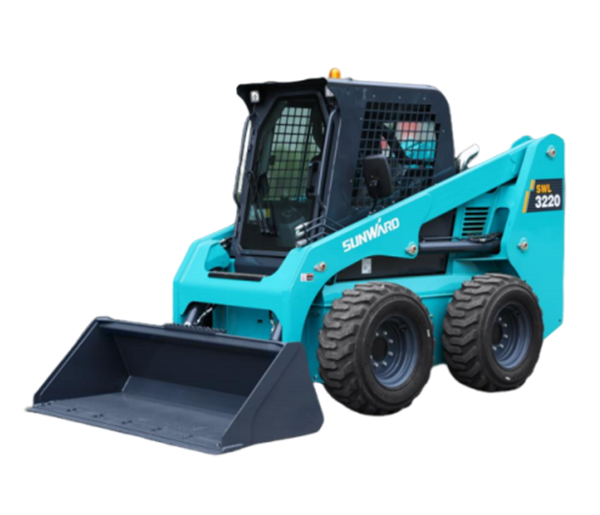
When I look at landscaping work, I see a job that needs more than raw engine power. A machine may need to move soil in the morning, level a garden area before lunch, carry materials in a narrow space, and switch to a sweeper or snow blade later in the day. This is where I design our skid steer loader for landscaping to be useful.
At HKLOONG Heavy Industry Technology (Hefei) Co., Ltd., I focus on practical machine design. Our skid steer loader combines strong power, reliable operation, low noise, energy-conscious operation, and a flexible attachment system. The goal is simple: give operators a compact machine that can handle many landscaping jobs without making the machine difficult to control or maintain.
For landscaping contractors, nursery operators, property maintenance teams, municipal service companies, and general contractors, a landscaping skid steer loader can become a daily working tool. Its compact body helps it work where larger Wheel loaders or Excavators may have difficulty. Its quick-change system allows one machine to perform different jobs with different attachments.
1. What Is a Skid Steer Loader for Landscaping?
A skid steer loader is a compact loader that turns by changing the speed and direction of the wheels on each side. Instead of using a traditional steering axle, I use the machine's independent drive system to create a very small turning path. This makes the skid steer especially useful in gardens, residential projects, nurseries, sidewalks, narrow construction areas, and other places where working space is limited.
For landscaping, the machine is not only a bucket loader. With the right attachment, it can prepare soil, move mulch, clear vegetation, grade ground, remove snow, carry pallets, dig small trenches, grind stumps, or clean paved areas.
This multi-purpose design is one of the main reasons I consider the skid steer loader a practical choice for landscaping contractors. Instead of keeping several small machines on one jobsite, a contractor can use one loader and change attachments according to the task.
Modern skid steer loaders also show how important attachment compatibility has become. For example, Bobcat's current S650 is offered with a wide range of attachments, including landscape rakes, soil conditioners, stump grinders, tillers, sweepers, tree transplanters, trenchers, mowers, seeders, and snow equipment. :contentReference[oaicite:0]{index=0}
| Typical Landscaping Job | Suitable Attachment Type | What the Loader Does |
|---|---|---|
| Moving soil or mulch | General-purpose bucket | Loading, carrying, and placing materials |
| Ground preparation | Soil conditioner or tiller | Breaking and preparing the surface |
| Fine grading | Landscape rake or grading attachment | Leveling and surface finishing |
| Vegetation clearing | Brush cutter or forestry cutter | Cutting grass, brush, and unwanted growth |
| Stump removal | Stump grinder | Grinding tree stumps below the working surface |
| Snow removal | Snow blade or snow blower | Clearing paths, driveways, and paved areas |
Source: Application and attachment examples are based on published Bobcat S650 attachment information; attachment compatibility varies by loader model and configuration. :contentReference[oaicite:1]{index=1}
2. How My Landscaping Skid Steer Loader Works
The working principle is straightforward. Power from the engine is transferred through the hydraulic and drive systems to the wheels. The operator controls the movement of the left and right sides independently. When both sides move forward at similar speeds, the loader travels forward. When one side slows down or reverses, the machine turns. When the wheels on opposite sides move in different directions, the loader can rotate within a very small area.
That turning method is especially helpful in landscaping. A residential garden may have fences, trees, buildings, flower beds, and parked vehicles around the work area. A nursery may have narrow rows between plants. A municipal maintenance project may require work beside sidewalks or other fixed structures.
I also pay close attention to the hydraulic system because landscaping is often attachment-driven work. A bucket mainly uses the loader's lifting and tilting functions. A brush cutter, stump grinder, trencher, or other powered attachment may require hydraulic flow from the auxiliary circuit.
As an industry reference, the current Bobcat S650 lists standard auxiliary hydraulic flow of 23 gpm and optional high-flow output of 30.5 gpm, with auxiliary system pressure listed at 3,500 psi. These figures are published specifications for the Bobcat S650 and should not be treated as HKLOONG specifications. :contentReference[oaicite:2]{index=2}
| Industry Reference Model | Rated Operating Capacity | Operating Weight | Engine Power | Auxiliary Hydraulic Flow |
|---|---|---|---|---|
| Bobcat S650 | 1,282 kg | 3,777 kg | 55.4 kW / 74.3 hp | 87.1 L/min standard; 115.5 L/min high flow |
Source: Bobcat published S650 specifications. Values are external industry reference data, not HKLOONG product specifications. :contentReference[oaicite:3]{index=3}
3. Arc Lifting Mechanism, ISO Pilot Control and Quick Attachment Changes
One of the areas I have focused on is the lifting mechanism. Our skid steer loader uses an independently developed arc lifting mechanism. I keep the structure relatively simple while giving the lifting system good load-bearing ability and reliable operation.
For an operator, this matters because landscaping involves repeated lifting and lowering. Soil, mulch, stones, branches, paving materials, and other loads may be moved hundreds of times during a working day. A practical lift system should respond smoothly rather than making every movement feel complicated.
The machine also uses an ISO pilot operating mode. The control layout is designed to make operation easier, with flexible movement and good inching performance. In simple terms, the operator can make small movements without needing to fight the controls. This is useful when working close to trees, walls, curbs, flower beds, irrigation systems, or other sensitive areas.
I also use an international universal quick-change device. The purpose is not simply to change tools quickly. It is to make the loader more useful throughout the year.
A contractor may start the day with a bucket for soil handling, change to a landscape rake for grading, install a milling or surface-preparation attachment for another task, and then use a snow attachment during winter. The loader becomes a platform for different tools rather than a machine limited to one function.
Published Bobcat S650 information also shows how attachment flexibility has become an important part of skid steer loader design. Its attachment list includes landscape rakes, soil conditioners, stump grinders, tillers, sweepers, trenchers, mowers, snow blades, snow blowers, and tree transplanters. :contentReference[oaicite:4]{index=4}
4. Key Technical Advantages for Landscaping Work
Compact movement in tight areas
Landscaping often takes place in areas where space is limited. My skid steer loader is built around flexible movement, allowing the operator to work around fixed obstacles and reduce unnecessary repositioning.
Strong power for repeated work
Power matters when loading soil, pushing material, operating attachments, or moving across uneven ground. I focus on a power system that supports repeated working cycles instead of only short bursts of performance.
Bucket floating and automatic leveling
The standard bucket floating function helps the attachment follow the working surface during suitable grading and cleanup operations. Automatic leveling helps keep the bucket in a more controlled position during lifting movements. Together, these functions can reduce repeated manual corrections and improve working efficiency.
Multi-purpose attachment platform
The universal quick-change device is one of the machine's most useful features for landscaping contractors. It allows the same loader to be matched with different tools according to the project.
Low-noise and energy-conscious operation
Landscaping work can take place close to homes, schools, commercial buildings, parks, and public spaces. Lower operating noise can make the working environment more comfortable. I also pay attention to energy use because fuel and operating costs directly affect the cost of completing a job.
Easy maintenance access
I do not consider maintenance an afterthought. Our skid steer loader provides an all-around maintenance space so operators and technicians can reach service points and components more easily. Better access can reduce unnecessary service time and make routine inspection more practical.
| Feature | Value in Landscaping | Typical Work Example |
|---|---|---|
| Arc lifting mechanism | Simple structure and good load-bearing ability | Loading soil, mulch, stone, and green waste |
| ISO pilot control | Flexible control and good inching performance | Working around trees, curbs, and buildings |
| Universal quick-change device | Fast switching between working tools | Bucket, rake, sweeper, cutter, snow attachment |
| Bucket floating | Better surface following in suitable applications | Light grading and cleanup |
| Automatic leveling | Reduces repeated bucket corrections | Material handling and leveling work |
| Accessible maintenance space | Easier inspection and servicing | Daily checks and scheduled maintenance |
5. Where I Use a Skid Steer Loader for Landscaping
I design this type of loader for more than one landscaping task. Its value becomes clearer when I look at the complete workflow of a project.
Residential landscaping: The loader can move topsoil, mulch, gravel, decorative stone, and other materials around residential projects. Its compact layout is useful where the work area is close to houses, fences, driveways, and gardens.
Commercial landscaping: Large property projects often require repeated material handling and surface preparation. A skid steer loader can support grading, cleanup, material movement, and attachment-based work.
Nursery operations: Nurseries need equipment that can work around planting areas while moving soil, compost, pots, and other materials. The loader's flexible steering can be useful in narrow working zones.
Park and public-space maintenance: Municipal and property maintenance teams can use different attachments for cleaning, vegetation control, grading, and seasonal work.
Snow removal: When fitted with a suitable snow blade, snow blower, or snow pusher, the same loader can support winter maintenance. This makes the equipment useful beyond the main landscaping season.
Tree and vegetation work: Attachments such as brush cutters, forestry cutters, stump grinders, and tree-handling tools can expand the machine's role. The exact attachment must always be matched to the loader's hydraulic capacity, operating limits, and manufacturer requirements.
6. How I Build and Support the Machine at HKLOONG
At HKLOONG Heavy Industry Technology (Hefei) Co., Ltd., I treat a skid steer loader as a complete working system rather than simply an engine, frame, and bucket.
Our company integrates equipment research and development, precision manufacturing, quality testing, customized modification, and global distribution. This gives me a practical way to look at the machine from both the engineering side and the customer's working side.
The manufacturing process starts with structural design. The frame and lifting mechanism need enough strength for repeated loading cycles. At the same time, the machine must remain practical to inspect and service. A machine that is strong but difficult to maintain is not a good long-term solution for a contractor.
I also pay attention to hydraulic routing, control layout, attachment connection, and maintenance access. These details may not be the first things a buyer notices in a product photograph, but they become important after hundreds of hours on a real jobsite.
Quality testing is another part of the process. Before equipment is delivered, the important operating systems need to be checked for proper movement, hydraulic response, structural performance, control behavior, and overall working condition.
Because landscaping requirements differ from one market to another, I also support customized configurations according to operating conditions, attachment requirements, working environment, and project needs. This approach is useful when a customer needs a skid steer loader for a specific type of landscaping work rather than a general-purpose configuration.
7. Why Choose Our Skid Steer Loader for Landscaping?
I know that buying a skid steer loader is not simply about looking at horsepower. A landscaping contractor usually cares about how easily the machine moves, how quickly attachments can be changed, how precisely the operator can control it, how often it needs service, and whether it can keep working across different seasons.
That is why I focus on several practical points:
Strong and reliable working performance: designed for repeated material handling and attachment-based tasks.
Arc lifting mechanism: independently developed with a simple structure and strong load-bearing ability.
ISO pilot operation: easy control with flexible response and good inching performance.
Universal quick-change system: supports fast switching between different compatible attachments.
Bucket floating and automatic leveling: useful functions for improving working efficiency in suitable applications.
Low-noise and energy-conscious design: suitable for landscaping environments where operating conditions matter.
Accessible maintenance space: makes daily inspection and servicing easier.
Customization: configurations can be adapted to project requirements and working conditions.
My aim is to provide a skid steer loader for landscaping that is practical to operate, easy to maintain, and flexible enough to stay useful as the customer's work changes.
8. Skid Steer Loader for Landscaping FAQ
What is a skid steer loader used for in landscaping?
A skid steer loader can be used for soil handling, grading, land preparation, vegetation clearing, stump removal, material transportation, cleanup, snow removal, and many other landscaping tasks. The final application depends on the attachment and machine configuration.
Why is a skid steer loader suitable for small landscaping sites?
Its compact body and skid-steering system allow it to turn within a small working area. This can be useful around houses, fences, trees, sidewalks, garden beds, and other fixed obstacles.
Can the same skid steer loader use different landscaping attachments?
Yes. A properly configured skid steer loader can work with compatible buckets, landscape rakes, soil conditioners, trenchers, stump grinders, sweepers, mowers, snow tools, and other attachments. Compatibility depends on hydraulic flow, attachment weight, mounting system, and the loader's operating limits.
What is an ISO pilot control system?
ISO pilot control is a control arrangement that allows the operator to manage loader and drive functions through joystick-style controls. It can make operation more direct and easier to learn, especially when precise movements are needed.
Why are hydraulic flow and pressure important for landscaping attachments?
Different attachments need different hydraulic performance. A bucket mainly requires lifting and tilting functions, while tools such as stump grinders, trenchers, brush cutters, and other powered attachments may require higher auxiliary hydraulic flow. Buyers should match the attachment requirements with the actual loader configuration.
Is this skid steer loader only for landscaping?
No. Landscaping is an important application, but the machine can also support construction, property maintenance, municipal work, snow clearing, agriculture, material handling, and other tasks when the correct attachment and configuration are selected.
Can HKLOONG customize the skid steer loader?
Yes. I can discuss configuration requirements based on working conditions, attachment needs, operating environment, and project requirements. The final configuration should be confirmed according to the actual application before production.
Final Thoughts
For me, a good skid steer loader for landscaping is not defined by one specification. It is defined by how well the machine fits the complete job.
Landscaping requires compact movement, accurate control, strong lifting ability, flexible attachments, easy maintenance, and reliable operation. Our HKLOONG skid steer loader brings these ideas together through an independently developed arc lifting mechanism, ISO pilot control, a universal quick-change device, bucket floating, automatic leveling, and an accessible maintenance layout.
Whether the work involves moving soil, preparing ground, maintaining gardens, clearing vegetation, grinding stumps, cleaning paved areas, or handling seasonal snow, I want the machine to remain useful from one task to the next.
That is the reason I build this landscaping skid steer loader as a flexible working platform rather than a machine designed for only one job.



 WhatsApp
 Phone
Phone E-mail
 Message